Philippines’ ‘China-free’ manufacturing strategy is a high-risk bet

China and the Philippines recently traded accusations over the medical evacuation of a Philippine serviceman from a grounded naval vessel in the hotly disputed Second Thomas Shoal in the South China Sea. The incident has sparked renewed worries about potential armed skirmishes in a global artery of trade.
But Philippine President Ferdinand Marcos Jnr was also quick to emphasise the economic dimensions of a major conflict. After a decade of rapid economic growth, the Philippines is facing potential “stagflation” due to multiple headwinds.
Both the ill-conceived US war on Iran and the domestic flood-control corruption scandal, which has hobbled infrastructure projects across the Philippines, have hammered the nation’s economy.
Reeling from record low approval ratings, Marcos is doubling down on attracting multibillion-dollar investments from traditional partners. In particular, he is betting on the newly launched Luzon Economic Corridor, which has Japanese and European support, and the US-led Pax Silica initiative. US President Donald Trump is expected to sign a framework agreement for Pax Silica during a visit to Manila next month.
By positioning itself as a “China-free” critical minerals producer, and leveraging its burgeoning security ties with Western powers, the Philippines hopes to become a new manufacturing investment hub in the Indo-Pacific.
The administration wants to transform the country into a centre for consolidating what experts call “allied scale”, namely the combined technological and industrial capacity of the United States and its allies in a brewing cold war with China. It’s a high-risk strategic bet.
09:58
Will Batanes become the next South China Sea flashpoint?
It’s hard to overstate the Philippines’ brewing economic crisis. Growth slowed to 2.3 per cent in the second quarter, according to the latest official data, while inflation has risen to 7.2 per cent. With growth rates halving year on year and core inflation nearly doubling, economists are warning of a “stagflation lite” nightmare.
In stark contrast, regional peers such as Vietnam, while also hit hard by the Iran war’s energy disruption, has managed to post a third-quarter growth of just under 10 per cent on the back of increasingly high-value-added manufacturing exports.
Even industrialised neighbours such as Taiwan and South Korea, also heavily reliant on energy imports from the Persian Gulf, are experiencing a boom year amid a global demand spike for advanced chips.
Once one of Asia’s fastest-growing economies, the Philippines is again facing being the “Sick Man of Asia”. No wonder the Marcos administration is scrambling for massive investments from allied nations.
After all, rising geopolitical tensions with Beijing have torpedoed prospects for large-scale Chinese investments in recent years, with the Philippines effectively pulling out of the Belt and Road Initiative.
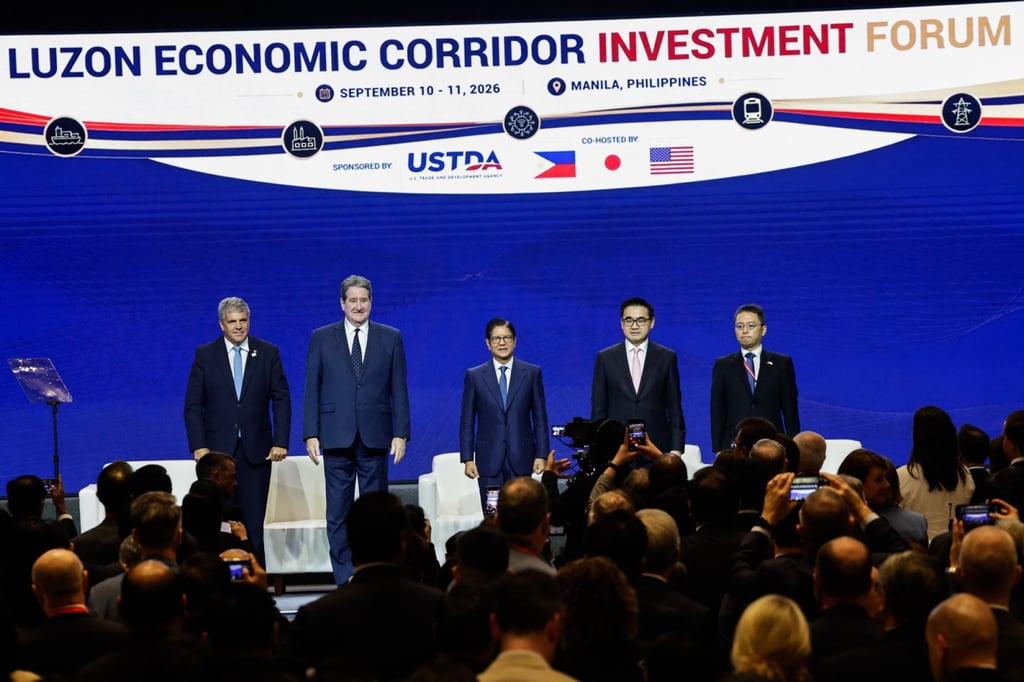
On one hand, there is the Luzon Economic Corridor, an initiative to consolidate the Philippines’ industrialised northern regions into a global manufacturing hub.
Eager to tap the Southeast Asian nation’s massive economic potential, hundreds of Japanese companies are exploring investments, especially in the manufacturing sector. Europeans have also expressed interest, making the Luzon Economic Corridor a global investment initiative.
“The US is not the alternative, it’s everybody else,” said Greg Poling of the Centre for Strategic and International Studies. “All of us are working in concert to provide attractive alternatives to China’s.”
Top Philippine officials remain bullish. Jose Manuel Romualdez, Philippine ambassador to Washington, has said that the Luzon Economic Corridor is “going to be the example again of what can be done and duplicated all over the country”.

Then there is the more controversial Pax Silica, which has drawn heavy criticism from civil society groups in the Philippines over environmental and community displacement concerns. Philippine officials have insisted no data centres would be part of the initiative, but the final contours of the deal remain murky.
Foxconn has reportedly shown interest in joining the initiative as an “anchor locator” for the planned 1,619-hectare (4,000-acre) manufacturing hub in New Clark City.
Meanwhile, top security officials have emphasised the importance of attracting investments and enhancing the country’s economic foundations as a matter of national security.
Defence Secretary Gilbert Teodro has said the country needs to build up a “resilient defence industry” anchored in domestic heavy industries such as steel, which has faced massive competition from China in recent years.
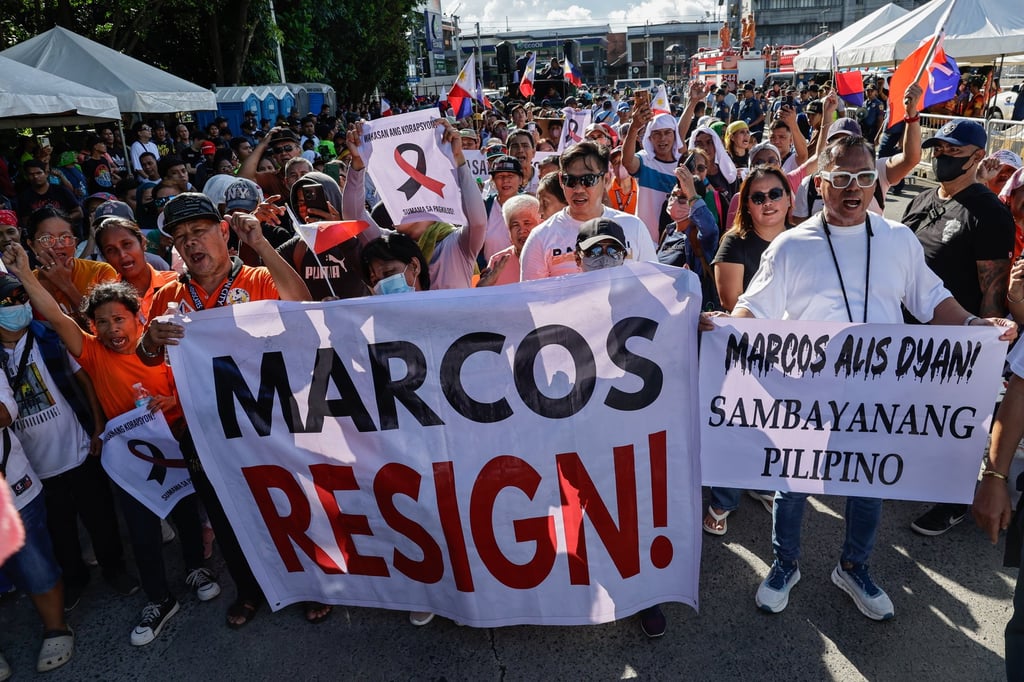
The Philippine dream of becoming a new regional manufacturing hub faces multiple challenges. To begin with, Marcos is in his twilight years of office, raising serious concerns over the country’s long-term geoeconomic strategy.
Surveys show Beijing-friendly political figures such as Vice-President Sara Duterte and senator Christopher Go as favourites for president and vice-president in next year’s election. Allegations have surfaced that the Duterte family received massive financial support from Beijing-affiliated elements. A major foreign policy U-turn soon is not improbable.
Moreover, the Philippines lacks a robust industrial strategy to harness new investment opportunities. Manila’s policymakers are generally “free market” advocates and have overseen a steady erosion of the manufacturing base in favour of an economy driven by labour exports and low-end services.
To attract large-scale manufacturing investments, however, the Philippines needs to harness a proactive bureaucracy and implement a long-term support strategy to create conducive conditions for high-value-added manufacturing. Faced with a fiscal crunch and corruption scandals, it’s unclear how the Philippine government plans to address the infrastructure bottlenecks and high energy costs that have been a bane of manufacturing investments.
Ultimately, the Philippines faces stiff competition from neighbours such as Malaysia, Vietnam and Thailand, which have far more robust manufacturing supply chains and have local conglomerates integrated into high-value-added production. For all its big ambitions, it remains unclear how the Philippines can credibly attract big-ticket Western investments to upgrade its flailing economy.
KioskNews shows a cleaned-up reading view extracted from the publisher’s page — the original always lives on their site, not ours.