Jamie Sarkonak: She was a rape accuser’s greatest ally. Now, she regrets it
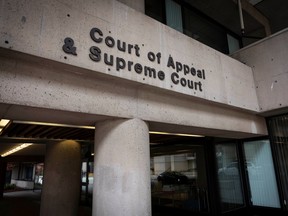
In 2015, when the University of British Columbia began to reckon with sexual assault allegations by a mature student against Steven Galloway, the school’s most high-profile creative writing professor, it had the help of an inquisitor.
Sign In or Create an Account
Chelsea Rooney circulated the unproven allegations that Galloway had raped a student (which were later found to be unsubstantiated by a retired judge tasked with investigating the affair for UBC) and did her best to gather more, contributing to the obliteration of his reputation and career. Now, a decade later, she’s walking it all back with a profuse apology, printed in the Saturday Post.
In her apology, which has also been posted online, Rooney admitted that her understanding of and approach to the “believe women” movement was “misguided.”

Columnist Jesse Kline keeps you up to date with what’s happening in Israel and the effects of antisemitism on life here in Canada. Friday mornings.
By signing up you consent to receive the above newsletter from Postmedia Network Inc.
A welcome email is on its way. If you don't see it, please check your junk folder.
The next issue of Channel Israel will soon be in your inbox.
We encountered an issue signing you up. Please try again
“My position at the time was that an allegation was all that a person should require to come to the conclusion that an accused person was guilty, and I accused those who disagreed with this of doing harm to survivors,” she wrote.
“I should have understood that supporting people who come forward about sexual violence does not require, and cannot justify, acting in ways that may lead others to conclude that unproven allegations are true or failing to give the person accused a fair opportunity to be heard and considered.”
Rooney, an author, alumna of UBC’s creative writing program and one of Galloway’s former students, was one of the many defendants in a defamation lawsuit brought by the ex-professor in 2018 to clear his name. The trial is set to start on Oct. 5, but Rooney has officially settled (along with several others, whose apologies have also been published).
In her apology, Rooney wrote that she “became involved without having heard Mr. Galloway’s side of the story.”
“I should not have listened only to one side, or allowed that one-sided understanding to shape my communications, my tweets, or my participation in the process. I also should not have allowed my own past negative experiences with others, or my experience learning about and working on issues of sexual violence, to cloud my judgment or prevent me from giving Mr. Galloway fair consideration.”

Her role in tying Galloway’s name to campus sexual violence is recounted in detail in a pre-trial court ruling on the lawsuit in 2021. It began when a friend in the UBC creative writing program, known only by the letters A.B. due to a publication ban, told her in 2015 that she’d been raped by Galloway a few years prior. A.B. is the primary defendant in Galloway’s defamation trial, but she will not be testifying in court or defending her account of being raped, as truth.
A.B. had been corresponding with some professors and members of the media about her alleged sexual assault earlier in 2015, and in mid-November, she told Rooney. Per the 2021 ruling, “Ms. Rooney did not ask for any details (such as when or where), which she did not consider relevant.” By Rooney’s account at the time, she did not think highly of Galloway and believed A.B.’s story to be truthful; A.B. then told Rooney that she was going to make a formal complaint to the university.
Around this time, per the 2021 ruling, another professor who has since settled with Galloway out of court connected with Rooney. They discussed her concerns about Galloway, and she asserted that there were other women with complaints about him. Rooney planned to reach out to these other women.
It was at this point that Rooney took on an inquisitorial role. The 2021 ruling says that she began contacting potential complainants — and telling them about A.B.’s allegations again Galloway. She emailed around nine individuals, urging them to contact the media about Galloway because they “either experienced or witnessed incidents that can speak directly to our subject’s character.” Here, she wrote, was an opportunity for them to “disrupt traditional narratives.” (A few days later, however, she sent a follow-up email to apologize for encouraging the recipients to speak to media.)
Rooney’s work informed a faculty meeting on what to do with Galloway. He was suspended on Nov. 16, and in the aftermath, according to a Globe and Mail report, UBC’s Equity Office formally thanked Rooney. The office also asked her to distribute a letter from administration to potential complainants, per the 2021 decision. From there the UBC investigation proceeded, the story grew into a national scandal, and Galloway was ultimately terminated in June 2016.
It was also in 2016 that, when an investigation into the Galloway firing by a retired judge concluded that he had not, in fact, sexually assaulted A.B., Rooney told the Globe and Mail that the resulting redacted report felt like “yet another slap in the face.” As some onlookers from the literary world expressed their disappointment in how UBC treated Galloway, Rooney expressed disappointment online. In frustration, she tweeted, among other things, that “we can believe her. And we do.”
A decade on, Rooney has warmer words for Galloway.
“I am aware that prior to A.B. making these allegations, Mr. Galloway considered me a friend and had on multiple occasions gone out of his way to help me, with nothing asked in return,” she wrote in her apology. “In my 2014 book I thanked him as someone ‘who encouraged me to commit to writing at a very important time in my life.’ That was a true statement.”
Rooney appears to have been powered by her zeal for the believe-all-women cultural moment. This was the time of Jian Ghomeshi’s trial; of Gamergate; of Mattress Girl and the Columbia University rape controversy (and the retracted Rolling Stone story that popularized them). The zeitgeist at the time was such that it was offensive to question those who alleged to have undergone sexual assault, and Rooney’s faith was deep.
Rooney’s apology repeatedly made reference to “serious and unproven allegations” and recognized that, by circulating them, she bolstered their credibility without actually knowing whether they were true. She retracted her words “to the extent they stated, repeated, or implied that the allegations” against Galloway were true. She wrote that she now accepts the findings of the retired judge who found the sexual assault allegations against Galloway to be unsubstantiated, as well as the judge’s conclusion that the complaints Rooney gathered were “without merit.”
Rooney further apologized for attempting to get Galloway’s lawsuit dismissed in court, and when that failed, embarking on appeals that also failed. She recognized that this “over many years contributed to a narrative that distracted from the central issue in this litigation and further caused Mr. Galloway harm.”
“I know that nothing I say now can undo the harm or give back the years affected by these events,” Rooney concluded, “but I am genuinely sorry for the part I played in causing that harm.”
Coming from someone who played a significant role in building up UBC’s questionable case against Galloway, and who passionately believed it was her duty to defend supposed victims, that should mean a lot.
National Post
Join the Conversation
This website uses cookies to personalize your content (including ads), and allows us to analyze our traffic. Read more about cookies here. By continuing to use our site, you agree to our Terms of Use and Privacy Policy.
KioskNews shows a cleaned-up reading view extracted from the publisher’s page — the original always lives on their site, not ours.