Danggit, mangroves tell story of coastal recovery in Prieto Diaz, Sorsogon
Already have Rappler+?
to listen to groundbreaking journalism.
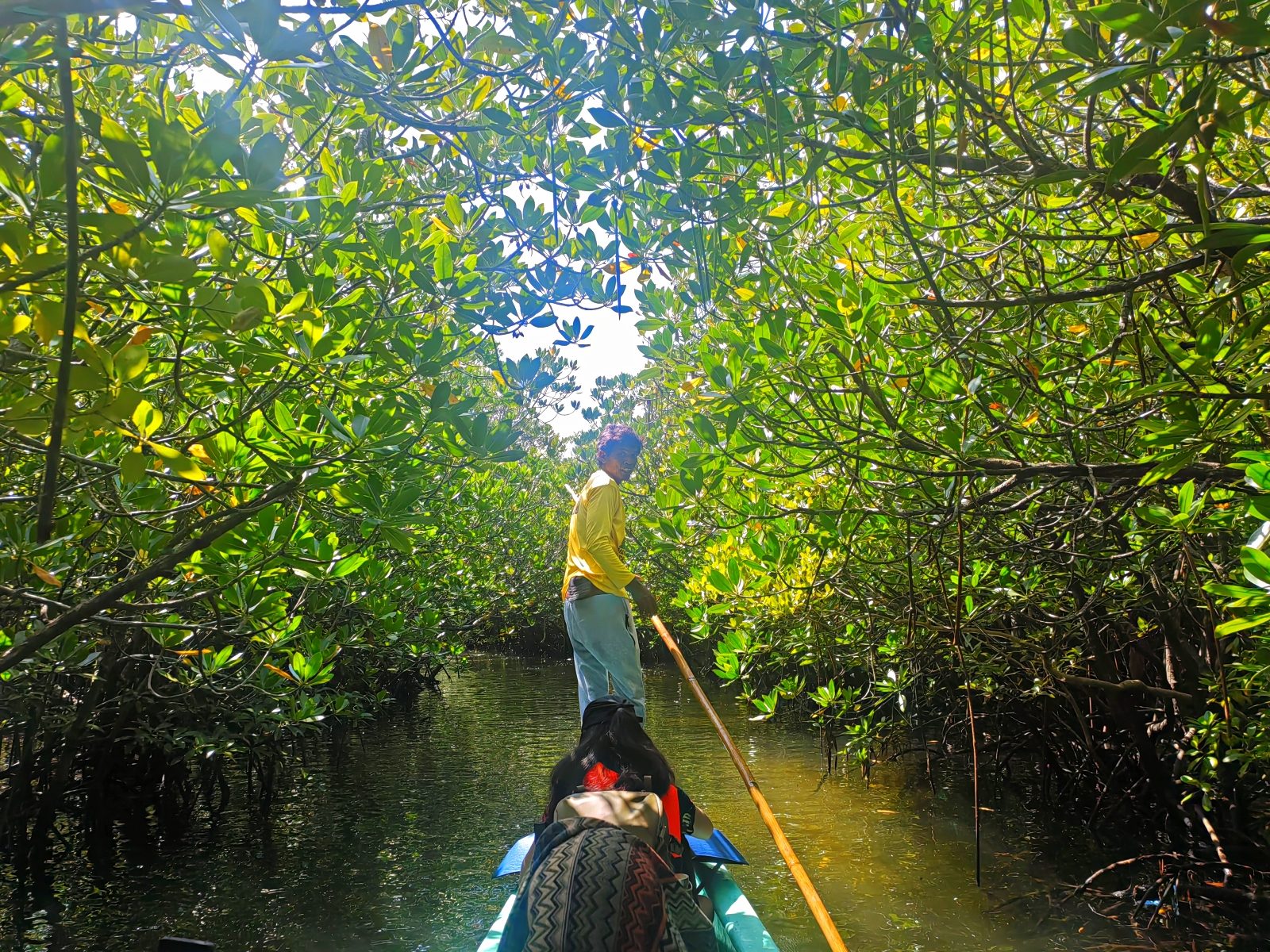
MAJESTIC. Local guides and paddlers bring tourists to the famed 'bakawan' of Prieto Diaz, Sorsogon.
Marky Ramone Go
Once facing severe decline, the 1,000-hectare Prieto Diaz mangrove forest in Sorsogon has been transformed by local residents into a thriving, community-managed sanctuary that protects both their livelihoods and the coastline
AT A GLANCE
- Prieto Diaz, Sorsogon has successfully rehabilitated its coastal ecosystem, particularly its mangrove forests, through community-led efforts since 1993.
- The formation of the community organization SEAMANCOR has played a crucial role in managing and protecting the mangroves, which are vital for local livelihoods and biodiversity.
- The community's commitment to conservation has led to national recognition and sustainable tourism development, highlighting the importance of the mangrove ecosystem for both the environment and the local economy.
This is AI-generated. Read the article for full context. Report any errors.
In Prieto Diaz, Sorsogon, danggit is more than a local delicacy. The rabbitfish that become the town’s dried fish thrive in nearly 1,000 hectares of seagrass meadows, part of a larger coastal ecosystem of seagrass, coral reefs, and mangroves that supports both the town’s livelihood and its marine life.
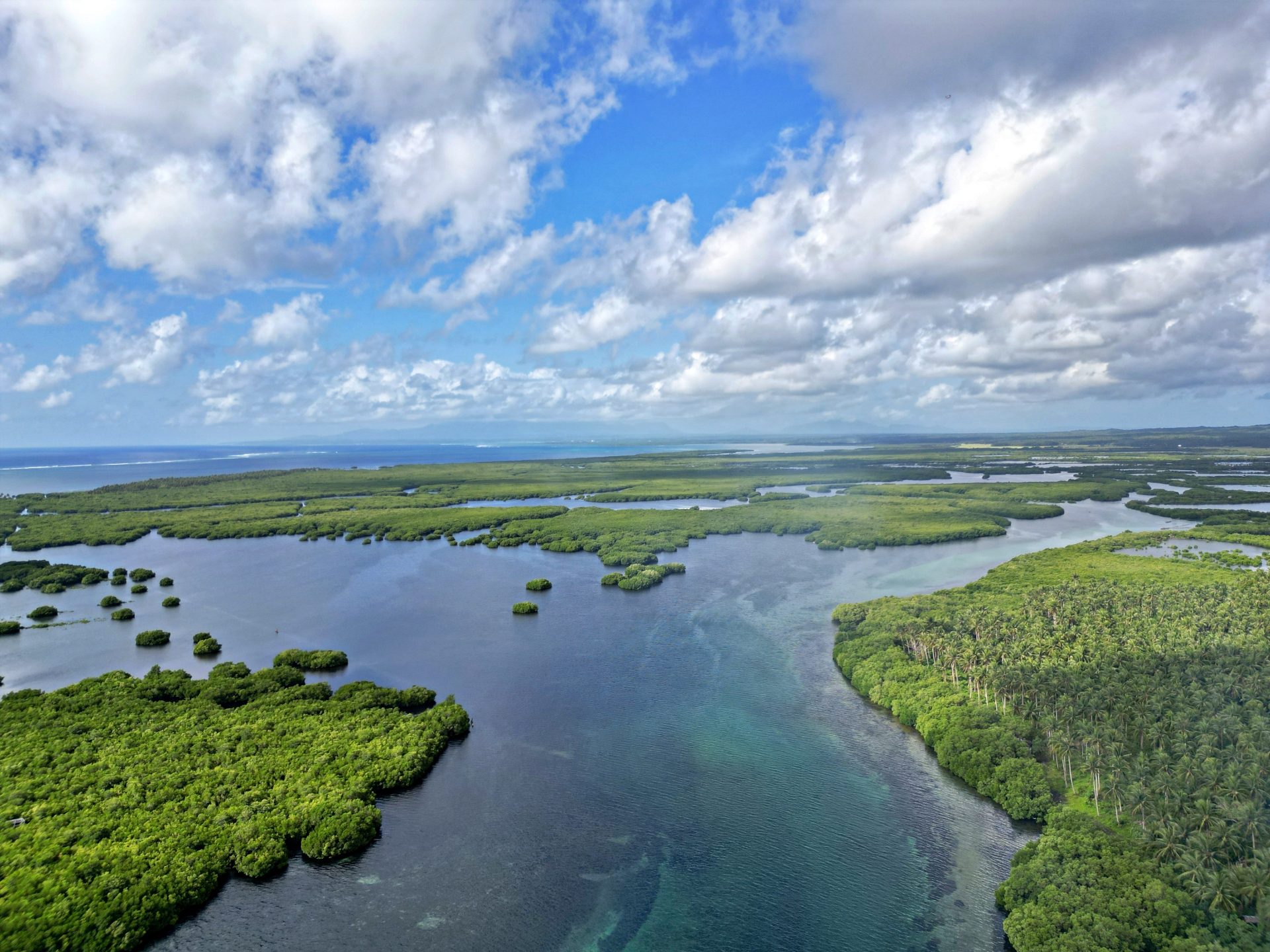
At the center of Prieto Diaz’s coastal conservation story is an ecosystem that has not always been this healthy. After decades of community-led protection, the town’s coastal habitats have recovered. Today, its mangrove forest spans more than 1,000 hectares, making it one of the largest community-managed mangrove forests in the Bicol region.
The transformation began in 1993, when the Department of Environment and Natural Resources (DENR) selected Prieto Diaz as a pilot site for a coastal rehabilitation project. The program eventually led to the formation of Seagrass, Mangrove, Corals (SEAMANCOR), a community organization whose members became bantay dagat (sea patrol), mangrove wardens, and guides for visitors.
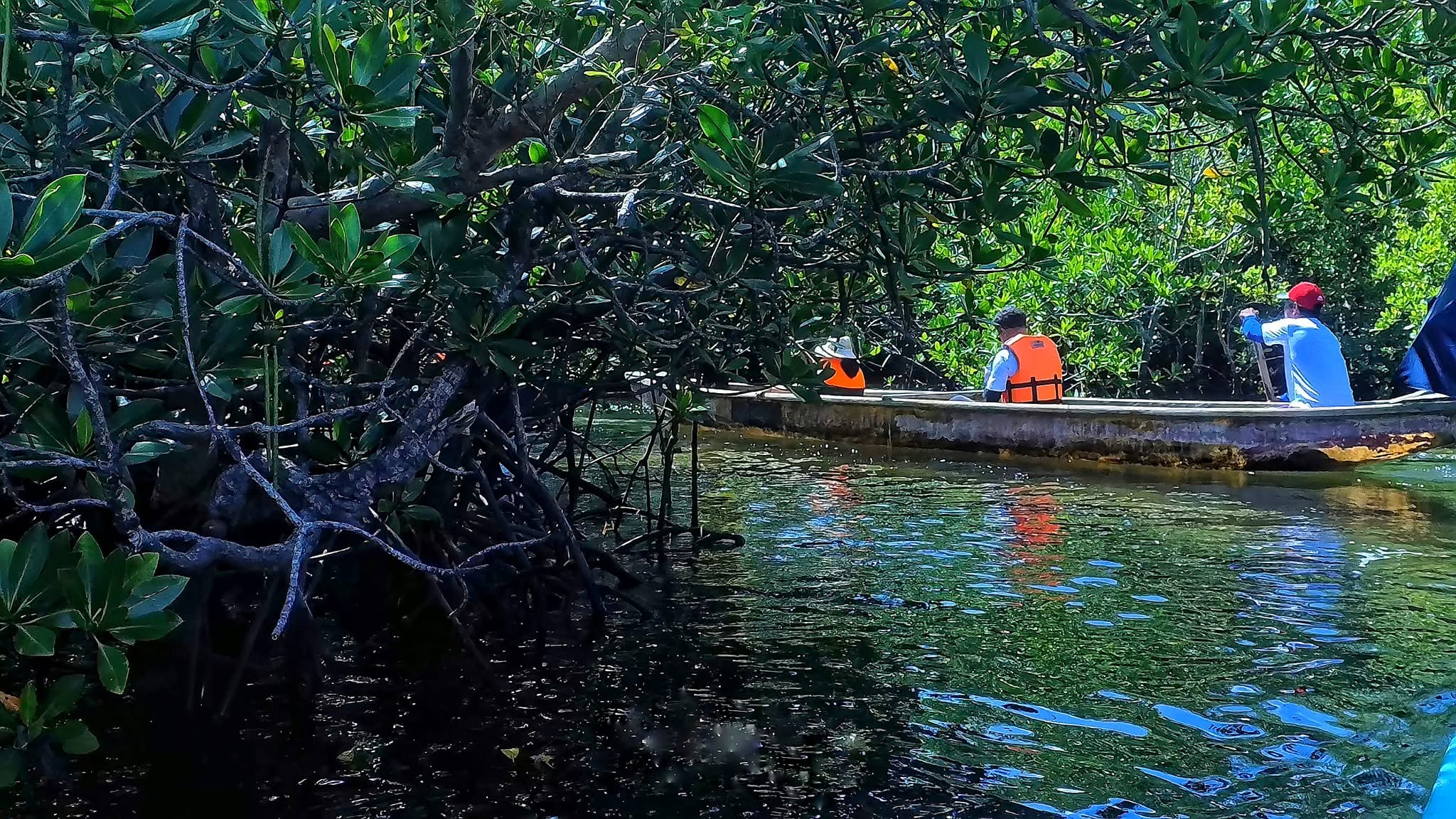
The recovery also involved people who patrol the waters, guide visitors through the bakawan, the Tagalog word for mangroves, and monitor the coastal ecosystem.
The people behind Prieto Diaz’s mangrove recovery
For Victor Emata, a paddler and guide, that work started when he began seeing the mangroves return. He remembers the early rehabilitation efforts in the 1990s, led by the DENR in partnership with the Agta-Tabangnon community and other organizations across the barangays.
“Through the protection of the mangroves, we are able to preserve the different mangrove species that can thrive here, as well as the other species like different birds, that depend on the mangrove ecosystem,” he said in Filipino.
As the forest recovered, visitors began arriving, and Victor became one of the paddlers and guides introducing them to the bakawan.
For Montano Eva Jr., protecting the restored mangroves meant enforcing the rules. When fishing restrictions were introduced, community members organized sea patrols.
Some violators were caught and fined, and Montano says the number of fishermen operating inside the protected area eventually declined. Today, residents continue taking turns guarding the mangroves.
Manuel Domdom, a fisherman, guide and president of the local guides’ organization, says the bakawan has become a big part of the community’s daily life.
“The bakawan is an important source of income for the fishermen in our community,” he said. “For those of us who live here in Prieto Diaz, we believe the bakawan is also a blessing from God. That is why we feel a responsibility to preserve it for our town and for our people.”
That responsibility is not always easy. Manuel says some people still attempt to cut or collect trees despite regulations, while the area remains an important fishing ground.
For Manuel, protecting the bakawan also means protecting the community’s fishing livelihood and the coast itself from storm surges.
Restoration eventually gave way to a system of community management and, later, tourism.
According to Oriculo Despuig Jr., the municipality’s tourism officer-designate, the process began when DENR assessed the condition of the mangrove forest and worked with an indigenous peoples group. Members were encouraged to plant mangrove propagules in designated areas in exchange for payment.
This was followed by the formation of SEAMANCOR in 1994, a community-based organization composed largely of fishermen and their wives. DENR eventually awarded the group a 25-year Mangrove Stewardship Agreement, formalizing its role in managing and protecting the restored forest.
Mangroves had been cut for charcoal and firewood, with some sold to nearby bakeries and others used by fishermen for fishpen construction. Illegal fishing, including the use of dynamite and poisonous substances, also threatened the coastal ecosystem.
The bantay dagat helped enforce the rules. Some fishermen were later trained as boat paddlers and guides for the community’s Mangrove Tours.
“Now the community, especially the coastal barangays, is aware that DENR regulations pertaining to mangroves are being implemented, especially for their protection and preservation,” says Despuig.
The community’s work eventually earned national recognition. The municipality was named the 2020 national grand winner of the Bureau of Fisheries and Aquatic Resources’ (BFAR) Malinis at Masaganang Karagatan (MMK) program, receiving P30-million worth of fisheries livelihood projects. The incentive-based program recognizes communities for stronger coastal governance and sustainable marine resource management.

Despuig hopes the mangrove forest will continue expanding over the next five to 10 years, eventually stretching from the poblacion toward Barangay Talisayan and the boundary with Sorsogon City.
For Fatit Guttierez Bayle, Prieto Diaz’s tourism officer, the future of the mangrove forest is personal.
Bayle said she chose to build her career in her hometown rather than pursue an opportunity with the United Nations: “As (Prieto Diaz’s) tourism officer, I did not give up a bigger life because I found a better one.” – Rappler.com
KioskNews shows a cleaned-up reading view extracted from the publisher’s page — the original always lives on their site, not ours.