In Esports, Olympic standardisation of hardware a game changer
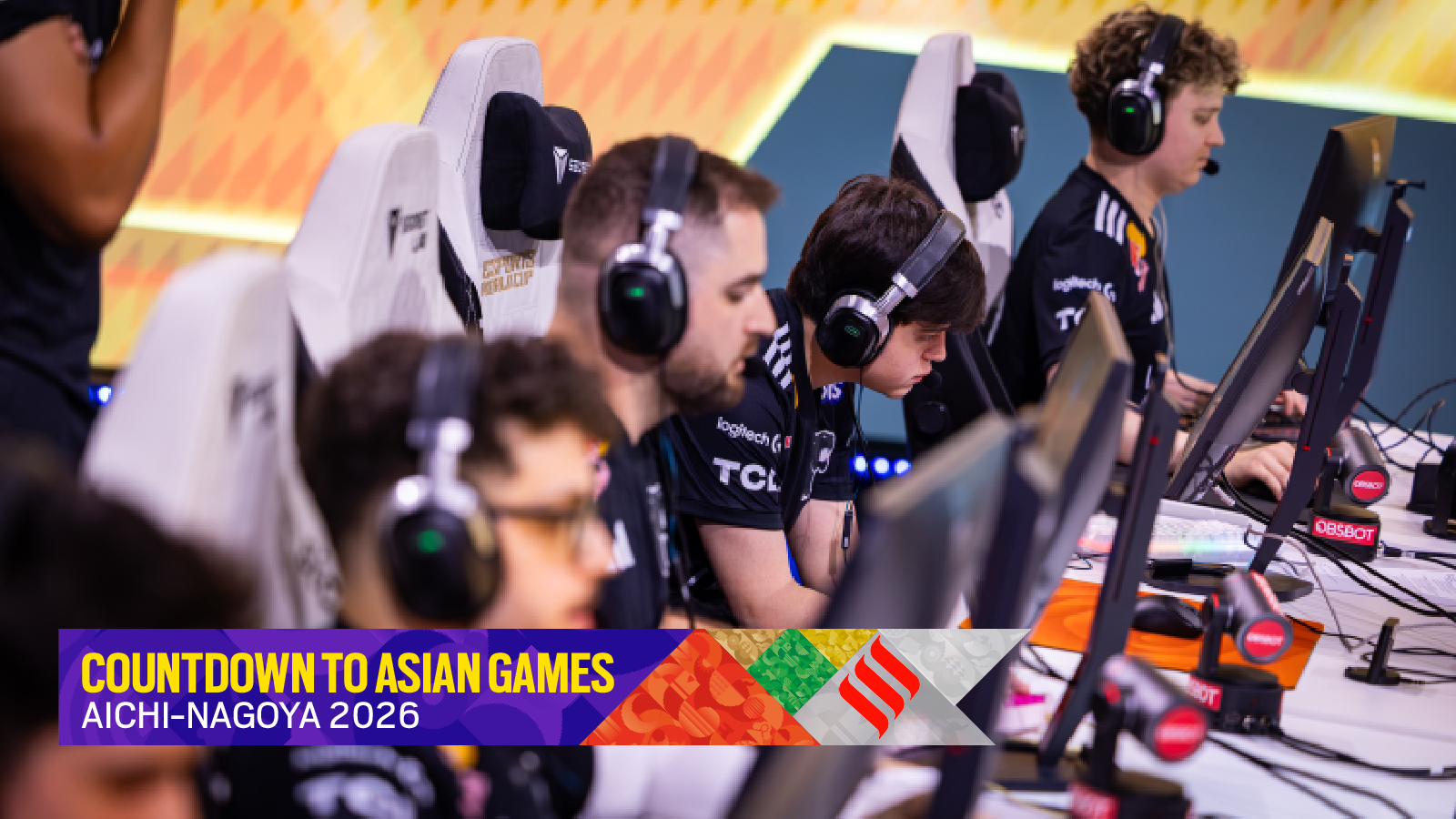
At the Asian Games, personal gear is quarantined, devices are identical, and every machine is hardwired to local servers with zero lag. (Photo: EWC)
Ask any amateur Indian gamer sweating it out in a study room or a cramped local cybercafe what frustrates them most, and the answer rarely involves their gameplay. It’s mostly the hardware. The sudden 200ms ping spike that freezes the screen mid-gunfight. The budget phone overheating until frames drop to a stutter. The cheap earphone that cuts out just as enemy footsteps draw near. In India, gaming has always been about making do, battling unreliable internet and uneven devices.
At the highest level, though, professionals build their entire elite gaming career around gear, be it by breaking in a specific mouse over months or tweaking custom keyboard switches, and depending on private servers for practice, where latency — time for a response from a server — is predictable and the environment is better controlled.
Over time, this gear becomes an extension of the player, a comfort zone that allows them to perform at their peak. At the Asian Games in Aichi-Nagoya, that entire comfort zone is stripped away.
The evolution has been dizzying. When esports debuted as a demonstration event at Jakarta-Palembang in 2018, it felt more like an upscale cybercafe. Internet connectivity was flaky, players plugged their personal gear straight onto the stage, and when server latency spiked, the standard fix was an admin jogging over to reboot the PC.
By Hangzhou in 2023, where esports became an official medal event, the scale exploded. China invested in purpose-built smart arenas with dedicated, isolated local servers. For the first time, games weren’t needed to ping into remote public servers. Rather, they ran on on-site, hardwired enterprise rigs delivering near-zero millisecond latency.
Now, arriving in Japan for the 2026 Games across an expanded 11 medal events — where India is set to send 15 players across four gaming disciplines — that technical rigour has solidified into absolute Olympic standardisation. Under Asian Electronic Sports Federation (AESF) oversight, the setup corresponds to an anti-doping laboratory. Players must surrender their personal mouse and keyboards into technical quarantine hours before walking out. Scrutineers scrub onboard memory chips to ensure no hidden shortcut macros exist, test firmware against strict whitelists, and lock the peripherals in anti-static boxes until match time. If a cable looks tampered with or a brand is unauthorised, it doesn’t make the stage.
For India, where mobile titles like Battlegrounds Mobile India (BGMI) dominate the culture, this level of technical parity is revolutionary. In domestic circuits, a player with an expensive flagship phone has an undeniable edge over someone on a ₹15,000 device battling thermal throttling.
Story continues below this ad
Level field
The Asian Games brutally levels that field. In mobile medal events, players are forbidden from touching their own phones. Organisers hand everyone identical, tournament-issued handsets stripped of background bloat. Same goes for a PC, PlayStation or a Nintendo Switch Event.
At the scale of the Asian Games, crucially, there will be no unstable Wi-Fi. Every device is hardwired via Ethernet docks directly into the arena’s local servers, completely killing ping spikes. At this level, handsets use external bypass power to keep batteries from heating up during long-drawn matches. Even popular accessories like third-party finger sleeves or clip-on triggers are strictly illegal.
The stage environment has transformed as well. Soundproof glass booths, once a staple of gaming broadcasts, are gone due to stadium fire codes. Instead, players wear an “audio sandwich”: custom in-ear monitors delivering game sounds and white noise, along with aviation-grade ear defenders to physically shut out arena crowds.
Even commercial freedom gets reined in. Under Olympic Rule 50, players’ usual billboard-style sponsors are banned on the field of play. Referees walk down desks with matte black gaffer tape, covering glowing logos on mice, pads, and jerseys before broadcast cameras go live.
Story continues below this ad
From Jakarta’s chaotic reboot culture to Hangzhou’s smart LAN architecture and now Japan’s ironclad standardisation, esports has grown exponentially over time. For the Indian contingent in Nagoya, the playing field has never been more level. There will be no lag, no hardware advantage and no crowd noise banging into the players’ ears and only nerve and skill will decide who wins.
KioskNews shows a cleaned-up reading view extracted from the publisher’s page — the original always lives on their site, not ours.