Iran Turns Trump's Election Disaster Into Leverage, Wants "New World Order"
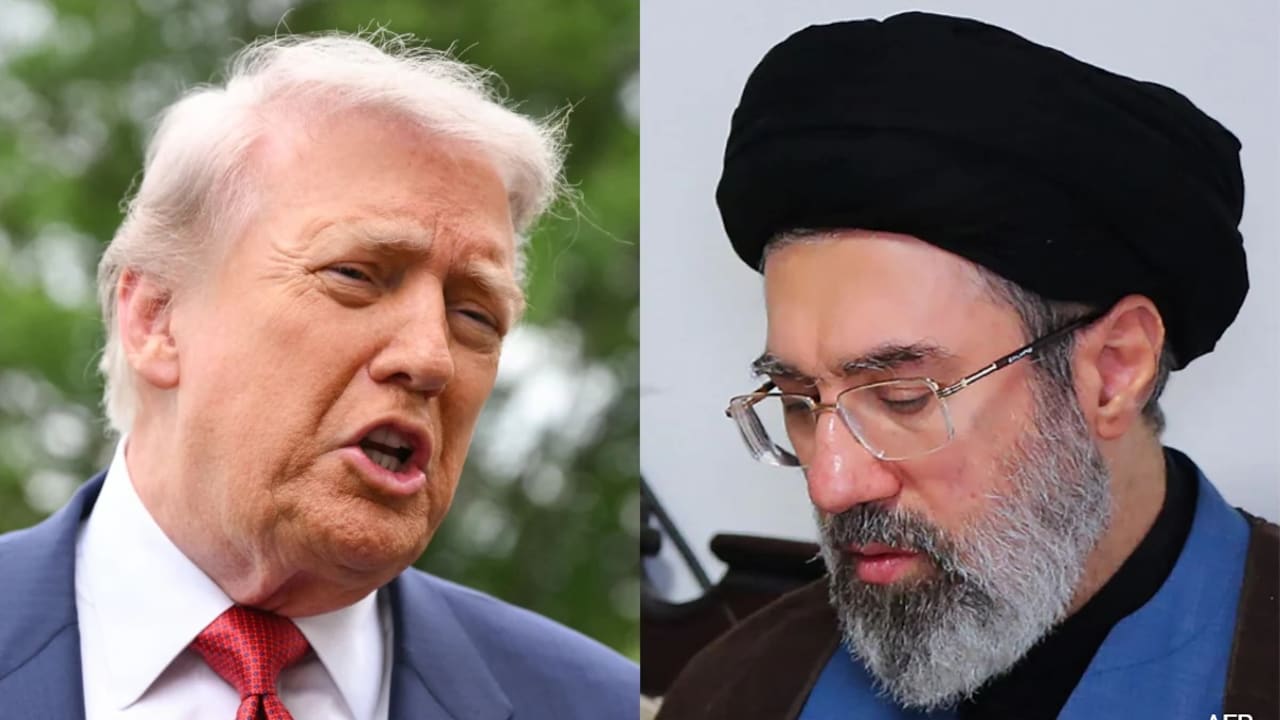
Iranian officials and hardliners are using US President Donald Trump's Republican Party's crushing midterm defeat to turn up the pressure on Washington, arguing that the political setback is proof that the United States has failed to achieve its objectives in the eight-month-long war.
One of the sharpest attacks came from Mohsen Rezaei, secretary of Iran's Supreme National Security Council, who openly mocked the Trump administration in a post on X.
"You lost the war and the election. Vance has conceded, Rubio is heading for the exit, Hegseth is about to be fired, and the Centcom commander is now a podcaster! So, Who exactly in Washington do we need to get this message across to?" he asked.
You lost the war and the election.Vance has conceded,Rubio is heading for the exit,Hegseth is about to be fired,and the CENTCOM commander is now a podcaster! So٫Who exactly in Washington do we need to get this message across to? Start a war,and you'll face a devastating response.
— محسن رضایی (@ir_rezaee) November 7, 2026
Rezaei's post was a swipe at what he portrayed as a weakening Trump administration, with the Republican electoral losses adding to the political cost of the war. His reference to Vance, Rubio, Hegseth and the US Central Command chief was meant to suggest that Washington's leadership was either admitting defeat, facing an uncertain future or losing its grip on the conflict.
Tehran believes Trump is under pressure at home and should be made to pay a bigger price to end the war.
Iran's Hardliners Want Trump To Pay A Bigger Price
The Republican defeat has given fresh ammunition to Iranian hardliners who believe their country has already won the conflict.
Rather than offering Washington concessions, conservative politicians and media outlets in Iran are demanding that the government hold its ground in negotiations and seek a settlement that changes the balance of power in the region.
Some hardliners are even pushing for a "new world order" that gives Iran a stronger position.
Supreme Leader Mojtaba Khamenei added to this message on Wednesday.
In a statement following the US election results, he warned against the "slightest inclination towards submission". Hardliners believe the warning was aimed at Iranian negotiators who are engaged in talks with Washington.
The hardline outlet Raja News also published a column arguing that the US should not be allowed an easy exit from the war.
It said Washington must "pay the price" for attacking Iran and warned against allowing Trump to "escape with a rushed agreement".
"The achievements of the Iranian people and the capital gained... should not be undermined by providing a way out for the other side," the columnist wrote on Wednesday.
"The only way to avert the shadow of war is to increase power, maximize pressure on the US and energy prices, and make the enemy regret its actions."
Trump, Vance Blame Iran War For Election Defeat
The comments from Tehran came after Trump and his vice president, JD Vance, linked the Republicans' poor performance in the midterm elections to the economic fallout from the war.
Trump acknowledged in a call with Fox News that the conflict had partly contributed to the party's defeat.
Vance was more direct. In a lengthy post on X on Wednesday, he wrote, "the reason we lost is the war."
The admissions have been seized upon by Iranian conservatives, who see the electoral setback as evidence that the conflict has become a political liability for Trump.
For Tehran, the argument is that the war has not only failed to deliver a decisive military victory for Washington but has also created problems for the US President at home.
War Stuck In A Stalemate As Talks Continue
Eight months into the conflict, neither side appears close to securing a decisive outcome. Military action has slowed, while diplomatic efforts have yet to produce a breakthrough.
Iranian negotiators have travelled between Tehran and Doha in recent weeks as Qatar tries to bridge differences between the two sides. The proposed agreement is expected to pave the way for negotiations on Iran's nuclear programme and an end to the war.
A regional official told CNN on Thursday that the risk of another war with Iran had eased following the Republican defeat in the US midterms. However, the possibility of escalation remains.
The uncertainty has kept countries across the Middle East on edge. In October, Trump said the US would not attack Iran before the midterm elections but did not clarify whether military strikes could resume afterwards.
Iran, meanwhile, had threatened to widen its retaliatory strikes if attacked again.
Over the past week, the US carried out strikes on Iran's Qeshm Island, including one on Thursday night. Both sides have played down the intensity of these attacks, apparently seeking to prevent them from derailing ongoing negotiations.
Trump, however, has not ruled out further military action.
"Now we're making a decision, do we want to go further? I would rather not destroy the rest of the country if possible but maybe I'll have to," he told reporters on Thursday.
"You'll know soon enough."
Qatar, Gulf Nations Step Up Diplomatic Efforts
Diplomatic activity across the region has picked up since Tuesday's midterm elections.
Qatar said on Friday that Trump had spoken to Emir Sheikh Tamim bin Hamad Al Thani over the phone to discuss efforts to de-escalate the conflict.
A day earlier, Iranian Foreign Minister Abbas Araghchi held conversations with his counterparts in Saudi Arabia, the United Arab Emirates, Oman, Pakistan, Kuwait, Jordan, Turkey, Cyprus and Qatar.
Tehran has also laid out seven conditions that Washington must meet before Iran agrees to reopen the Strait of Hormuz.
These include ending the war on all fronts, paying compensation, withdrawing US forces and lifting sanctions. It is not yet clear whether Washington is willing to accept any of these demands.
KioskNews shows a cleaned-up reading view extracted from the publisher’s page — the original always lives on their site, not ours.