10 Classic Books That Deserve A Modern TV Adaptation Like East Of Eden
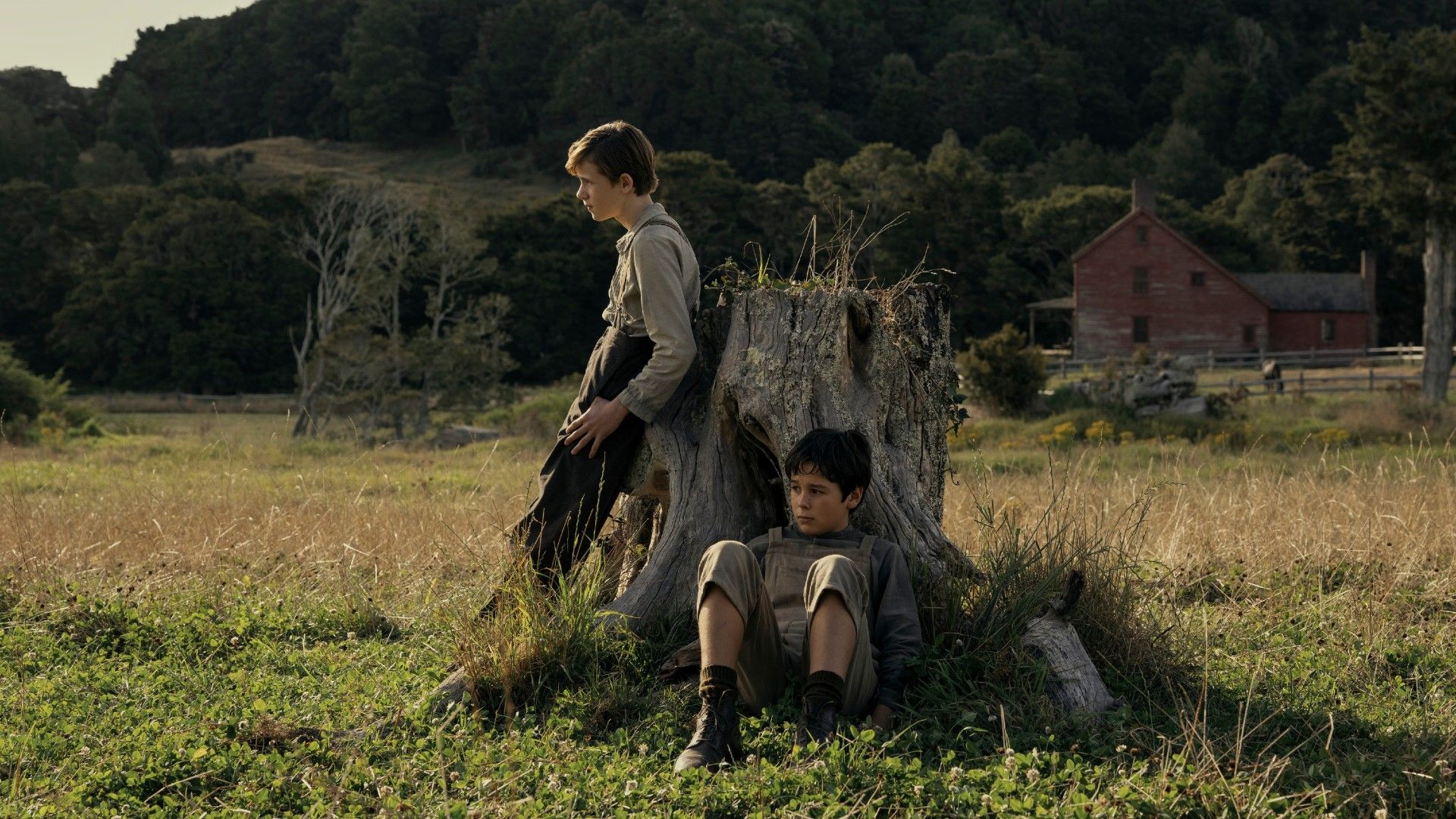
If the success of Netflix's adaptation of East of Eden is any indication, the limited series now reigns supreme as the best way to adapt great literature to the screen. Book-to-screen adaptations range from the extremely accurate, to the modern twist - with shows like Bridgerton showing how a truly modern take can breathe new life into a hit series, while East of Eden focuses less on shifts in overall style, and more on a new perspective on existing characters. Wuthering Heights, meanwhile, does both - and simultaneously faces criticism for straying too far from the source material.
And while there are some books that seem to receive a new adaptation almost annually (like Pride and Prejudice, which currently sits around 15 adaptations, with 2026's The Other Bennett Sister as the most recent take on the story), some of the most celebrated books of all time have never received a film or TV adaptation. Their memorable characters, rich worlds, and enduring themes could make compelling limited series of their own. It's past time for these to get a modern adaptation like East of Eden.
The Catcher In The Rye, 1951
J.D. Salinger

In 1951, J.D. Salinger introduced audiences to one of the most compelling and complex characters of his generation. Holden Caulfield and The Catcher in the Rye have captivated audiences for decades, and so it's only natural that a limited series adaptation could be a hit.
Oftentimes, film adaptations are forced to cut key plot elements and character development to fit into a given runtime, so Salinger's character-driven story of teenage alienation, grief, and the search for connection is well-suited for a limited series adaptation because it could stay close to Holden’s restless perspective while giving the people and moments he encounters room to shape his story.
Salinger famously opposed a film adaptation of The Catcher in the Rye, so it's unlikely that any screen adaptation will be made in the future. Still, The Catcher in the Rye's themes are especially relevant now, touching on issues like mental health and what it means to grow up and be an adolescent in a world that can feel unfamiliar.
Giovanni's Room, 1956
James Baldwin

Giovanni's Room is a short novel—only 159 pages—but its themes and character work make it perfect for a limited series adaptation. Much of the meat of James Baldwin's classic 1956 novel lies in its subtext and characterizations—which would have full room to be explored in a limited series adaptation, as opposed to a feature film.
Giovanni's Room is a landmark work in LGBTQ+ literature, and adaptations of the novel have seen success in the past. Stage play adaptations of Giovanni's Room in Philadelphia and Amsterdam have found audiences, and in 2018, Barry Jenkins's film adaptation of Baldwin's If Beale Street Could Talk took home several of the awards circuit's most coveted prizes, including a Best Supporting Actress Academy Award for Regina King.
Before he died, Baldwin intended to return to Giovanni's Room and even considered adapting it to film (via New York Times). He and director Michael Raeburn worked on a screenplay in the late 1970s, but the project never came to fruition. A limited series could bring the novel to the screen at last, honoring its intimate focus while giving its layered characters and themes the space to unfold.
Franz Kafka

Kafka’s novella follows Gregor Samsa, a traveling salesman who wakes one morning transformed into a giant insect. The Metamorphosis is a story rife with interpretation, and a limited series could use Gregor’s shocking transformation as a jumping-off point to explore Kafka's existentialism.
The story’s claustrophobic setting and unsettling premise lend themselves to a short, tightly focused series. Kafka’s exploration of alienation, work, and the pressure to provide for one’s family still feels relevant, especially in a world where the ways people work are changing constantly and people can feel defined by their utility to others.
The Metamorphosis has been adapted for the screen before, including a 1975 television version and a 2012 feature film, as well as into a video game in 2020. A new limited series could give Gregor’s story more room to develop while preserving the novella’s strange, dark atmosphere.
The Jungle, 1906
Upton Sinclair

Upton Sinclair’s The Jungle follows Jurgis Rudkus and his family as they immigrate to Chicago in search of a better life. Instead, they find themselves trapped in the brutal conditions of the city’s meatpacking industry. A limited series could follow the family over time, showing how each new job, setback, and loss changes their hopes for the future.
The novel is best known for exposing the unsanitary conditions of the meatpacking industry, but Sinclair’s central concern was the exploitation of workers. That combination of family drama and social criticism still gives the story a sharp edge, especially as audiences continue to debate labor rights, corporate power, and the cost of the food and necessities
Question 1 of 3
A series could give the novel’s immigrant characters and working-class communities more space than a feature film, while bringing Sinclair’s Chicago vividly to life. It could also restore attention to the book’s larger argument about wage labor and poverty, which was overshadowed by the public response to its revelations about food safety.
A Tree Grows in Brooklyn, 1943
Betty Smith

Betty Smith’s A Tree Grows in Brooklyn follows Francie Nolan as she grows up in a poor Brooklyn neighborhood in the early 20th century. Through her family, school, and local community, Francie begins to imagine a future beyond the limited choices around her. A limited series could give her coming-of-age story room to unfold alongside the lives of the people who shape it.
The book’s tenderness comes from its attention to ordinary moments: Francie’s trips to the library, her mother’s efforts to keep the family afloat, and her father’s charm and alcoholism. Its portrait of a family finding ways to love one another through hardship remains moving, and its Brooklyn setting gives the story a strong sense of place.
The novel has already been adapted as a celebrated 1945 film and a 1974 made for TV movie. A new series could take a wider view of Francie’s neighborhood and give the family’s story more time to develop across episodes.
The Grapes of Wrath, 1939
John Steinbeck

John Steinbeck’s The Grapes of Wrath follows the Joad family as they leave Oklahoma during the Dust Bowl and travel west in search of work. Their journey is filled with setbacks, but the novel’s scope reaches beyond one family to capture the hardship faced by countless displaced people. A limited series can give both the Joads’ story and the wider migrant community room to unfold.
The novel remains a powerful portrait of economic desperation, labor exploitation, and the ways a family tries to hold together under pressure. The family’s setbacks feel inseparable from the system surrounding them, turning the novel into a story about how poverty can trap people even when they do everything they can to escape it.
The novel’s famous 1940 film adaptation brought the Joads’ journey to the screen, and AMC is now developing a limited-series version as the first installment of its Great American Stories franchise. With Rolin Jones adapting the novel, audiences can look forward to a new version with more room for Steinbeck’s sweeping cast and social detail.
The Age of Innocence, 1920
Edith Wharton

Edith Wharton’s The Age of Innocence centers on Newland Archer, a wealthy New York lawyer engaged to May Welland. When May’s cousin, Countess Ellen Olenska, returns to the city after leaving her husband, Newland is caught between the life expected of him and the feelings he tries to suppress. A limited series could give new life to the novel, and let the love triangle and tightly ordered social world space to grow.
Wharton’s story is as much about the rules governing Gilded Age society as it is about romance. The characters’ choices are shaped by reputation, family expectations, and the fear of scandal, making the novel a subtle portrait of how social pressure can limit a person’s freedom.
Martin Scorsese’s acclaimed 1993 film brought the novel to the screen, and Netflix is now adapting it as a limited series. With filming underway and a cast led by Kristine Froseth, Ben Radcliffe, and Camila Morrone, the new version can explore Wharton’s world and the characters’ complicated inner lives across multiple episodes.
Jane Eyre, 1847
Charlotte Brontë

Charlotte Brontë’s Jane Eyre follows its title character from a difficult childhood to her position as governess at Thornfield Hall, where she becomes drawn to the secretive Mr. Rochester. Jane’s independence and moral conviction shape the novel’s gothic romance, while Thornfield’s hidden history gives the story an undercurrent of suspense. A limited series could let both sides of the story unfold at a deliberate pace.
Jane’s determination to claim a life on her own terms helped make her one of literature’s most enduring heroines. Her story still resonates as a coming-of-age drama about class, gender, love, and self-respect.
The novel has inspired many film and television adaptations, including a popular BBC miniseries in 2006. A new BBC series starring Aimee Lou Wood as Jane is now in development, giving audiences another chance to see Brontë’s heroine and her gothic world reimagined for television.
A Confederacy of Dunces, 1980
John Kennedy Toole

In John Kennedy Toole’s comic novel, Ignatius J. Reilly is a stubborn, self-important misfit whose grand theories about society rarely survive contact with everyday life. Set in New Orleans, A Confederacy of Dunces follows Ignatius as he clashes with his family, employers, and nearly everyone he meets. A limited series could bring the book’s eccentric cast and tangled comic plot to life episode by episode.
Ignatius is an unusual protagonist: brilliant in his own estimation, theatrical in his complaints, and completely out of step with the world around him. His misadventures give the novel its comedy, while the people he encounters offer a lively portrait of a changing New Orleans.
Hollywood has tried for decades to bring the Pulitzer Prize-winning novel to the screen, with several projects falling through before production. A limited series could finally give Ignatius and the city around him the space it deserves, while keeping the story’s strange, sprawling humor intact.
The Secret Garden, 1911
Frances Hodgson Burnett

Frances Hodgson Burnett’s The Secret Garden begins when Mary Lennox, a lonely and bad-tempered orphan, is sent to live with her uncle at a gloomy English estate. There, she discovers a locked garden and begins to draw a small circle of people into its restoration. A limited series could let Mary’s gradual transformation develop alongside the mystery of the house and its hidden spaces.
The garden is more than a beautiful setting: caring for it helps Mary form friendships and reconnect with the world around her. The novel’s themes of grief, isolation, and renewal still resonate, and its slow shift from a cold, neglected manor to a place full of life gives a series a natural visual arc.
The story has inspired several film, theatrical, and television adaptations, including the 2020 feature film. A new limited series could spend more time on Mary’s friendships with Dickon and Colin, while exploring the garden’s place in the family’s history.
KioskNews shows a cleaned-up reading view extracted from the publisher’s page — the original always lives on their site, not ours.