Anutin reveals handwritten ‘love letter’ to Trump seeking tariff exemptions for Thai goods
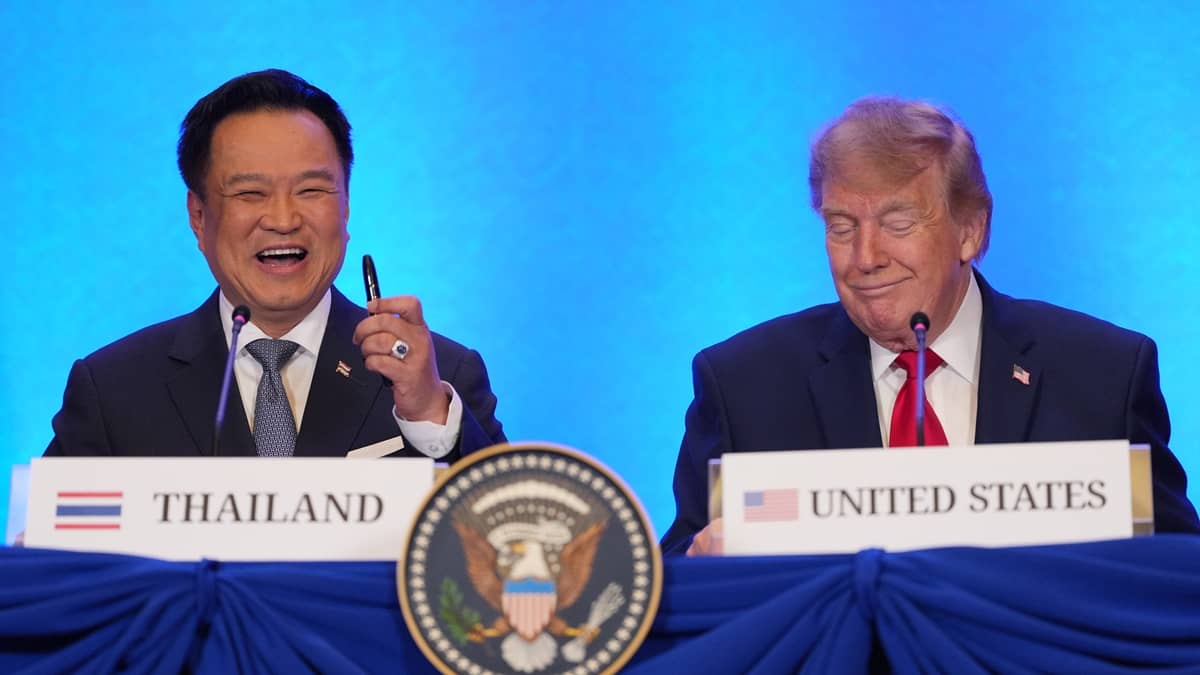
BANGKOK — Prime Minister Anutin Charnvirakul revealed on Saturday that he personally wrote a handwritten letter to US President Donald Trump during the APEC Summit, asking him to consider tariff exemptions for key Thai exports, including jasmine rice and maize.
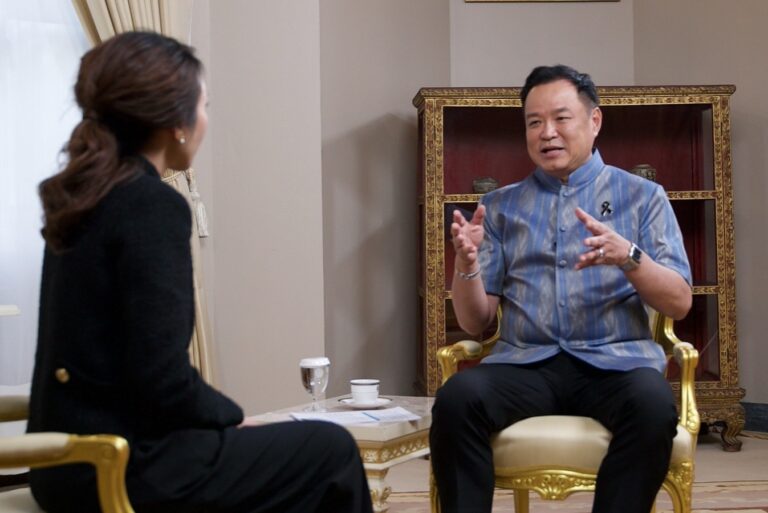
Speaking on his programme “Talk with Prime Minister Anutin” on 28 November 2026, Anutin shared details of Thailand’s trade negotiations with the United States following Washington’s latest proposed tariff rate of 18% on Thai goods.
Anutin said Deputy Prime Minister and Commerce Minister Suphajee Suthumpun had asked him during the APEC Summit to personally write a note to Trump seeking additional tariff exemptions for important Thai products.
“I wrote a handwritten note on a piece of paper, starting with ‘Dear Mr. President’, asking him to give further consideration to tariff exemptions for important products such as jasmine rice and maize. Then I handed it to him,” Anutin said.
The prime minister recalled telling Trump that he did not need to read the letter himself and could simply pass it on to the US trade representative. However, Trump spent some time reading the handwritten note before putting it in his suit pocket.
After the meeting, Anutin approached a representative from the Office of the United States Trade Representative (USTR) and asked them to follow up on the matter with Trump.
US tariff proposal lowered to 18%
Anutin said the proposed tariff rate of 18% followed the signing of a joint statement between Thailand and the United States, while legal teams were still drafting the full Agreement on Reciprocal Trade (ART).
Thailand had previously anticipated a tariff rate of around 19–20%, he said, adding that higher tariffs could affect investment, production planning and the competitiveness of Thai exporters in the US market.
Responding to criticism that his government was withholding details of the negotiations, Anutin said trade agreements involved extensive negotiations and neither side could dictate the terms unilaterally.
“What could I possibly be hiding? I don’t know who could hide anything from whom, or who could deceive whom. No one is smarter or more foolish than anyone else. It comes down to where each side is willing to compromise. Team Thailand has done everything to the best of its ability,” he said.
Thailand seeks more trade agreements
Anutin said progress in trade negotiations with the United States had encouraged other countries to pursue trade agreements with Thailand, with the United Kingdom already beginning negotiations.
He noted that trade agreements often took years to negotiate, citing Thailand’s negotiations with Peru, which took approximately five to six years.
The government also hopes to conclude negotiations on the Thailand–European Union Free Trade Agreement (FTA) by 2027.
Anutin said the agreement would create new opportunities for Thai exporters and Thai-owned businesses operating in Europe, allowing them to source more raw materials, components and packaging from Thailand. Some of these products currently face tariffs of around 20%.
KioskNews shows a cleaned-up reading view extracted from the publisher’s page — the original always lives on their site, not ours.