China Golden Week spending per trip hits four-year low amid overseas travel jump
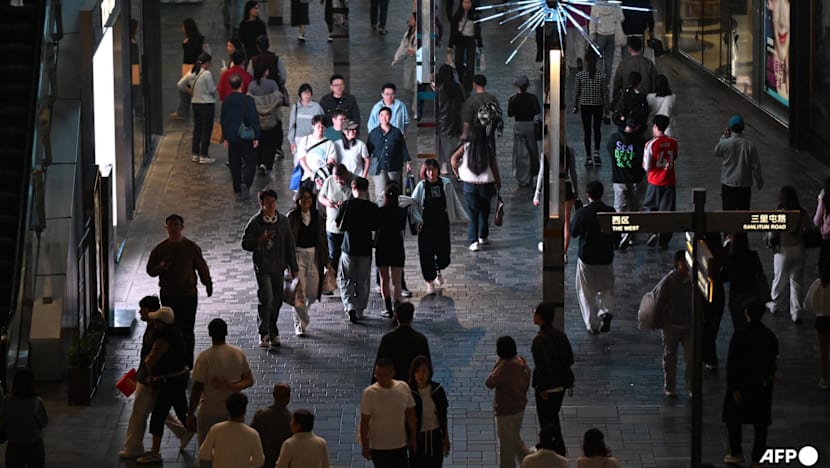
BEIJING: Chinese travellers' average spending per trip fell to a four-year low during this year's seven-day Golden Week holiday, dashing hopes that strong travel demand would spur a broader recovery in consumer spending.
Chinese consumers instead opted for more overseas travel to take advantage of a longer travel period around the holiday. That trend, along with movie ticket sales falling to their lowest in 12 years during the period, will likely raise concerns in the government, which has sought to spur domestic spending to boost the overall economy.
Average spending per domestic trip during the holiday fell 1.9 per cent to 893.92 yuan (US$133.51) from 911.04 yuan a year earlier, according to Reuters calculations based on government data published on Friday (Oct 9).
That was the lowest since 2022, when spending fell to 680.60 yuan during the most severe period of China's COVID-19 restrictions.
The National Day holiday is one of China's longest public breaks, and spending per trip is closely watched as a gauge of consumer confidence.
Consumer spending in China has remained stubbornly weak in recent years as a prolonged property downturn, sluggish wage growth and a soft job market weighed on household sentiment.
Chinese consumers have a "strong willingness to spend, but weak confidence," said Ailsa Liao, a senior analyst at Forthright Securities.
"The key constraint, in our view, is not a lack of desire to consume, but uncertainty over income and employment prospects," she said.
SHORTER HOLIDAY
The seven-day holiday beginning Oct 1 was one day shorter than last year's break. However, many travellers combined it with the Mid-Autumn Festival holiday, which fell on Sep 25 to Sep 27, creating a potential 13-day vacation that encouraged longer, more far-flung trips.
More than half of outbound overseas flight bookings made through Trip.com Group were for departures before Oct 1, with average trip lengths exceeding nine days, the online travel agency said.
Bookings for foreign hotel stays of at least seven nights rose 123 per cent from a year earlier, while multi-destination itineraries climbed 84 per cent, it added.
Outbound demand for overseas travel was markedly stronger this year, said Sienna Parulis-Cook, director of marketing and communications at Dragon Trail International.
A survey the marketing firm conducted in August found that 54 per cent of respondents planned overseas trips during the holiday period, up from 35 per cent a year earlier, although value remained a key consideration.
Only 5 per cent of respondents planned to stay in luxury hotels, while mid-range accommodation was the most popular option at 33 per cent, Parulis-Cook added.
"Consumers are willing to travel farther, but they are still spending selectively," said Forthright Securities' Liao.
Domestic hotel data also pointed to restrained spending. Average revenue per available room, a key industry measure, slipped 0.5 per cent from a year earlier over Oct1 to Oct 5, while average daily room rates fell about 2 per cent, Jefferies analysts said in a note on Wednesday, citing InnHome data.
FEWER MOVIEGOERS
The holiday cinema market showed little sign of a broader spending revival.
The National Day holiday is typically one of China's biggest box-office periods alongside the Chinese New Year. Yet revenue during this year's holiday totalled just 1.16 billion yuan, according to data from Chinese film industry analysis platform Maoyan, down 36.6 per cent from a year earlier and the lowest National Day holiday box office since 2014.
Takings in the first four days of the holiday were worse than during the COVID-19 pandemic, Citi analysts said in a note on Monday, blaming a "lack of blockbusters" and holidaymakers choosing to travel instead of going to the cinema.
Travel agencies were more optimistic about outbound overseas demand beyond the holiday period, a sign that Chinese consumers are confident to spend money in some instances.
Spring Tour, the tourism arm of Shanghai-based Spring Group, said visa application volumes in September more than doubled from a year earlier. Popular destinations included Italy, Spain, France, Australia, the United States and Canada.
The company said many travellers complete visa applications well before departure and plan to travel after major holidays to avoid peak-season crowds.
"Demand for outbound travel is expected to continue gaining momentum in the fourth quarter and through next year," the company said.
KioskNews shows a cleaned-up reading view extracted from the publisher’s page — the original always lives on their site, not ours.