Chalmers warns against sneering at Hanson backers ahead of 12 months of pain
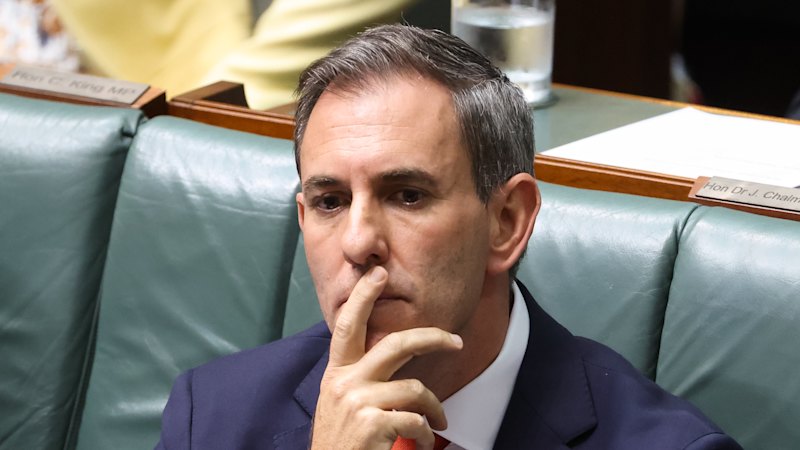
Treasurer Jim Chalmers has forecast a year of economic turmoil and warned progressives not to sneer at supporters of One Nation, drawing the battlelines with Pauline Hanson as the prime minister assures nervous Labor MPs that the government remains on track to win the next election.
Labor will introduce its 30 per cent tax on trusts on Wednesday, a key plank of its ambitious May budget, but uncertainty remains about businesses and families restructuring. The Greens are threatening to launch an inquiry into the proposal, extending scrutiny of the government’s tax agenda.
NSW Right faction Labor MPs vented in a meeting on Monday about potential blowback over impeding trusts changes from tradespeople, among others, following the backlash over the tax office credit card ban and a series of amendments watering down Labor’s budget tax reforms.
The government’s economic agenda has been set back by four interest rate hikes this year, persistent inflation, soaring petrol prices driven by the war in Iran and a collapse in consumer confidence, while Pauline Hanson’s support has surged.
“Nobody expects polls to change much any time soon – it would be more surprising if
they did. Same goes for consumer confidence,” Chalmers said, according to a copy of his speech.
“If you look at a combination of forecasts from the Reserve Bank and the Treasury, which they’ll update before long in the usual way, there is some cause for some cautious confidence.
“They don’t expect things to get a lot better in the next 12 weeks but they do expect things to get a bit better over the next 12 months … We expect the tax reforms will be bedded down and legislated by then, too.”
There had been speculation that Prime Minister Anthony Albanese would go to the polls in the back half of 2027 to take advantage of the Coalition’s collapse. But Chalmers’ admission of a year of financial stress and continued global turmoil makes it more likely that Albanese will wait until early 2028, when interest rates may have started to come down.
Albanese rejected suggestions of a midterm slump on Tuesday and tried to gee up worried Labor MPs on Tuesday. In a caucus meeting, he said Labor would be “kicking with the wind in the fourth-quarter”, the same line he used last term before defeating Peter Dutton.
“This Liberal Party has abandoned any pretense of being a centre-right party. They withdrew … from the mainstream,” the prime minister said.
“The Greens have made a factional decision to go to the fringes at the same time that the Libs, the Nats and One Nation are fighting for the right-wing fringes.”
Labor MPs returned to parliament with the latest Resolve Strategic Monitor showing Labor’s primary vote at 29 per cent, One Nation’s at 25 and the Coalition at 23, which would still deliver a victory for Labor.
Several MPs, who did not want to be identified, said caucus members discussed Labor’s economic woes in a meeting of the powerful NSW Right faction. MPs lamented yet another backflip on the ATO ban and the repeated anti-business signals being sent by the changes to the capital gains tax discount and now the trusts policy.
One MP said tradespeople were told for years to use trusts and were now being made to feel like the government was coming after them, the latest in a growing list of caucus complaints about Labor’s economic management.
In a major speech on the populist threat, Chalmers acknowledged it was a treacherous period for incumbents and told a progressive audience at The Australia Institute: “Hoping the far right goes away or implodes again is not actually a strategy.”
Criticism of One Nation’s voter base could not come from a place of “smug moral superiority”, Chalmers warned, but from a place of genuine respect for their concerns, echoing the message of South Australia’s Premier Peter Malinauskas.
“When a significant swathe of our fellow Australians find that message of returning to
an idealised version of the good old days appealing – we shouldn’t turn on them,” Chalmers said.
“Our role as progressives is not to scold those who see appeal in that message. It’s not to mock them or ‘cancel’ them or talk down to them.”
Liberal and Labor strategists believe One Nation’s support could fade over time, but Chalmers noted that the party would probably have a strong foothold in the next parliament and was being treated favourably by traditional media outlets.
Opposition Leader Angus Taylor has been calling on Chalmers to resign while One Nation’s treasury spokesman Barnaby Joyce said on Tuesday on News24 that he would defeat Chalmers.
Chalmers said Labor would continue to make economic reforms to counter social and financial anxiety that he said was “fed and fuelled, monetised, politicised and catastrophised by algorithmic rage bait”.
“Their superannuation policy would make people much poorer in retirement; their wages policy would eat away at take home pay and living standards; their unfunded commitments would blow a hole in the budget; their migration policy would smash the economy,” he said, setting up Labor’s election framing.
As part of its suite of tax changes contained in the budget, Chalmers unveiled plans to impose a minimum 30 per cent tax on discretionary trusts in a bid to align the tax rate on income earned by workers with income moved through trusts. Income funnelled out of trusts often goes to people who declare a taxable income just below changes in tax thresholds – a process called bunching.
While the trust changes will sail through the House of Representatives, they will face an inquiry in the Senate with the Greens signalling they may block the proposals if they don’t go far enough to improve the tax system.
“We won’t give Labor a free pass on legislation that falls short of that objective,” Greens’ economic justice spokesman Nick McKim said.
When originally announced, the government revealed it expected the changes to trusts to raise $4.5 billion in its first full year of operation and $40 billion over a decade.
But Chalmers has been forced into a series of changes after criticisms from accountants, small business operators and charities.
There are also concerns that trust operators will face state government stamp duties if they change their tax arrangements to comply with the new laws.
In parliament, Chalmers said the government was acting on issues around trusts that had been raised in almost every review of the tax system since the mid-1970s.
Cut through the noise of federal politics with news, views and expert analysis. Subscribers can sign up to our weekly Inside Politics newsletter.
KioskNews shows a cleaned-up reading view extracted from the publisher’s page — the original always lives on their site, not ours.