What Netflix’s Haunting Reveals About Your Darkest Fears
8 Years Ago, Netflix Took A Swing With A Horror Series That Proves Adaptations Can Change Everything

Anusha Sanyal is a writer, editor and guitarist. She believes good writing should feel clear,natural and purposeful. Her approach combines strong language, attention to detail, and an understanding of what makes content both credible and relatable.
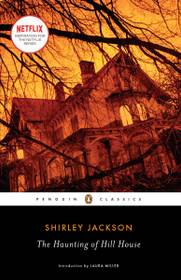
Shirley Jackson's The Haunting of Hill House isn't just one of the most acclaimed horror novels ever written, it's the blueprint that nearly every haunted house story since has borrowed from. Nearly sixty years after publication (first published in 1959), the book got a radical reinvention with Netflix's 2018 series, which kept the title and character names but built an almost entirely different story around them. Comparing the two reveals just how much psychological horror can shift shape while still terrifying audiences in exactly the same way.
Jackson's novel follows Eleanor Vance, a woman who spent years caring for her now-deceased, invalid mother and has almost no identity left of her own. Desperate for purpose, she accepts an invitation from Dr. John Montague, a paranormal researcher assembling a small team to investigate the notoriously unsettling Hill House. Joining her are Theodora, a free-spirited artist, and Luke, heir to the estate.
From its now-iconic opening line describing a house that stands "not sane," Jackson signals that Hill House isn't a haunted building in the traditional sense. It's a psychological pressure chamber. Doors seem to breathe on their own, cold spots appear without explanation, and writing turns up on the walls addressed specifically to Eleanor. She becomes convinced, with mounting certainty, that the house has singled her out.
What makes the novel so unsettling nearly seventy years later is that Jackson never confirms whether any of it is truly supernatural. Every eerie event can be read two ways: as a genuine haunting, or as the slow unraveling of a deeply lonely, fragile mind. That ambiguity, sustained right up to the novel's tragic final pages, is why writers from Stephen King to Neil Gaiman still cite Jackson's book as foundational to the genre. It proved that the scariest hauntings are often the ones that refuse to explain themselves.
Netflix Reinvented The Entire Concept - And Made It Work
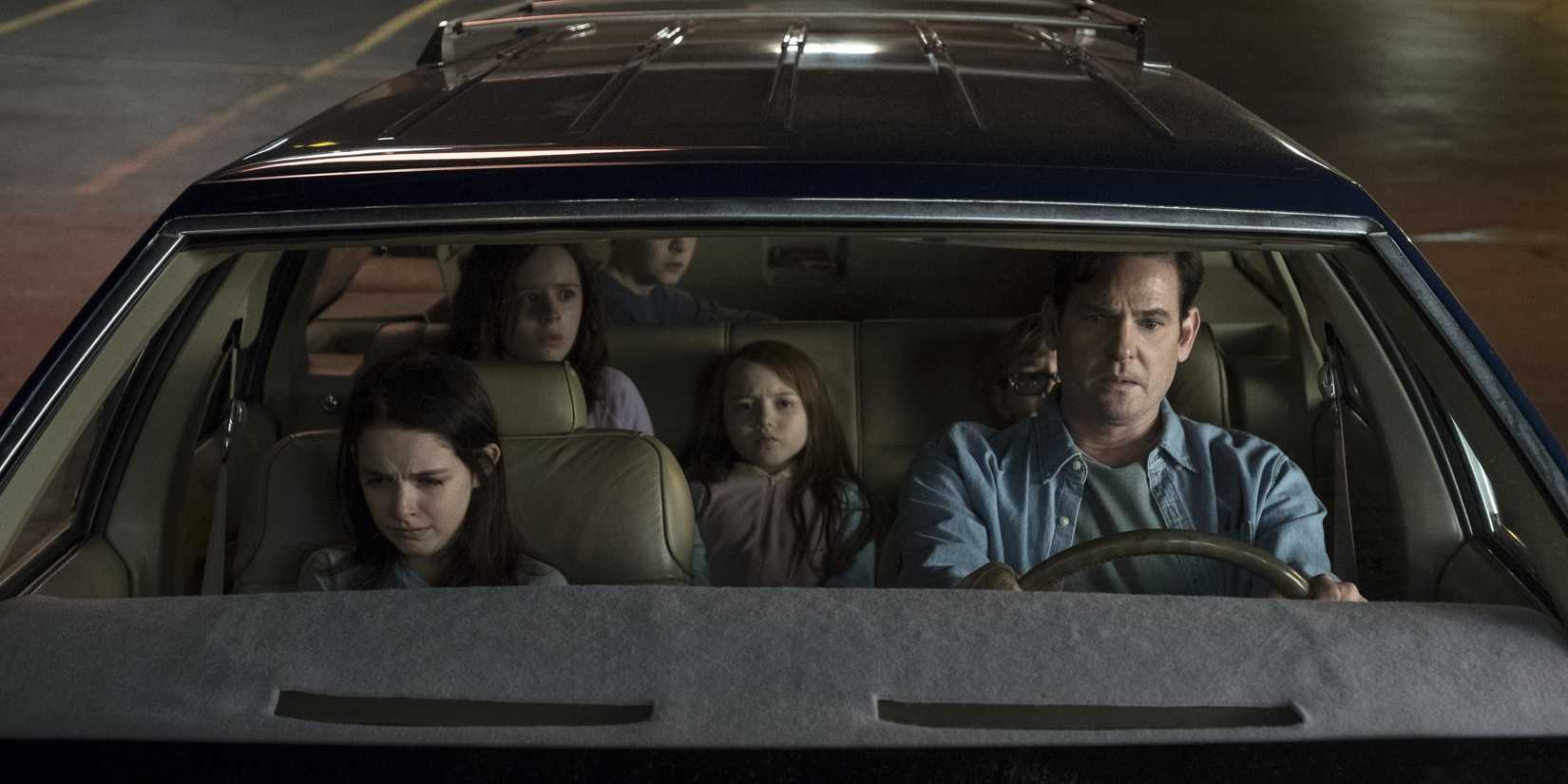
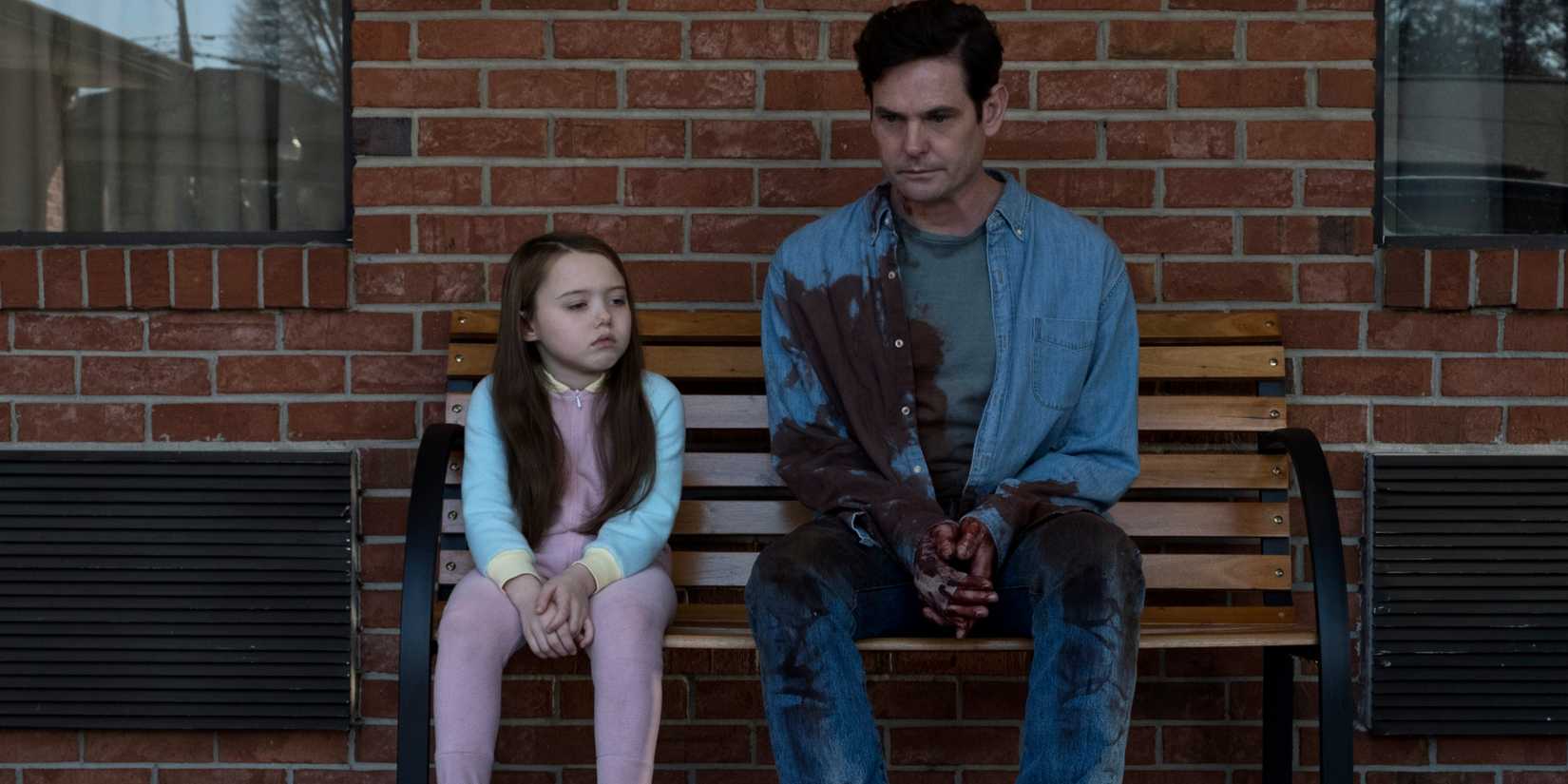
Mike Flanagan's 2018 adaptation takes Jackson's character names and almost nothing else. Instead of Eleanor's solo psychological collapse, the show centers on the Crain family, parents Hugh and Olivia, and their five children, Steven, Shirley, Theodora, and twins Luke and Nell. The Crains lived in Hill House decades earlier while renovating it for resale, until a traumatic event drove them out overnight and left Olivia dead. The series cuts between the children's terrifying childhood in the house and their broken adult lives, using Hill House less as a mystery to solve and more as an old family wound that keeps reopening.
This restructuring allows Flanagan to explore something Jackson's novel never attempts, trauma rippling outward across an entire family rather than collapsing inside a single mind. Theo's inability to let anyone touch or get emotionally close to her, Luke's heroin addiction, Shirley's controlling perfectionism as a funeral director, and Steven's rationalist skepticism are all framed as different coping mechanisms stemming from the same shared horror. Nell, the series' clearest echo of Eleanor, becomes its emotional center, and her arc produces some of the most devastating television horror has ever delivered.
The show also became a technical phenomenon in its own right. Episode six features a six-episode-spanning unbroken take that weaves a funeral and a flashback together in real time, a feat rarely attempted on television. It further built a cult following for hiding ghostly figures in the background of countless shots, often invisible on a first watch, turning the series into something fans rewatched specifically to hunt for scares they'd missed.
Two Houses, One Enduring Idea
Despite sharing almost no plot, the novel and the series are united by the same core philosophy: a haunted house works best as a mirror for psychological pain rather than a machine built for jump scares. Jackson used Hill House to dramatize one woman's loneliness and dissolving sense of self. Flanagan used it to dramatize how grief and trauma echo through an entire family for decades. Neither version of The Haunting Of Hill House diminishes the other. If anything, the Netflix series' willingness to depart so drastically from its source material only proves how much room Jackson's original premise still has, a house that becomes whatever kind of nightmare its inhabitants most need to confront.
-
The Haunting of Hill House
-

The Haunting of Hill House

10/10
- Release Date
- 2018 - 2018
- Network
- Netflix
-

Michiel Huisman
Steven Crain
-

Elizabeth Reaser
Shirley Crain
Loosely based on Shirley Jackson's novel of the same name, The Haunting of Hill House follows the Crain family's experience in their beautiful (and deadly) home. With a story told using two timelines simultaneously, The Haunting of Hill House chronicles both the haunting itself, and the lasting effect it had on the Crain children as they struggle through adulthood decades later.

KioskNews shows a cleaned-up reading view extracted from the publisher’s page — the original always lives on their site, not ours.