Top 20 UPSC Current Affairs Pointers of the past week | October 12 to 18, 2026
Every Monday, we bring you UPSC Current Affairs Pointers—a concise, exam-focused guide to help you stay ahead in your Prelims and Mains preparation.
— Celebrated internationally on October 16, World food day is recognised by the UN to commemorate the date of the founding of the United Nations Food and Agriculture Organization in 1945.
— The World Food Day was celebrated this year under the banner of “Innovate Today. Nourish Tomorrow.” with events marking the occasion held in more than 50 languages in more than 150 countries around the world.
Story continues below this ad
Polity
• Jantar Mantar de-notified as protest site
— The Delhi Police on October 12 de-notified Jantar Mantar as a designated protest site, naming Ramlila Maidan and Burari Ground in north Delhi and CBD Ground in east Delhi as alternatives.
— According to the notification, the decision follows a recommendation by a committee constituted by the Ministry of Home Affairs (MHA).
— Unlike other states, Delhi’s police and public order fall outside the legislative powers of the Delhi Assembly. Under Article 239AA(3)(a) of the Constitution, the Legislative Assembly has the power to make laws for NCT Delhi “except matters with respect to Entries 1, 2 and 18 of the State List,” which cover public order, police and land.
— The Delhi police thus function under the MHA. The police regulate individual demonstrations, including applications for permission and compliance with conditions governing designated sites.
• Internet access fundamental right
— In a significant order, the Supreme Court has said that the right to access and use the Internet is a fundamental right of every individual under Article 21 read with Article 19(1)(a) of the Constitution.
— The ruling pointed out that in its January 10, 2020, judgment in Anuradha Bhasin vs Union of India, the Court “held that the freedom of speech and expression and the freedom to carry on any trade or business through the medium of the Internet is constitutionally protected as a fundamental right under Article 19(1)(a) and 19(1)(g) of the Constitution”.
— While the judgment “refrained from expressing any view on whether the right to access the Internet is, by itself, a fundamental right and left the question of law open for future discourse”, the Court said, “yet, this issue is no longer res-integra (untouched)”.
— Justices Pardiwala and Chandran pointed to the April 2025 decision in Pragya Prasun & Ors. v. Union of India, where the Supreme Court held that the “right to digital access is an intrinsic component of the right to life under Article 21 of the Constitution, and that it is the obligation of the State to proactively design and implement inclusive digital ecosystems that serve not only the privileged but also the marginalised”.
Story continues below this ad
• Overseas Citizen of India
— Actor Imran Khan, a US citizen and Overseas Citizen of India (OCI) cardholder, has been asked by the Foreigners Regional Registration Office (FRRO) to leave India by October 28, days after he joined a protest in Mumbai demanding the resignation of Chief Election Commissioner Gyanesh Kumar.
— The OCI scheme was introduced in 2005 for certain categories of foreign nationals of Indian origin. India does not permit dual citizenship, and an OCI remains a foreign national holding the passport of another country.
— The status nevertheless gives privileges unavailable to ordinary foreign nationals, most importantly a multiple-entry lifelong visa and exemption from registration with the FRRO irrespective of the duration of stay.
— OCI cardholders also receive parity with Indian citizens or NRIs in certain areas, including some property, educational and professional rights.
Story continues below this ad
— But there are restrictions. A March 2021 government notification requires OCI cardholders to obtain special permission before undertaking research; missionary or Tabligh work; mountaineering; journalistic activity; certain employment or internships in foreign diplomatic establishments; or entering protected, restricted or prohibited areas.
— OCIs also do not possess the political rights of Indian citizens. Under Section 7B of the Citizenship Act, they cannot vote or contest elections, and Article 19 rights — including the constitutional guarantees of freedom of speech and peaceful assembly — are guaranteed specifically to citizens.
• National Social Assistance Programme
— On 14 October, the Union Cabinet approved the proposal of the Department of Rural Development for Continuation of the National Social Assistance Programme (NSAP) for five years from 2026-27 to 2030-31.
— The renaming of the scheme & sub-schemes was also approved. Eligibility criteria, coverage and rate of assistance for divyangjan pension was also revised.
Story continues below this ad
| Existing Name | Approved name |
| National Social Assistance Programme (NSAP) | Pradhan Mantri Samajik Sahayata Yojana |
| Indira Gandhi National Old Age Pension Scheme (IGNOAPS) | Pradhan Mantri Vridhavastha Pension Yojana |
| Indira Gandhi National Widow Pension Scheme (IGNWPS) | Pradhan Mantri Vidhawa Pension Yojana |
| Indira Gandhi National Disability Pension Scheme (IGNDPS) | Pradhan Mantri Divyangjan Pension Yojana |
| National Family Benefit scheme | Pradhan Mantri Parivar Labh Yojana |
Economy
• Additional Tier-1 (AT-1) bond
— The Supreme Court upheld the quashing of Yes Bank’s Rs 8,415-crore Additional Tier-1 (AT-1) bond write-off. Following the ruling, the lender’s shares plunged 14.43% to Rs 18.15 on the stock exchanges. The bank said it was examining the judgment and its implications before making any further disclosures, as required.
— AT-1 bonds are unsecured perpetual instruments issued by banks to strengthen their capital base. They have no maturity date and carry higher risks than traditional bonds. They rank below other debt but above common equity.
• Generalisation of inflation
— Household inflation jumped to 5.54% in September from 4.83% in August, data released on October 12 showed. And one phrase is now on everyone’s lips: price pressures are generalising, or spreading. This is important, as the Reserve Bank of India (RBI) last week admitted that there is “some evidence of elevated inflation expectations and generalisation of inflation”.
— The generalisation of inflation is the process when higher prices start to spread across the household consumption basket in a sustained manner. This requires the price rise to span different categories of items and move from ones that are most susceptible to price increases – such as food and fuel – to others, like consumer goods and services.
Science and Technology
• Additional sweeteners
— The Food Safety and Standards Authority of India (FSSAI), the country’s apex food regulator, has proposed banning the addition of sweeteners such as sucrose and fructose in infant formula meant for babies up to six months old in a bid to promote healthier nutrition for children.
— Currently, the Food Safety and Standards (Foods for Infant Nutrition) Regulations of 2019 allow lactose and glucose polymers as carbohydrate sources in baby foods, provided they do not exceed 20 per cent of the total carbohydrates.
Story continues below this ad
— The proposed amendment adds another condition: sweeteners such as sucrose and fructose will “not be added in the products intended for infants up to the age of 6 months,” according to a recent draft notification.
— Added sugars are essentially sweetening agents such as syrups added to processed foods and beverages. They are considered to be more harmful than natural sugars that are usually found in foods such as fruits and milk.
— The World Health Organization advises against the introduction of added sugars before the age of two years. This is essentially meant to prevent addictive habits of consuming excessive sugars that can lead to chronic diseases such as obesity, Type 2 diabetes, heart disease, and even cancers later in life.
• Caller Name Presentation
— Starting November 1, telecom operators like Airtel, Jio, and Vodafone Idea will have to make caller name identification mandatory for mobile users, according to a circular issued by the Department of Telecommunications (DoT).
— Essentially, when a user receives a phone call, the caller’s name will also be visible. Technically called Caller Name Presentation (CNAP), the move is being seen as a push towards helping users get a clearer idea before responding, and comes amid widespread instances of online fraud, such as digital arrests.
— The service would only be available to users at least on a 4G network, as the department said the rollout for 2G and 3G networks, as well as landline connections, will be considered separately.
— The telecom operator on whose network the call is originating will provide the calling name presentation service, without requiring any separate request from a user.
— The call identification will have two fields: the first field shall contain the telecommunication identifier assigned to the calling user by the originating telco (read: phone number), as per existing practice, and the second field shall contain the name of the calling user.
— Keeping in view users’ privacy, the DoT has asked telcos to follow a “security-by-design approach,” by not allowing for retention of calling name identity after a call is completed. Subscribers who have enabled Calling Line Identification Restriction (CLIR) will also be exempt from the system. Their names will not be listed in CNAP.
• Dark patterns
— The furore over Merchant Discount Rate (MDR) on UPI transactions has brought back into focus other charges that run counter to the idea of catalysing India’s digital push. These include platform fees and convenience charges, which have become an industry-wide practice across online services spanning food and grocery delivery, e-commerce, entertainment and travel.
— Compounding this are so-called ‘dark patterns’ used by online platforms, which can further obfuscate the real price a consumer has to pay, including by revealing charges late in the checkout process or adding services without explicit consent.
— Dark patterns on e-commerce are deceptive user-interface designs that trick shoppers into making unintended purchases or sharing data.
— Basket sneaking is a deceptive design tactic where an e-commerce platform automatically adds an extra product or service to users’ shopping carts without their explicit consent, usually through pre-checked boxes, hidden line items, or forced bundles during the checkout process.
— Drip pricing is a deceptive sales tactic where companies advertise only a low initial ‘headline price’ and then reveal mandatory fees, taxes, or service charges incrementally (‘dripping’ them) as the customer moves through the checkout process.
Defence
• Exercise KONKAN-26
— The India-UK bilateral maritime exercise, KONKAN-26, was conducted from 08-15 October 2026 at Plymouth, UK. The exercise enabled the Indian Navy and the Royal Navy to engage across a wide range of professional and operational domains.
— The Indian Navy was represented by the stealth frigate INS Trishul, while the Royal Navy deployed HMS Sutherland, a Duke-class anti-submarine warfare frigate. The exercise was conducted by Fleet Operational Standards and Training (FOST), Royal Navy.
— Notably, Exercise Ajeya Warrior is a joint military exercise between India and the United Kingdom. It is a biennial joint army exercise conducted alternately in India and the UK.
— Exercise Indradhanush is a bilateral air exercise between the Indian Air Force (IAF) and the UK’s Royal Air Force (RAF), focusing on joint training and operational cooperation.
• INS Mangrol
— INS Mangrol, the third vessel in the Mahe-class Anti-Submarine Warfare Shallow Water Craft (ASW-SWC) series, was commissioned at the Naval Dockyard in Mumbai on October 12, strengthening the Indian Navy’s ability to detect and counter enemy submarines in shallow coastal waters.
— Designed to operate in shallow and confined waters where larger warships may face limitations, the indigenously built vessel will help protect ports, harbours, and coastal approaches against underwater threats.
 Beyond anti-submarine warfare, INS Mangrol can conduct underwater surveillance, low-intensity maritime operations, and mine warfare tasks. (Express Photo)
— Built by Cochin Shipyard Limited (CSL), Kochi, INS Mangrol is equipped with advanced sonar, lightweight torpedoes and other anti-submarine systems that enable it to detect, track, and counter hostile submarines. With more than 80 per cent indigenous content, the vessel also reflects the Navy’s push to strengthen domestic capabilities in warship construction and defence technology.
— Powered by three diesel engines and fitted with waterjet propulsion, the ship has high manoeuvrability, making it suitable for operations in shallow and confined waters. Beyond anti-submarine warfare, it can conduct underwater surveillance, low-intensity maritime operations, and mine warfare tasks.
— INS Mangrol is named after the coastal town and prominent fishing harbour of Mangrol in Gujarat’s Junagadh district, reflecting the region’s rich maritime heritage. The ship carries forward the legacy of the erstwhile INS Mangrol (M85), a minesweeper that served the Indian Navy from 1983 to 2004.
— The induction of the Mahe-class vessels is part of the Navy’s efforts to bolster its coastal anti-submarine warfare capabilities and replace the ageing Abhay-class corvettes, which entered service between 1989 and 1991.
• INS Samarthak
— INS Samarthak, the Indian Navy’s first indigenous Multi-Purpose Vessel, was commissioned at Karwar, Karnataka on 16 October.
— With more than 75 per cent indigenous content, INS Samarthak reflects the growing strength of India’s industrial, technological and shipbuilding capabilities.
— INS Samarthak will serve as a versatile platform for trials and evaluation of next-generation weapons, sensors and emerging technologies. Its capabilities will also support maritime surveillance and reconnaissance, offshore patrolling, launch and recovery of targets, operations involving unmanned systems, and humanitarian assistance and disaster relief.
Health
• Adenocarcinoma
— Pope Leo XIV, 71, diagnosed with lung adenocarcinoma, a type of lung cancer, has undergone “successful surgery to remove the lower lobe of his right lung“, the Vatican stated.
— Adenocarcinoma is a type of non-small cell lung cancer that develops in cells lining the airways or producing mucus.
— It is one of the common forms of lung cancer. The seriousness of the diagnosis depends on factors such as the tumour’s size, its location, whether it has spread to nearby lymph nodes or other organs, and the characteristics of the cancer cells.
Environment
• India’s New Ramsar Sites
— India’s Ramsar site tally has reached 103, with the designation of Sukhna Wetland in Chandigarh and Sauj Jheel in Uttar Pradesh as the latest additions to the list.
— Located at the edge of Chandigarh at the foothills of the Outer Himalayas, and spread over nearly 565 acres, Sukhna wetland is a a peri-urban reservoir. It supports a range of habitats, including open water, shoreline vegetation, scrub and forest, making it an important refuge for wildlife amid the urban landscape.
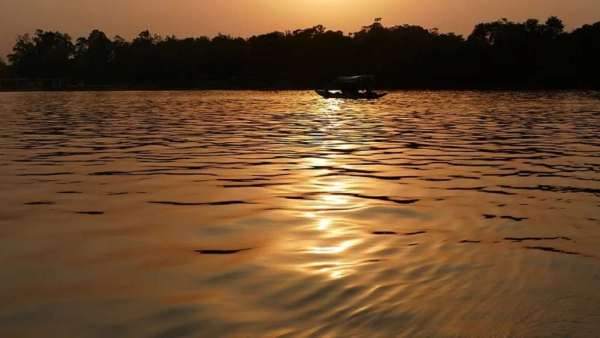 Sukhna Lake has been assigned Site Number 2602 on the Ramsar List. (Source: Wikimedia Commons)
— It is also a vital life support system and biodiversity hotspot that provides critical habitat for thousands of migratory birds navigating the Central Asian Flyway each year.
— Sauj Jheel in the state of Uttar Pradesh is a shallow lake surrounded by farmland in the floodplain of the Ganga River. It forms part of a larger network of wetlands, contributing to ecological connectivity in the wider landscape, and is close to Saman Bird Sanctuary.
— The Site is particularly important for waterbirds, regularly supporting more than 30,000 individuals, and has been designated as an Important Bird and Biodiversity Area (IBA) by Birdlife International.
— Notably, the Ramsar Convention, an intergovernmental treaty adopted in 1971 in the Iranian city of Ramsar, provides a framework for the conservation and wise use of wetlands. India became a party to the convention on February 1, 1982.
• Gorkha flash flood
— A sudden surge of water, mud, boulders and debris swept through settlements along Nepal’s Budhi Gandaki river in Gorkha district early on October 11, causing damage to infrastructure.
— The immediate trigger appears to have involved a sudden release of water and debris, but the precise mechanism has not been conclusively established.
— The fresh Nepal incident has renewed concerns about sudden floods across the Himalaya, where retreating glaciers, unstable mountain slopes and large quantities of loose sediment can combine to produce destructive flows.
• Nagoya Protocol on Access and Benefit Sharing
— Recently, the National Biodiversity Authority disbursed Rs 1.19 crore under the Access and Benefit Sharing mechanism to 29 State Biodiversity Boards and one Union Territory Biodiversity Council to support biodiversity conservation and sustainable use of biological resources.
— The Nagoya Protocol on Access and Benefit Sharing deals with the commercial utilisation of biological and genetic resources, for example, by pharma companies. It asks the host countries to provide access to its genetic resources in a legal, fair and non-arbitrary manner and offers them a fair and equitable share of benefits arising out of the utilisation of those resources.
— It lays down the general principles of the rights and claims of countries on their bio-resources and rules for their commercial utilisation.
— Under this mechanism, biodiversity-rich countries needed to provide access to their biological resources to those wanting to use them for research or commercial reasons, and the user agencies, in turn, were mandated to share the benefits of their use with the local communities. This access and benefit-sharing works at both the domestic and the international levels.
— Notably, India has submitted the First National Report (NR1) on the implementation of the Nagoya Protocol on access and benefit sharing on 27th February 2026. It is in accordance with Article 29 of the Protocol on Monitoring and Reporting.
• Kigali Amendment
— The Kigali Amendment to the Montreal Protocol turns 10. It agreed to phase down hydrofluorocarbons, or HFCs, which had become common refrigerants after countries moved away from chemicals, like chlorofluorocarbons (CFCs), that destroyed the ozone layer. The amendment is expected to prevent up to 0.5°C of warming by 2100.
— The Montreal Protocol was agreed in 1987 to phase out CFCs and other chemicals that damage the ozone layer. This layer shields the Earth from harmful ultraviolet radiation. Countries have since eliminated nearly 99% of the controlled ozone-depleting substances, and the layer is recovering.
— Hydrofluorocarbons, or HFCs, became common substitutes in refrigeration and air-conditioning because they do not deplete ozone. These chemicals act as refrigerants, carrying heat out of the space being cooled. If they escape, many have hundreds or thousands of times the warming impact of carbon dioxide over a century, weight for weight.
— As the use of HFCs grew, the Federated States of Micronesia and Mauritius proposed bringing them under the Protocol in 2009.
— Governments adopted the amendment in Kigali, Rwanda, on October 15, 2016; it entered into force in January 2019. It sets binding schedules for reducing HFC production and consumption, with developing countries given longer to comply. Limited use can continue after the reductions, which is why the agreement calls for a “phase-down”.
— Kigali has yet to achieve universal participation: 175 parties had joined by early October. Notably, India ratified the amendment in 2021 and must freeze HFC production and consumption in 2028. This caps them at an agreed baseline. The first cut, of 10% below that baseline, is due in 2032; reductions reach 85% in 2047.
• Gomarda Wildlife Sanctuary
— Over 50 years after it lost its last blackbuck, the Gomarda Wildlife Sanctuary in Chhattisgarh is all set to welcome new arrivals from the species.
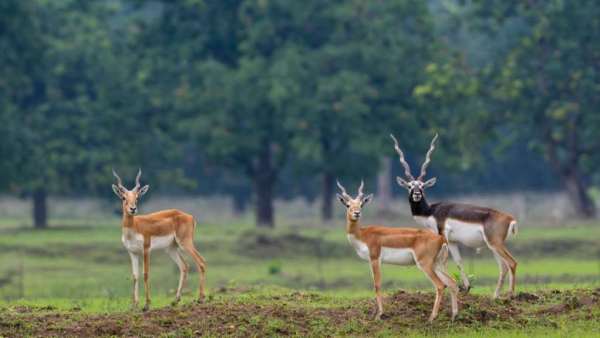 As many as 50 blackbucks will be translocated to the sanctuary in Sarangarh-Bilaigarh district, with the process taking place gradually over the next week. (Image source: Forest Department)
— These antelopes will be brought from Barnawapara Wildlife Sanctuary in the state where the translocation process over the last few years has proven to be a success.
— Due to various factors such as hunting, poaching, encroachment and development work, the population of blackbucks started depleting in the region that makes the present-day Chhattisgarh, a senior official said. By the 1970s, they vanished completely and remained locally extinct for over 50 years, the official added.
Awards
• Sveriges Riksbank Prize in Economic Sciences
— The Royal Swedish Academy of Sciences has awarded the Sveriges Riksbank Prize in Economic Sciences in Memory of Alfred Nobel 2026 — commonly called the Economics Nobel — to two American economists: Robert E Hall of Stanford University and Michael Woodford of Columbia University. They will share the prize money of 12 million Swedish kronor (approximately Rs 12 crore) equally.
 (Image: X/NobelPrize)
— The official citation states they have received the award “for microeconomic foundations of macroeconomic stabilisation”. Macroeconomic stabilisation refers to policies that governments and central banks use to “stabilise” an economy.
Test Your Knowledge
(Note: The best way to remember facts for UPSC and other competitive exams is to recall them through MCQs. Try to solve the following questions on your own.)
(1) Which of the following statements is/are correct about the INS Mangrol?
1. It has Anti-Submarine Warfare (ASW) capabilities.
2. INS Mangrol is the third of the eight indigenously designed and built Mahe-class vessels.
3. INS Mangrol is named after the coastal town in Gujarat.
Select the correct answer using the codes given below:
(a) 2 only
(b) 2 and 3 only
(c) 1 only
(d) 1, 2 and 3
(2) Recently, the Royal Swedish Academy of Sciences has awarded the Sveriges Riksbank Prize in Economic Sciences to two American economists: Robert E Hall and Michael Woodford for:
(a) having identified the prerequisites for sustained growth through technological progress
(b) studies of how institutions are formed and affect prosperity
(c) having advanced our understanding of women’s labour market outcomes
(d) microeconomic foundations of macroeconomic stabilisation
Answer Key
1. (d) 2. (d)
For your suggestions and feedback, write to Roshni.Yadav@indianexpress.com
Click here to read the UPSC Essentials magazine for September 2026. Subscribe to our UPSC newsletter. Stay updated with the latest UPSC articles by joining our Telegram channel – Indian Express UPSC Hub, and follow us on Instagram and X.
KioskNews shows a cleaned-up reading view extracted from the publisher’s page — the original always lives on their site, not ours.