SC shields Mann government from ED, CBI's coercive actions in graft case but probe to continue
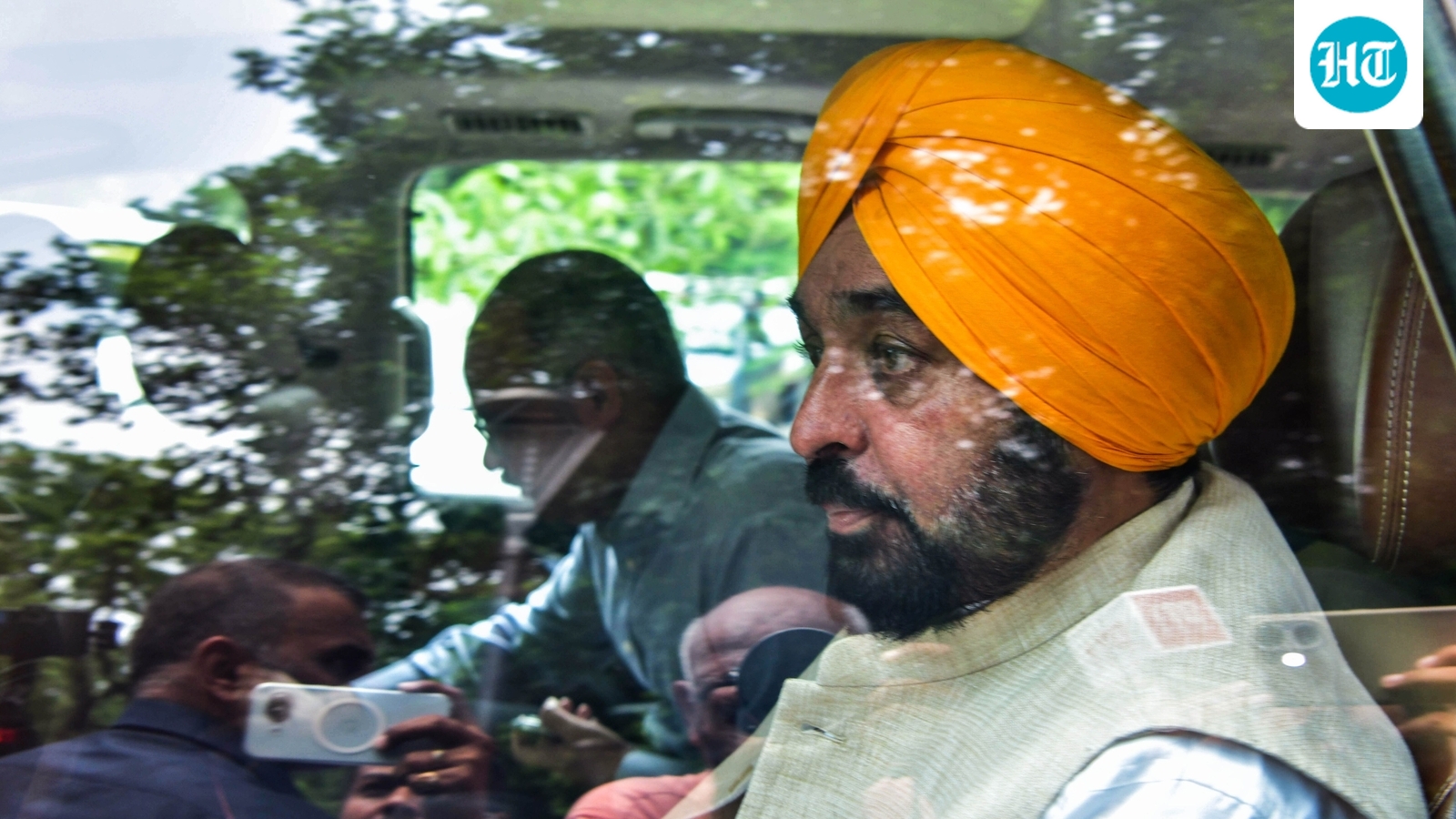
The Supreme Court on Monday restrained the Central Bureau of Investigation (CBI) and the Enforcement Directorate (ED) from taking any coercive steps, including arrests, in connection with their ongoing probe into alleged corruption linked to Punjab chief minister Bhagwant Mann’s office, while making it clear that the investigation itself would not be halted.
A bench of Justices MM Sundresh and PB Varale issued notices to the two central agencies and advocate Nikhil Saraf, whose petition before the Punjab and Haryana High Court led to the CBI being directed to register a criminal case into the allegations. The court ordered that no coercive steps be taken until the next hearing.
The interim protection came on a plea by the Punjab government challenging the high court’s October 5 order directing the CBI to register a first information report (FIR) and investigate allegations of corruption involving the chief minister’s office. The state government argued that the high court ordered a CBI probe without sufficient material to establish a cognisable offence and raised concerns over the federal structure.
Also Read | 'Don't drag Supreme Court into politics': CJI Surya Kant amid Delhi protests row
“This is coming up before the court for the first time,” senior advocates Vikas Singh and Sidharth Luthra, appearing for the state government, told the bench. “We will issue notice but will not stay the investigation. We will, however, stay any coercive action,” replied the bench.
Senior advocate DS Naidu, appearing for Saraf, also sought protection for his client, alleging that the state government was harassing him for acting as a whistleblower and attempting to demolish his property.
The bench issued notice and directed: “No coercive steps be taken till the next date of hearing.”
Also Read | 'Tell us in 24 hours or we will': CJP's ultimatum over Jantar Mantar protest amid access restrictions
The order marks an interim reprieve for the Mann government as it contests the high court’s decision, even as the Supreme Court has allowed the central agency’s investigation to proceed.
The matter had earlier run into a judicial recusal. On October 9, Justice Sheel Nagu withdrew from hearing the state government’s challenge after the issue of his previous judicial dealings with some of the petitioners was raised. Justice Dipankar Datta, who was sitting with him, observed that these were “very difficult times” and that one did not know “where the attack will come from” if a judge did not recuse himself in such circumstances. The matter was subsequently listed before the present bench.
The high court’s October 5 order followed communications sent by the ED to Punjab director-general of police Gaurav Yadav between July 24 and August 12, flagging alleged corruption involving Rajbir Singh Ghuman, an officer on special duty to Mann, and others. Acting on a public interest litigation alleging that the state police had failed to act on the information provided by the ED, the high court held that the material prima facie indicated the involvement of senior public officials. It directed the CBI to register an FIR and submit an investigation report within two months.
The CBI subsequently registered a 251-page FIR naming Ghuman and five others, alleging that they operated a network to manipulate government postings, administrative decisions, tenders, licences and other official processes in return for bribes. The agency conducted searches at eight locations across Punjab.
The case has acquired political significance with Punjab’s assembly elections due early next year. The Aam Aadmi Party (AAP) government has accused the BJP-led Centre of using central agencies to target political opponents, while the proceedings before the Supreme Court will determine the legal validity of the high court’s direction for a CBI investigation.
KioskNews shows a cleaned-up reading view extracted from the publisher’s page — the original always lives on their site, not ours.