1Sambayan threatens suit if Marcos gov’t fails to return P107B to PDIC
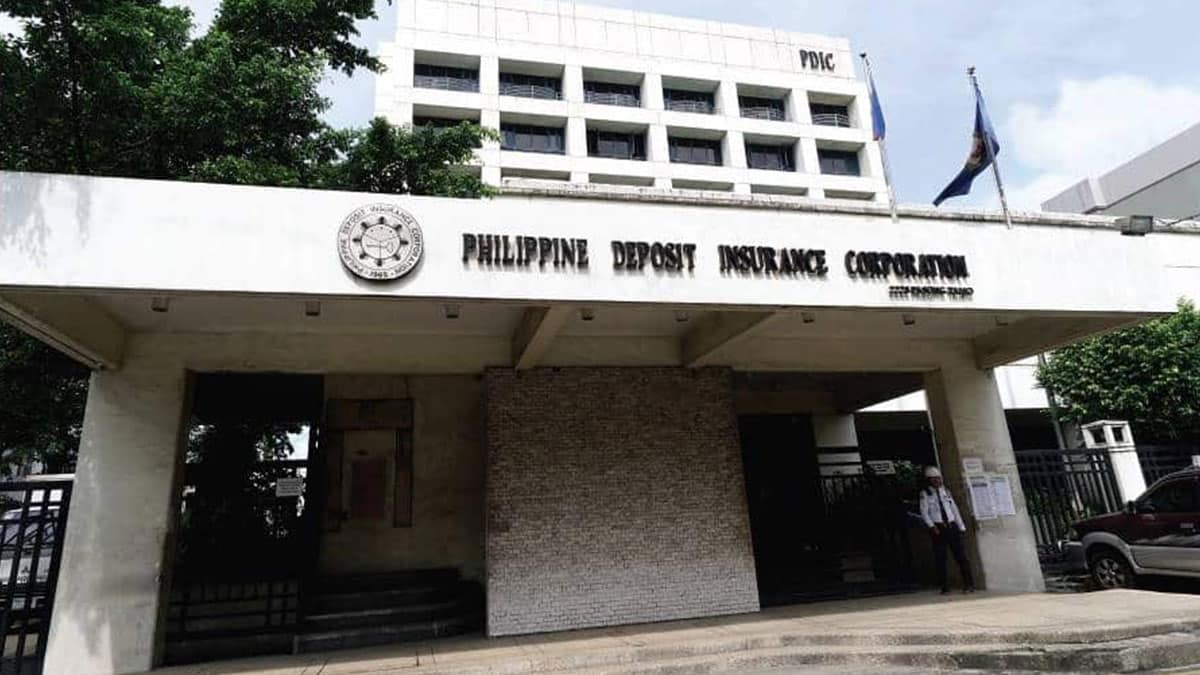

MANILA, Philippines — Political coalition 1Sambayan has threatened to file a new petition before the Supreme Court if the Marcos administration fails to secure definite funding to return P107 billion to the Philippine Deposit Insurance Corp. (PDIC).
The government remitted the funds to the national treasury under a special provision in the 2024 national budget law that the SC has since struck down.
Under the 2027 National Expenditure Program (NEP), P57 billion has been allocated under unprogrammed appropriations (UA) specifically for the “Restoration of the Fund Balances of the PDIC.” The amount represents 53.2 percent of the P107.23 billion that the PDIC remitted to the national treasury in January 2025 as “unrestricted retained earnings.”
Article continues after this advertisement
1Sambayan convenor and former Finance Undersecretary Cielo Magno said, however, that the PDIC funds should be included in the programmed appropriations, which have definite funding, rather than under UA.
FEATURED STORIES
NEWSINFO
NEWSINFO
NEWSINFO
“We, the coalition led by retired Supreme Court Senior Associate Justice Antonio Carpio, are preparing to go to court if the administration will not put the restoration of PDIC funds under the programmed part of the national budget,” Magno told the Inquirer.
“We are already accommodating the government’s plan to return the PDIC funds in two tranches. But they should respect the commitment and place it under the portion of the budget that has actual funding,” she added.
According to Magno, putting the P57 billion in PDIC funds under UA would mean that the return of the funds to the state firm remains uncertain, even if the Marcos administration has already decided that it is a priority.
UA are standby spending authorities that are not automatically released. Funding for programs and projects under UA may be released only when specified conditions are met, such as the availability of excess or new revenue collections or loans.
Article continues after this advertisement
READ: PDIC weighing options to get P107B back from treasury
Magno said that if the government does not accede to their demand, they will again ask the Supreme Court to intervene, similar to how it ordered the government to return the P60 billion that the Philippine Health Insurance Corp. (PhilHealth) remitted to the national treasury in several tranches in 2024.
Article continues after this advertisement
Confident of a funding source
Asked for comment, Executive Secretary Ralph Recto told the Inquirer on Sunday that the Marcos administration is “confident that we can fund the P57 billion” under UA for the 2027 General Appropriations Act (GAA).
However, Recto said the government still has to determine the revenue sources for the second tranche of P50 billion. He also did not confirm whether the remaining balance would be placed under programmed appropriations or UA in the proposed 2028 national budget.
In December 2025, the SC declared void Special Provision 1(d), Chapter XLIII of the 2024 GAA and Department of Finance (DOF) Circular No. 003-2024 for having been issued and implemented with grave abuse of discretion amounting to lack or excess of jurisdiction.
The special provision authorized the return of the fund balances or excess reserve funds of government-owned or -controlled corporations (GOCCs), particularly PDIC and PhilHealth, to fund UA under the 2024 GAA.
PhilHealth, which transferred P60 billion of its unused subsidies to the national treasury, was able to retrieve its remittance in May, following the SC ruling and President Marcos’ order in September last year.
In January this year, however, Recto, who issued the DOF circular when he was the agency’s head, and Finance Secretary Frederick Go were not keen on returning the PDIC funds despite the SC ruling.
They argued that the SC order concerned only the return of PhilHealth’s remitted funds, not those of PDIC.
The first tranche to replenish PDIC’s fund accounts for more than half of the P111.98 billion in UA in the 2027 NEP.
READ: Marcos seeks ‘historic low’ P120-B unprogrammed funds for 2027
According to the Department of Budget and Management (DBM), it kept the controversial appropriations at a “historic low” in the 2027 NEP upon orders of President Marcos.
Budget Secretary Kim Robert de Leon said that at P119.98 billion, the proposed UA for next year is “the lowest amount nominally of the UAs since 2019, and only accounts for 1.5 percent of the total expenditure program — the lowest ratio since 1991.”
The proposed UA for 2027 was even smaller than the P150.9 billion allocation for UA under the 2026 GAA, after President Marcos vetoed P92.5 billion, or more than one-third of the P243.4 billion of UA approved by Congress in its enrolled version of the spending bill.
Aside from the P57 billion for PDIC, the other items under UA for 2027 are the following: Program on Risk Management for payment of contingent liabilities arising from Public-Private Partnerships (PPPs) at P3.6 billion; Conversion of National Government Advances into Subsidy for GOCCs at P8.831 billion; and Support to Foreign-Assisted Projects at P42.55 billion.
The DBM said the move to cut UA for next year “marks a significant move toward more programmed, predictable, and transparent government spending.”
Magno said the Marcos administration should have waited for the SC’s ruling on the consolidated petitions challenging the constitutionality of UA before introducing another list of UA items in the 2027 NEP.
The petitioners argued that UAs allow Congress to circumvent the constitutional limit that bars lawmakers from increasing appropriations beyond the President’s proposed budget.
Budget watchdogs consider UAs as “shadow” pork funds because they sit outside the regular budget framework and can be released with minimal transparency. They have called UA unconstitutional and said it should be eliminated from the GAA.
Fiscal discipline
De Leon, in his November 2025 working paper as a professor at the University of the Philippines–National College of Public Administration and Governance (UP-NCPAG), wrote that the national government can operate even without any provision for UA.
“Removing the UA will promote fiscal discipline both in the executive and legislative branches of government,” he said.
De Leon recommended that any funding requirement that cannot be funded by the GAA should be submitted by the Executive to Congress in the form of a supplemental appropriation bill.
“This will make both the funding source and the proposed items of expenditures more transparent, not only to Congress but to the Filipino people,” he added.
UA allocations surged in 2023, the first national budget approved under Marcos, reaching P807.16 billion, more than triple the P251.64 billion allocated in 2022.
Your subscription could not be saved. Please try again.
Your subscription has been successful.
The amount fell to P731.4 billion in 2024 and P531.7 billion in 2025. It dropped further to about P150.9 billion this year after strong opposition from civil society groups. /mcm /atm
KioskNews shows a cleaned-up reading view extracted from the publisher’s page — the original always lives on their site, not ours.