Good to see you after all this time. Chinese scientists put a face to the Denisovans
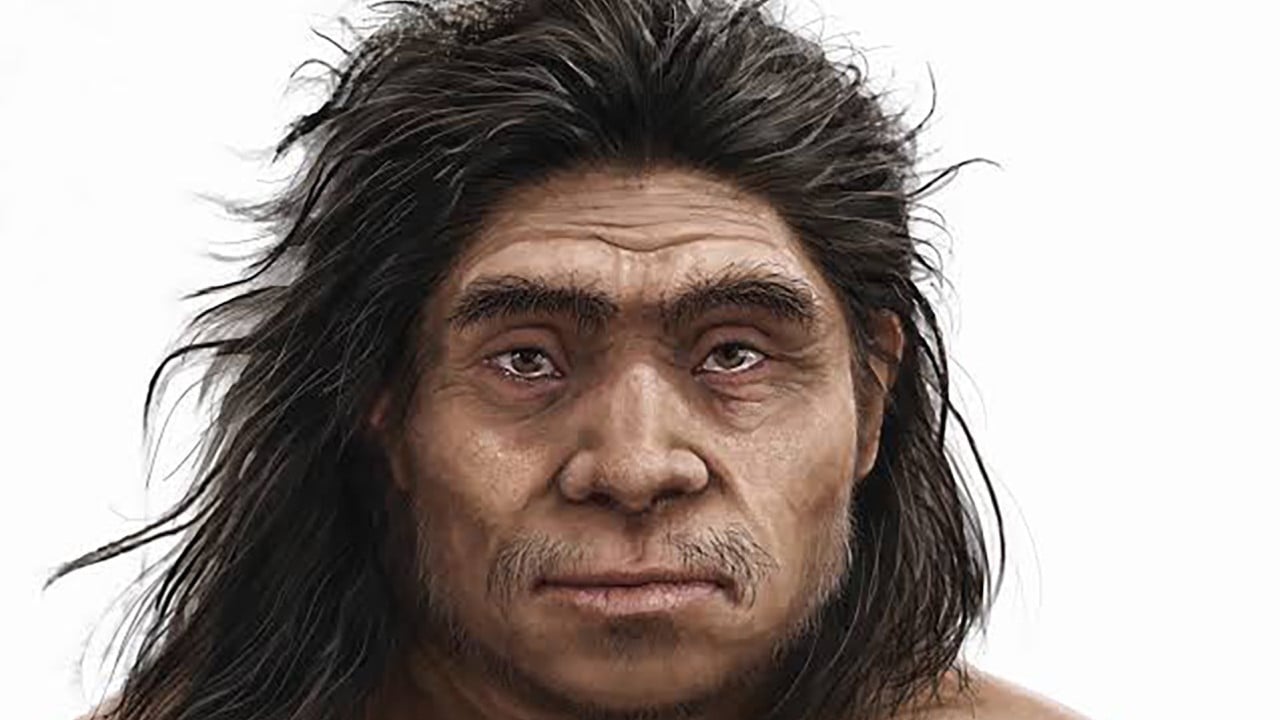
Chinese scientists have finally put a face onto the Denisovans, a mysterious species of ancient humans who were previously known only through the evidence of their DNA and fossil fragments.
The hominids were thought to have lived in parts of Siberia and East and Southeast Asia thousands of years ago.
The work of reconstructing their face was based on fossils excavated from Xujiayao, a major archaeological site in northern China’s Nihewan Basin, between 1976 and 1979.
Scientists also confirmed that the collection of ancient human remains belonged to the Denisovan lineage, allowing them to reconstruct what they looked like.
The remains, dated between 138,000 and 199,000 years old, included skull bones and teeth that had long puzzled palaeontologists trying to classify where they fit on the ancient human family tree.
Without any complete skulls to work with, the team, led by Fu Qiaomei, a palaeontologist at the Institute of Vertebrate Paleontology and Paleoanthropology in Beijing, had to reconstruct their features from fragments.
They concluded that their skulls were low and wide, with fairly thick bones. The sides of the braincase were relatively flat rather than rounded, while the back section of the lower jaw was quite wide, according to the official newspaper Science and Technology Daily.
“This analysis provides a comprehensive view of Denisovan features, showing both traits reminiscent of Homo erectus (such as a thick cranial vault) and those characteristic of modern humans (for example, a strongly arched temporal squama),” the scientists wrote in a paper published in the peer-reviewed journal Nature on Wednesday.
The researchers were also able to confirm that the fossils were Denisovans through the discovery of a key protein marker that was not found in Neanderthals and modern humans.
02:23
7,000-year-old remains of young Indonesian woman reshape views on early human migration
While the extraction of ancient DNA is almost impossible, proteins can survive longer than DNA without fully degrading.
“The palaeoproteomic results revealed Xujiayao hominins as Denisovans,” the researchers said, adding that their “similarities with other East Asian late Middle Pleistocene archaic Homo (such as Jinniushan, Dali and Hualongdong) indicate that they all belong to the Denisovan lineage.”
The study also showed that “Denisovans could have lived in East Asia from at least [300,000 to 45,000 years ago], paralleling the temporal range of Siberian Denisovans”.
It was “a broadly distributed homo lineage that adapted to diverse ecological zones, including the high-altitude plateau, subtropical forest and insular environments, across Siberia, East Asia and Southeast Asia.”
KioskNews shows a cleaned-up reading view extracted from the publisher’s page — the original always lives on their site, not ours.