Bank of England’s inflation response ‘risks higher interest rates for longer’
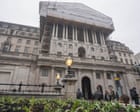
The Bank of England is risking higher interest rates for longer after a hesitant response to rising inflation, according to leading thinktank.
In a searing critique of the central bank’s tactics, the National Institute of Economic and Social Research (Niesr) said a timid increase in interest rates last week was likely to mean inflation staying above the Bank’s 2% target until at least 2030.
The thinktank said inflation was likely to become a more persistent feature of the UK economy unless the Bank took tougher action.
The Bank’s monetary policy committee increased the cost of borrowing from 3.75% to 4% last week and hinted at another increase to combat inflationary pressure unleashed by the Iran war.
The director of the Niesr, David Aikman, urged the Bank of England to be more aggressive in tackling inflation, saying all the ingredients were in place for workers to demand inflation-linked salary rises.
“Inflation is set to rise above 4% in the new year, just as most pay awards for 2027 are being agreed, so the risk that it becomes embedded is rising.
“One further quarter-point rise is unlikely to be enough, and the longer the MPC waits, the more it will eventually need to do.”
UK inflation stands at 3.5%, well above the Bank’s 2% target, driven higher by the soaring cost of fuel. Oil and gas prices have risen sharply since the end of February, when the US and Israel launched their war on Iran.
Brent crude oil has persistently traded at more than $100 a barrel in recent weeks – compared with about $70 before the war – but on Tuesday it traded below $90 at one point, the lowest since 31 August, after Donald Trump downplayed the need for military action against Iran “at this point”.
Investors, however, reined in their enthusiasm after US inflation climbed by 0.4 percentage points from September to October, revealing that high oil and gas prices were continuing to drive up costs. The S&P 500 index of leading US companies was down 0.9% by early afternoon on Wall Street.
The Niesr said its forecasts for growth in the UK and the global economy were based on oil prices at $105 a barrel. However, it cautioned that while prices had dropped, continued difficulties shipping and refining meant consumer prices would decline slowly.
Stephen Millard, an economist at the institute, said the lower oil price was also dependent on Trump sticking to his new policy. “We’ve seen him change his mind before,” he said.
after newsletter promotion
The Niesr expects the UK economy to grow by 1.6% this year, but by only 0.9% in 2028 as high inflation, high interest rates and tight government spending take a toll on consumer and business confidence.
The chancellor, John Healey, was criticised for deferring difficult decisions in the budget last month, which the institute said would leave a £30bn hole in the government’s finances if the pattern of doing so over the last decade was repeated next year.
Aikman said financial markets would punish the Treasury by raising the price of loans to the UK if it became clear that government spending was going to soar in areas such as defence without savings being made elsewhere.
He said there was a “double whammy” from higher energy prices and rising global borrowing costs that was not being addressed.
“Those pressures reflect global developments and cannot be avoided,” he said. “How monetary and fiscal policy respond to them is a domestic choice, and on both fronts decisions are being deferred.”
KioskNews shows a cleaned-up reading view extracted from the publisher’s page — the original always lives on their site, not ours.