Environmental Impact Assessment: How eDNA can revolutionize Taiwan’s biodiversity research
From reservoir fish to rice-field pests, environmental DNA is helping scientists detect species that conventional surveys can miss
By Steven Crook / Contributing reporter


Last year, a Taiwanese-Japanese team of scientists described a new species: the Yuchi music frog (Nidirana shyhhuangi), an amphibian previously thought to be an isolated population of the Ryukyu music frog (Nidirana okinavana).
Careful comparison of body sizes, patterning, and vocalizations convinced the researchers they were looking at different species, meaning that Nidirana shyhhuangi — found at only two locations in Nantou County — is a critically endangered Taiwan endemic. According to a press release issued by NTNU’s Center of Public Affairs, this discovery “shows that even on an island as small as Taiwan, the richness and complexity of biodiversity are still widely underestimated.”
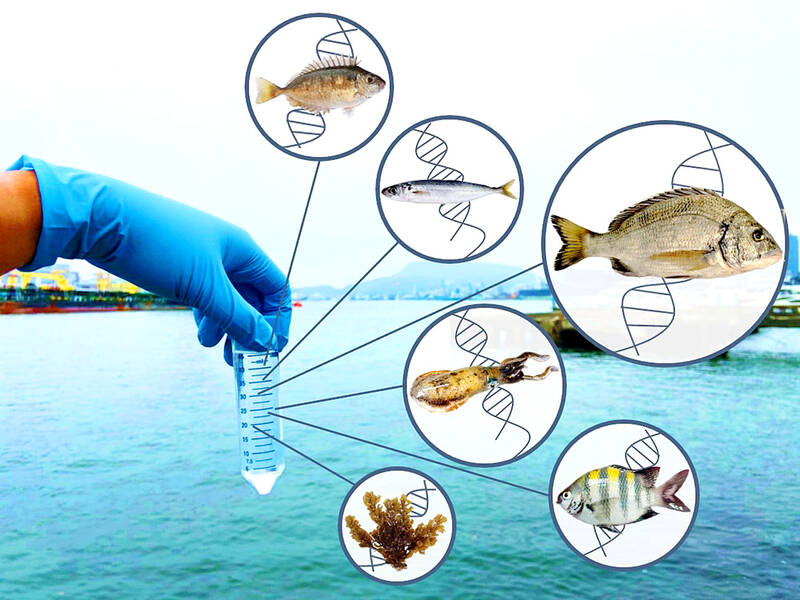
In the last two decades, various technological leaps have made the detection and identification of species easier than ever. Among them, environmental DNA (eDNA) metabarcoding is one of the most transformative.
The Taiwan Ocean Research Institute has successfully developed a high-flow-rate eDNA sampling module for use in the ocean depths.
Photo courtesy of the National Institutes of Applied Research
Every plant and animal within an environment sheds genetic material in forms such as feces, urine, feathers, spores or pollen. Some of these traces last just a few hours, but viable DNA fragments have been extracted from the teeth or bones of creatures that died over 1,000 years ago.
So far, most eDNA studies have focused on what can be learned by analyzing a location’s soil or water. But an article in June last year on the University of Florida’s online news hub quoted David Duffy, a professor of wildlife disease genomics at the university, as saying that a great deal of informative DNA can be found in the air.
“That means you can study species without directly having to disturb them, without ever having to see them. It opens up huge possibilities to study all the species in an area simultaneously, from microbes and viruses all the way up to vertebrates like bobcats and humans, and everything in between,” Duffy said.
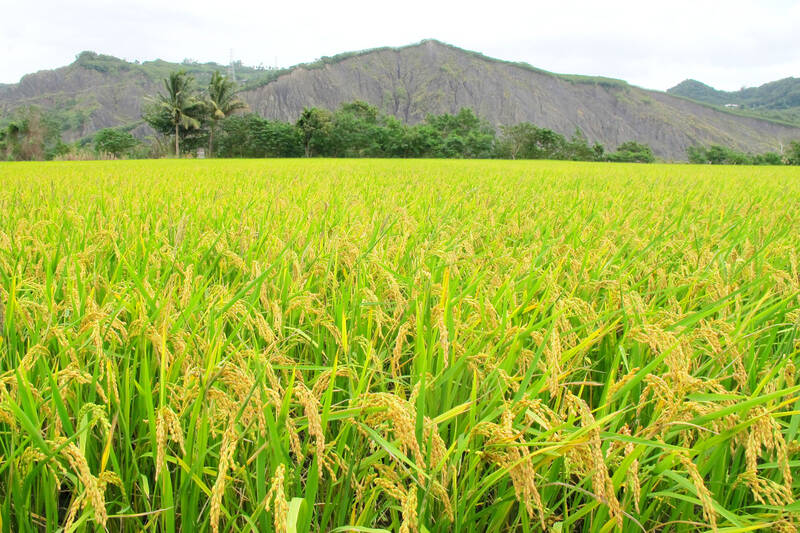
Metabarcoding may soon make it possible for individual farmers to easily identify pests in their rice fields, and respond quickly.
Photo: Steven Crook
TECHNOLOGICAL PROGRESS
Filters fine enough to catch all but the very smallest bacteria — which are less than 1/200th of the width of a human hair — have been around since the 1960s. Only recently, however, have scientists gained access to sufficient computational power to process the enormous amounts of data a single study can generate. Computers are now able to compare eDNA sequences against vast reference databases such as GenBank (maintained by the US National Institutes of Health). In addition to producing a list of the species found at a particular place, bioinformatics software suites can estimate species abundance and biomass.
Even though the Yuchi music frog was identified using more traditional methods, Taiwanese researchers have embraced the potential of eDNA metabarcoding.
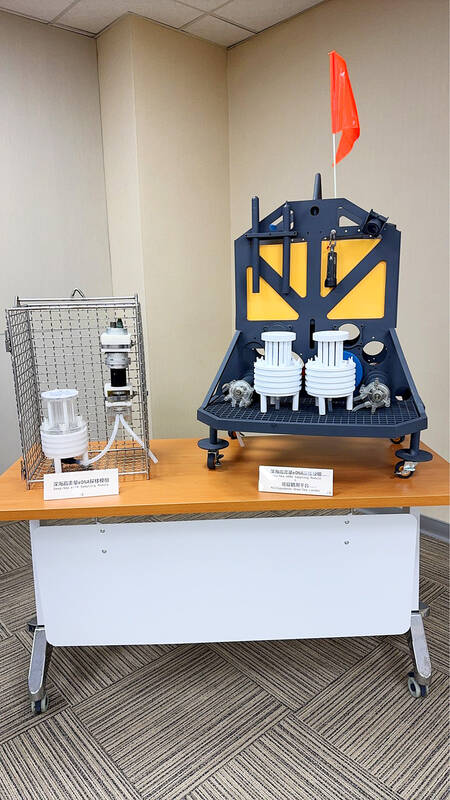
Taiwan’s National Ocean Database and Sharing System now incorporates environmental DNA data.
Photo courtesy of the National Academy of Marine Research
Lin Yen-ting (林晏廷), an expert on invasive fish species (see “Taiwan’s freshwater invaders” in the Aug. 26, 2026 Taipei Times), has applied the technology to the piscine population of New Taipei City’s Feitsui Reservoir (翡翠水庫).
According to a paper authored by Lin, an assistant professor in the Master’s Program in Biodiversity at National Taiwan University, and seven other specialists, eDNA demonstrated “superior sensitivity” compared to traditional survey methods such as gillnetting (Environmental and Sustainability Indicators, September 2025).
Damming a waterway to create a reservoir — in the case of Feitsui, the Beishi Creek (北勢溪) was impounded — changes it from a lotic (flowing) to a lentic (still) system. This leads to “profound alterations in aquatic environments and shifts in species composition [which] often favor species adapted to stagnant waters…The result is often species replacement, altered community structures, and declines in ecological stability and native biodiversity,” Lin and his coauthors point out.
Traditional sampling at Feitsui had previously documented 23 fish species, while eDNA analysis not only matched this count but detected 13 additional species. Capture methods appear to be biased toward “large-bodied, invasive taxa” while metabarcoding favors “native and small-bodied species,” the paper states. At the same time, the authors express concern that among the species detected exclusively through eDNA were the Florida or largemouth bass (Micropterus salmoides) and the blue tilapia (Oreochromis aureus). Both are “high-risk invasive species.”
While there can be no doubt as to “the dominance of invasive species and the evident shift in community structure,” the authors take heart from the fact that native fish haven’t entirely disappeared from the reservoir. The evidence they present indicates “these species continue to exist — albeit potentially in lower abundance or occupying less-sampled habitats — suggesting that invasive species, while impactful, have not entirely displaced native fauna.” Feitsui Reservoir’s native fish populations may, they speculate, benefit from ecological connectivity between the reservoir and upstream tributaries of the Beishi Creek.
Metabarcoding demonstrates “both time and cost efficiency” compared to older sampling methods, Lin’s team writes, but it’s not without its drawbacks. Depending on their life stages, activity levels and stress levels, individual organisms shed varying amounts of DNA. Temperature, UV radiation and microbial activity influence the rate at which DNA degrades, while running water can move it far from the source fish. This makes it “difficult to infer community structure solely based on eDNA data [and] accurately estimating abundance remains a major challenge in fish surveys using eDNA methods.”
BLUE OCEANS, GREEN FIELDS
Even in the open ocean, metabarcoding produces useful data. Scientists at National Sun Yat-sen University’s Department of Marine Biotechnology and Resources recently used it to better understand the boundary between tropical and subtropical marine communities.
They took samples of seawater from 10 coastal locations, including Taiwan’s north and northeast coasts, the Penghu archipelago, Siaoliouciou (小琉球) and Green Island (綠島). In July paper in Marine Environmental Research, they explain that hard corals and benthic organisms (those that dwell on or close to the seabed) were more evident in southern waters, whereas the richness of copepods (small crustaceans) was highest in the north.
Rice fields cover a major part of Taiwan’s lowlands, and rice is a crop of great importance. It’s hardly surprising, then, that local researchers have been conducting eDNA biodiversity surveys to assess the presence of native and non-native pests across cultivation phases.
Rice fields are “ephemeral wetlands particularly vulnerable to invasive species,” according to an April paper in Ecology and Evolution. To study these habitats, the authors collected water and soil samples from eight rice fields in Chiayi County, generating 1.01 million usable DNA sequencing reads. After excluding unclassifiable results, 93 percent of the reads were matched to arthropods (a group that includes agricultural pests such as stem borers and planthoppers) and nearly 6 percent to annelids (segmented worms). Rotifers — microscopic swimming organisms — and mollusks made up most of the remainder.
The paper concludes that, despite the limited number of samples, the study provided “valuable insights into the pest community.” The detection of the Asiatic rice borer (Chilo suppressalis), the Formosan termite (Coptotermes formosanus) and the golden apple snail (Pomacea canaliculata) “are highly concerning.” Humans who live near paddy fields may be alarmed to know the scholars also found “high abundances of Culex tritaeniorhynchus, a vector of Japanese encephalitis virus.”
Metabarcoding offers distinct advantages over conventional biomonitoring, which in rice fields relies on dip nets, funnel traps and taxonomic expertise. As the technology advances, analyzing water, soil or leaf swabs will become increasingly accessible to ordinary farmers. By providing a real-time picture of field biodiversity, metabarcoding could make it possible to target pests more precisely — and reduce farmers’ reliance on broad-spectrum pesticides.
Steven Crook, the author or co-author of four books about Taiwan, has been following environmental issues since he arrived in the country in 1991. He drives a hybrid and carries his own chopsticks. The views expressed here are his own.
KioskNews shows a cleaned-up reading view extracted from the publisher’s page — the original always lives on their site, not ours.