Every Mike Flanagan TV Show, Ranked

Kelcie Mattson is a Senior Features author at Collider. Based in the Midwest, she also contributes Lists, reviews, and television recaps. A lifelong fan of niche sci-fi, high fantasy, Gothic horror, elaborate action, and witty detective fiction, becoming a pop culture devotee was inevitable once the Disney Renaissance, Turner Classic Movies, BBC period dramas, and her local library piqued her imagination.
Rarely seen without a book in one hand and a cup of coffee in the other, Kelcie explores media history (especially older, foreign, and independent films) as much as possible. You'll also find her enjoying video games, amateur photography, geeking out over all music genres, admiring birds from her porch, trying to overcome her meager baking skills, and attending fan conventions with her Trekkie family.
Sign in to your Collider account
Mike Flanagan understands horror's most indispensable foundation — the shadows plaguing our sleepless nights and waking nightmares should emerge from life's bottomless well of relatable anxieties, distressing questions, and ubiquitous truths, not overpower them. His filmography wouldn't wield its punishingly profound effect without his unfailing interest in every facet of the human experience. Folding intimate character studies into the spine of his storytelling agenda ensures audiences sympathize, to some degree, with the flawed protagonists, the deplorable antagonists, and the ghostly specters who were once as tormented as anyone.
Flanagan's progression definitely doesn't hurt his venerated reputation. The filmmaker has refined his cinematic technique and stylistic hallmarks with each project rather than regress into retreading well-worn ground. No mediocre options exist within his TV catalog — only six testimonies to his elegant precision.
6 'The Midnight Club' (2022)

Since his television debut described death as an experience that makes us "all stories in the end," it's fitting that Flanagan's fourth show honors the ways communal storytelling encourages empowerment and helps us interpret a senseless world. Co-created with Leah Fong and based on author Christopher Pike's young adult thrillers, The Midnight Club unfolds within the baroque halls of Brightcliffe, a hospice for terminally ill teenagers. The titular group assembles every night, right when the clock strikes 12 AM, to share the macabre tales they've invented.
The Midnight Club's kids-accessible eeriness evokes '90s anthology horror series like Are You Afraid of the Dark? and Goosebumps, although Flanagan and Fong's even-keeled tone contains equal parts melancholy and levity. The story-within-a-story framework embraces a range of delightful aesthetic flourishes; meanwhile, the pair jettisons poor-taste caricatures about cancer in favor of poignant character beats and a dynamic ensemble. These witching-hour meetings are the only time Brightcliffe's residents can express the honest extent of their creativity, bitterness, hopelessness, and fear — where they can mourn the futures this indiscriminately malicious disease has stolen from them, defy their fates by imagining different outcomes, and nurture a modicum of catharsis.
5 'Carrie' (2026)

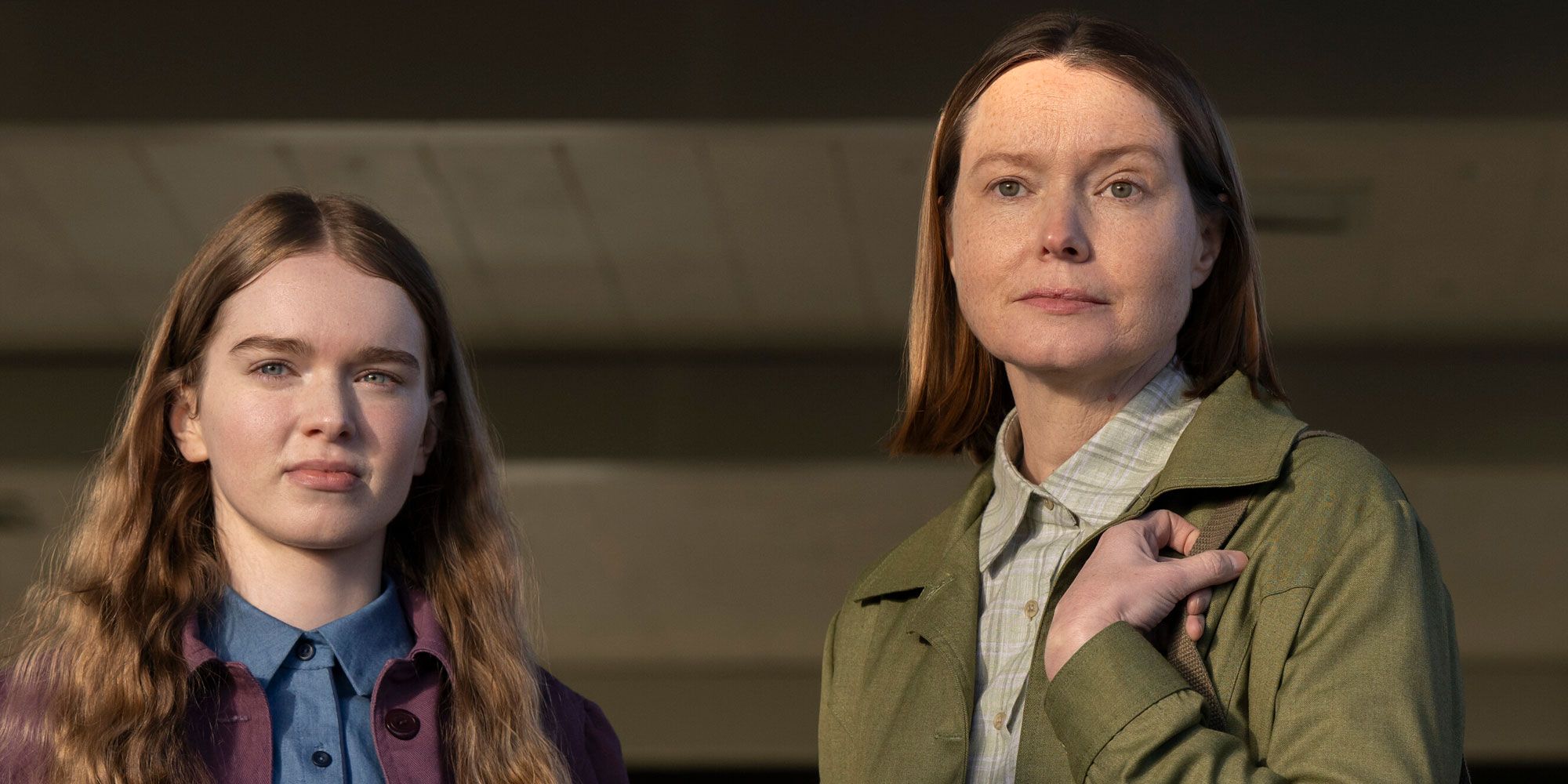
After four collaborations with Stephen King and more projects in the pipeline, the Maine-based horror icon has become Flanagan's biggest recurring inspiration. For Carrie, the prevailing question was whether Flanagan could justify the relevance behind yet another remake. It was a tall order, even considering the high standard his previous adaptations have set; amplifying a source material's texture while adjusting the surrounding minutia is his staple. Carrie passes the test with flying colors.
His modern alterations and newly introduced concepts inform, authenticate, and redefine King's meditations on fundamentalist religion, abuse cycles, and how intentional cruelty and herd-mentality conformity extinguish sincere compassion. Eight episodes' worth of breathing room further buoys Carrie's character-driven strengths. Exploring the key figures' intricate vulnerabilities doesn't condone their behavior, but it humanizes why they move through the world. And aside from softening Carrie White's (Summer H. Howell) harsh edges, realizing that "why" makes the players far more believable and insidious than their book counterparts. It's impossible to know whether the polarizing season finale will pay off in Season 2, but Flanagan's bold strides are commendable nonetheless.
Collider Exclusive · 8 Questions · 2 Minutes What Is Your Biggest Horror Nightmare? Elm Street · Chucky · Scream · The Conjuring
Four horror franchises. Four completely different ways of scaring you. One waits until you fall asleep. One makes sure nobody believes you. One is already in your group of friends. And one is in the house with your family. Answer eight quick questions about how you actually watch horror, and find out which nightmare was built for you.
😴Elm Street(Freddy Krueger)
🧸Chucky(Child's Play)
📞Scream(Ghostface)
🕯️The Conjuring(The Warren Files)
01
Which horror scene makes you cover your eyes? Four classic images. One of them is worse than the others for you.
02
You are home alone and you hear a noise. First thought? Everybody has one. It arrives before you have decided anything.
03
Which horror movie rule would you break first? Everybody thinks they would survive. Almost nobody actually does.
04
Something genuinely frightening happens. What do you do? Not in a film. In your actual living room, tonight.
05
How do you actually watch a horror film? Be honest about this one. Nobody is checking.
06
Somebody offers you serious money. Which do you still refuse? The amount does not matter. There is one on this list you are not doing.
07
Which feeling stays with you a week after the film? Good horror does not stop when the credits do.
08
Something wakes you at 3am. What is the worst possibility? Eight questions in, this is the one that decides your nightmare.
The Lights Just Went Out Your Nightmare Is…
Four franchises, four completely different ways of getting underneath your skin. This is the one built out of your particular fear, why it works so well on you, and what it would leave behind.
Elm Street
Your nightmare does not wait outside the door. It waits for you to close your eyes, which you are going to have to do eventually, because nobody has ever won that particular argument.
- Freddy is horror's cruellest idea: a threat that lives in the one place you cannot guard, cannot lock, and cannot avoid forever.
- You are the one who is fine during the film and wide awake at two in the morning. Your own head is where this does its damage.
- These films understood exhaustion as a horror engine. The kids on Elm Street do not lose because they are weak. They lose because they are tired.
- You can lock every door in the house. You still have to sleep.
Chucky
Your nightmare is not really the doll. It is the face of the person you tell, and the way they decide, very kindly, that you have imagined all of it.
- Chucky works precisely because he is absurd. That is the trap: the more accurately you describe him, the less anybody is going to believe you.
- You are the one shouting at the screen because the characters are not listening. You know that feeling from real life too.
- The franchise is at its best when the adults in the room are the real obstacle, and you have met those adults.
- By the time somebody finally believes you, you will have handled most of it on your own.
Scream
Your nightmare has your number, knows your name, and has almost certainly been inside your house before. The worst part is that you already know them.
- Scream is the only one of these where the killer takes the mask off and turns out to be somebody who was at the party.
- You are the person who calls the twist out loud before it lands. You watch people the same way you watch films.
- The franchise made the rules of horror part of the plot, which means the survivors are the ones paying attention. You would be paying attention.
- Everybody is a suspect, including the person who just offered to walk you home.
The Conjuring
Your nightmare is not really about you. It is about the people asleep down the hall, and the feeling that whatever is here is not interested in leaving.
- The Conjuring films are domestic horror. The house, the family, the perfectly ordinary room that quietly stops feeling ordinary.
- Your instinct is to get everybody into one room. Your fear is protective rather than personal, which is rarer than it sounds.
- This is the one franchise where belief is the weapon. The people who come through it are the ones who are not alone and refuse to be.
- Whatever is here did not come for you. It came for the household, and you are the one standing in the hallway.
4 'The Fall of the House of Usher' (2023)

Even with the 200-year gap, Edgar Allan Poe readily translates into the 21st century. The Fall of the House of Usher preserves his Gothic preoccupations by deftly remixing over a dozen separate poems and short stories into one cohesive, ingenious flow. Roderick Usher (Bruce Greenwood, Zach Gilford) and his twin sister Madeline (Mary McDonnell, Willa Fitzgerald) have built their unassailable empire on greed, lust, hatred, blood money, manufactured pharmaceutical scarcity, and a supernatural boon. Five decades later, a mysterious fragment from their past (Carla Gugino) resurfaces to assassinate Roderick's six offspring. But no justice, not even a cosmic bloodbath, can repair the unaccountable damage the Ushers have wrought.
House of Usher's thematic intentions are as blatant as a sledgehammer to the skull, but this remix doesn't concern itself with subtle motifs. Flanagan navigates the opioid crisis and the poisonous horrors of capitalistic decay with immense care. Otherwise, it's a seething rebuke of predatory billionaires. The nuance materializes through two generations of broken children who are condemned to misery by their father's self-serving negligence — a fate compounded by their own refusal to abandon their catastrophic vices. Cynical resignation aside, Flanagan's company relish the chance to play with melodramatic Gothic flourishes and Rube Goldberg-like kill sequences that slasher villains would admire.
3 'The Haunting of Bly Manor' (2020)

The follow-up to The Haunting of Hill House reuses multiple actors and revisits parallel themes through a different lens. Where Hill House centers a familial love story, The Haunting of Bly Manor opts for a devastatingly tender and romantic affair. Flanagan updates Henry James' classic novella The Turn of the Screw to 1987, with Dani Clayton (Victoria Pedretti) taking a governess job at the Bly Manor estate. No matter how intensely she flees the phantoms of her past, however, Dani encounters the literal ghosts of the mansion's former employees, Peter Quint (Oliver Jackson-Cohen) and Rebecca Jessel (Tahirah Sharif).
Bly Manor is more inclined to tragedy than Hill House in some ways, but healing runs underneath the sibling shows. Even though the past's acute wounds are inescapable, individuals can free themselves from its embedded thorns before despair taints their future. Bly Manor centers on cherishing life's every fleeting, fragile moment to a degree only The Midnight Club matches. It's a paranormal-tinged version of the "it's better to have loved and lost than never to have loved at all" mentality, one where affection, grief, and toxic obsession transcend beyond the grave with all-consuming force. To that end, Dani's chemistry with Jamie Taylor (Amelia Eve) is a staggering one-true-love for the ages. The wrenching Hannah Grose (T'Nia Miller) and Owen Sharma (Rahul Kohli) radiate equally luminous yearning.
2 'The Haunting of Hill House' (2018)

It's here — the cultural phenomenon that gripped the world, reset assumptions regarding what serialized horror television could accomplish, and launched Flanagan into an overnight household name. Hill House exemplifies the experimental side of his adaptational approach; rarely has an interpretation been so dissimilar to its source material's narrative beats yet so faithfully transposed the harrowing soul of Shirley Jackson's genre-defining novel. True to its origin, Flanagan's drama is a mesmerizing, truthful, and tangible depiction of unfathomable loss, childhood trauma, and mental illness in all its life-altering permutations.
The dwindling number of tormented Crains and their dynamics embody what it means to be a shattered family forever bound by blood, estranged love, and shared experience. Proximity means the harm relatives inflict upon one another cuts viscerally deeper than all other wounds. Flanagan dances between dual timelines as seamlessly as he juxtaposes the malignant incidents that've scarred the titular house's interior like wallpaper and the psychological reckonings caused by its paranormal warfare. Recovery requires brutal effort and bitter sacrifice, but without diminishing Hill House's agonizingly moving gravitas, Flanagan's soft heart lets the Crains' extinguished hope reignite like an ever-strengthening candle flame.
1 'Midnight Mass' (2021)

By all accounts, Flanagan contributes his figurative blood, sweat, and tears to every endeavor. Midnight Mass basically adds his bone marrow to the mix. An original work he never expected to see realized, it's the project of his heart, and it shows. Midnight Mass is a revelation (Biblical pun intended) of atmospheric claustrophobia, creeping menace, and breathtaking splendor that irrevocably sears itself onto viewers' subconscious. As Flanagan's tour de force, the miniseries exemplifies his keen capacity for exorcising America's sinister underbelly and underscores his main methodology: you can't scare people if they don't care about the characters' circumstances and survival. In both cases, it's Midnight Mass's fictional New England island, a small town issuing its death rattle after being devoured by a miasma of ecological collapse, existential despair, and feverish religious fanaticism. Only then, with anguish ripe for the devouring, do the vampires arrive.
Five years have passed since Midnight Mass' debut, yet its totality still demonstrates a master whose accumulated growth and consistent passion have elevated him to the peak of his field. Look no further than the career-best moments of superlative visual language, arresting theological interrogations, and thematic harmony. He crafts vampire mythology into a tapestry-sized metaphor for insatiable hunger and conquest, weaving in belief, addiction, self-loathing, belonging, forgiveness, reformation, the obligations communities owe each other, and how the narcissistic, bigoted, exploitative segments of organized religion masquerade as devout altruism. Flanagan more than secures his place in television history not with one all-time achievement under his belt, but two.
KioskNews shows a cleaned-up reading view extracted from the publisher’s page — the original always lives on their site, not ours.