LOCAL ELECTIONS 2026: Four national polls show ANC decline, DA growth and MK drift

Four recent polls that measure party support at the national level provide a broad look at the state of South Africa’s major parties, and all tell the same story of ANC decline, DA growth and MK drift.
The first poll was released by The Common Sense/Social Research Foundation (TCS/SRF) in August. Ipsos released a poll in early September, although its field research was conducted before the TCS/SRF poll. A third poll was released by News24/Sabi in early October, followed by a second TCS/SRF poll in mid-October.
eNCA/Markdata are releasing their polling results over three weeks in October, but their analysis is confined to polling at the municipal level.
The bar charts below summarise the results of the four polls.
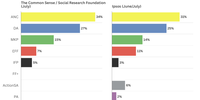
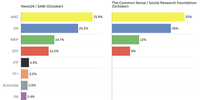
Compared with its 40.2% share of the vote in the 2024 national election, the ANC has fallen by at least six percentage points, while the DA has grown by at least three. The MK party is treading water while the EFF is either growing or shrinking by a couple of points, depending on which poll you trust.
National polls are useful in checking the national pulse, but they can’t describe the tapestry of local government elections, particularly across the metros and the larger towns. The aggregated picture blurs the ANC’s decline across urban South Africa, particularly in Gauteng.
Conversely, the polls obscure the smaller parties’ outsized effect in the metros. The IFP’s 3%-5% national share hides its kingmaker status in eThekwini; similarly, the prominence of the FF+ in Tshwane and ActionSA’s presence across all three Gauteng metros. Even the PA, with less than 2.5% of the vote nationally, will win enough seats to affect coalitions across the metros and the rural Western Cape.
National polls are still an important reference point for local elections. The ANC’s increasing rejection by urban voters means the party’s declining national share is still greater than what it can hope for in the metros. How the ANC will fare in the rest of South Africa is unclear. DM
Paul Berkowitz is co-founder of The South Africa Brief and is a director at Hlaziya Solutions.
KioskNews shows a cleaned-up reading view extracted from the publisher’s page — the original always lives on their site, not ours.