Snap Insight: Protecting Singapore’s outdoor workers from haze is easier said than done
Financial pressures make reducing haze exposure difficult for Singapore's outdoor workers, says Olivia Jensen of NUS’ Institute for the Public Understanding of Risk.
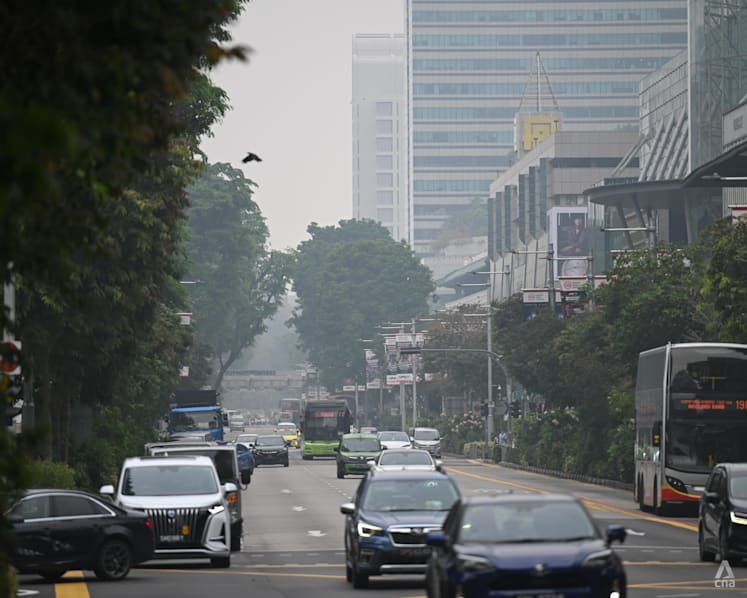
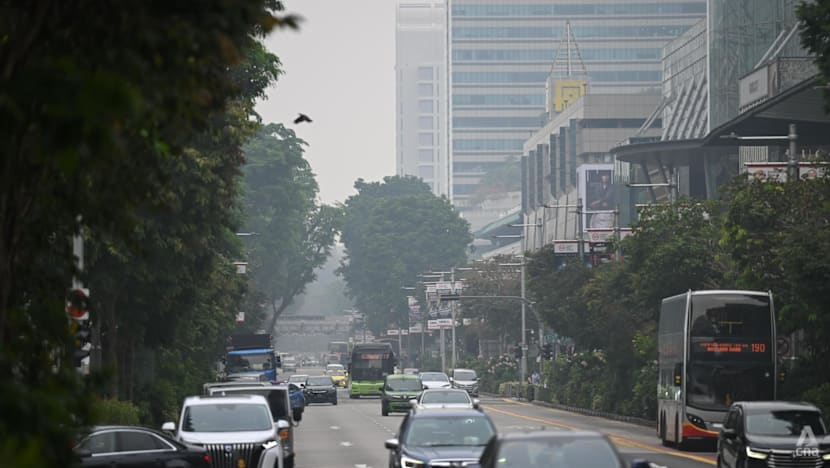
The haze seen at Orchard Road on Oct 12, 2026. (Photo: CNA/Marcus Mark Ramos)
New: You can now listen to articles.

This audio is generated by an AI tool.

17 Oct 2026 06:00AM
SINGAPORE: With the possibility that the haze may reach hazardous levels in Singapore, the tradeoff outdoor workers face may become more acute. Should they prioritise their health or livelihoods?
Even as air quality in parts of Singapore reached the very unhealthy range, road construction sites on my commute yesterday morning were as busy as ever and food delivery riders waited in the traffic.
Singapore's outdoor workers provide essential services. Platform workers deliver the food that families order while sheltering from the haze, while construction crews, cleaners and security guards keep Singapore up and running.
Unlike those who can work from home or avoid outdoor activities, these workers may face financial pressures that make reducing their exposure difficult.
Acting Minister for Manpower Jasmin Lau said on Friday (Oct 16) that protecting workers from the haze is “not optional” for employers. The Ministry of Manpower (MOM) will issue further advice on how employers can use 1-hour PM2.5 readings to take action, which may include pausing outdoor work for vulnerable workers.
PRONOUNCED RISKS FOR DELIVERY RIDERS
Delivery riders face pronounced risks. Regardless of haze conditions, many are motivated to stay on the road to bring home sufficient income.
Under the Platform Workers Act, platform operators are responsible for the health and safety of their workers and are obliged to advise them on haze protection. Some platform operators, including Grab and Foodpanda, have distributed N95 masks to workers.
However, beyond the fine particles (PM2.5) in haze, delivery riders are also exposed to chronic pollution from vehicle emissions which contain nitrogen dioxide and carbon monoxide, and generate other harmful pollutants like ozone.
This means that Singapore’s 24-hour Pollutant Standards Index (PSI) and PM2.5 readings may not give a complete picture of the air quality delivery riders are exposed to when they spend significant amounts of time in traffic. Without more localised information, it is difficult for them to get a picture of their own exposure or make informed decisions about when to take additional precautions.
In the coming weeks and in preparation for future haze episodes, it would be valuable to extend air quality monitoring to high-exposure locations, including busy intersections and delivery pick-up points. Ideally, measurements would include all the components in the PSI, not just PM2.5.
Making this information publicly accessible would help platforms and workers themselves understand their personal exposure and take appropriate protective action.
In the meantime, there are practical steps that outdoor workers and their employers can take. Properly fitted N95 masks do substantially reduce inhalation of fine particles. They may be hot and uncomfortable, but workers should use them during periods of elevated particulate pollution when outdoor work cannot be avoided.
Platform operators, construction companies and other employers can help distribute masks and encourage their use. Masks are not a substitute for reducing exposure, but they can provide an important additional layer of protection.
Olivia Jensen PhD is Deputy Director and Lead Scientist at the Institute for the Public Understanding of Risk, National University of Singapore.
KioskNews shows a cleaned-up reading view extracted from the publisher’s page — the original always lives on their site, not ours.