11 Best Standalone Fantasy Books Of All Time

Nicholas Becher is a gaming journalist with an MFA in Creative Writing from FAU. With extensive experience playing video games, he covers all forms of gaming content at Screen Rant, from breaking news to the latest fan theories. Most-played games range from Clair Obscur to Civ to Elden Ring to Halo 2 and beyond.
The fantasy genre has become inundated with lengthy and elaborate multi-book series over the years, which isn't necessarily a bad thing. However, tackling a lengthy series such as A Song of Ice and Fire, Fourth Wing, The Wheel of Time, or The Stormlight Archives can become quite overwhelming if you're short on time.
Fortunately, fantasy readers have a trove of options when it comes to completely self-contained standalone titles that aren't dependent on multiple entries to establish the world or provide a satisfying ending. The below works of fantasy are some of the most iconic standalone titles ever created, spanning decades of the genre's history and covering everything from whimsical fairy tales and sweeping epics to darker, more literary adventures.
Some may exist within larger fictional worlds or have inspired later continuations, but each tells a complete story on its own, making them perfect for readers looking for an unforgettable fantasy experience without committing to an entire series.
1 Alice's Adventures In Wonderland (1865) — Lewis Carroll

A no-brainer entry for any fantasy list worth its salt, Alice's Adventures in Wonderland remains one of the most influential works the genre has ever produced. Lewis Carroll's surreal journey down the rabbit hole introduced generations of readers to Wonderland and its unforgettable cast, from the Cheshire Cat and Mad Hatter to the Queen of Hearts.
The story has inspired countless adaptations, perhaps most famously Disney's 1951 animated film, which helped cement its characters and imagery in popular culture. Carroll did follow the novel with Through the Looking-Glass in 1871, but Alice's Adventures in Wonderland tells a completely self-contained story and requires no sequel to feel complete.
2 The Hobbit (1937) — J.R.R. Tolkien

While The Lord of the Rings is the most iconic fantasy series of all time, it wouldn't even exist without Tolkien's original The Hobbit. First published in 1937, the novel introduced readers to Middle-earth through Bilbo Baggins, an unassuming hobbit swept into an adventure involving dwarves, trolls, goblins, and the dragon Smaug.
Tolkien would greatly expand the world and mythology in The Lord of the Rings, but The Hobbit remains a wonderfully complete adventure on its own. Its influence on modern fantasy is difficult to overstate, helping establish many of the genre conventions that countless authors would build upon while introducing characters, places, and ideas that remain cultural touchstones nearly a century later.
3 The Last Unicorn (1968) — Peter S. Beagle
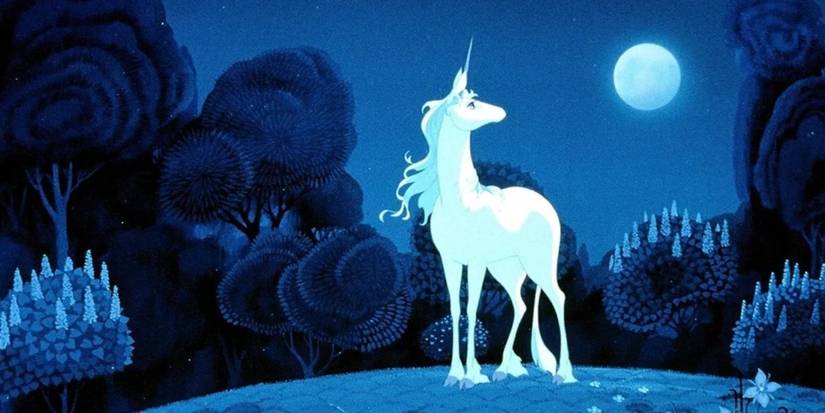
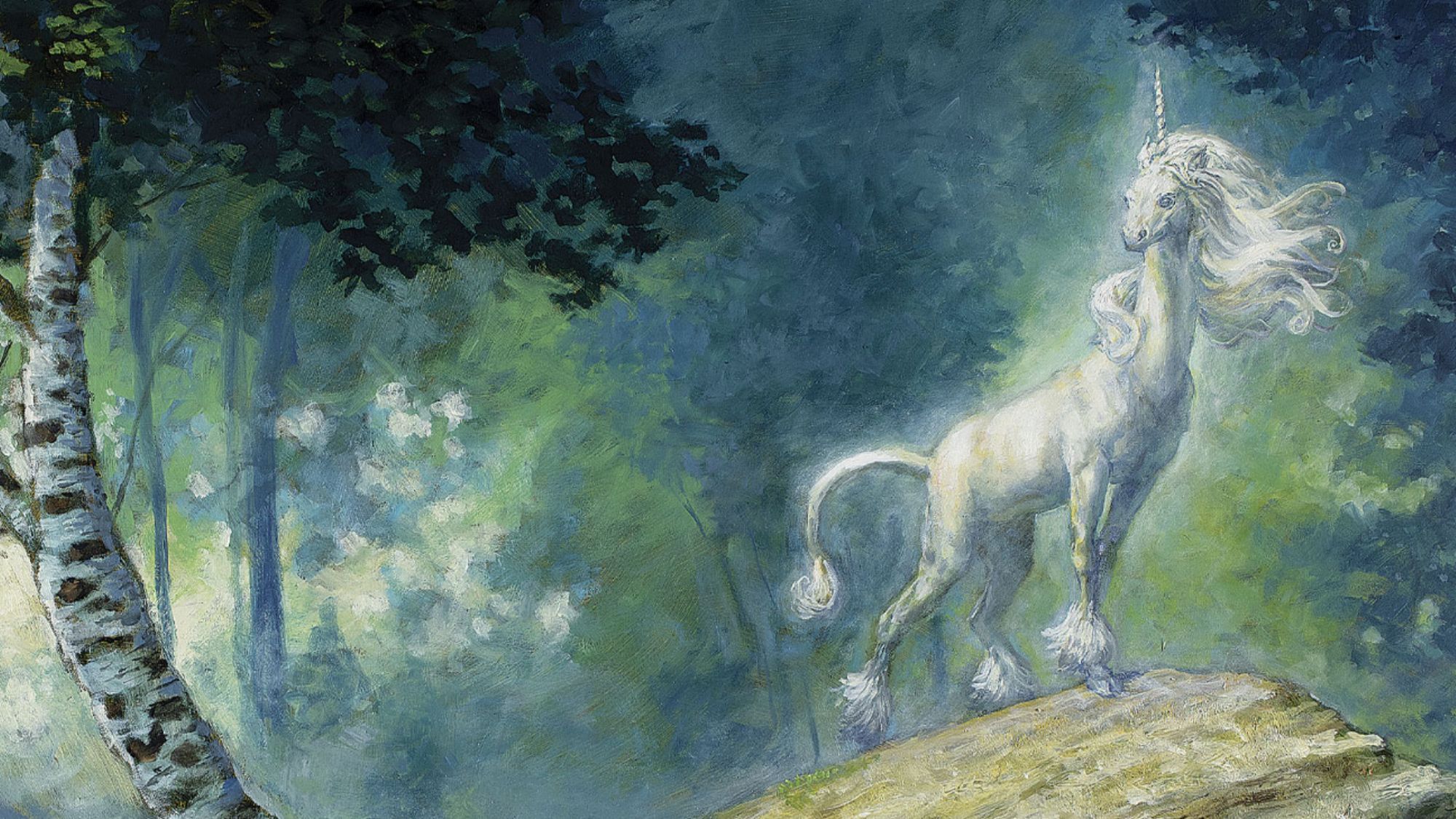
Beagle's The Last Unicorn is an essential fantasy read and one of the genre's most enduring modern fairy tales. First published in 1968, the novel follows a unicorn who leaves the safety of her forest after learning she may be the last of her kind, setting out on a melancholy and often surprisingly funny journey to discover what happened to the others.
Beagle blends traditional fairy-tale imagery with a distinctly modern sense of humor, giving the story an appeal to both young and adult readers. Its reputation only grew with the beloved 1982 animated adaptation, which introduced the story to an even wider audience and remains a masterpiece in its own right to this day.
4 Watership Down (1972) — Richard Adams
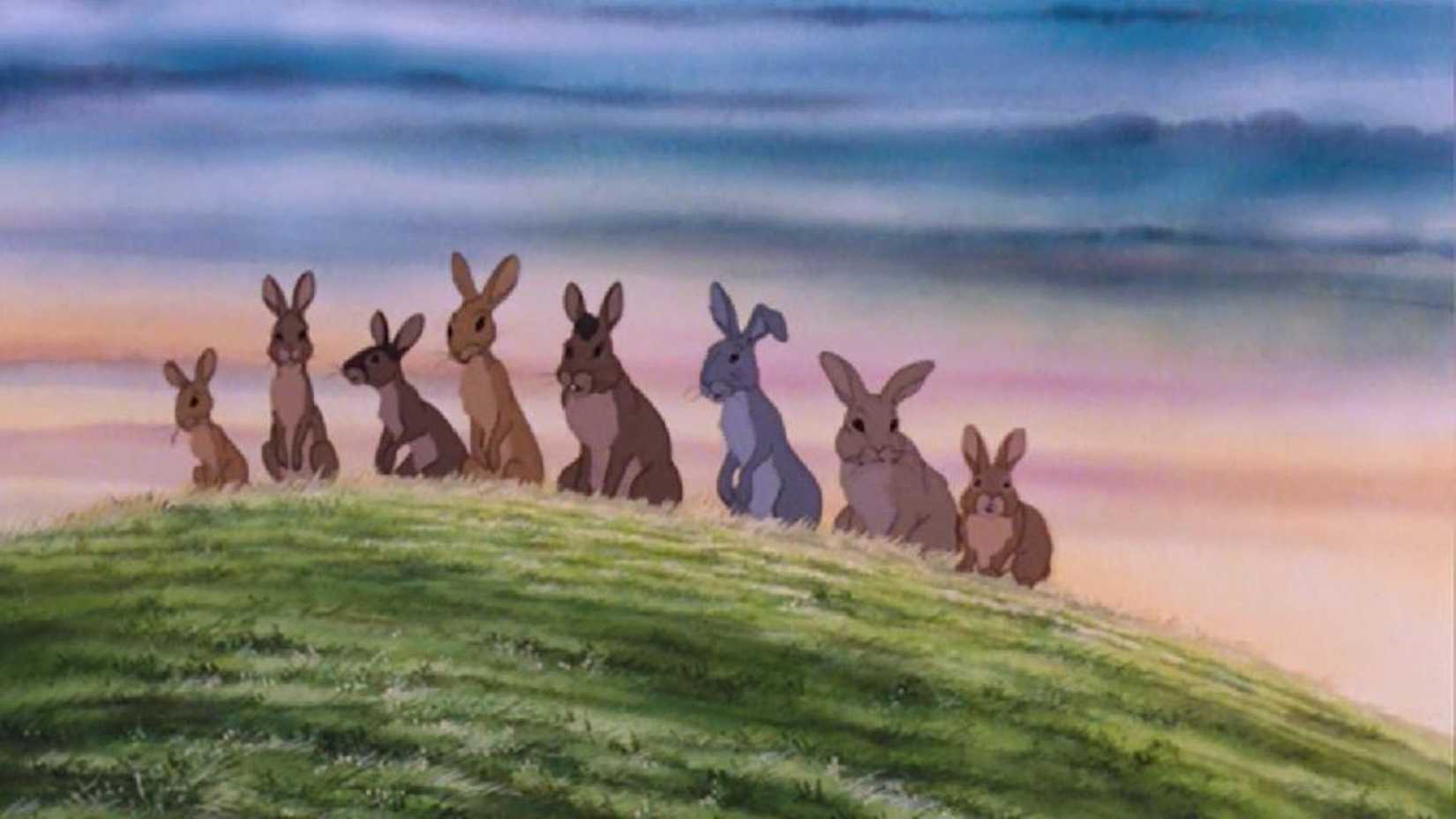
Richard Adams' Watership Down is a far deeper and more ambitious novel than its premise might initially suggest. First published in 1972, the story follows a group of rabbits fleeing the destruction of their warren in search of a new home, but Adams uses that journey to explore leadership, authoritarianism, community, survival, displacement, and humanity's relationship with the natural world.
The rabbits are given their own mythology, language, social structures, and competing philosophies, allowing the novel to function as both an adventure story and a remarkably layered work of political and literary fantasy. Its thematic depth has made Watership Down a frequent subject of academic discussion, while its complete, emotionally satisfying narrative makes it an essential standalone work.
5 The Princess Bride (1973) — William Goldman

While The Princess Bride is arguably much better known for its movie adaptation, William Goldman's 1973 novel remains a brilliant fantasy adventure in its own right. Presented as an abridged version of a fictional older work, the book combines swashbuckling action, romance, fairy-tale conventions, and sharp metafictional humor into something far stranger and more playful than a traditional quest story.
Its cast of memorable characters, including Westley, Buttercup, Inigo Montoya, and Fezzik, helped give the story enormous staying power even before the 1987 film became a cult classic. The novel's blend of sincerity and satire also makes it unusually accessible, while still offering plenty for longtime fantasy readers to appreciate.
6 The Forgotten Beasts Of Eld (1974) — Patricia A. McKillip

McKillip's The Forgotten Beasts of Eld is one of the most important standalone fantasy novels of the 1970s, with a relatively compact story told at the same scope and atmosphere of a much larger epic. It follows the reclusive wizard Sybel, who lives secluded among legendary creatures until political conflict and personal betrayal draw her into the wider world.
The novel won the World Fantasy Award for Best Novel in 1975, the first year the awards were presented, and its success helped establish McKillip as one of the genre's most distinctive voices. At a time when sprawling Tolkien-inspired epics were all the rage, McKillip showed that sound mythology and character development could be packed into a comparatively short standalone novel.
7 The Neverending Story (1979) — Michael Ende

Michael Ende's The Neverending Story is one of fantasy's most beloved portal adventures, thanks largely to the unforgettable characters Bastian encounters across the world of Fantastica. From the heroic Atreyu and the luckdragon Falkor to the haunting Childlike Empress, the novel is packed with creatures and heroes that stay with readers for a lifetime.
First published in German in 1979, the book became an international success and later inspired the 1984 film adaptation, which introduced its world to an even larger audience and became a cultural phenomenon. The movie only covers part of Ende's much richer novel, making the original book a substantially deeper and more complete experience.
8 Little, Big (1981) — John Crowley

John Crowley's Little, Big is one of the most acclaimed examples of literary fantasy, taking readers on a dreamlike, layered adventure of magical realism in a remarkably intricate standalone novel. Published in 1981, it follows several generations of the Drinkwater family and their mysterious connection to an unseen faerie world surrounding their unusual home.
Crowley's dense, elegant prose and layered structure have earned the book a devoted critical reputation, including the 1982 World Fantasy Award for Best Novel. Its influence can be felt across later literary and contemporary fantasy, and its ambitious combination of domestic drama and mythic storytelling makes it a distinctive and must-read entry in the genre.
9 Tigana (1990) — Guy Gavriel Kay

Guy Gavriel Kay's Tigana is one of the defining standalone works of epic fantasy, pairing a sweeping political conflict with an unusually intimate focus on a modern exploration of memory, identity, and cultural erasure. Published in 1990, the novel is set in the Peninsula of the Palm, where a conquered province has been magically stripped of its very name by a powerful sorcerer.
Kay uses that premise to explore what happens when a people's history is deliberately erased, while still delivering on tropes such as rebellion, romance, tragedy, etc.
10 Jonathan Strange & Mr Norrell (2004) — Susanna Clarke

Published in 2004, Jonathan Strange & Mr Norrell follows two very different magicians whose uneasy partnership gradually reshapes both their lives and the wider world around them. Clarke combines historical fiction, dry wit, folklore, and an elaborate system of footnotes to make the book feel like a lost scholarly history of English magic.
Its originality and ambition earned widespread acclaim, including the 2005 Hugo Award for Best Novel, and helped establish it as a modern fantasy classic.
KioskNews shows a cleaned-up reading view extracted from the publisher’s page — the original always lives on their site, not ours.