Indonesia haze: why Jakarta won’t declare wildfires a national disaster
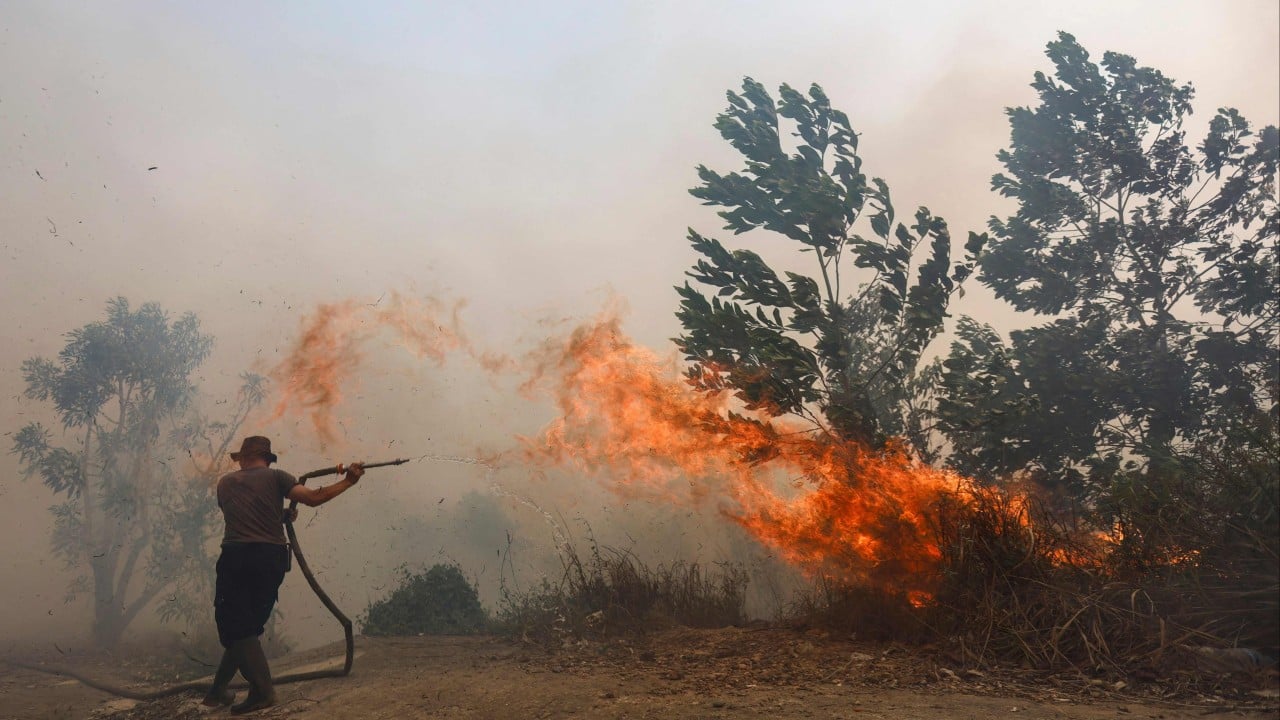
Indonesia’s government has resisted mounting calls to declare widespread forest and land fires a national disaster, insisting it can handle the crisis alone as residents report worsening health impacts and disaster experts warn that a broader, coordinated response is needed.
Critics suggest the reluctance may stem from concerns that a national declaration could force Jakarta to redirect funds from other political priorities, while exposing the administration to greater scrutiny over its disaster response.
The dispute intensified on Tuesday – the second anniversary of President Prabowo Subianto’s administration – when student protesters across the country demanded a national disaster declaration, the restoration of damaged ecosystems and action against both the rising cost of living and the perceived erosion of democracy.
02:44
Anger builds as Indonesian wildfires burned nearly 2 million hectares and send toxic haze across region
A similar demand was included in a class-action lawsuit filed by civil society and indigenous groups in West Kalimantan last month, though the government maintains the fires do not warrant such a designation.
“If a national disaster is declared, there will inevitably be those who exploit the situation. Disaster management is now nationally mandated, no longer the responsibility of regional governments,” Dudung Abdurachman, Coordinating Minister for Political and Security Affairs, told reporters on Wednesday.
“These fires are not just caused by ordinary people – corporations and certain parties from outside are deliberately creating [these] conditions.”
In a speech on Wednesday, President Prabowo warned against “countries that like to insult” Indonesia over wildfires and transboundary haze, adding that “when the time comes, we will reveal the companies involved”.
While Jakarta appreciated foreign aid offers, Dudung insisted external help would not solve the problem.
“Japan, Malaysia and Singapore have offered assistance. Japan even arrived with a Chinook helicopter, but they still weren’t able to extinguish the fires,” Dudung said, adding that the government “has tried its best”.
Dudung said on Monday that Malaysia had offered three helicopters and 52 firefighters, but pointed to logistical challenges on the ground.
“There are many obstacles [in the field], such as fuel distribution. This isn’t necessarily about the equipment and personnel provided. For now, we can still cope,” he said.
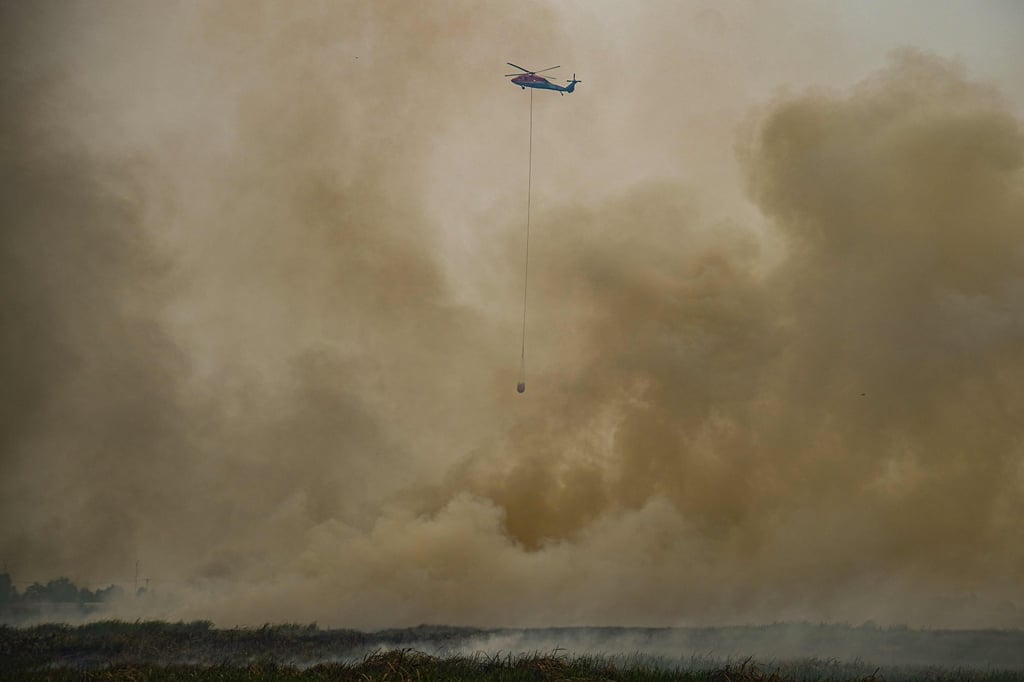
But satellite data shows the scale of the destruction. The blazes burned through more than 1.9 million hectares (4.7 million acres) of Indonesian forest between January and late September this year – a 38 per cent increase compared with the same period in 2019 – according to deforestation monitoring site Nusantara Atlas, as cited by Agence France-Presse. The true scale was likely higher, the organisation said, as the figures excluded individual burn scars smaller than 6.25 hectares.
‘Selfish’ move
Edy Kurniawan Wahid, a lawyer with the Indonesian Legal Aid Foundation, alleged that fiscal and political motives were behind the administration’s hesitation.
“While disaster occurrences have risen sharply over the last five years, the national budget allocated for disaster management has actually decreased,” Edy said.
Jakarta allocated 400 billion rupiah (US$22.1 million) this year for the National Disaster Management Agency (BNPB), a sharp drop from 2 trillion rupiah last year.
“The government may be concerned that if this is declared a national disaster, the consequences will be a refocusing of existing budgets, including those for free nutritious meals and Prabowo’s other ambitious projects.”
Edy currently represents victims of last year’s flash floods and landslides in Aceh and Sumatra, who filed a citizen lawsuit in May over the government’s handling of that crisis.
“In the trial process, the government’s legal counsel said that one reason why the disasters [in Aceh and Sumatra] were not declared a national disaster was that they were worried that this would disrupt the macro economy and fiscal policy,” Edy said.
On the ground in hard-hit regions such as Central Kalimantan, residents lamented Jakarta’s position as daily life under the blanket of toxic smog became increasingly grim.
“We deeply regret that this statement was issued, considering that there are already quite a lot of victims in Central Kalimantan, especially those suffering from acute respiratory infections,” said Janang Firman Palanungkai, executive director of environmental group Walhi in Central Kalimantan.
“The local government is no longer capable of handling this situation. The haze is getting thicker every day. Even if this isn’t declared a national disaster, how exactly is the central government handling it? To this day, that remains unclear.”
Janang said health facilities in the province were “overwhelmed”. On October 10, local media reported that a six-month-old baby in Central Kalimantan died from pneumonia after suffering from shortness of breath and convulsions.
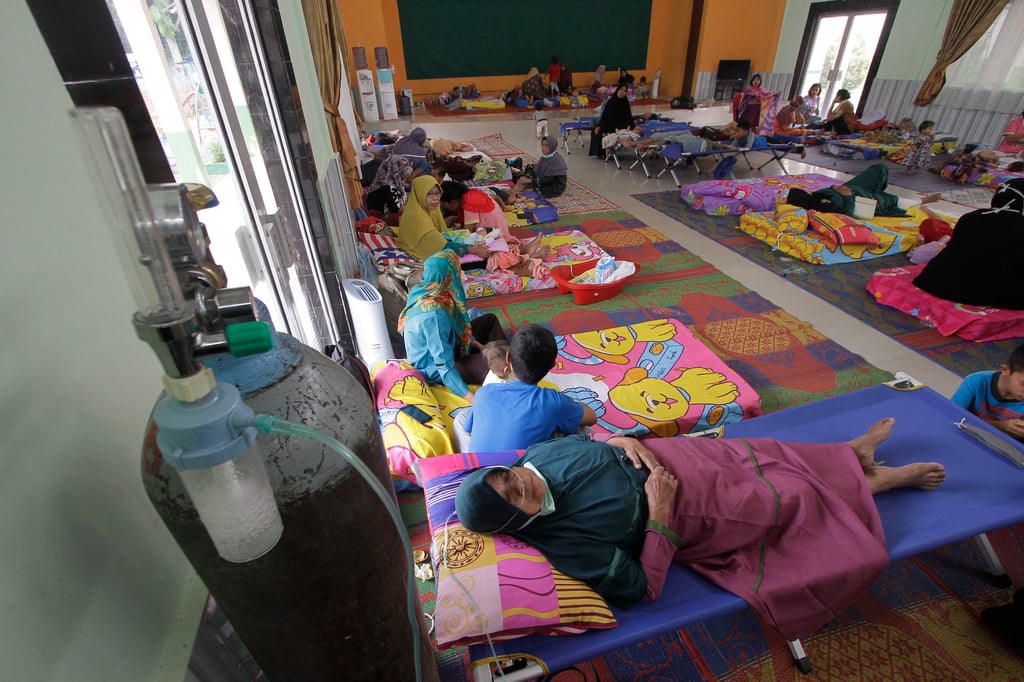
Between August 20 and October 20, the Ministry of Health recorded 21,607 cases of respiratory disease in the province, including 5,133 involving toddlers.
Janang added that vital medical supplies like N95 masks and oxygen tanks had become scarce and “very expensive”.
“A national disaster declaration would ensure an increased budget, especially to help medical personnel and firefighters,” he said. “The central government is [being] selfish.”
Coordination and international aid
A national disaster declaration could help unite government ministries and state agencies under a single, coordinated response, according to Avianto Amri, chairperson of the non-profit Indonesian Disaster Management Community.
“We must approach forest and land fires like Covid-19, as the threat is constantly evolving – unlike floods and landslides, which end when extreme weather is over, allowing us to focus on recovery,” Avianto said.
“The current situation is even more dangerous and critical because response efforts require intensity, and the risk of spread remains high.”
The Covid-19 pandemic was the last state of emergency designated a national disaster in Indonesia.
Avianto said a formal declaration would also streamline foreign help from regional partners via established mechanisms, such as the Association for Southeast Asian Nations Coordinating Centre for Humanitarian Assistance on Disaster Management.
“If the government gives its blessings and accepts foreign aid, it will help civil society access foreign funding to help extinguish these fires,” he said.
KioskNews shows a cleaned-up reading view extracted from the publisher’s page — the original always lives on their site, not ours.