Uniform Friday sermons in J&K mosques: Why idea was floated, why it was shot down
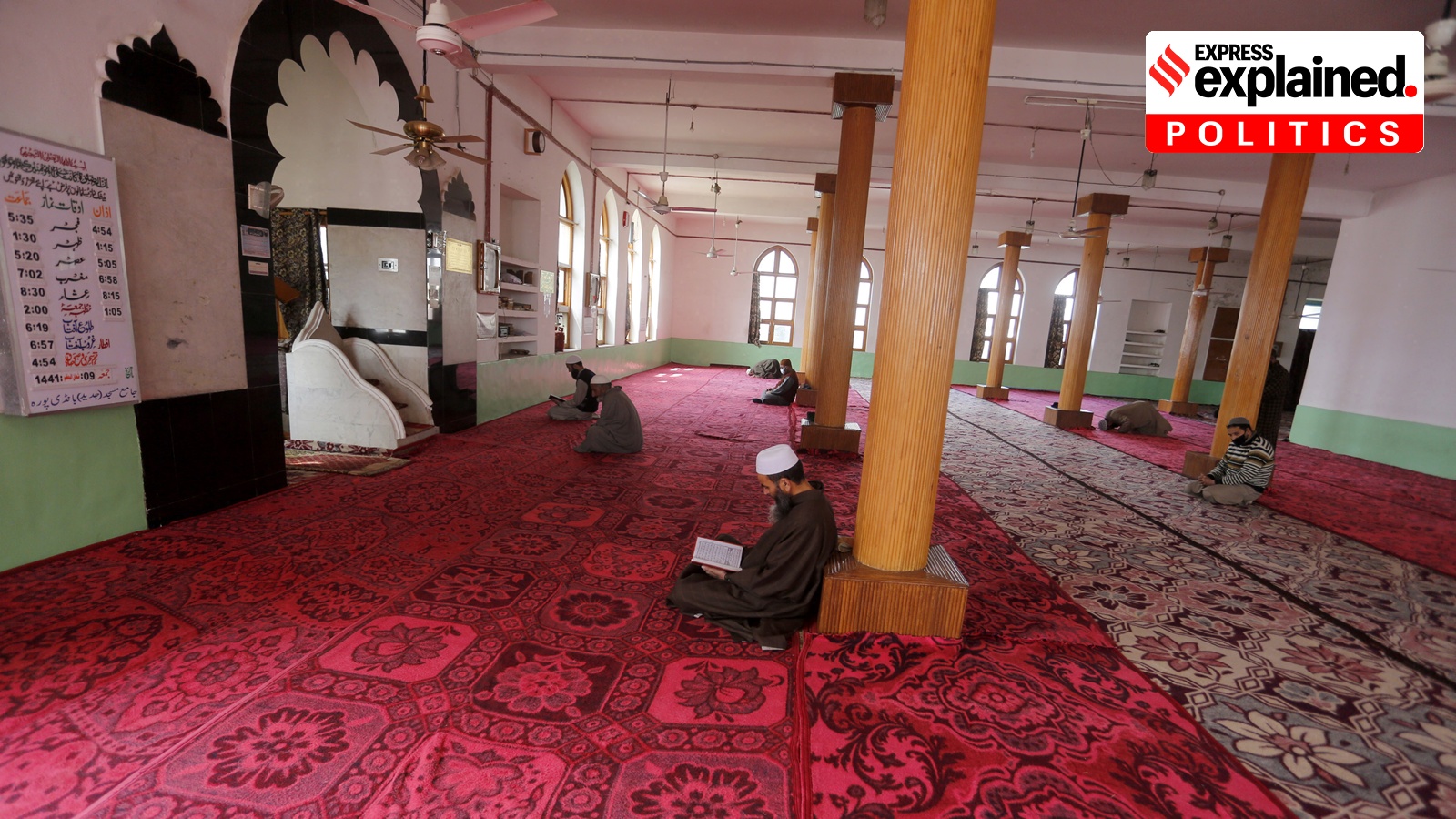
Jammu and Kashmir saw a row over mosque sermons earlier this month, when J&K Wakf Board chairperson Dr Darakshan Andrabi, in an online meeting of the imams of the Union Territory, informed them that they would have to deliver a uniform Friday sermon prepared by Wakf Board imams.
After pushback from the valley’s political leaders, Andrabi said nobody would be forced to deliver a prepared sermon.
Established in the 1930s by the Muslim Conference, the Muslim Auqaf Trust served as the custodian of Muslim religious properties in Jammu and Kashmir, including shrines and a large number of mosques. Its mandate was to manage, regulate and develop these religious institutions, while promoting the social and educational upliftment of Muslims.
For much of its existence, however, the Trust remained under the control and influence of the National Conference. Despite generating substantial revenue through charitable donations and offerings at shrines and mosques, as well as rent from its properties, it failed to channel these resources into the broader socio-economic development of the Muslim community.
Little was done to build an independent educational and healthcare infrastructure or adequately preserve the community’s cultural heritage. Operating largely beyond public scrutiny, the Trust maintained that most of its income was spent on the salaries of its employees and the renovation of shrines and mosques.
After Mufti Moahmmad Sayeed took over as the Chief Minister of Jammu and Kashmir in a Peoples Democratic Party (PDP)- Congress coalition government, he took the Muslim Auqaf Trust into government control and rechristened it as the J&K Wakf Board. The Chief Minister was the ex officio chairman of the Wakf Board.
The abrogation of special status and the Wakf Board
After the abrogation of Jammu and Kashmir’s special status, the Wakf Board operated under the Central Wakf Act. In 2002, the Centre appointed Syed Darakahshan Andrabi, a BJP leader, as its chairperson. Her tenure has been controversial.
The Wakf board has limited control over the running of the shrines and mosques under it. Most are run by the mohalla and village committees, making use of donations and monthly contributions from residents. The Wakf board directly administers less than 150 mosques and shrines in Jammu and Kahsmir, out of thousands.
Story continues below this ad
Who decides the topic of a Friday mosque sermon?
A Friday sermon is a religious obligation. Before the Friday prayers, the imam — a person who leads the prayers — speaks on a particular topic for 15 to 30 minutes. The topic for the sermon is generally decided by the imam of the mosque, and is generally about faith, social issues, or any other matter concerning the neighbourhood, region or the Muslim world.
Bid to implement uniform sermons in mosques
After the abrogation of Jammu and Kashmir’s special status in 2019, the Lt Governor’s administration slowly started taking over various spheres. While the administration acted against government employees believed to be “separatist sympathisers” under the Article 311(2)(C) of the Constitution, banned schools run by the Jamaat-e-Islami-linked Falah-e-Aam Trust, and banned books with “inappropriate” content, it stayed away from controlling the mosque pulpit, fearing a backlash.
Officials say that the concept of uniform Friday sermons was first discussed a few years ago in a meeting of the J-K’s Criminal Investigation Department (CI) to control “radicalisation narratives”. The officials discussed the possibility of uniform Friday sermons vetted by the government, on the pattern of Saudi Arabia.
The proposal, however, was shot down as some senior officials objected to it. Then recently, the decision came from the Wakf board chairperson. The board wanted the sermons to be limited to social issues like rising drug abuse, dowry, and late marriages.
The backlash
Story continues below this ad
As expected, the Wakf board’s push for uniform Friday sermons has been resisted by both political and religious leaders.
“This is an unacceptable attempt by the BJP to interfere in the religious affairs of Muslims and will not be accepted under any circumstances. The BJP-appointed Chairperson must immediately halt this misplaced attempt to please her masters,” Chief Minister Omar Abdullah said.
The valley’s chief cleric, Mirwaiz Umar Farooq, said such orders would be “unacceptable”. “The Mimbar (pulpit) is an Amanah (trust), and religious guidance is the domain of Ulema and Imams, not state-linked bodies. Such interference in matters of faith and religious practice is unacceptable. The Waqf Board must confine itself to its administrative responsibilities”.
The backlash forced Andrabi to backtrack.
Apart from the issue of interference, uniform Friday sermons are also impractical. Every neighbourhood has different problems and relevant issues. Also, mosques belong to different schools of thought, having different opinions on various subjects. A uniform sermon would not be acceptable to all the schools of thought.
KioskNews shows a cleaned-up reading view extracted from the publisher’s page — the original always lives on their site, not ours.