Yamuna toxic foam: Why is the river covered with glacier-like layers of froth?
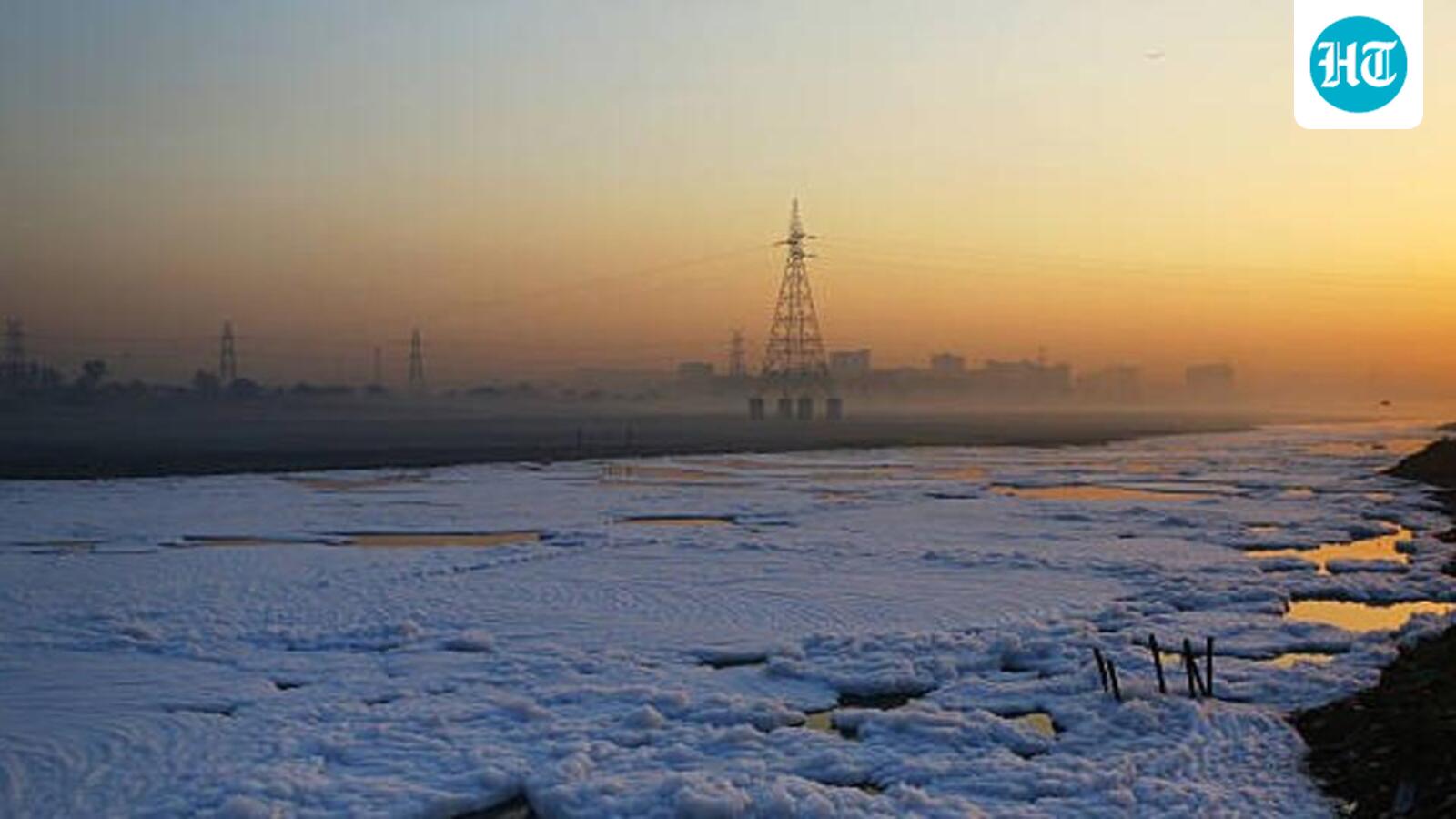
A thick layer of toxic white froth has once again covered stretches of the Yamuna near Kalindi Kunj as falling temperatures and churning of water intensify foaming on the river’s surface.
As the wind blows, cloud-like segments of froth roll over the surface, while devotees could be seen praying along the banks of the highly polluted river on Wednesday, once again highlighting the plight of the dying river. Over the next month, froth formation, as well as the politics around the phenomenon, will intensify as Delhi approaches Chhath festival.
What causes the froth?
What causes it?
The froth bubbles are caused by surfactant (soap-like) molecules. When water falls from a height at the nearby Okhla barrage, it leads to the churning of polluted water and increased frothing. Froth formation in the Yamuna intensifies during winter, when temperatures drop and the bubbles formed by the churning of polluted water at the Okhla barrage become much more stable.
There are biological, physical and chemical causes behind the presence of surfactant molecules. They can originate from detergents and surfactants in untreated domestic sewage, industrial pollutants, dhobi ghats, as well as materials released by the decomposition of dying water hyacinth weeds in the Okhla barrage.
Also Read: Froth reappears in Yamuna despite record defoamer use
What experts say
Bhim Singh Rawat, a Yamuna activist and member of the South Asia Network on Dams, Rivers and People (SANDRP), said that low temperatures and the stabilisation of froth were among the factors behind the intensification of foam formation. However, he said, the phenomenon ultimately reflected the extremely poor state of the Yamuna, and the situation had only deteriorated over the last decade, with froth formation now being observed throughout the year.
Chemical defoaming and the state of the river
Chemical defoaming
The Delhi Jal Board (DJB) will initiate the spraying of chemical defoaming agents in the coming weeks to control froth formation ahead of the Chhath festival.
The defoaming drive was started four years ago, following a joint meeting with the National Mission for Clean Ganga (NMCG) to control froth formation in October 2022. However, there have been controversies over its use. A defoamer, or an anti-foaming agent, is a chemical additive that reduces foam formation in industrial process liquids.
Also Read: Delhi to re-engage 10,000 civil defence volunteers for anti-pollution efforts
Rawat said that attempts to spray defoaming agents were merely an effort to treat the symptoms.
“The reality is that the river water is extremely polluted and the river is ecologically dead at this point. From the rampant use of surfactants to industrial waste, the problem has only become more aggravated over the last decade,” he added.
Last year, a study conducted by The Energy and Resources Institute (TERI) and commissioned by the Delhi government to identify the reasons and sources behind excessive froth formation in the river also flagged the poor functioning of the city’s existing sewage treatment plants (STPs) and common effluent treatment plants (CETPs). It found that these facilities were not only struggling to treat toxic sewage and effluents but were also failing to effectively remove several surfactants.
Pollutant sources and control efforts
Pollutant sources
The report stated that surfactants from known anthropogenic sources, along with saponins released by water hyacinth (Eichhornia crassipes), were combining to create froth in the river.
The report specifically flagged hotspots at Akshardham, Khichdipur and the Railway Colony dhobi ghats, where white, turbid and untreated wastewater was found to be discharged directly into the Yamuna through the Ganesh Nagar drain, Shahdara drain and 12A drain, respectively.
Several studies have been undertaken, and the matter was also taken up by a parliamentary committee in 2024. However, despite the issue being flagged repeatedly over the last decade, agencies such as the Central Pollution Control Board (CPCB), Delhi Pollution Control Committee (DPCC), Haryana State Pollution Control Board (HSPCB) and NMCG have failed to improve the situation.
Also Read: Shahdara, Barapullah drains most polluted: Report reveals Yamuna’s breach levels
During the last winter season, the DJB used a record 48,000 kilograms of defoaming chemicals over a period of 63 days between October and December 2025 as part of the Delhi government’s anti-froth drive around the Chhath festival.
The DJB stated that the drive to remove froth near Kalindi Kunj was conducted between October 13 and December 17. Around ₹80 lakh was spent on procuring the chemicals alone, with separate expenditure incurred on operating boats and sprinklers.
KioskNews shows a cleaned-up reading view extracted from the publisher’s page — the original always lives on their site, not ours.