Better late than never: Why it matters that the Michelin Guide has finally begun to get it right with ‘nasi kandar’ inclusion
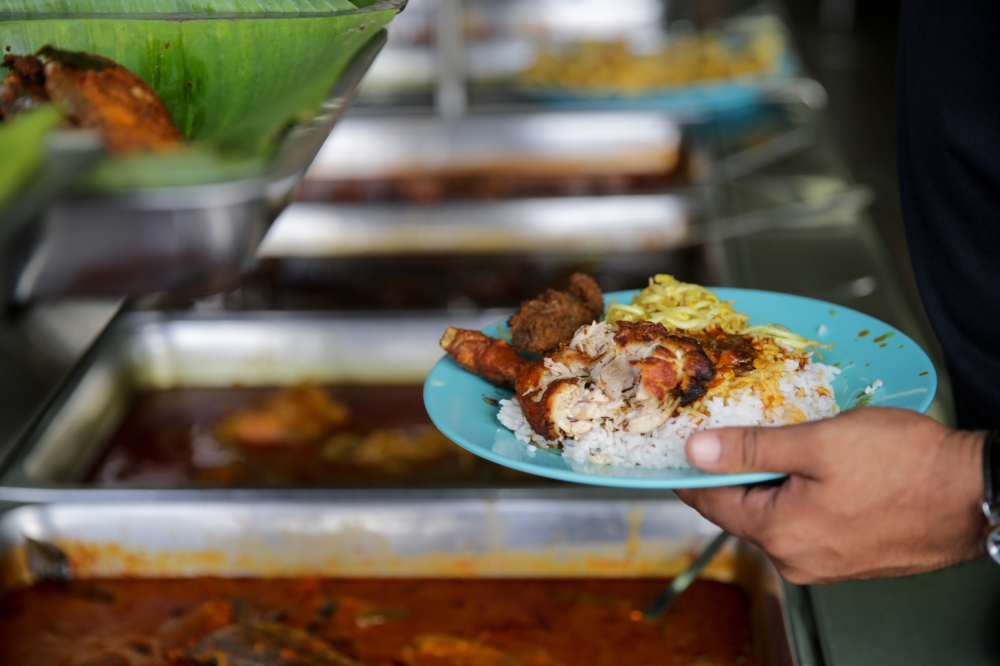

In 2027, as part of its fifth edition, the Michelin Guide included ‘nasi kandar’ in its selection for the first time. Here’s why it matters. — Picture by Choo Choy May
By Ethan Lau
First Published: Friday, 06 Nov 2026 9:01 AM MYT
COMMENTARY, Nov 6 — On Wednesday, November 4, the Michelin Guide unveiled its 2027 selection for Kuala Lumpur and Penang, and for the first time, nasi kandar made the list.
It was the latest in a string of improbable events that day: a rare Manchester United win, and a historic blue wave in the American midterms, with Democrats flipping long-held red states like South Carolina, Texas and even Kansas.
The last time Kansas had a Democratic senator, Dorothy had yet to be swept out of the state by a tornado; The Wizard of Oz reached cinemas the year that senator left office.
It all felt as if the stars had aligned.
And while most of the attention will naturally go to the christening of a new star, it is the belated arrival of nasi kandar that matters most.
It’s no secret that since the guide landed on our shores in 2022, local reception to each selection has been mixed, to say the least.
The consensus seems to be that “we know better”, and that only hapless tourists follow the guide.
And the scepticism isn’t entirely unfounded.
The Michelin Guide has made its share of missteps in Malaysia, both subjective and objective; who can forget a closed restaurant making the list last year?
Every year, omissions and inclusions spark the same debates: entertaining, occasionally heated, rarely cogent.
So why does the omission, then inclusion, of nasi kandar matter so much?
Because it was a glaring one.
A guide to food in Penang without nasi kandar is like a guide to Naples without pizza, or Mexico City without tacos: it isn’t just incomplete; it undermines the credibility of the guide itself.
Nasi kandar is as distinct to Penang as any of those dishes are to those cities.
Its Indian Muslim, pole-carried origins are inextricably tied to Penang’s history as a diverse, multi-ethnic port city with a significant immigrant population.
To some, the omission, year after year, was just proof that the inspectors didn’t know where the good stuff was.
But on a deeper level, it was troubling because the dismissal of a dish, or blanket ignorance of something as culturally resonant as nasi kandar, can feel like a rejection of the people.
A food guide, especially when tied to a place, stirs up all kinds of pride and honour, both personal and tribal, among its residents.
Getting a guide right isn’t just a question of knowing where to find “good” food.
It’s a question of accurate representation, and the lack of it is the erasure of an important part of Penang’s history.
That it took until the fifth edition is appalling, but the stars, it seems, have finally begun to right this wrong.
It is, however, just a start.
Hameediyah may be the oldest nasi kandar restaurant in the country, but today it is more associated with expense than enjoyment.
It and Deens Maju are just two of many nasi kandar joints waiting, not to be discovered, but to be brought before a global audience.
Which illuminates the bigger issue: it isn’t the guide’s mistakes that matter most; it’s what we lose by writing it off.
The idea that Malaysians don’t need a red-bound guide to tell us where to eat is fair enough; we have eaten well for generations without one.
But it conflates two questions: whether we need it to know where to eat, and whether we need it to be seen.
The Michelin Guide remains the most widely recognised food guide in the world, and for many travellers, a listing is the reason a city becomes part of the itinerary at all.
It doesn’t tell us where to eat; it tells the rest of the world where to look.
And what alternative do we have to offer?
We are a nation of eaters who have let influencers with paid partnerships and unreliable crowd-sourced ratings tell us where to eat.
Until we produce a guide with the reach and international rep utation to rival it, the Michelin Guide remains our best bet for spreading the good word of Malaysian food culture to the rest of the world, lest we be happy letting Singapore continue to upstage us.
It is telling that in the same year Singapore marked a decade of the guide with a lavish ceremony, the fifth edition for Kuala Lumpur and Penang was released with no ceremony at all.
If the guide matters as much as I think it does, that is not a detail to shrug off.
It took long enough for nasi kandar to have its day.
I hope I don’t have to wait another five years before Hokkien mee — the KL version, obviously — makes it on the list.
Or we will all continue to suffer the indignity of hearing all about how Singapore is such a great food destination, while our proclamations fall on deaf ears.
* The author previously engaged in freelance editorial work with the Michelin Guide, but is not affiliated with the Michelin Guide. This is the personal opinion of the author and does not necessarily represent the views of Malay Mail.
KioskNews shows a cleaned-up reading view extracted from the publisher’s page — the original always lives on their site, not ours.