History repeats in Shenzhen? China hosts another lame-duck US president
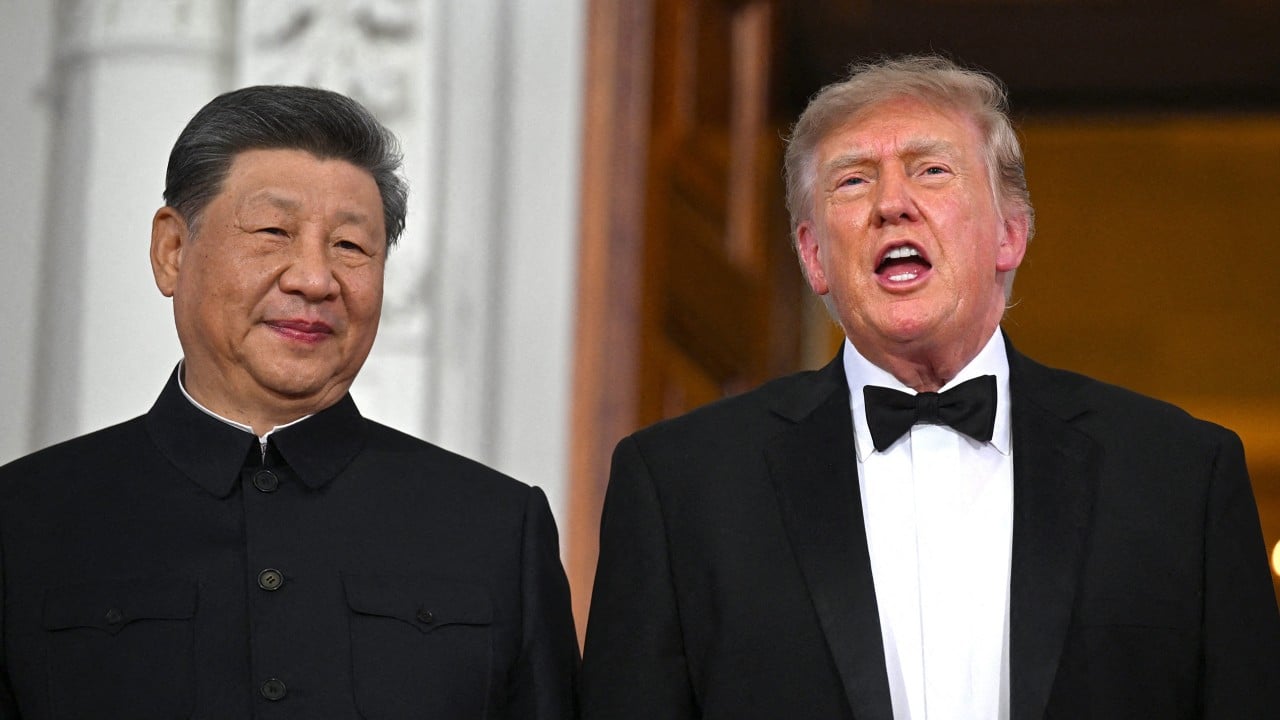
A decade after hosting a politically hobbled Barack Obama at a Group of 20 (G20) summit in Hangzhou, China is preparing to welcome another “lame-duck” US president for a multilateral gathering: Donald Trump.
Following the Republicans’ loss of both chambers of the US Congress in the midterm elections on Tuesday – a drubbing that reached deep into historically red states – Trump is expected to meet Chinese President Xi Jinping in two weeks on the sidelines of the Asia-Pacific Economic Cooperation (Apec) leaders’ meeting in Shenzhen. It will be their third face-to-face meeting this year.
Obama’s five-hour talks with Xi in 2016 did not prevent ties from later unravelling into a trade war after Trump took office – raising questions over whether Trump’s post-midterm vulnerability will limit his room for lasting diplomacy, even if he clinches quick deals in Shenzhen.
The midterm “Waterloo” could prompt Trump to avoid new frictions in ties with China and make him keener to strike deals on trade and international flashpoints to burnish his political standing, according to one Chinese scholar.
However, the US leader is unlikely to yield ground on technology or Taiwan to avoid political attacks from within his own party, the expert warned.
“That contradiction would run through his Shenzhen trip,” said Mei Yang, assistant director of the Shenzhen-based Institute for International Affairs, Qianhai (IIA).
Writing in a note published on Thursday, Mei argued that Trump was “clearly reluctant” to accept the political narrative that he had become a lame duck, with the next Congress not convening until January.
A meeting with Xi could offer Trump a chance to show domestically that the midterm setback “did not diminish” his political clout and to show globally that he was capable of representing the US on major international issues.
If the Shenzhen talks produce progress, Trump could extend the momentum to the G20 summit in Miami in December, Mei added.
“For a Trump eager to prove he still has governing capacity, such an arrangement has real appeal,” Mei wrote.
The meeting between Xi and Obama 10 years ago made little headway on bilateral ties, especially over trade, cybersecurity, the South China Sea and Washington’s deployment of the Terminal High Altitude Area Defence (THAAD) anti-missile system in South Korea.
The two leaders jointly announced they would ratify the Paris climate agreement, though many saw the move as papering over deep-rooted differences. Trump later withdrew the US from the accord during his first term as president.
Still, Obama and Xi both stressed a commitment to managing differences constructively and expanding cooperation across a range of fields.
Like his predecessor, Trump is now working to keep relations with Beijing stable, though the concept of “constructive strategic stability” agreed on earlier this year by the US and Chinese leaders is expected to be tested following the midterms.
In Shenzhen, Trump might be willing to discuss extending the trade truce that expires in January, adjusting tariffs on some goods and expanding market access for China in exchange for more Chinese purchases of US agricultural and energy products or improved access to the Chinese market for American firms, according to Mei.
The US leader could also seek to keep China’s supply of critical minerals, such as rare earths, stable and to strengthen law enforcement cooperation to combat narcotics and telecoms fraud, he added.
“Trump can frame these outcomes as tangible gains he negotiated for the United States,” he wrote.
The US-Israel war on Iran is widely seen as the main cause of the Republicans’ midterm rout. US Vice-President J.D. Vance publicly voiced that view on Wednesday, though Trump has stood by his decision to launch the operation.
Mei said Trump might seek to tap Beijing’s channels of communication with Tehran to reduce the diplomatic cost of resolving the conflict, push for the reopening of the Strait of Hormuz and create conditions for talks on Iran’s nuclear programme.
Trump might also hope to channel China’s ties with Russia to make progress towards a ceasefire and post-war arrangements in Ukraine, though he would not necessarily want China to act as a formal mediator, he added.
“Trump wants China to use its international influence to help the US solve problems, yet remains wary of China playing a greater leadership role in international affairs,” Mei said.
He said he did not expect Trump to significantly ease restrictions on China for high-end chips, artificial intelligence (AI) infrastructure or other key technologies.
“There is even less room for compromise on Taiwan and military security,” he added.
Mei said Trump was likely to take a “rather cautious” dealmaking approach, avoiding commitments that could be perceived as weak on Beijing on those issues.
Faced with a Congress controlled by Democrats, Trump could become more reliant on his political base, while trying to prevent Republicans from blaming his foreign policy for the party’s midterm defeat, Mei noted.
Beijing regards Taiwan as part of China, to be reunified by force if necessary. Most countries, including the United States, do not recognise Taiwan as an independent state, but Washington opposes any attempt to take the self-governed island by force and remains committed to supplying it with weapons.
“China and the US can look for areas of cooperation on trade, energy, counter-narcotics, anti-fraud efforts and some international hotspots, but Trump’s short-term need for deals does not mean that America’s strategic position toward China has changed,” Mei wrote.
He added that a single meeting between leaders could not “automatically erase long-accumulated differences”.
“Trump hopes to use diplomatic deals to strengthen his hand for the second half of his term, while China needs an external environment that can manage differences, expand cooperation and avoid repeated swings in the relationship,” Mei noted. “The two sides’ interests overlap, but each has its limits.”
While the 2016 Hangzhou visit was Obama’s final trip to China as president, taking place during his final months in office, Trump still has two years remaining in his second term.
Whether an Apec encounter between the US and Chinese presidents leaves an enduring legacy depends on how well the consensus reached in Shenzhen is carried out, according to Mei.
KioskNews shows a cleaned-up reading view extracted from the publisher’s page — the original always lives on their site, not ours.