Is Donald Trump’s ‘Chinamaxxing’ pushing Beijing’s soft power?
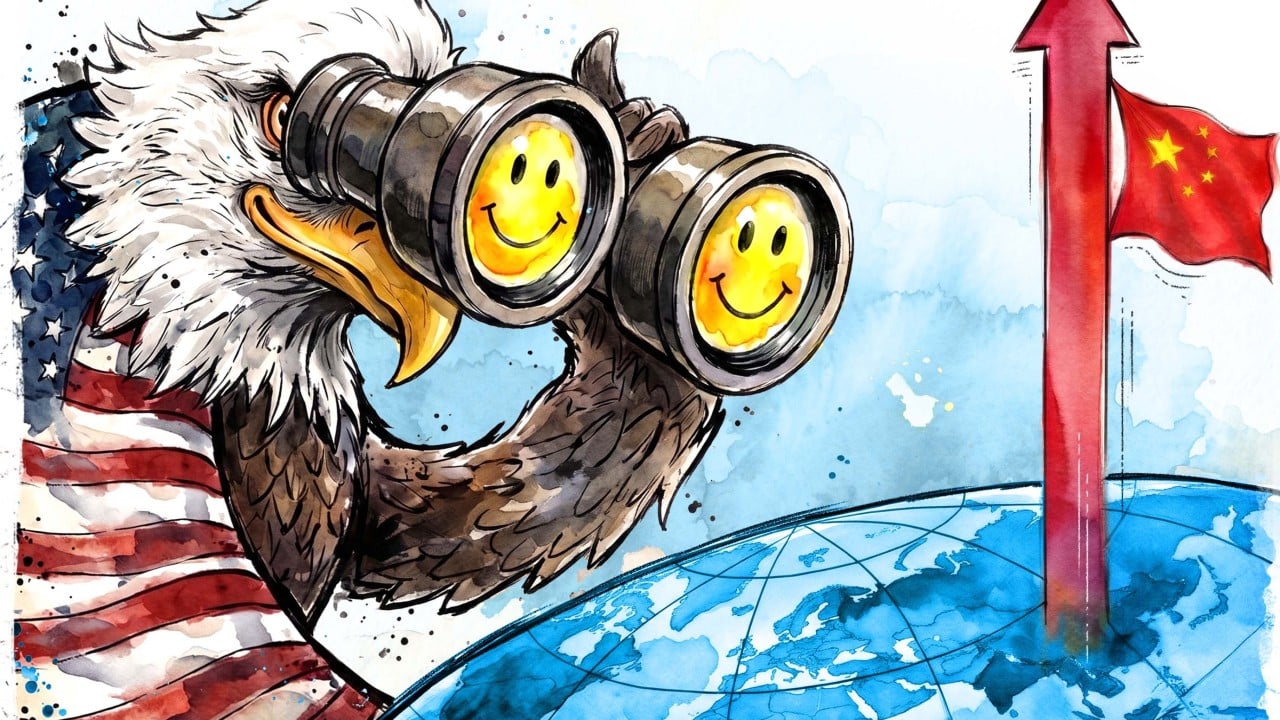
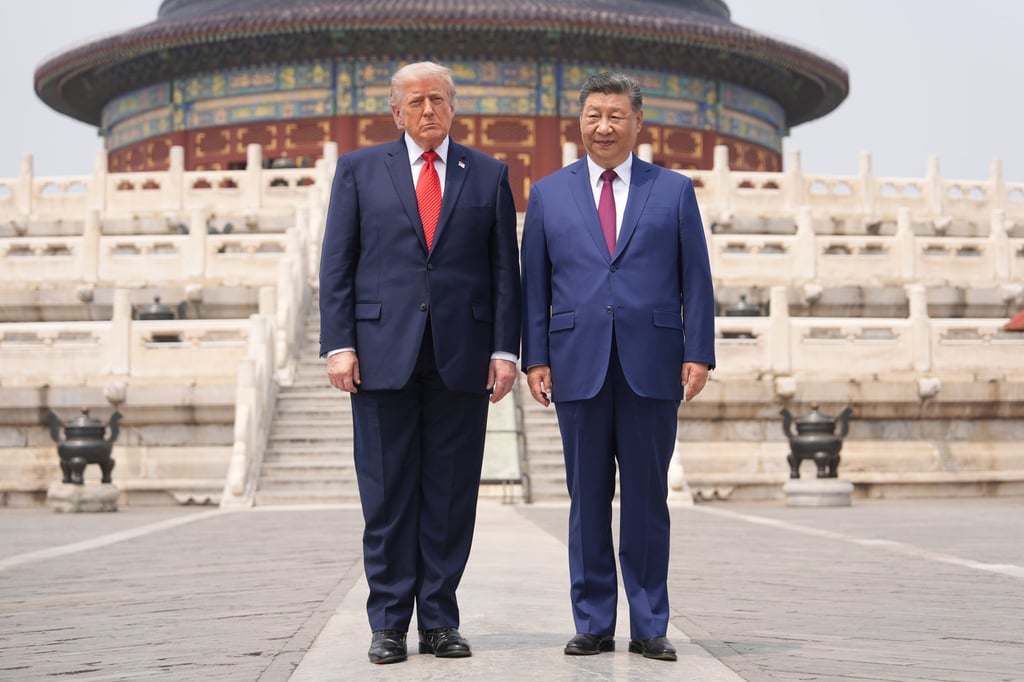
Since then, the pageantry has continued. Trump has welcomed Xi Jinping at the airport in Washington and hosted the Chinese leader for a state visit at his official residence. For a country many Americans still view as an adversary, the treatment has been striking. Trump is now looking to meet his “friend” twice more before the year comes to a close.
The warm optics, however, have yet to translate into the grand bargain many had anxiously anticipated. The strategic competition between the two powers remains firmly in place, whatever the personal bonhomie.
But the spectacle raises a question that goes beyond diplomacy: could Trump’s red carpet treatment of Xi help Beijing sell its version of China to the world?
00:50
Chinese and US leaders tour Beijing’s Temple of Heaven during Xi-Trump summit
For years, China’s efforts to shape its global image have often been dismissed in the West as propaganda. Beijing, however, has spent decades building relationships with foreign officials, journalists, academics and political figures, particularly across the Global South.
Observers say Trump’s approach may not have created these channels, but it could change the political environment in which they operate.
“Trump’s personal, transactional diplomacy creates opportunities for China to improve its international image,” said Xiaoyu Pu, a political scientist at the University of Nevada, though he expected the gains to be “modest”.
Pu noted that Trump “downplays” ideological differences between Washington and Beijing, while his “G2” framing conveys recognition of China as an equal great power.
“This helps Beijing present its political system as less of a barrier to international acceptance,” he said.
From activists to officials
One illustration of how China’s image is being contested comes from an unlikely group of American visitors.
SCMP Plus is a new premium news platform that gives you an
all-inclusive edge to stay ahead on China news.
To access our exclusive content you’ll need to subscribe.
Already a subscriber?
LOG IN
This month, the US anti-war group CodePink walked parts of the Long March route through Guizhou. The 12-day itinerary took the group through Zunyi, Loushanguan, Maotai and Guiyang – places associated with the Communist Party’s rise to power and the events that preceded the founding of the People’s Republic of China in 1949.
The historical parallel is hard to miss. In 1936, the American journalist Edgar Snow made his way to Communist base areas and later wrote Red Star Over China, helping introduce the Chinese Communist Party and the Long March to a wide Western audience. Ninety years later, American activists have again followed parts of the same trail.
CodePink framed the trip as a chance to see China beyond what it called “hateful and racist narratives” coming out of Washington.
“As the US continues to push hateful and racist narratives that China is to be feared, it is up to us, as peace-seeking citizens, to learn the truth that China is not our enemy,” the group wrote in a statement.
It described China as “one of the safest and most advanced countries in the world”, arguing that “only visiting China can expose you to the deep well of peace and serenity that permeates the air, and the warmth and kindness of the Chinese people”.
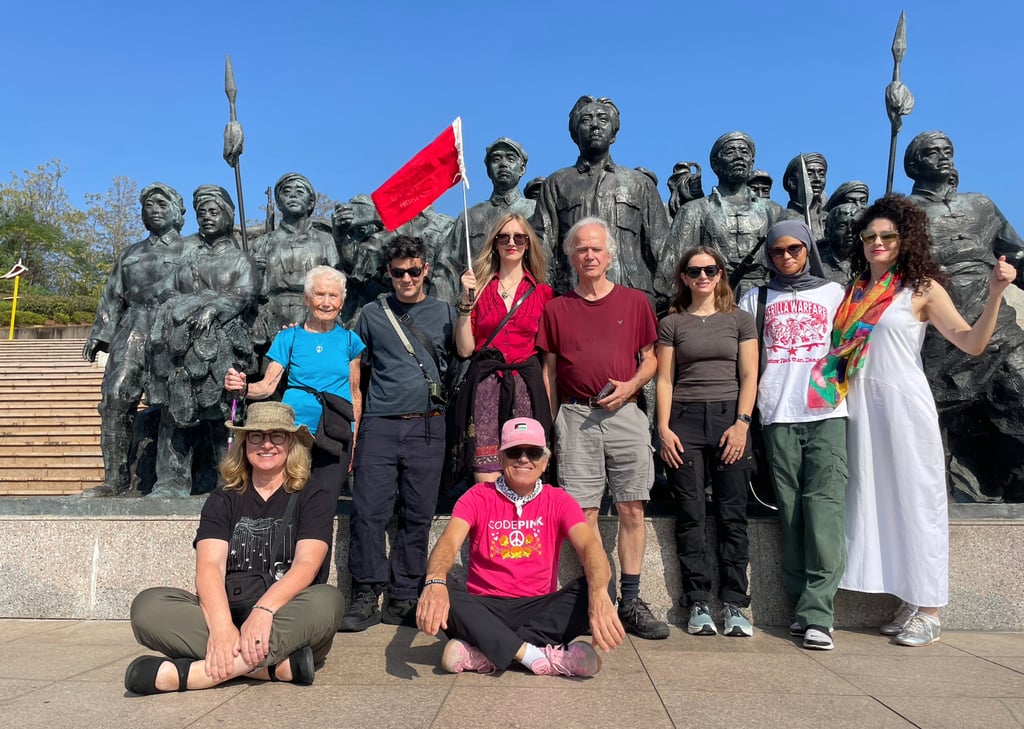
The group remains controversial. Co-founder Jodie Evans is married to Neville Roy Singham, a tech entrepreneur who lives in China and whose funding of progressive organisations has drawn scrutiny under the Trump administration.
But the visit comes amid a gradual shift in American public opinion. Pew Research Centre data shows the share of Americans with a favourable view of China rising from 14 per cent in 2023 to 16 per cent in 2024, 21 per cent in 2025 and 27 per cent in 2026.
CodePink represents just one strand of engagement with China. But its visit highlights how direct exposure to the country can become part of a larger contest over how China is understood abroad.
A different kind of outreach was under way in Beijing at around the same time. In mid-October, Ma Hui, a vice-minister at the International Department of the Communist Party of China Central Committee, met a group of young Latin American politicians and officials led by Peru’s first vice-president of Congress.
The participants, drawn from 16 countries, told their hosts they were struck by China’s modernisation achievements and intended to apply what they had learned at home.
The department has also run a degree-oriented programme with Renmin University for young Global South elites, designed to share Chinese modernisation experience and party-building practices.
Such initiatives are not new. Beijing has long used party-to-party exchanges, official training, educational programmes and other forms of engagement to cultivate relationships with foreign political and professional elites.
These initiatives allow Chinese officials to present the country’s development model on their own terms while building personal connections that can endure beyond a single visit.
The question is whether the changing political climate in Washington is making its long-standing efforts more effective, or simply more visible.
“Visits and training programmes can build goodwill, personal relationships, and interest in China’s experience. However, exposure does not automatically translate into lasting alignment,” Pu said.
Some participants may already be sympathetic to China, he noted, while others may admire its economic achievements or borrow particular policies without embracing its political system or consistently supporting Beijing.
“Favourable comments during a visit provide limited evidence of lasting changes in attitudes,” he said.
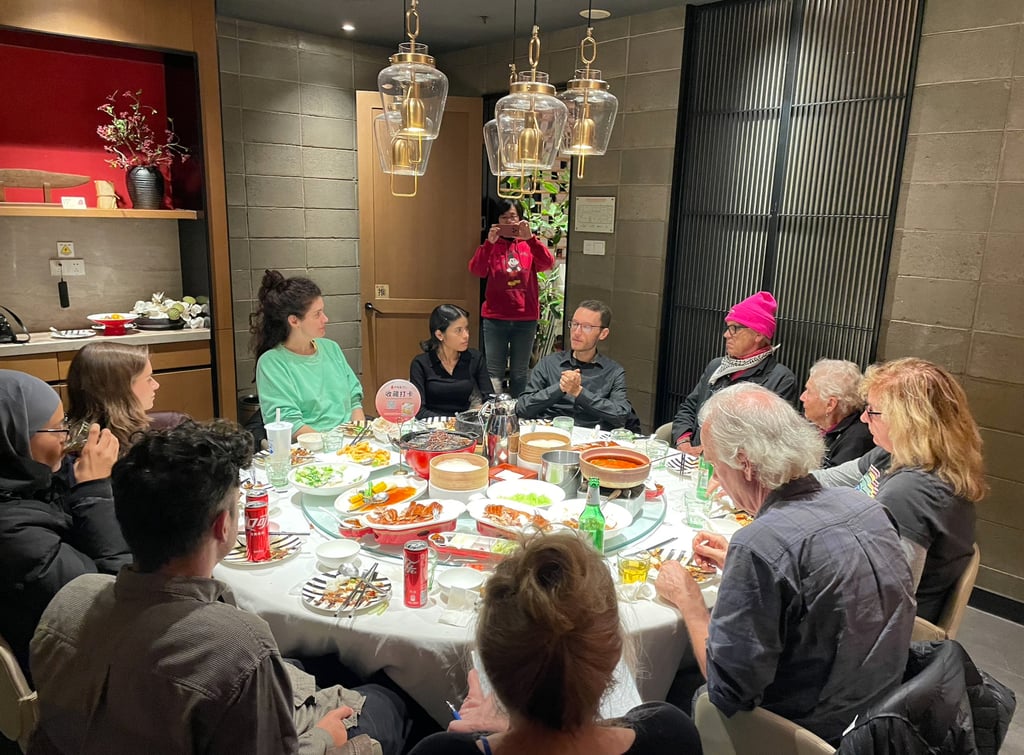
Josh Kurlantzick, author of Beijing’s Global Media Offensive, was sceptical of treating individual visits as evidence of a new soft power breakthrough. CodePink’s trip did not “add much”, he said, while delegation visits were “not particularly new”.
“China already has tonnes of exchange and training programmes for officials, journalists, et cetera from all over the world,” he said.
Tourism is another channel through which China can influence perceptions. Kurlantzick said China’s inbound tourism numbers had risen substantially before the Iran war made flying more expensive, adding that tourism was also a source of soft power.
Kurlantzick, a senior fellow at the Council on Foreign Relations, ruled out Trump’s personal relationship with Xi having “much to do with it”. What mattered more, he suggested, was the US government’s “own abandonment of many soft power efforts, like cutting foreign aid, alienating allies … certainly helps China a great deal”.
The Trump administration has significantly cut US foreign aid, moved to dismantle the US Agency for International Development, which coordinated much of that assistance, and sharply reduced the operations of Voice of America, the US government-funded international broadcaster.
A different model
For Lina Benabdallah, author of Shaping the Future of Power: Knowledge Production and Network-Building in China-Africa Relations, the changing tone between Washington and Beijing matters because it may give other countries greater room to manoeuvre.
She said the relaxed atmosphere was “definitely allowing Beijing to signal to its partners in the Global South that they don’t have to choose sides and can be moderate in their balancing between the two”.
“Human capital investments are a trademark of China’s soft power,” added Benabdallah, who teaches international relations and politics at Wake Forest University in North Carolina.
Such programmes allow Chinese officials to present narratives about China’s development, modernisation and political system directly to early career civil servants and professionals from Latin America and Africa.
According to Benabdallah’s research, these initiatives can be effective in shaping participants’ perceptions.
“Most people who participate in these trainings go home with a more positive impression about China than before the trainings,” she said, while cautioning that there was no evidence that participation necessarily led to greater political alignment.
Changing perceptions
In recent years, public opinion towards China has improved in many countries. Pew Research Centre’s Spring 2026 survey of 37 countries found that a median of 51 per cent of respondents held a favourable view of China, compared with 39 per cent who held an unfavourable view.
Attitudes were significantly more positive in many middle-income countries in Africa, Latin America and parts of Asia than in high-income countries, where majorities often remained negative, particularly in Japan, South Korea and parts of Europe. In the same survey, China was viewed more favourably than the US in most countries polled.
Gallup’s 2025 World Poll, covering more than 130 countries, found a global median of 36 per cent approving of China’s leadership, compared with 31 per cent for the US.
Ali Wyne of the International Crisis Group, a Washington-based think tank, argued that if receptiveness to China’s development path and foreign policy was growing, Trump’s disposition towards Xi probably played less of a role than two other factors.
One, he said, was that many countries now viewed Beijing as “less destabilising” than Washington. The other was China’s advances across critical and emerging technologies while “retaining authoritarian rule”, demonstrating to developing countries that “there are non-Western pathways to modernisation”.
Wyne noted that China had done “little to assuage the concerns that many of its neighbours have about its assertion of territorial claims in Asia” and the potential impact of its hi-tech exports on their economic competitiveness.
Pu likewise argued that political leaders, activists and wider publics may interpret the same Chinese experience very differently, depending on their domestic politics and interests.
“A warmer diplomatic atmosphere gives Beijing more opportunities to be heard, but the reception and effects remain selective and contested,” he said.
KioskNews shows a cleaned-up reading view extracted from the publisher’s page — the original always lives on their site, not ours.