Fantasy baseball 2027 early ADP takeaways: Shohei Ohtani holds firm, Aaron Judge slides and young stars soar
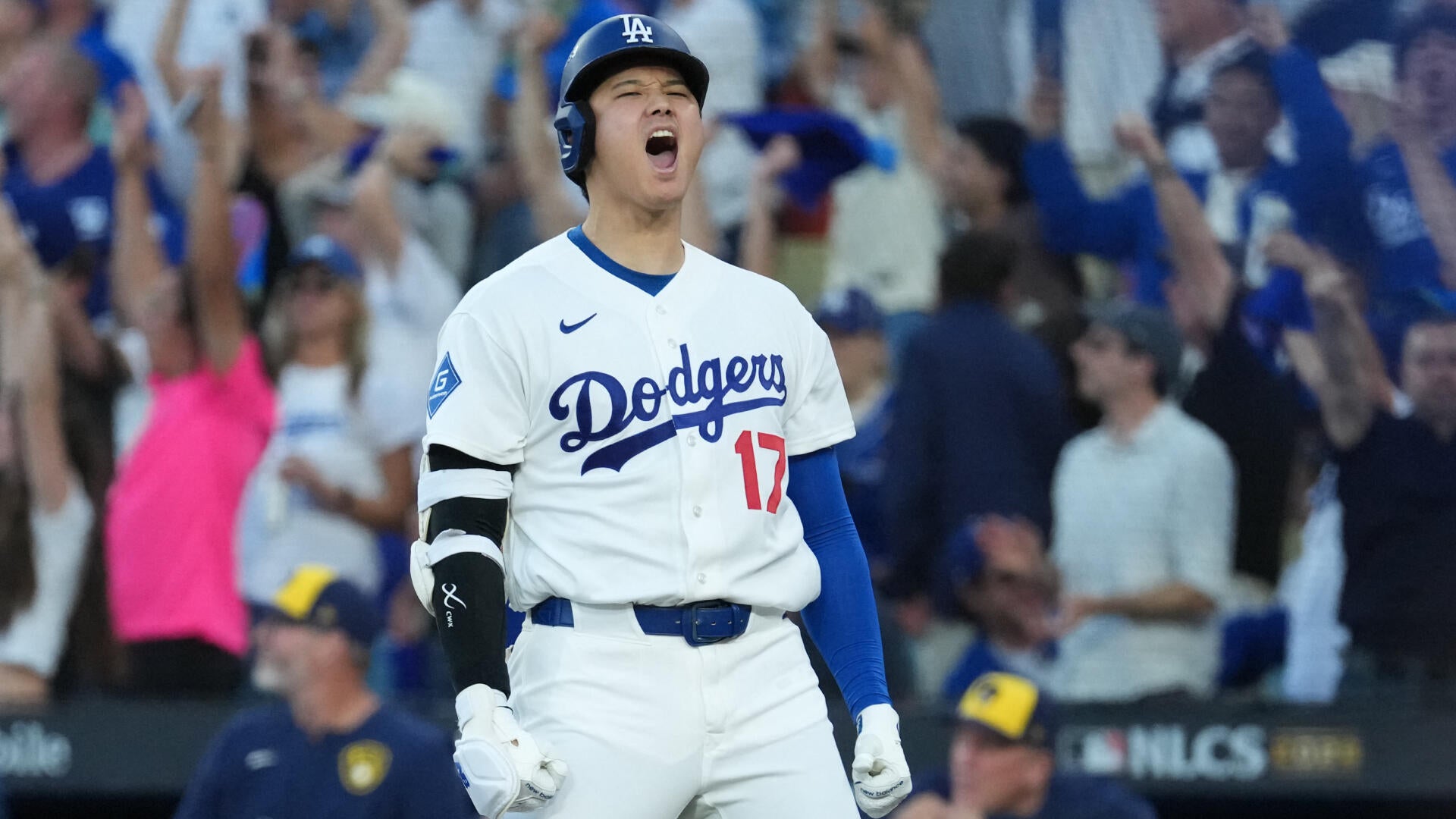
And just like that, the Fantasy Baseball offseason is officially here. The MLB offseason has kicked off with teams setting their 40-man rosters earlier in the week, and the hot stove will kick off … well, eventually. It's kind of hard to say how this offseason is going to play out, what with a lockout looming in less than a month and a potentially transformative new collective bargaining agreement set to be ironed out over a period of (hopefully) weeks and (likely) months.
But we should see some movement before then. There are already reports that Tarik Skubal is trying to sign before the lockout, and I would guess plenty of other players want to lock their deals in before a new CBA comes down with potential restrictions on team spending. And while the free-agent class is relatively weak, that, combined with the looming uncertainty, could make teams more willing to make their mark via the trade market.
But one thing is for sure: Fantasy baseball is still happening. Yep, drafts are already underway over on the NFBC platform, and I'm planning on jumping into a few of those myself in the next few days. I'll also be out at the First Pitch Arizona conference with my Fantasy Baseball Today co-host, where we'll be on panels and doing a live episode of FBT from the conference. If you're in town and you see either of us, come up and say hi!
To be clear: There aren't many drafts happening. As of this writing, the NFBC platform has seen 18 completed drafts, and none of them are your traditional 12-team, managed league. We're talking about best-ball-type leagues with no waivers, no trading and even, in some leagues, no bench spots. This is not how most of you will play Fantasy baseball in 2027, of course, and so the results will look pretty different, even without accounting for whatever shakes out over the next five months to change the landscape.
Still, it's data. It's very noisy data, subject to many caveats and changes between now and whenever you draft. None of what we're seeing should be taken as a sign of what things will look like in the future. But it's a neat snapshot of where things stand right now, and it can be useful to look at early trends.
So, with a boulder-sized grain of salt in hand, let's take a look at 10 interesting takeaways from the very first ADP data for 2027:
1. Shohei Ohtani is still No. 2
I think one of the toughest calls for 2027 is what to do with Ohtani. The case against him? He finished as the No. 40 hitter in 2026 and he'll be 33 by the midpoint of the season, to start with. On the other hand, he hadn't finished lower than seventh among hitters in any season since 2022, when he was 21st. The fact that he's a pitcher is a double-edged sword, though I generally lean toward it being a net-negative for Ohtani's value. On the one hand, yes, you can use him as a pitcher occasionally in these leagues, which matters on the margins; on the other hand, he tends to run significantly less often when he's pitching, and we saw how the added injury risk he takes on in his dual roles can limit him as a hitter even if he's technically healthy enough to play through it.
There aren't many players capable of hitting .300 with 50-plus homers, but Ohtani did it in 2024; he wasn't far off in 2025, and he was on pace for a .293 average and 40 homers before the second-half slide. The lack of stolen base potential in his current profile certainly takes away some of the insulation from his hitting slumps, and his spot on the aging curve means there is going to be a drop-off at some point. Did we already see it in 2026? If you're drafting Ohtani second overall, you're betting we didn't.
2. Aaron Judge is almost out of the top 10
I thought about taking Judge out of my top 12, so I can't say I'm surprised by this. But it's still a bit shocking to see Judge going near the end of the first round after being a consensus top-five pick for more than a half-decade. But he'll be 35 shortly after the scheduled Opening Day and didn't just miss 106 games in 2026; we saw the first signs that he may no longer be the clear best hitter in baseball. His strikeout rate jumped from 24% to 30%, and while his .537 expected wOBA on contact would still have been the best mark in baseball, it was only four-thousandths of a point ahead of James Wood; he was 35 points clear of Ohtani in 2025 and a whopping 67 points better in 2024. The strikeout rate only magnifies that. If Judge is still the best hitter in baseball, he's worth a top-five pick even with the injury risk, but if you can't bet on him being a true four-category outlier anymore, it's a lot harder to overlook the downsides.
3. Konnor Griffin is a second-round pick
I'm not shocked by this one either, but it's a tough pill to swallow. Griffin played an even 80 games as a rookie, which makes it easy to come up with what a full-season pace would look like: You just double the numbers. That gets us to a .272 average, 12 homers, 86 runs, 66 RBI, and 46 steals. That's … not worth a second-round pick. It's a worse version of what Bobby Witt Jr. did last season, when he finished as the No. 32 hitter.
A top-50-ish pace for a guy who debuted as a 19-year-old is, to be clear, pretty incredible, but this price requires improvement from Griffin to be justified. Of course, Griffin didn't hit his first homer until his 20th MLB game, and his pace looks a lot better if you take from his final 61 games: .297 average, 16 homers, 94 runs, 66 RBI, and 50 steals. That would be worth a top-20 pick without even accounting for the possibility that Griffin gets even better. I certainly don't think 16 homers is anything like the ceiling for a guy who was viewed as having plus-plus raw power as a prospect.
Get over the sticker shock. At least in a 5x5 Roto league, this is what Griffin is going to cost.
4. Jacob Misiorowski is the clear SP1
There was no question who the No. 1 SP would be, of course, not after the historic season Misiorowski just had. It's not even close, with Misiorowski sitting at 9.12 in ADP, compared to 14.06 for Skubal. It's not clear if Skubal has gone ahead of Misiorowski in any of the 17 completed drafts – Skubal has been picked as high as seventh overall, Misiorowski as low as 18th. However,h they likely came in separate drafts, I would guess. Skubal certainly has the longer track record of success, but even he can't quite touch the ceiling Misiorowski showed in 2026. Cam Schlittler represents the end of a clear tier with his 16.65 ADP, and I suspect things will look more or less like that all the way through next March.
5. Paul Skenes is still a top-10 SP
SP8, to be exact, and he actually has a slightly tighter spread of picks than SP7, Cristopher Sanchez: Sanchez has gone as high as 21st and as low as 45th, while Skenes has gone as high as 21st but no lower than 40th. That's genuinely surprising, because Skenes feels like one of the absolute toughest players to rank following two historically great seasons to open his career, followed by a deeply disappointing third. I would imagine projection systems are still going to be quite bullish on the guy with a 2.62 ERA, 2.83 xERA, and 2.73 FIP for his career, because you are generally bet off taking the totality of what a player has done in the past into account when projecting their future (while weighing more recent results more heavily, obviously). In Skenes' case, his velocity collapsed as the season went on, something most projection systems won't account for. I think I'll be lower on Skenes than this, but the real takeaway here is: I don't know if any ranking of Skenes for 2027 will be one you can make with confidence.
6. There's a bit of trepidation around Zack Wheeler still
He's at SP15, and in the overall range where nine pitchers are going between picks 49 and 65 on average, so he could end up as high as SP10 or as low as SP18 without too much changing about how he's being drafted. That sounds about right, but seeing as I ranked him seventh among starters, I do think this is a bit low. Wheeler pulled out of a mid-season lull and ended up putting up a 3.00 ERA and 1.05 WHIP, with peripherals that at least backed it up. He ended up throwing at least six innings in 64% of his starts, the 10th-highest mark of any pitcher, so he still showed he can handle an ace workload in addition to pitching like an ace. There aren't any obvious red flags in his production profile, so it just comes down to this: How much can you trust a soon-to-be 37-year-old starting pitcher who had Thoracic Outlet surgery last year? There is real risk involved with picking Wheeler, but if he ends up around SP15, I'll be fine with taking the chance. The skill set here still looks incredibly strong.
7. Vladimir Guerrero Jr. is still a top-75 pick
This remains one of the biggest questions for me as I look ahead to beginning the overall ranking process for 2027, and honestly, I thought he might slip further than this. This would be the cheapest Guerrero has been in drafts since before his MLB debut, so it's a pretty massive drop, but consider this: He has as many seasons in his past five with a top-30 finish as he does finishing outside of the top 200 overall. There's no question Guerrero has some high-end outcomes that would justify a pick as early as the first round, but more often than not, he's just a good, but not great Fantasy option. It's tough to bury him too much when we know that upside is still there (especially when his rare combination of plus raw power and contact skills is still intact, which we still saw in 2026), but at some point we also have to stop giving him credit for upside alone. If I can grab him as a low-end starting 1B, I think he's a fine pick, and this price would be reasonable enough. But I won't take him with a top-4 pick again.
8. Cal Raleigh is still a top-100 pick
It's pretty funny that Raleigh was better than Guerrero in both 2025 and 2026 but seems likely to fall even farther in drafts. Certainly, the batting average floor for Raleigh seems tougher to overcome than the power outage we saw from Guerrero, though I'd argue a sub-.200 batting average from your catcher is a lot easier to survive than a single-digit homer total from your first baseman. Still, Raleigh is a catcher with a lot of wear on his tires who will turn 30 before the end of the year and just fought through a ton of injuries en route to being one of the biggest disappointments in Fantasy, so a big drop in his price makes perfect sense. In one-catcher leagues, he'll fall easily outside of the top 100 and probably closer to 150 or later, but a pick around 90 in a two-catcher league seems like a reasonable bet on at least some kind of bounce-back here.
9. Mookie Betts is not a top-12 SS
Betts is clearly in decline. He had just two stolen bases in 2026 after stealing just eight in 2025, so I think that part of his game is gone. He has also run a BABIP below .280 in four of the past six seasons and below .260 in each of the past two, so I think the batting average is probably staying in that .260 "Doesn't help, but doesn't hurt you" territory, though probably with more room for decline than improvement at this point. The plate discipline and power are still pretty solid, but it all feels like where Jose Altuve was a few years ago – still clearly a helpful Fantasy option, but with a margin for error that continues to decrease.
I could see another season where Betts hits .260 with 25-ish homers and helpful run production, but the arrow is pointing in the wrong direction heading into his age-34 season. Altuve still had one more pretty good year at 35, and Betts can probably afford to lose a little bit more before he truly collapses. But I do think that day will come, and even in a relatively weaker year for shortstop, it's hard to talk yourself into Betts being a truly impactful player anymore. I think I'd still take him over someone like Cole Carrigg, who is a couple rounds ahead in this early ADP, but I think Carrigg probably has the higher ceiling at this point. So, it might be the right choice in the end.
10. Alex Bregman is not a top-100 pick
This one is genuinely pretty surprising. He's eighth at third base right now, within spitting distance of Manny Machado and Zack Gelof, but with a ceiling of 3B6 even if his price increases. Six is where I have him ranked, and that gap after the top five should be there, given Bregman's iffy batting average and non-existent stolen base numbers. But I am surprised to see him behind Machado and Gelof coming off a season where he emphatically answered questions about how his bat will play at Wrigley Field. The whole Cubs lineup seems likely to be worse in 2027, if for no other reason than both Ian Happ and Seiya Suzuki are free agents, so it's true that there is room for regression here with Bregman. And he probably isn't a pick with a ton of upside, so I suppose I can squint and see the case for the much more volatile Gelof ahead of him (even if I won't rank it anywhere close to that). But Bregman seems like an early value worth tracking as one of those boring old vets who tends to get pushed down draft boards for shinier objects. There's often value in that.
KioskNews shows a cleaned-up reading view extracted from the publisher’s page — the original always lives on their site, not ours.