6 ways bats are surprisingly human
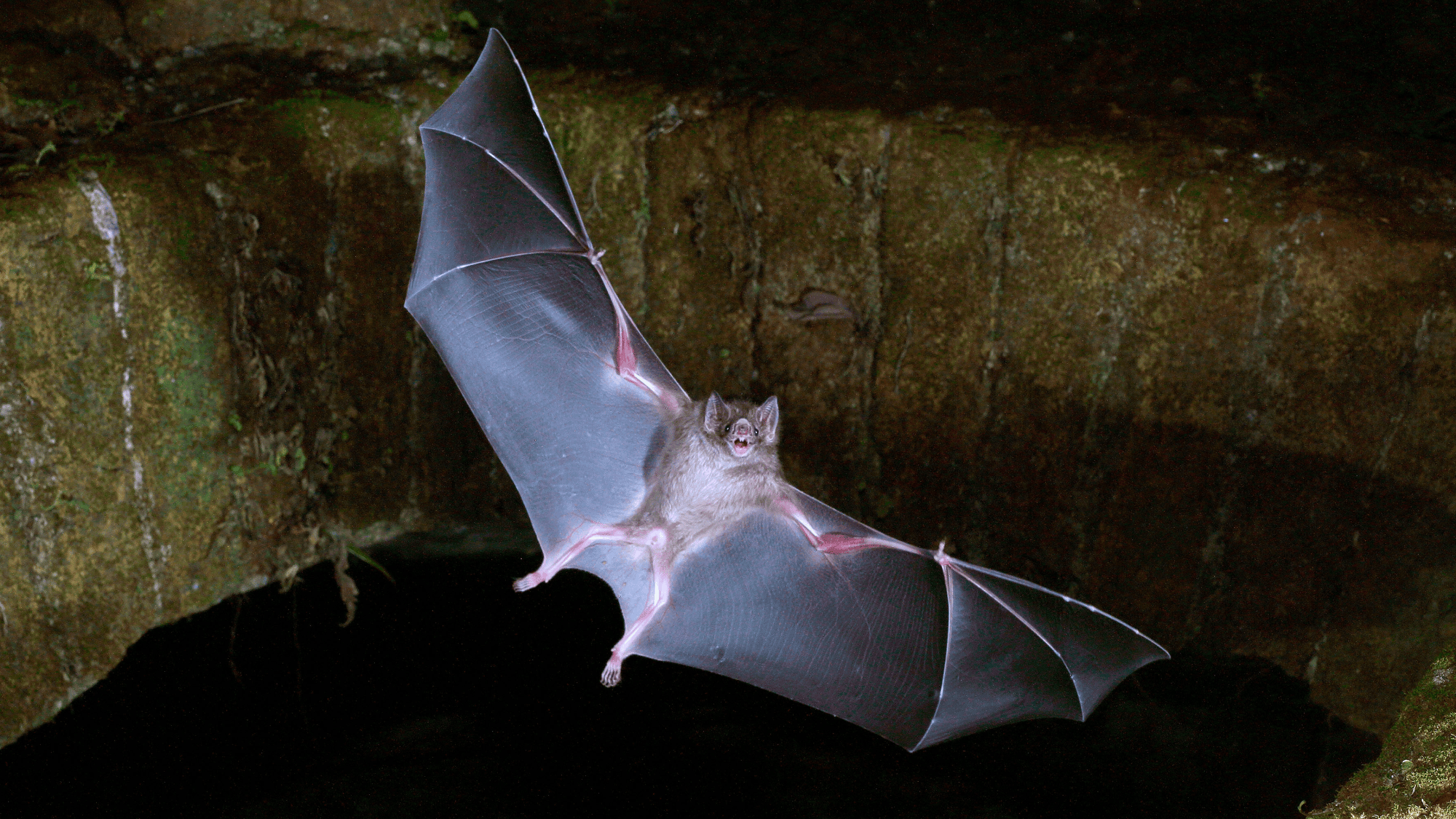
Bat Week officially begins today. It’s the one week where Earth’s only winged mammals get top billing. Often associated with disease, vampires, and other generally unpleasant things, bats are actually important pollinators and play critical roles in our ecosystem.
“They’re just so cool and so interesting. During first forays into bat studies, it was just one question after another,” Rachel Page, an evolutionary biologist at the Smithsonian Tropical Research Institute in Panama, tells Popular Science. “The more I sort of scratched the surface, the more interesting it became—which is the fun part.”
One reason bats are so interesting to scientists like Page is that they are surprisingly similar to humans. Here’s how.
Sharing food with friends
Sharing a meal with good company brings immense joy for us humans. For many vampire bat species (subfamily Desmodontinae), sharing food is a matter of survival. They survive exclusively on blood and can only go about two nights without a blood meal before they die. To get around this, they rely on their social networks.
“They have the equivalent of friends. Basically, if a bat comes back from a night of foraging and has not been successful, other members of that social group will share food,” Page explains. “They’ll regurgitate blood for the bat that came back hungry.”
If that donor bat has difficulty getting food later, the one recipient will often become the donor. “So there’s this very reciprocal relationship,” says Page.
Not being afraid to punch above their weight
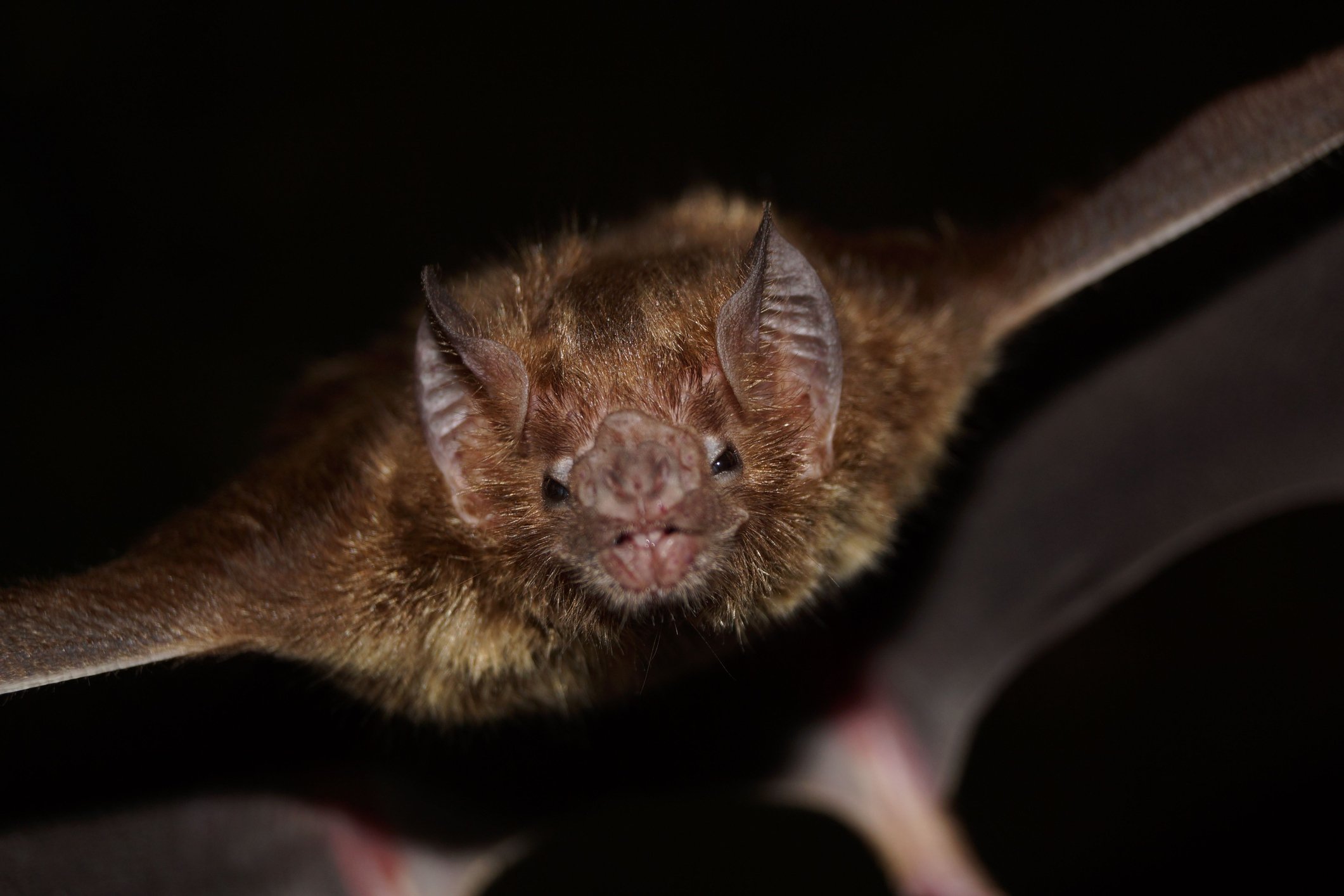
According to Page, bats will have their distinctive personalities just like people. It’s present across species, but also individual bats as well.
“You have some species that are very feisty, and they’ll go out of their way to pick a fight, and then other ones that are much more passive, calm, and very gentle,” she says.
At the edge of Panama’s Soberanía National Park, tiny, fruit-eating bats will take over the roost of larger, carnivorous bats. The Seba’s short-tailed bat (Carollia perspicillata) weighs roughly the same as a strawberry. By comparison, the frog-eating, fringed-lipped bat (Trachops cirrhosus) weighs roughly as much as an apricot and twice as much as the short-tailed bat.
Page and her colleagues in Panama have witnessed fights between the two species from roosts set up throughout the forest.
“Basically, it was the male Seba’s short-tailed bat who was instigating the fight. He was coming over and was kind of boxing and threatening much larger bats with wide open mouths and lots of teeth,” Page recalls. “And he just kept at it, and then finally, this group of fringed-lipped bats left.”

Roost Rulers_Small Prey Bully Large Predators…And Win
Figuring out their prey’s trick through problem solving
Even in the thick jungles of Panama, bats can find motionless insects on leaves. Initially, scientists believed that the thick tree cover would give small insects an “acoustic camouflage” that would confuse a bat’s echolocation system. But they were wrong.
The bats can see through this acoustic camouflage by changing the angle at which they approach the still insect.
“If you approach a flat leaf at just the right angle, you can actually get an echolocation signature,” Page explains. “You can get an echolocation signal that jumps back at you, but only if you direct your echolocation call at just the right angle.”
That’s exactly what the bats were doing in order to find insects who tried to hide in leaves.
Pushing their kids out into the world—literally
When it’s time for the babies to wean or leave the roost, mother tent-making bats (Uroderma bilobatum) will physically prod their young with their forearms.
“There is this interesting tug that you see across so many different species. For birds, when they’re ready to fledge, there’s this sort of uncertainty.”
Changing our behavior when someone is sick
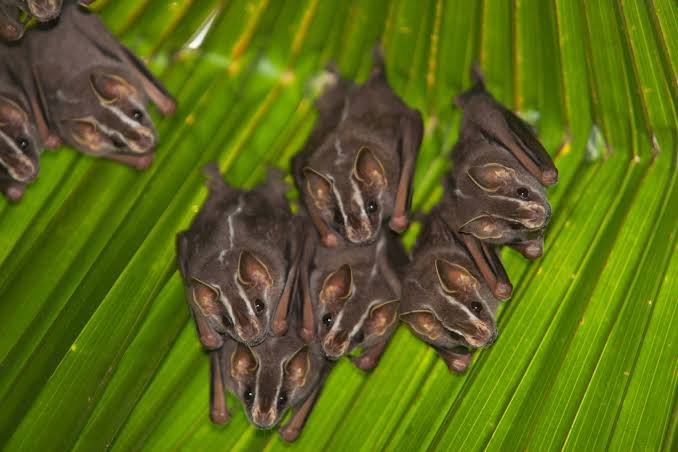
When sick, humans and even non-human primates change their behavior. We isolate so that the disease does not spread, and will look to plants and other sources of medicine for relief. Bats appear to change their diet to less nutritious leaves. While this may sound backwards, it’s in the hope that they have medicinal properties.
In an ongoing study with a team from the Ukrainian Bat Rehabilitation Center, the Smithsonian team is looking at the bats from Barro Colorado Island in Panama.
“We have fecal samples from these bats, so we were able to see exactly what they are eating,” says Page.
In addition to changing their diets, vampire bats will self-isolate when they are sick and others will act in a way familiar to any human parent—continuing to care for our young, even when sick.
“You don’t do as many of the normal behaviors unless it’s taking care of your babies,” says Page. “And again, it’s like a human relationship. If your little kid has a fever, you’re not going to shut them in a room and leave them. You’re not going to desert them.”
Learning by listening
To find dinner, the fringe-lipped bat (Trachops cirrhosus) will listen in on their prey’s mating calls. These frog-eating bats eavesdrop on the mating calls that the male frogs use to attract females. They then use the calls to assess if the frog is edible or poisonous before going in for the kill.
“They’ve really cracked this communication of another entire group,” says Page.

Fringe-lipped bats react to túngara frog calls
According to Page, it’s similar to being in a quiet room and hearing someone open up a bag of potato chips and is loudly eating. The noise makes everyone pay attention. “Bats attend to those acoustic signals of other bats, and that attention then helps them learn,” Page says. “They can learn those distinctions of palatable versus poisonous, and they can learn that socially as well from observing the other behaviors with bats.”
To learn more about bats and how to help protect them, visit Bat Week’s website.
KioskNews shows a cleaned-up reading view extracted from the publisher’s page — the original always lives on their site, not ours.