Why two people with same BMI can have different risks of diabetes, heart disease and fatty liver

Two people can have the same weight and body mass index (BMI) but very different risks of developing diabetes, cardiovascular disease and fatty liver. The reason may lie in their body composition, particularly how much muscle and fat they carry and where they store that fat.
A question posted on Quora read: Why can two people with similar body weight and BMI have dramatically different risks of diabetes, cardiovascular disease and fatty liver?
We reached out to Dr Saurabh Juneja, Director and HOD, CTVS, Cardiac Sciences, ISIC Multispeciality Hospital, to understand why BMI alone may not tell the whole story about a person’s metabolic health.
DISCLAIMER: This article is based on information from the public domain and/or the experts we spoke to. Always consult your health practitioner before starting any routine.
Why can people with the same BMI have different health risks?
“BMI only measures weight relative to height. It does not show how much fat a person has, where that fat is stored, or how much muscle they carry,” Dr Juneja explains.
This means two people with identical BMI readings can have very different body compositions. “One may have more muscle and less harmful fat, while the other may have excess fat around internal organs,” he says.
This internal fat, known as visceral fat, matters because it is metabolically active. “This hidden fat can increase inflammation, insulin resistance, cholesterol abnormalities and liver fat, raising the risk of diabetes, heart disease and fatty liver,” Dr Juneja explains.
Story continues below this ad
Unlike fat stored just beneath the skin, visceral fat releases fatty acids and inflammatory substances that can interfere with the body’s ability to regulate blood sugar and fats.
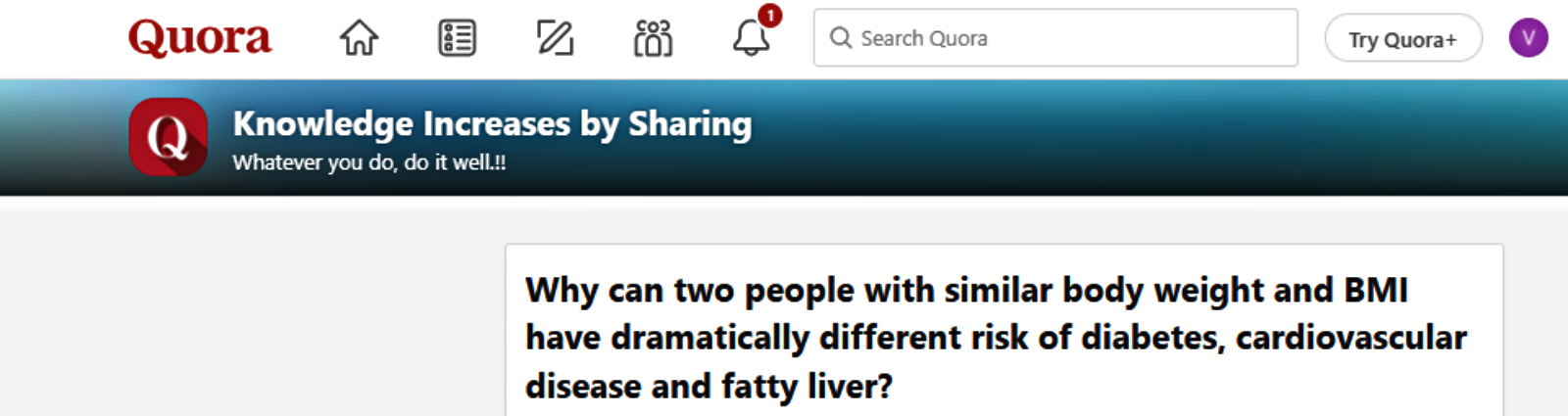 Screenshot of the query posted on Quora
How does excess abdominal fat affect different organs?
The effects of excess visceral fat can extend beyond a larger waistline, influencing blood sugar regulation, blood vessel health and fat accumulation in the liver.
Diabetes: “Excess visceral fat releases fatty acids and inflammatory substances that make the body’s cells less responsive to insulin,” Dr Juneja says.
Insulin helps glucose move from the bloodstream into cells, where it is used for energy. When the cells become less responsive to this hormone, a condition known as insulin resistance, blood sugar levels can rise, increasing the risk of type 2 diabetes.
Story continues below this ad
Cardiovascular disease: “Visceral fat contributes to high blood pressure, unhealthy cholesterol levels and chronic inflammation, all of which damage blood vessels and increase the risk of heart disease and stroke,” Dr Juneja explains.
These changes can increase cardiovascular risk even in people whose BMI falls within the normal range.
Fatty liver: “Excess fat stored around abdominal organs can accumulate in the liver,” Dr Juneja says. Fat accumulation in the liver can lead to fatty liver disease, although not everyone with the condition develops inflammation or liver damage. In some people, the disease can progress over time.
Can someone with a normal BMI still be at risk?
Yes. A person can have a normal BMI but still carry excess visceral fat or have relatively low muscle mass. This is sometimes described as normal-weight obesity.
Story continues below this ad
“Such individuals may appear healthy from the outside but can still develop insulin resistance, fatty liver, abnormal cholesterol levels and heart disease,” Dr Juneja says.
He adds that this is particularly relevant among South Asians, who tend to store more fat around the abdomen even at lower body weights.
Body composition is not the only factor that influences disease risk. “Genetics, age, gender, physical activity, diet quality, sleep patterns, stress levels, smoking, alcohol consumption and family history all play a role,” Dr Juneja explains.
Muscle mass also matters because muscles help regulate blood sugar. Genetic differences can influence where the body stores fat, making some people more vulnerable to metabolic conditions despite having a seemingly healthy weight.
Story continues below this ad
Which tests can reveal risks that BMI misses?
BMI can be a useful starting point, but it cannot independently establish whether someone is metabolically healthy. Other measurements and tests can help identify potential risks.
Dr Juneja recommends checking waist circumference and waist-to-height ratio to assess abdominal fat. Blood tests such as fasting blood sugar, HbA1c, lipid profile and liver function tests can help identify metabolic problems. Blood pressure monitoring is also important when assessing cardiovascular risk.
“In some cases, body composition analysis, ultrasound scans or advanced imaging tests can detect visceral fat and liver fat that BMI cannot reveal,” he says.
A person’s weight, therefore, is only one part of the picture. Looking at abdominal fat, muscle mass, blood sugar, cholesterol, blood pressure and other clinical markers can provide a more complete assessment of metabolic health.
Story continues below this ad
DISCLAIMER: This article is based on information from the public domain and/or the experts we spoke to. Always consult your health practitioner before starting any routine.
KioskNews shows a cleaned-up reading view extracted from the publisher’s page — the original always lives on their site, not ours.