The Witch Farm review – this creepy tale is laugh-out-loud funny … without meaning to be
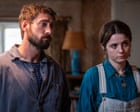
A lot of strange and scary stuff happened in 1989 at Heol Fanog, a lonely farmhouse at the foot of Bannau Brycheiniog (formerly known as the Brecon Beacons). English artist Bill Rich and his pregnant Welsh partner, Liz, moved there with Bill’s teenage son to begin again, replacing the complexity of urban life with the still silence of the remote countryside. But their new start became a protracted nightmare when they experienced what seemed to be supernatural phenomena – and the Heol Fanog ghosts would keep appearing to the Rich family for another seven years.
The case – nicknamed the “Welsh Amityville” for its similarities to the US’s most famous instance of reported paranormal activity – has long haunted Danny Robins, presenter of the podcast and BBC Two TV series Uncanny, in which he investigates claims of interactions with the undead. Heol Fanog stands out because of the sheer number of eerie events, the length of time across which they took place, and the multiple witnesses: if you can explain this, what about that? Or that? Or, oh my God, THAT?
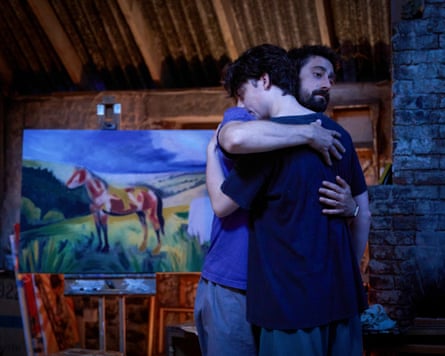
In 2022, Robins made a nine-part BBC audio documentary about Heol Fanog, with Joseph Fiennes and Alexandra Roach playing the Riches in dramatised inserts, but the itch persists and so here is a full-blown drama, written by Robins, telling the tale again. Michael Socha and Gabrielle Creevy play the doomed couple, with Lewin Lloyd as Bill’s son, Jonathan.
Robins’s factual programmes can be frustrating for those of us who are sure that death is final, that the departed cannot communicate with us, and that if they did they probably wouldn’t choose annoyingly obscure and ambiguous methods such as slamming doors, knocking ornaments off shelves and making noises in the night. He comes across as a sceptic at heart, and Uncanny’s format includes two warring “experts”, one of whom is a parapsychologist who puts forward earthly explanations for supposedly spooky goings-on. But too much reason would spoil the fun and Robins, a skilled showman, typically lets the science guy’s objections be overwhelmed by a tide of intoxicating hogwash.
Repackaging the saga of Heol Fanog as fiction allows Robins, and us, to loosen up. Yes, it’s based on fact, but the writer is under no obligation to stick precisely to what is known to be true. Ghosts can just be real, and viewers who disagree in everyday life can – at night, in front of a screen – still suspend disbelief and enjoy a good yarn.
The Witch Farm has classic ghost-story elements in abundance. Bill, Liz and Jonathan are a unit riddled with vulnerabilities, from Jonathan’s abiding resentment at Bill’s role in the end of his marriage to Jonathan’s mother, to Bill’s currently dormant alcoholism and stalled career as an artist. Liz is about to have a baby with a man we sense is a risky choice for her – Socha’s skill in portraying matey charmers in denial about the consequences of their own weakness means he’s very well cast here – and the trio are, by buying such a gnarly property, messing with things they don’t understand, possibly including Bill the Englishman having rashly moved to rural Wales. The house is rough and rickety with odd, dusty junk in the attic; to ram home how unsettling the place is, there’s a derelict stone building at the bottom of the garden, its old cellar now a seemingly bottomless pond, the surface of which is a pitiless black mirror. The farmer who lives up the road (played by Robert Pugh) is a bit frosty as well.
But because the story of Heol Fanog has so much in it, even a four-episode series has to move uncomfortably fast. The Witch Farm can’t hang about if it’s going to cover the plentiful aberrations turned up by the original podcast series, which touched on historical murders, ancient curses and even ley lines in addition to regular visions of the dead. Consequently, it breaks the rule that horror stories have to wait as long as possible before showing us the monster.
There’s no slowly accumulating dread here: it’s bedlam in that house from day one and, although the show makes some use of claustrophobic closeups, sudden switches to shaking handheld cameras and liminal glimpses of the atrocious – there’s one shot of a swiftly retreating spectre that does chill the hackles – it soon abandons the effort to build atmosphere and shows its hand instead. Our first clear sighting of what the Riches are haunted by arrives far too early and is so unsubtle, it’s laugh-out-loud funny.
Liz’s new-mum insecurities, Jonathan’s turbulent adolescence and Bill’s mental fragility give the drama all it needs to be a powerful ghost story. But the best ones exploit the idea of malevolent phantoms as allegories for human frailties, and The Witch Farm’s genesis means it hasn’t time for that. This is one for true believers.
KioskNews shows a cleaned-up reading view extracted from the publisher’s page — the original always lives on their site, not ours.