Blue oasis in a shipping lane
The islands provide more than just visual respite from the pollution. They have also been a refuge for wildlife in the Singapore Strait – one of the world’s busiest shipping routes – since the marine park was announced in 2014.
On Oct 26, California-headquartered marine conservation organisation Mission Blue will designate the marine park a Hope Spot – Singapore’s first – to recognise it as an area that serves as a sanctuary for marine biodiversity and an important contributor to the health of the seas.
It joins 171 other Hope Spots globally, including sites renowned for their marine life, such as the Bunaken National Park in Indonesia and Australia’s Great Barrier Reef. Since Mission Blue started the initiative in 2009, 10 Hope Spots have been designated in South-east Asia.
An oasis for marine life
The marine park, located among the southern islands off mainland Singapore, is a testament to how life can cling on and even thrive in a heavily urbanised island-state.
Research has shown that the coral reefs within the marine park act like mother reefs, releasing free-floating coral larvae that settle in neighbouring sites and create new habitats there.
We saw a sign of this while glancing into one of the moon pools along the Sisters’ Islands boardwalk – openings that allow visitors a glimpse of the sea beneath their feet.
Jani Tanzil, a coral reef biologist, pointed out some corals growing along the edges of the pool. “Those corals grew here naturally,” she said. “They were not planted by us.”
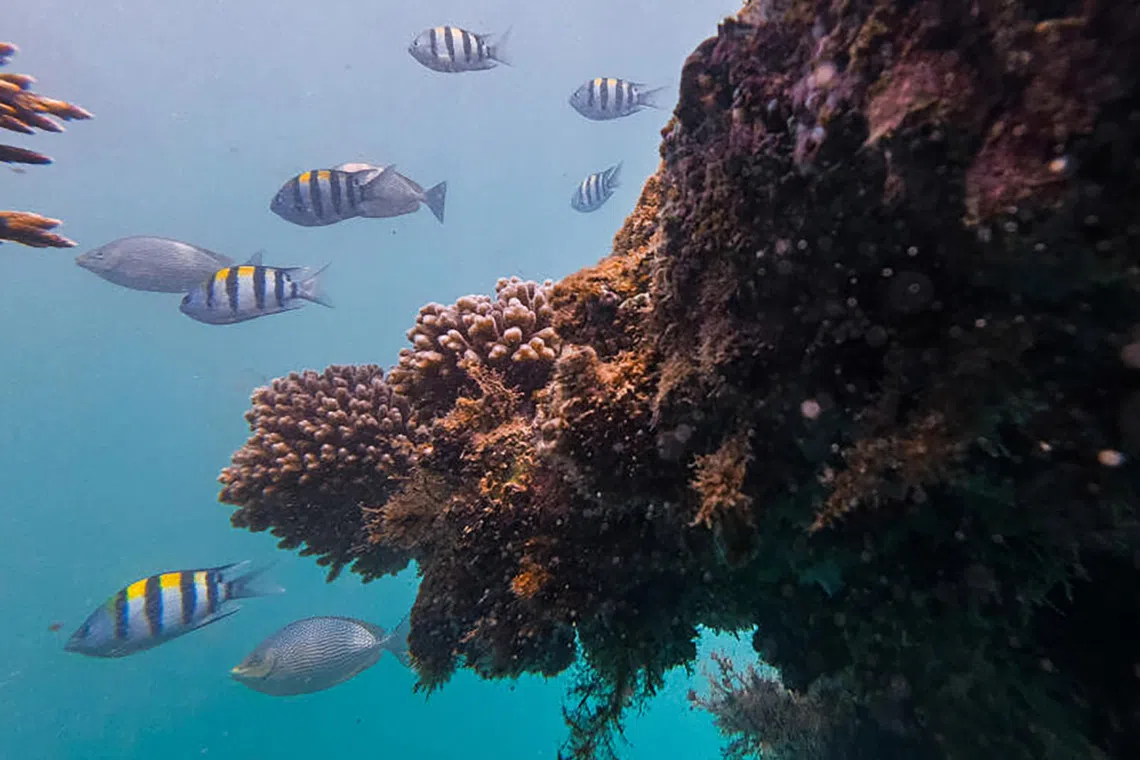
Naturally grown corals thriving beneath the Sisters’ Islands Marine Park floating boardwalk.
ST PHOTO: GAVIN FOO
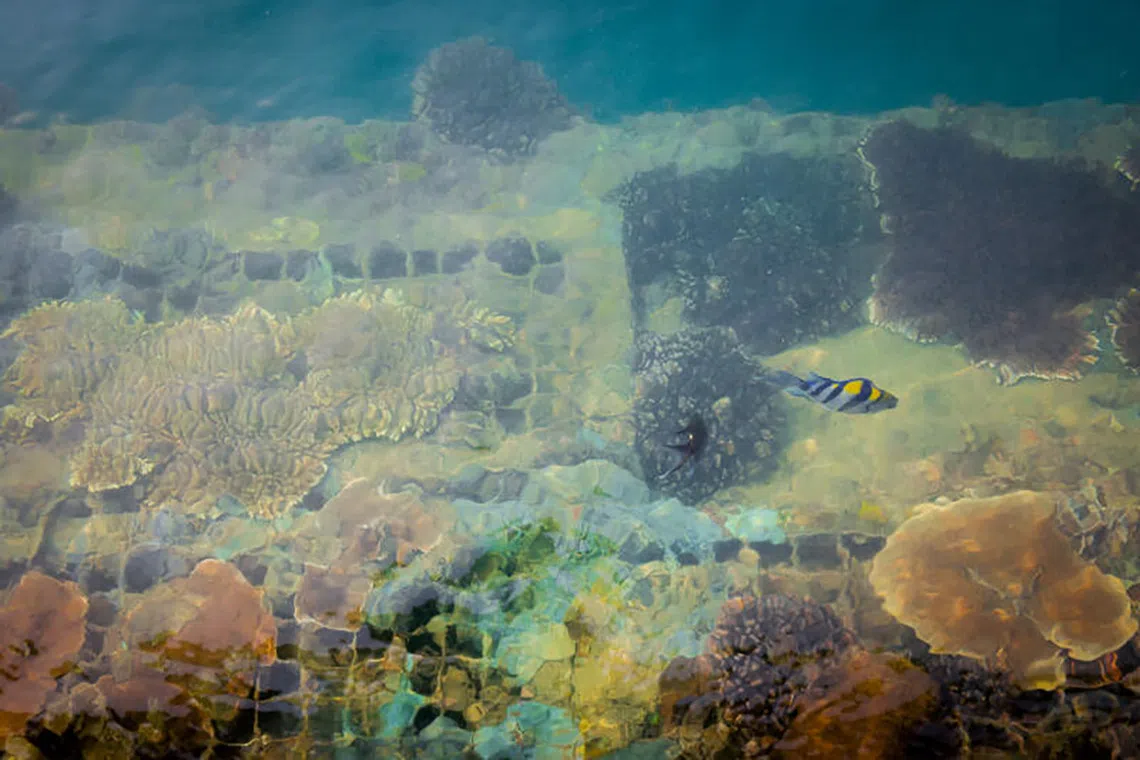
Corals – both naturally grown and planted – on an artificial reef structure beneath the floating boardwalk.
ST PHOTO: GAVIN FOO
Tanzil is one of two co-chairs of the Friends of Marine Park – a network that works closely with the National Parks Board (NParks), the government agency that manages the marine park, on conservation programmes, activities and outreach efforts related to the marine park.
Its members include conservationists, marine scientists, heritage experts, as well as representatives of sea sports organisations and educational groups.
Tanzil and marine scientist Sam Shu Qin, the other co-chair, led efforts to nominate the marine park as a Hope Spot. “The conversation among the community started about two years ago, and we submitted the nomination papers in July 2026,” Sam said.
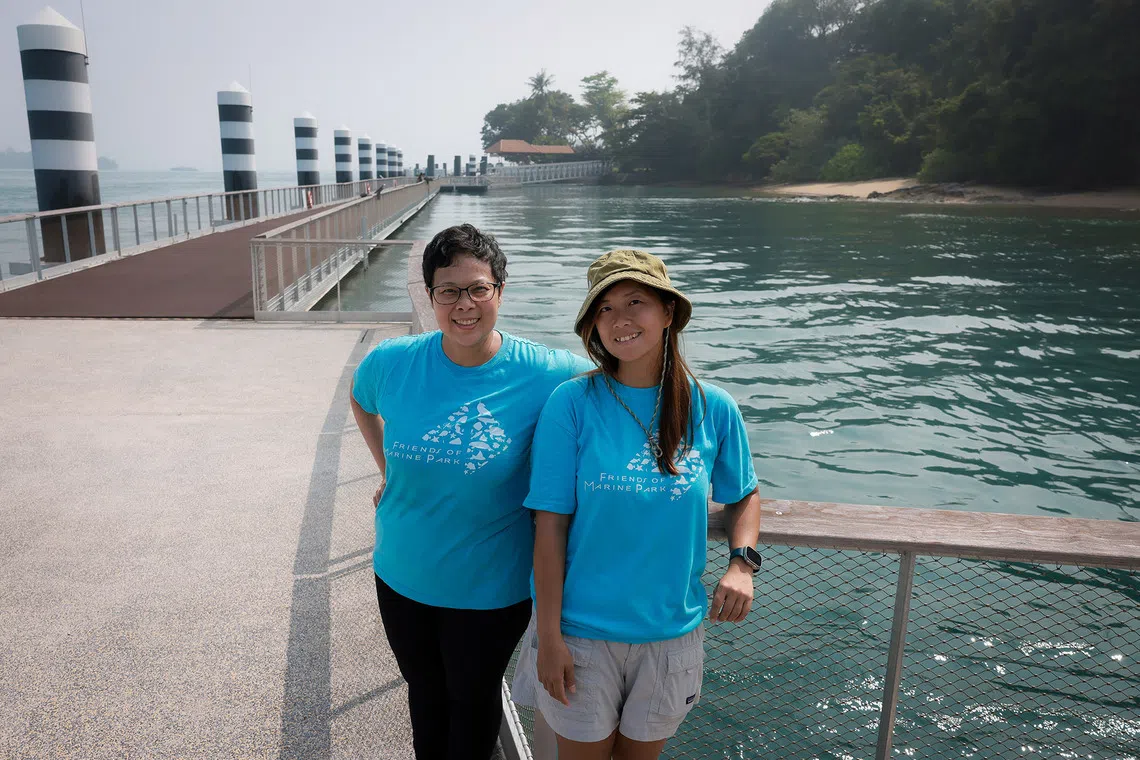
Jani Tanzil (left) and Sam Shu Qin, marine biologists and co-chairs of the Friends of Marine Park community, at Sisters’ Islands Marine Park.
ST PHOTO: GAVIN FOO
The duo were guiding a team from The Straits Times around the marine park, ahead of its official designation as a Hope Spot.
Features visitors can view include the floating boardwalk, a coastal forest trail with a hilltop viewing deck, and a lagoon tidal pool that supports mangrove and seagrass restoration, as well as educational and monitoring programmes.
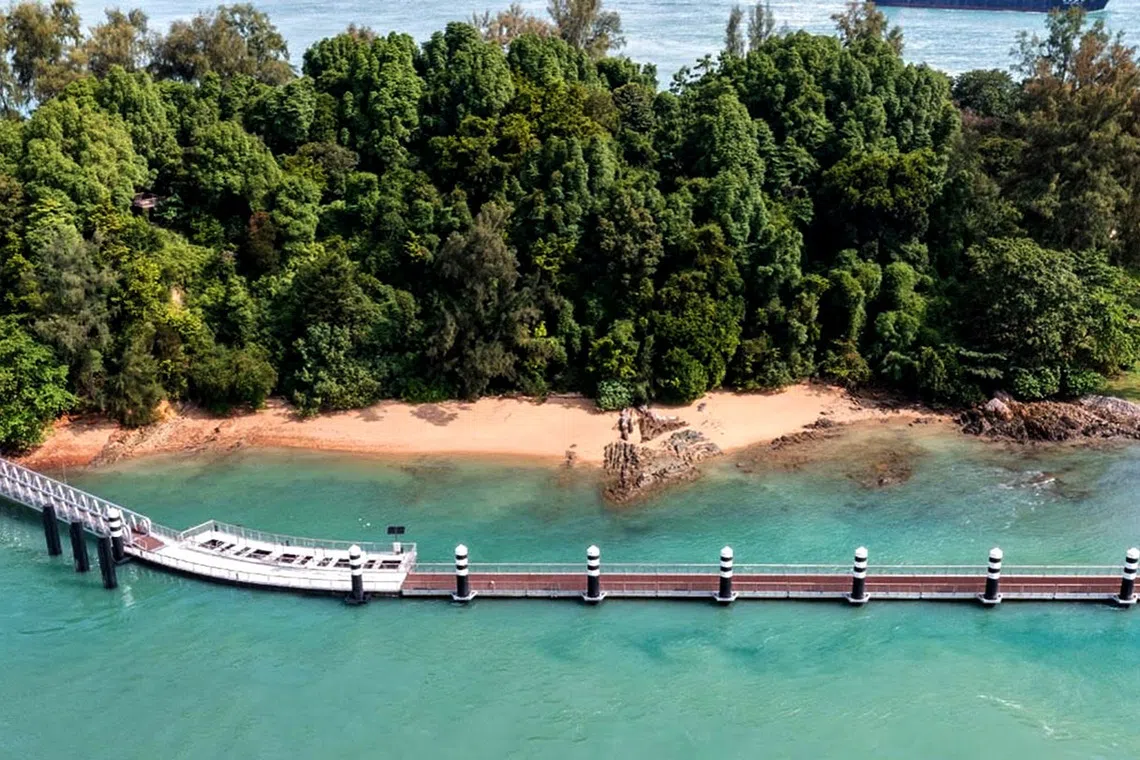
An aerial view of the floating boardwalk at Sisters’ Islands Marine Park.
PHOTO: NPARKS
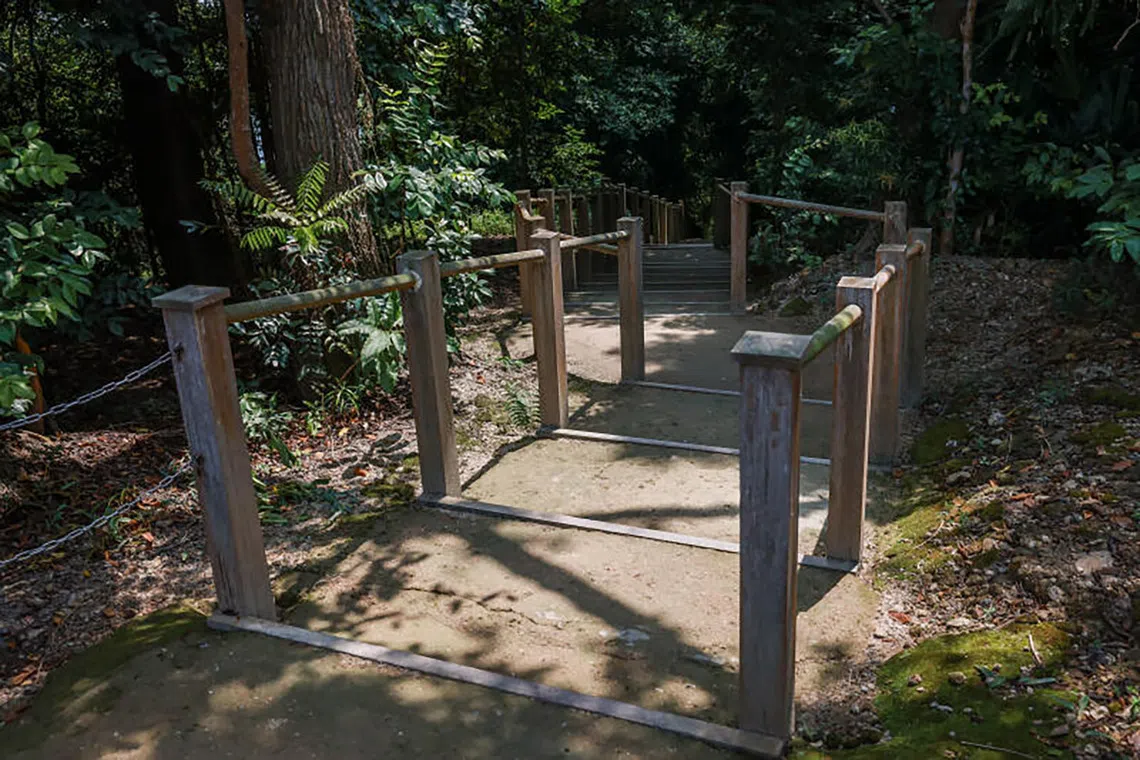
The Ocean Network Express Coastal Forest Trail on Big Sister's Island.
ST PHOTO: GAVIN FOO
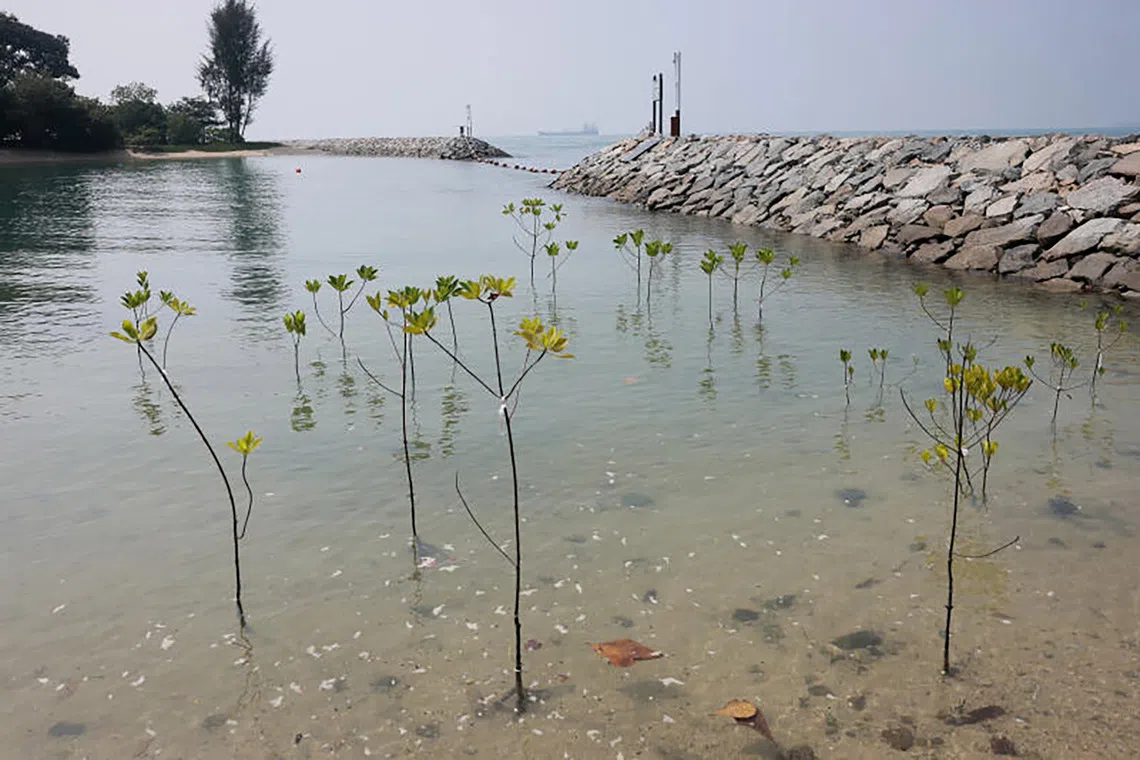
Mangrove saplings in a lagoon at Sisters’ Islands Marine Park.
ST PHOTO: GAVIN FOO
Small Sister’s Island, the smaller of the two islands, is not open to the public as it is zoned for research and conservation, including the nation’s first turtle hatchery.
Mission Blue evaluates Hope Spot nominations based on various factors, including an area’s ecological and scientific importance, presence of threatened species, existing or potential protection, and the strength of local leadership and community support, a spokesperson said.
She noted that the Sisters’ Islands Marine Park protects a variety of habitat types, including coral reefs and mangroves, alongside one of the world’s busiest shipping corridors. The reefs also help supply coral larvae to connected habitats in the Singapore Strait, she said.
“Combined with decades of community-led conservation, Singapore offers an important model for protecting marine biodiversity in rapidly developing urban coastal environments,” the spokesperson added.
Rich marine biodiversity
The 40ha Sisters’ Islands Marine Park is the size of 50 football fields and comprises the two islands, the surrounding reefs and the western reefs of nearby St John’s Island and Pulau Tekukor.
The Southern Islands Hope Spot now mainly spans the boundaries of the marine park.
But Sam said that the Friends of Marine Park community opted to name the Hope Spot after the Southern Islands so its boundaries could potentially be expanded. This could include Singapore’s second marine park when it is officially gazetted.
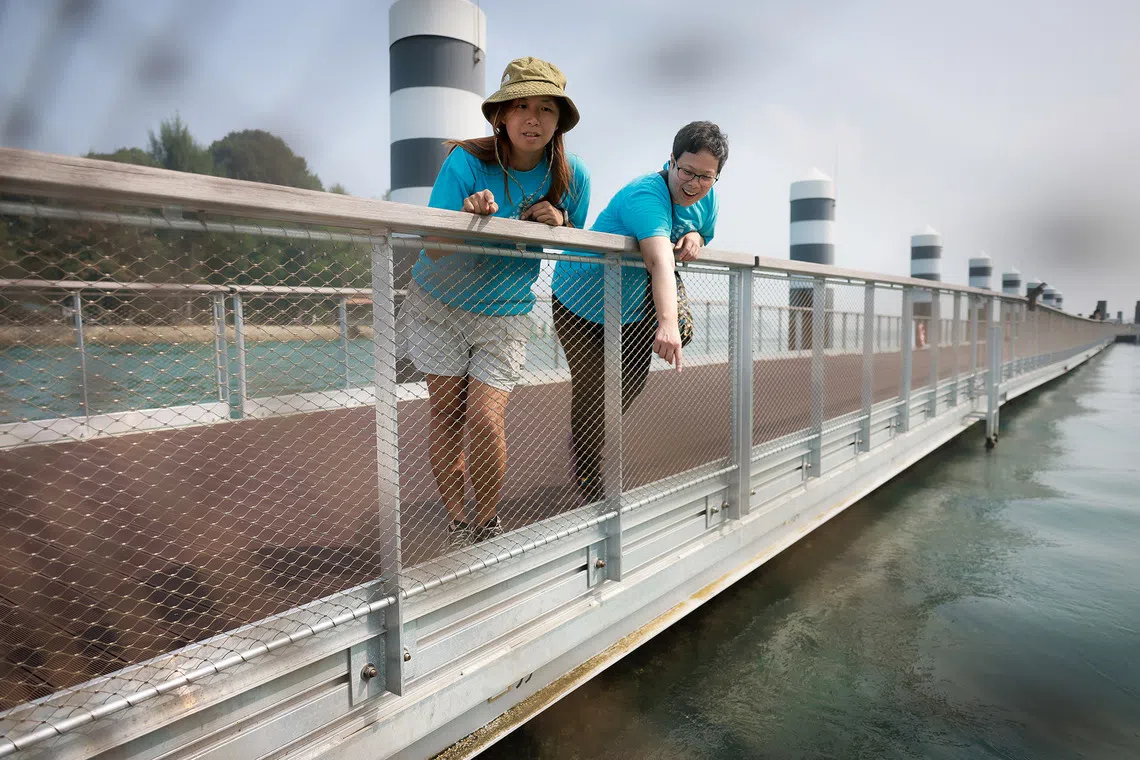
Sam Shu Qin (left) and Jani Tanzil pointing out marine life from the boardwalk at Sisters’ Islands Marine Park.
ST PHOTO: GAVIN FOO
The Government announced in May 2024 that the southern part of Lazarus Island and the reef off Kusu Island would be designated as the Republic’s second marine park.
Both these islands are in the vicinity of Sisters’ Islands. There have been no updates on the second marine park since the initial announcement.
Karenne Tun, the group director of NParks’ National Biodiversity Centre, said large marine areas can have regional and global significance. But the importance of small marine areas, like Sisters’ Islands Marine Park, cannot be underestimated or overlooked.
“Being located in close proximity to one of the world’s busiest waterways, the marine park protects coral reefs, seagrass beds, sandy and rocky shores, and coastal habitats that provide safe harbour for a wide range of marine life,” she said.
For instance, the marine park is one of the few places in the world where living Neptune’s Cup sponges can be seen, Tun said. These marine sponges, which can grow large enough for a child to sit in, were reportedly last sighted in Singapore in 1908.
Tun had rediscovered them in 2011, in Singapore’s waters.
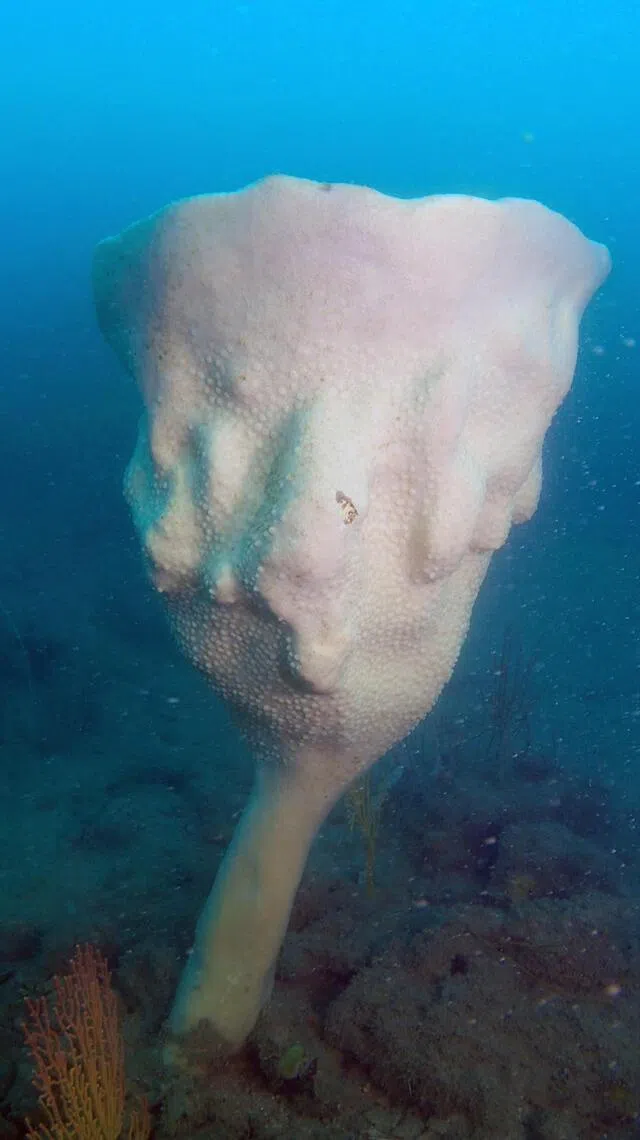
A Neptune’s Cup sponge that was relocated from Pulau Semakau to the marine park in February 2022.
PHOTO: JEFFREY LOW
Tun pointed to other signs of life flourishing because of the protection given to the marine park.
Schools of fishes are often seen swimming around the marine park’s floating boardwalk, she said, while sea turtles have been sighted surfacing in the area, suggesting that at least a few of them may be feeding and nesting within the marine park.
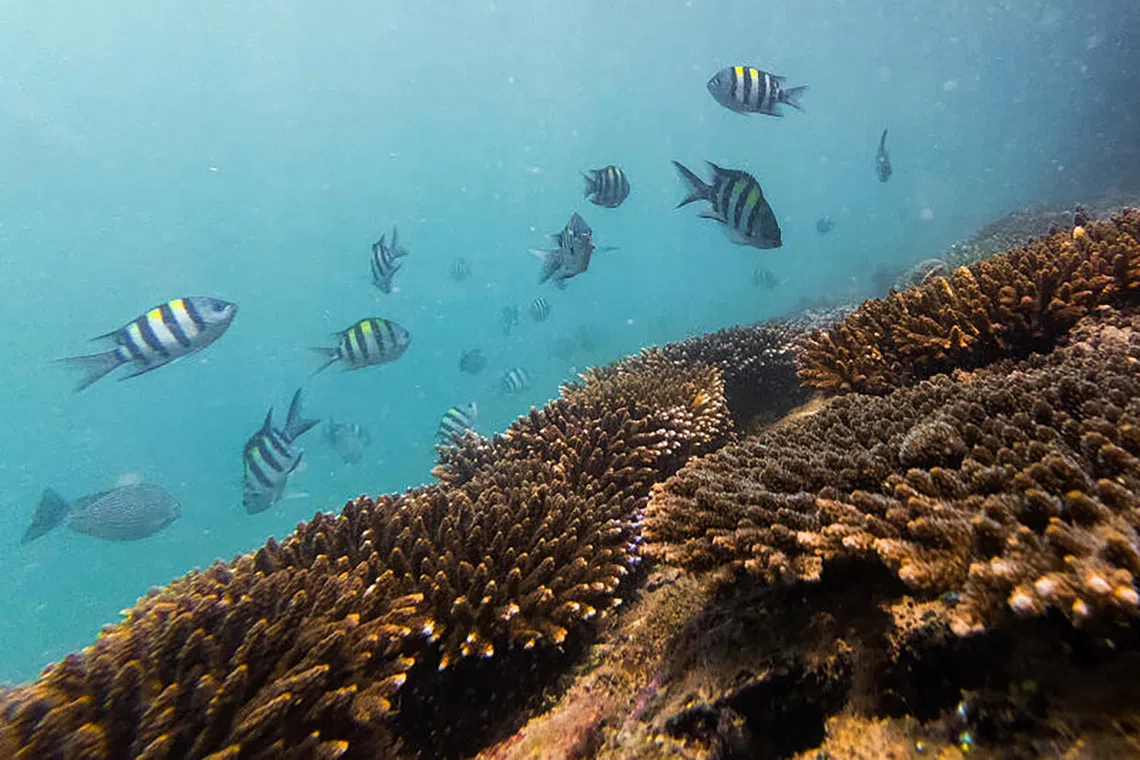
Corals beneath the Sisters’ Islands Marine Park floating boardwalk.
ST PHOTO: GAVIN FOO
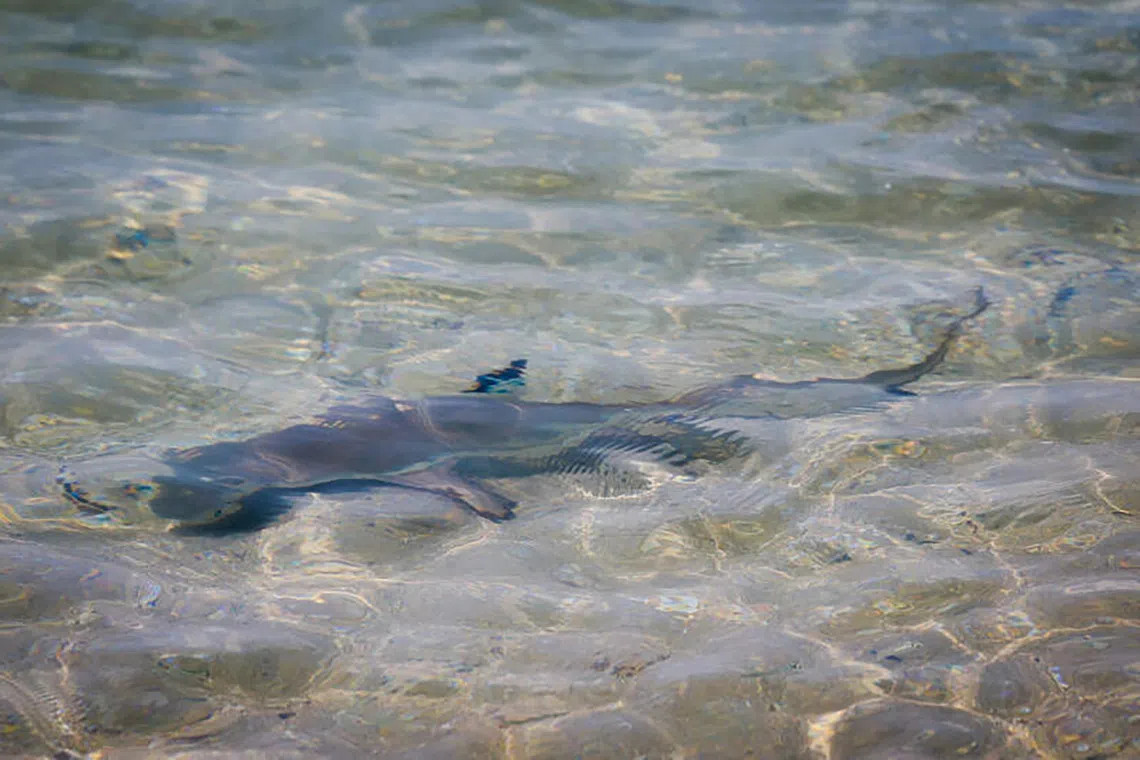
A blacktip reef shark in a lagoon on Big Sister’s Island.
ST PHOTO: GAVIN FOO
While on Big Sister’s Island that day, we saw a turtle’s nest. Its eggs had been eaten by a monitor lizard – an unfortunate yet unavoidable part of the circle of life.
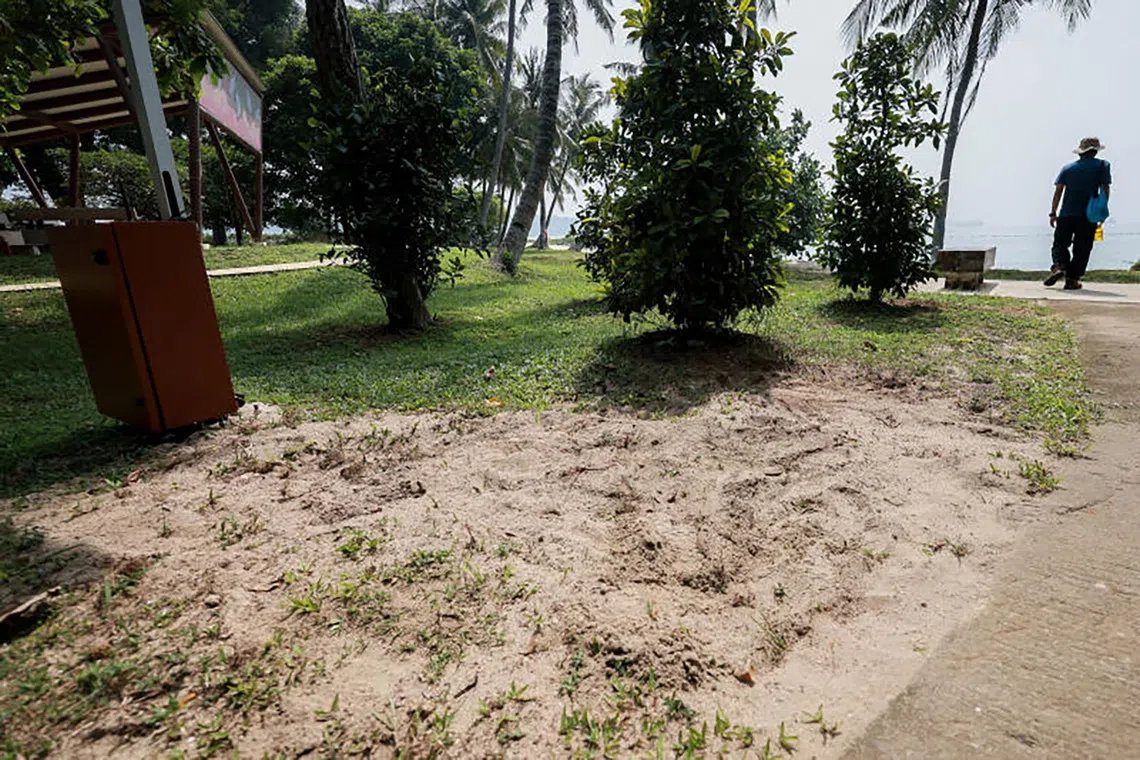
A sandy area where turtles laid their eggs near a lagoon at Sisters’ Islands Marine Park.
ST PHOTO: GAVIN FOO
“The presence of apex predators, such as blacktip reef sharks, hound needlefish, and Pacific reef heron, is indicative of the marine park’s excellent ecosystem health,” Tun said.
The benefits of a marine park
A Hope Spot designation is largely symbolic – it does not automatically grant legal protection or guarantee funding for these areas.
But the Mission Blue spokesperson said the designation can provide international visibility, scientific and strategic support, communications amplification, connections, and funding opportunities.
She cited how the Pangatalan Island Hope Spot in the Philippines, designated in 2019, has expanded into a network of community-supported marine protected areas across Shark Fin Bay.
In Cambodia’s Kep Archipelago Hope Spot, also designated in 2019, partners have supported seagrass restoration, anti-trawling structures, research and monitoring, the spokesperson added.
Singapore’s marine park already has some legal protection under Singapore’s Parks and Trees Act, which prohibits activities such as fishing, collecting corals or mooring boats.
But the Friends of Marine Park co-chairs hope that the designation of the marine park as a Hope Spot will help build support for stronger and expanded marine protection in Singapore.
Tanzil and Sam said the community has developed a three-year plan with activities and festivals in the pipeline to support research and reef restoration, develop youth leaders, and expand education efforts.
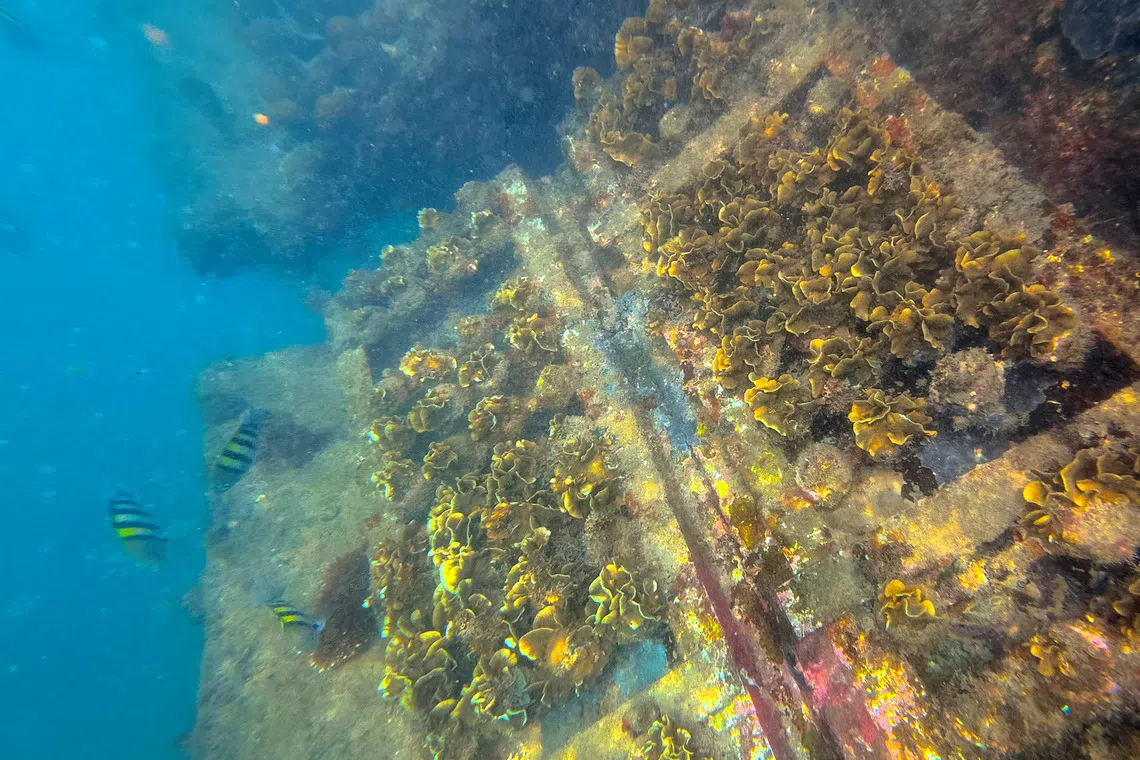
Corals planted at Sisters’ Islands Marine Park under NParks’ 100K Corals Initiative, Singapore’s most extensive coral restoration effort, which aims to plant 100,000 corals in Singapore’s waters.
ST PHOTO: GAVIN FOO
Tanzil noted that there are people who may not know that Singapore has coral reefs.
“We should not forget the rich marine habitats we still have,” she said. “We should cherish and continually celebrate these places, and champion their protection for future generations who will also benefit from them.”
In the face of the authorities’ plans to reclaim several of Singapore’s southern islands, which could affect the marine biodiversity of the area, Tun said that Sisters’ Islands Marine Park is legally protected and will continue to serve as a refuge for marine biodiversity and a vital hub for conservation, research, outreach and education.
Tun said: “NParks will continue to work with the wider research community to ensure that any restoration or habitat enhancement interventions are grounded in science and evidence, to ensure the long-term ecological viability of the marine park.”
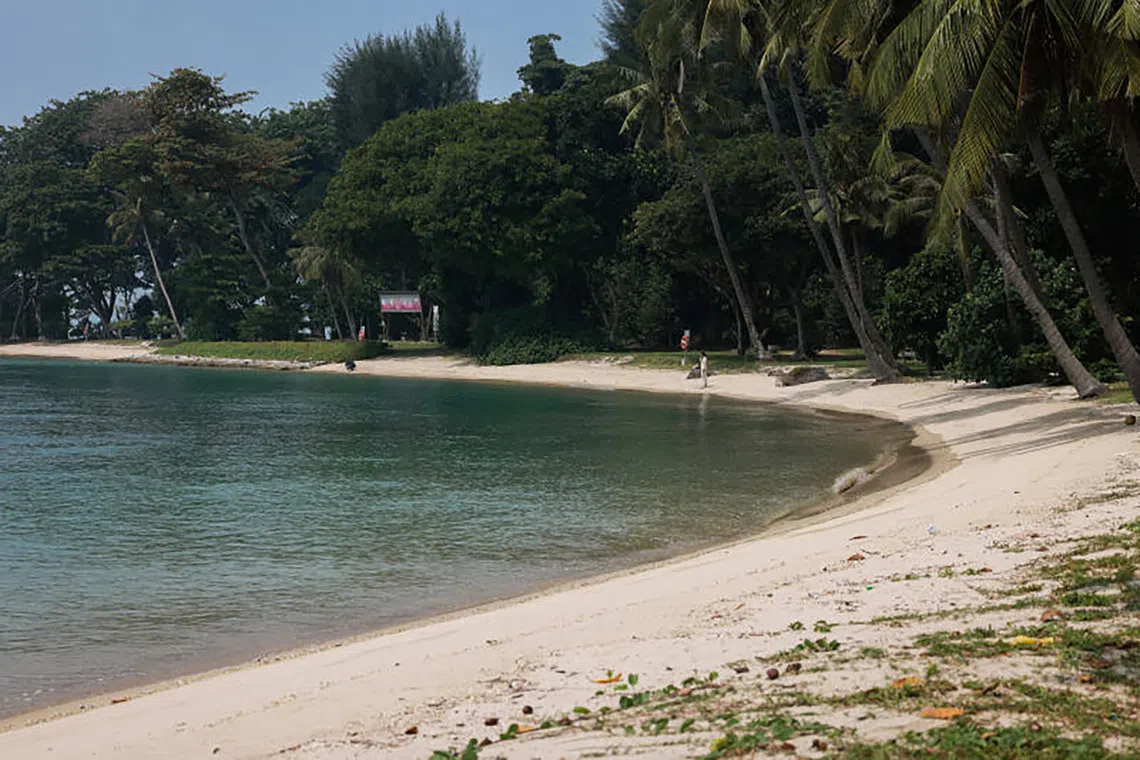
Sisters’ Islands Marine Park also offers many opportunities for visitors to get close to marine biodiversity, such as at the lagoon.
ST PHOTO: GAVIN FOO
Sam pointed to the resilience of the life in the marine park, which is thriving despite environmental stress from warmer oceans, shipping activity and coastal development.
Alvin Tan, Minister of State for National Development, told The Straits Times that the Hope Spot designation reaffirms the Southern Islands’ rich natural heritage, importance to marine health, biodiversity and ecological connectivity, and the conservation efforts led by its local communities.
He added: “I would like to thank our Friends of Marine Park members, the marine community, as well as colleagues from NParks for their strong conservation and outreach efforts, which made this designation possible.”
ST Photos and Videos: Gavin Foo
Produced by: Audrey Tan, Andy Chen, Nicole Ng, Neo Xiaobin, Stephanie Yeow
KioskNews shows a cleaned-up reading view extracted from the publisher’s page — the original always lives on their site, not ours.