CISF scraps territorial commands, puts sectors under specialist control
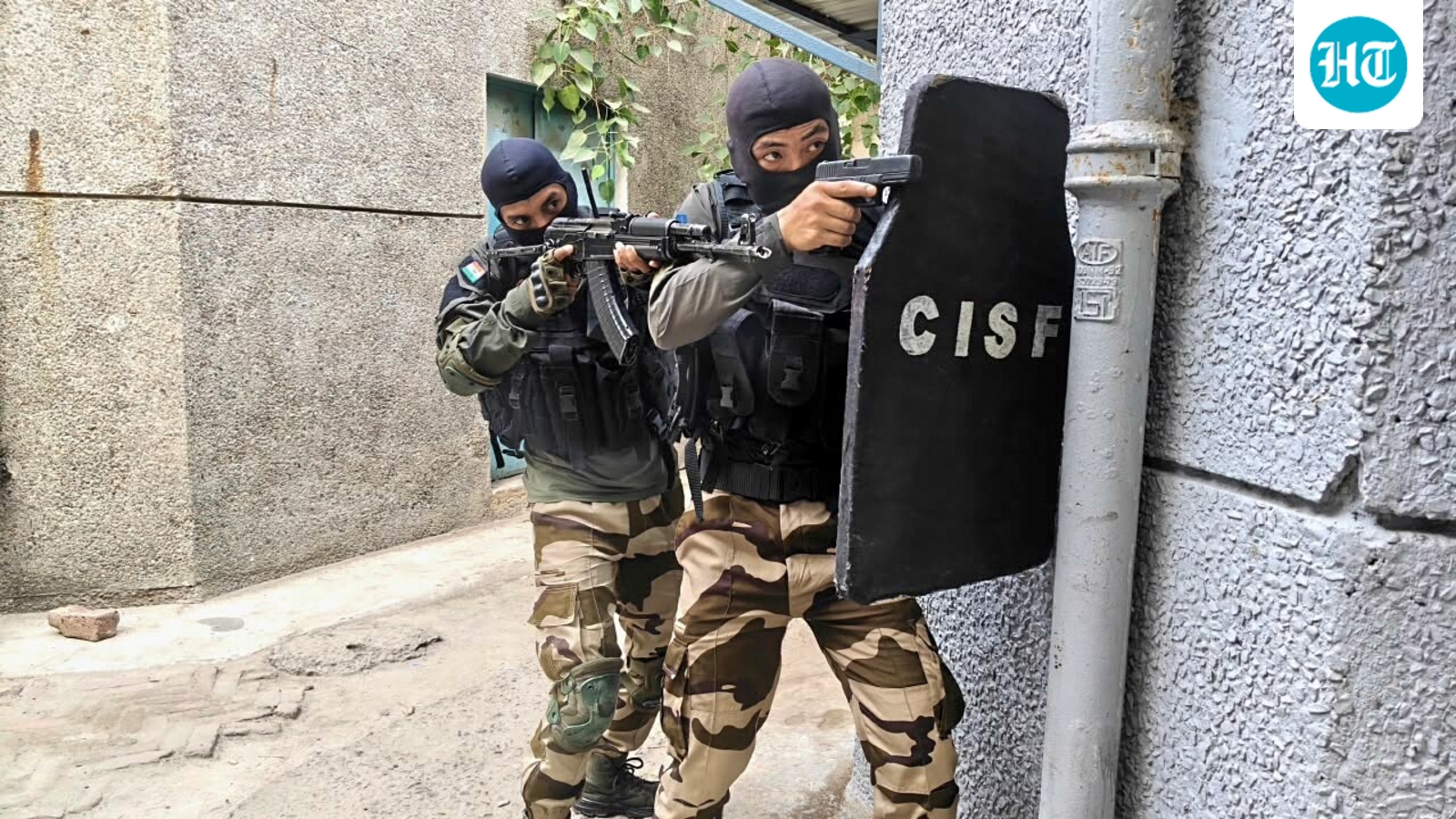
The Central Industrial Security Force (CISF) will end the regional model that has governed most of its installations and move to a “functional” command structure from 1 November, with the concurrence of the ministry of home affairs (MHA).
Under the new structure, the force that guards India’s power plants, coal mines, steel plants, ports, monuments and metro systems will be supervised industry by industry instead of region by region.
“The objective is to improve operational oversight, promote sector-specific expertise, ensure greater uniformity in security practices and strengthen coordination with the concerned ministries, departments and installation managements,” the CISF said in a statement.
Until now, supervision of the force’s establishments was largely organised on the basis of territorial jurisdiction. Each sector has its own operations, hazards and weak points. “Each sector has distinct operational processes, infrastructure, potential hazards and security vulnerabilities,” the force said.
The change
The reach of the change is wide. Eight of the force’s 11 sectors, about 73 per cent, will take on new functional roles. Three will continue as they are, and the new structure will take effect 15 days after the announcement.
The CISF has been moving this way for some time. Over the past 25 years, it has progressively adopted a functional approach in selected sectors, including aviation and the strategic establishments of the Department of Atomic Energy (DAE) and the Department of Space (DoS). Its protective cover already spans airports, seaports, atomic energy and space installations, power plants, steel plants, coal mines, petroleum and natural gas facilities, currency note presses, government buildings, iconic monuments and mass transit systems.
That experience, the force says, strengthened the case for specialisation. It “highlighted the advantages of specialised supervision, focused training, sector-specific Standard Operating Procedures (SOPs), better utilisation of specialised personnel and closer coordination with the concerned organisations.”
The CISF then turned to the sectors still run on territorial lines. It reviewed them after “detailed deliberations” with supervisory formations, branches at Force Headquarters and senior officers, and then sought approval from the MHA.
The new commands
The National Capital Region Sector in New Delhi becomes the Government Building Museums & Monuments and Mass Rapid Transit System (GBMM & MRTS) Sector. One command will now cover government buildings, museums, monuments and mass rapid transit in the capital.
Power gets two commands. The North Sector in New Delhi becomes the Power-I Sector, and North Eastern Sector-II in Kolkata becomes the Power-II Sector.
Heavy industry follows. The Eastern Sector in Ranchi has been transitioned to the Coal Sector, and the Central Sector in Bhilai has become the dedicated Steel Sector. The North Eastern Sector in Guwahati becomes the Petroleum & Natural Gas Sector.
Ports also get two commands. The Western Sector in Mumbai becomes the West Coast Port Sector, and the South Sector in Chennai becomes the East Coast Port Sector. The force described the step as one “to fortify India’s maritime trade infrastructure.”
Three sectors continue under their existing functional arrangements. These are the DAE & DoS Sector in Bengaluru, Airport Sector-I in New Delhi and Airport Sector-II in Bengaluru.
The timing is tied to a growing mandate. The CISF has been designated a Recognised Security Organisation (RSO) for port facilities under the International Ship and Port Facility Security (ISPS) Code. Realigning port supervision is expected to “support the development of specialised port-security expertise and coordination with port authorities and other stakeholders.”
Its remit now goes beyond conventional industrial security. The force has been entrusted with security responsibilities at high-security correctional facilities in Jammu and Kashmir and designated the nodal agency for aerial security of critical infrastructure.
Such tasks demand “specialised training, clear operational accountability and a coordinated approach to emerging security challenges,” the statement said.
Technology is part of the same push. The CISF is strengthening its cyber-security, drone, and anti-drone capabilities through specialised training and collaboration with premier institutions. The aim is better preparedness against cyberattacks, digital threats and hostile unmanned aerial systems that may endanger vital installations.
Some unanswered questions
The statement leaves some questions open. It does not say how many personnel will move between commands, what the transition will cost, or whether any sector headquarters will change location. It also carries no comments from the client ministries or independent security experts, so the expected gains in coordination are based on the force’s own assessment.
The CISF is nonetheless confident of the result. By “transitioning to a purely functional command,” it says, the force will “proactively counter emerging, sector-specific threats” and remain “a dynamic, future-ready force.” The first test will come after 1 November, when the new sector commands begin work.
KioskNews shows a cleaned-up reading view extracted from the publisher’s page — the original always lives on their site, not ours.