New property purchase disclosure rule in Japan sparks fears it may curb foreign investment
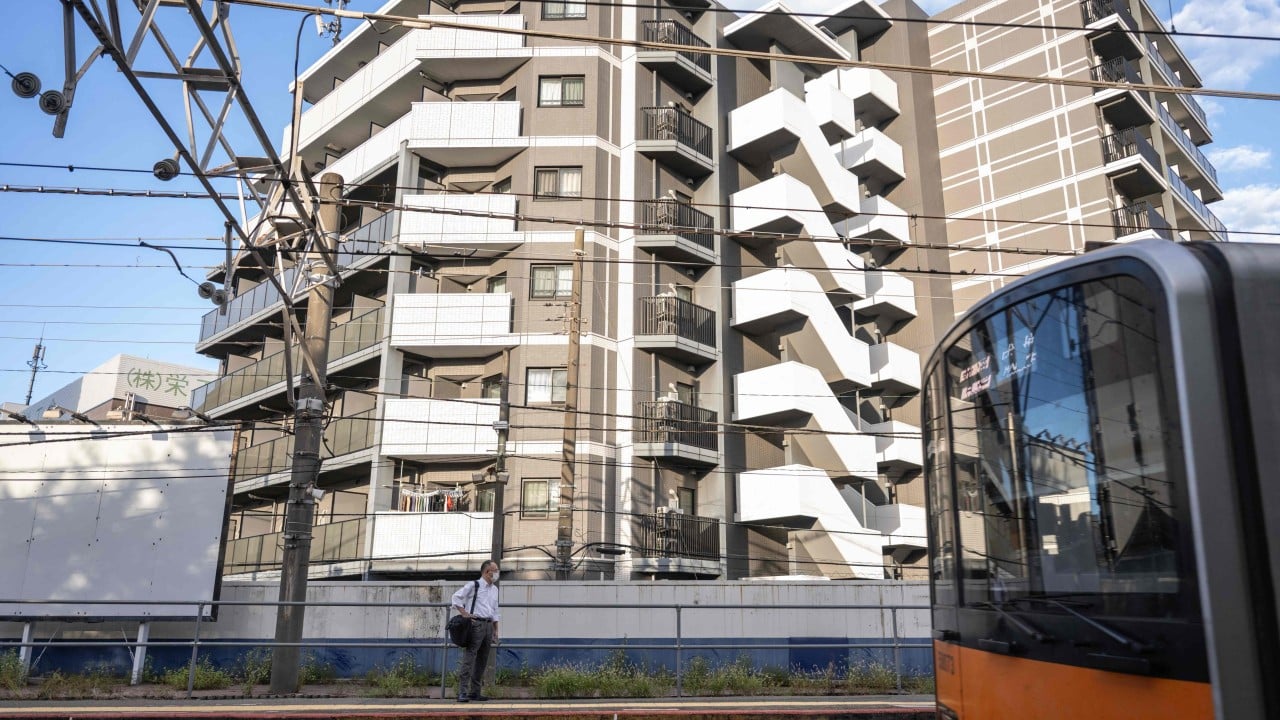
Tokyo’s implementation of a rule that requires all property buyers to declare their nationality is raising concerns among investors, according to analysts.
Japan’s shift from an ultra-loose monetary policy to gradual normalisation of its interest rates was also likely to force investors to reconsider whether real estate assets were still attractive, they added.
“Japan has had a really strong run for the last seven or eight years,” said Neil Brookes, head of Asia-Pacific capital markets at property consultancy Savills. “But generally, because interest rates have gone up so much, there’s definitely less demand for Japan.”
The world’s fourth-largest economy netted US$27.2 billion in property investment in the first half of the year, ranking second behind mainland China in Asia-Pacific, according to data tracked by MSCI.
The transaction volume, however, was 7 per cent lower than in the same period in 2025, the financial services company added.
The Bank of Japan’s quarter-point increase last month brought its benchmark interest rates to a 31-year high of 1.25 per cent.
This raised financing costs specifically for highly leveraged property investors, which was likely to dampen demand for speculative transactions, said Yasuyuki Nozawa, president and CEO of Tokyo-based LogProstyle.
The real estate and hospitality group listed on the NYSE American, which focuses on small and mid-tier companies, counted international customers as an important target market, particularly for its renovated residential properties, Nozawa said.
Official data released by the Japanese government last month showed that in the six months to December 2025, foreign nationals and businesses bought 68 – or 0.7 per cent – of the 9,573 large-scale land deals in Japan.
Among them, Chinese individuals and businesses were the most frequent investors, with 28 deals across a total of 42 hectares.
Meanwhile, Tokyo now requires both Japanese nationals and holders of other citizenships to add nationality information when registering new property ownership or transferring property from October 5 onwards.
According to Kingston Lai, founder and CEO of Asia Bankers Club, the disclosure rule was unlikely to dissuade his clients at the Hong Kong-based company from investing in Japanese real estate.
“It’s a disclosure rule, not a restriction, and Japanese buyers have to declare their nationality too,” Lai said.
“Our clients are mostly bankers, lawyers and business owners who go through KYC [Know Your Customer] all the time,” Lai said, referring to a compliance process. “So declaring a nationality on a title deed will not change anyone’s decision.”
However, the rule was spurring clients to question whether it was “a first step towards tougher measures, like Singapore or Canada have done”, Lai said, referring to Singapore’s punitive levies on residential transactions by foreign buyers and Canada’s ban on home purchases for most foreigners since 2023.
“That’s fair, but for now nothing stops a foreigner [from] buying in Tokyo or Osaka, and Japan’s real draws haven’t changed,” Lai said.
Japan imposed the new rule following renewed concerns about foreign nationals buying land and property across the country, with growing alarm over the acquisition of property close to so-called sensitive sites, as well as overseas investors causing prices to spike beyond the reach of many Japanese people.
“The government has been reviewing the framework surrounding property purchases by foreign nationals and has increased reporting and scrutiny in this area, so international investors need to pay close attention to regulatory developments,” Nozawa of LogProstyle said.
“At the same time, Japan continues to welcome legitimate international investment and inbound tourism, both of which are important to the economy,” Nozawa added.
“Clear and predictable rules are ultimately positive for serious long-term investors because they give everyone greater confidence in the market.”
Amid all these changes, Nozawa said Japan remained a market where investors could access high-quality assets in major cities, a transparent legal and ownership framework, strong tourism demand and, in many cases, pricing that remained attractive relative to comparable properties in other global cities.
“We also believe international awareness of Japan as an investment destination has increased substantially as tourism has recovered and more investors experience the country directly,” he said.
For those looking into Japanese real estate, the asset class and its soundness should be the main priority, said Richard Hill, senior managing director and head of global research and strategy for real estate at Principal Asset Management.
“When you consider foreign investment into Japan, you have to be careful about what type of investment that is,” he said. “Is it levered or non-levered? That’s a big question to begin with. Is it driven by income returns or capital returns? These are questions that investors are beginning to ask.”
KioskNews shows a cleaned-up reading view extracted from the publisher’s page — the original always lives on their site, not ours.