We put ten cheap phones to the test – here are our favourite Samsungs, iPhones and Pixels for £500 or less

Buying a flagship phone in 2026 makes little sense unless you’re really going to use all the features at hand. By comparison, the budget smartphone market has come on leaps and bounds in the past few years, and you can now get most of the features you’d want, including a high-quality OLED screen and a well-performing chipset, all for a reasonable price.
There’s more choice than ever for shoppers who don’t want to spend too much on their next upgrade, but many models simply aren’t worth your time. That’s where this guide comes into play. I’ve tested the latest models and pinpointed the nine best budget phones available right now – all you have to do is pick the one that best suits your needs.
Due to the ongoing Ram shortage fuelled by AI development, smartphones have become increasingly expensive recently, but nothing in this guide costs more than £600 – and many cost less.
At a glance
Best budget phone overall
£349 at Amazon
Samsung Galaxy A37Best cheap phone for battery life
£379 at John Lewis
Motorola Edge 70 FusionBest cheap phone for camera
£349 at Argos
Google Pixel 9aBest cheap iPhone
£599 at John Lewis
Apple iPhone 16eBest phone under £150
£129.99 (new) at eBay
TCL 60R 5G
Why you should trust me
I’ve been a tech journalist for almost a decade, and I’ve had the pleasure of testing many phones across the price spectrum in that time. From flagship-level iPhones to budget-friendly Samsung handsets, I know exactly what makes a phone worth buying and, more crucially, how each one compares with the other options on the market.
How I tested
To find out if these phones are truly as good as the marketing jargon suggests, I used each one as my daily mobile for the better part of a week, with my sim card in tow. I tested 11 in total.
With each phone, I split my testing into two categories: real-world use and benchmarking. For the former, I used the phones as normal, noting how well they perform in everyday tasks such as checking Google Maps for directions, scrolling through social media, and streaming YouTube. I also monitored the battery drain over time.
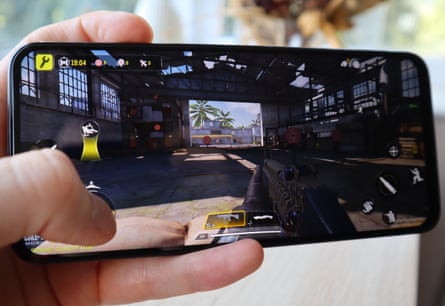
To benchmark and see the raw performance capabilities of each phone, I put each device through gaming sessions in Call of Duty: Mobile and the more demanding Honkai: Star Rail, followed by tests in PCMark and Geekbench 7. In both tests, the higher the score, the better. Many of these phones are able to beat flagships when it comes to battery life due to having larger cells, but on raw horsepower (which is where Geekbench 7 comes into play), you can expect pricier options to have a single-core and multi-core score of more than 1,500 and 5,500, respectively. For context, the single-core score (as its name suggests) shows us what just one core of the CPU is capable of, while the multi-core score brings them all into play.
Every phone featured here did a brilliant job at passing these tests, so no matter which one you pick, you’ll be getting a great-performing device.
If not returned to the manufacturer, these review units were donated to charity after testing.
The best budget phones in 2026
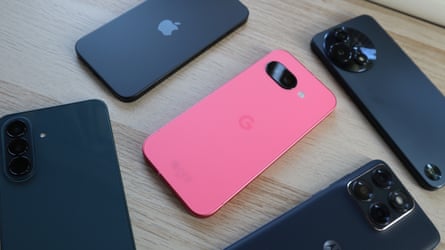
Best budget phone overall:
Samsung Galaxy A37

Samsung
Galaxy A37
from £349
What we love
Updates until 2032 and a slick software experience
What we don’t love
It’s a minimal update over the Galaxy A36
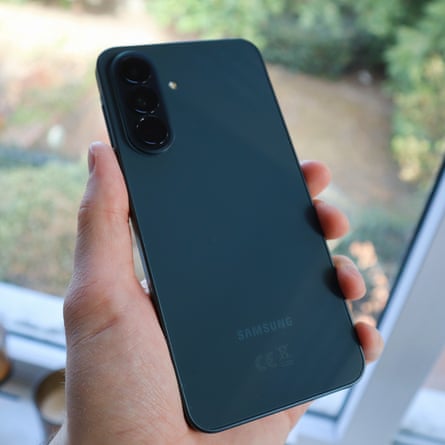
Samsung doesn’t really do itself any favours by having so many phones on the market – it’s hard work just to understand how each one is different from the next, particularly at the more affordable end. But if all you need is a great all-rounder that’s designed to last, then you can’t really go wrong with the Samsung Galaxy A37.
Why we love it
With a promised six years of software and security updates from the time of launch in April 2026, the Galaxy A37 offers far better long-term value than most. Samsung’s One UI Android overlay has come a long way in recent times, too, and it now rivals the stock Android experience of Pixel phones when it comes to everyday usability.
Thanks to the glass backing, the A37 doesn’t feel like a budget phone in the hand either. To the untrained eye (that wouldn’t notice the slightly smaller lenses), the phone could be mistaken for the far more expensive Galaxy S26+. Durability has been tightened up against its predecessor, the A36, with a higher IP68 dust and water resistance rating, and the newer Exynos 1480 chipset performs well as you jump from one app to another.
For repairability, the phone only has a C rating in the EU’s EPREL database, and while Samsung does offer a recycling service for handsets, they must be taken to the Samsung KX store in London’s King’s Cross.
It’s a shame that … as much as I rate the Galaxy A37, it is almost identical to its predecessor, the Samsung Galaxy A36, which now costs less.
Screen: 6.7in AMOLED 120Hz
Processor: Samsung Exynos 1480
Ram: 6/8GB
Geekbench 7 CPU results: 990 single-core, 3,357 multi-core
Storage: 128/256GB
Operating system: Android
Security updates available until: 2032
Battery size: 5,000mAh
PCMark tested battery life: 16hrs 37mins
Camera: 50MP wide, 8MP ultrawide, 5MP macro, 12MP selfie
Connectivity: Bluetooth 5.3, wifi 6
Dust and water resistance: IP68
Dimensions: 78.2 x 7.4 x 162.9mm (WDH)
Weight: 196g
Samsung
Galaxy A37
from £349
What we love
Updates until 2032 and a slick software experience
What we don’t love
It’s a minimal update over the Galaxy A36
For more, read Samuel Gibbs’s guide to the best Android phones, compared and ranked
Best cheap phone for battery life:
Motorola Edge 70 Fusion
Motorola
Edge 70 Fusion
from £379
What we love
The phone can last for up to two days at a time
What we don’t love
The larger-battery model only comes in one colour
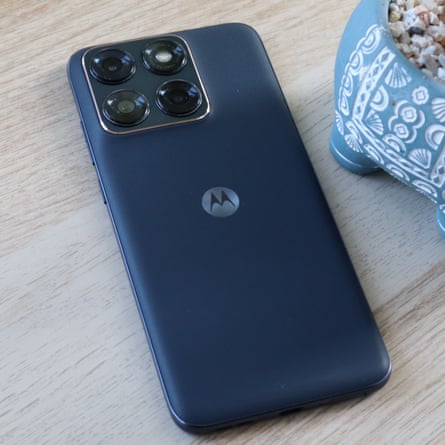
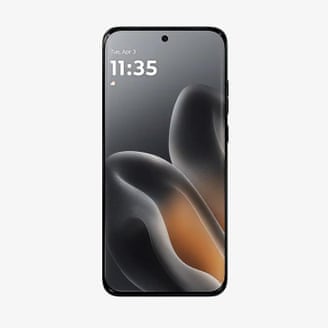
Ever since getting my hands on the mid-range Motorola Edge 60 Pro last year, I’ve been increasingly impressed with the brand. Not only is it offering a genuine alternative to the likes of Samsung and Google, but it’s doing so with phones that make the competition look boring. The Motorola Edge 70 Fusion deviates from this strategy slightly, but the massive battery more than makes up for any misgivings.
Why we love it
With its sizeable 7,000mAh battery, the Edge 70 Fusion can outlast almost any budget phone on the market – even the Honor Magic 8 Lite below, despite its larger battery. And the 70 Fusion trumps Honor’s phone for software: Motorola hasn’t tinkered with it too much, for an experience that feels a lot like stock Android. With that battery in tow, you can easily get the phone to last for up to two days at a time.
That kind of longevity is great when you’re having a night out on the town and need to use your phone for directions, payments, train tickets and more. Speaking from experience and the fact that I now regularly carry a power bank, being able to avoid any battery anxiety is worth the price of admission alone. There is a version of this phone with a 5,200mAh battery that costs £20 less, but I would avoid that.
If you need any repairs, Motorola’s ReplaceBase website sells replacement parts for devices, and there are helpful video tutorials available to help you fix your phone.
It’s a shame that … for whatever reason, Motorola has kept all of the exciting colours to the 5,200mAh version of the Edge 70 Fusion, so anyone who wants the larger battery has to make do with a rather unexciting Pantone silhouette. There are also just three years of software updates (until 2029), although you do get five years of security patches (until 2031).
Screen: 6.78in AMOLED 144Hz
Processor: Qualcomm Snapdragon 7s Gen 3
Ram: 8GB
Geekbench 7 CPU results: 989 single-core, 2,764 multi-core
Storage: 256GB
Operating system: Android
Security updates available until: 2031
Battery size: 7,000mAh (tested unit)
PCMark tested battery life: 24hrs 35mins
Camera: 50MP wide, 13MP ultrawide, 32MP selfie
Connectivity: Bluetooth 6, wifi 6E
Dust and water resistance: IP68/IP69
Dimensions: 75.6 x 7.99 x 162.8mm (WDH)
Weight: 193g
Motorola
Edge 70 Fusion
from £379
What we love
The phone can last for up to two days at a time
What we don’t love
The larger-battery model only comes in one colour
Best cheap phone for camera:
Google Pixel 9a
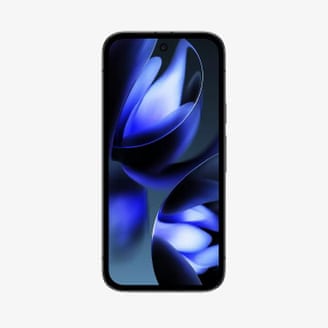
Pixel 9a
from £349
What we love
High-quality photos with helpful editing features
What we don’t love
The Tensor G4 chip isn’t great for gaming
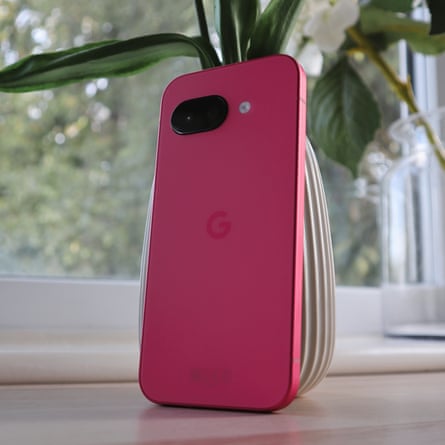
Although it’s been supplanted by the newer Pixel 10a, Google has rather smartly kept the Pixel 9a around and slashed its price to just £349. It can be found for even less if you shop around. Aside from making the camera flush with the phone, upping the brightness and durability of the display and introducing faster charging, the Pixel 10a is practically identical to its predecessor – they even use the same chipset. You’re better off picking up the previous-gen tech at a discount.
Why we love it
The Pixel 9a shows you don’t always need high-end camera hardware to take great pictures. Google’s computational processing remains among the best on the market. Colours are vibrant, while skin tones are naturally replicated, and each photo looks like it could have been taken on a much pricier phone. The abundance of AI-driven features such as Magic Eraser and Best Take make it easy to edit on the go, too.
With its clean Android interface, this is the least cluttered software experience you’ll find outside Apple’s ecosystem, with no annoying bloatware to contend with when you switch the phone on for the first time. Alongside Samsung, Google leads the charge on long-term support, too, with a committed seven years of updates (until 2032). This means the phone will last you for quite some time to come. At least 23% of the device is made from recycled materials, and when it reaches the end of its life, Google offers a free device recycling service.
It’s a shame that … for all its prowess elsewhere, the Pixel 9a isn’t a great phone for gaming: the Tensor G4 isn’t as powerful as comparable Snapdragon chips. Charging at 23W is also quite slow for a modern phone.
Screen: 6.3in pOLED 120Hz
Processor: Google Tensor G4
Ram: 8GB
Geekbench 7 CPU results: 1,479 single-core, 4,206 multi-core
Storage: 128/256GB
Operating system: Android
Security updates available until: 2032
Battery size: 5,100mAh
PCMark tested battery life: 20hrs 39mins (refurbished unit)
Camera: 48MP wide, 13MP ultrawide, 13MP selfie
Connectivity: Bluetooth 5.3, wifi 6E
Dust and water resistance: IP68
Dimensions: 73.3 x 8.9 x 154.7mm (WDH)
Weight: 186g
Pixel 9a
from £349
What we love
High-quality photos with helpful editing features
What we don’t love
The Tensor G4 chip isn’t great for gaming
Best cheap iPhone:
Apple iPhone 16e
Apple
iPhone 16e
from £599
What we love
Affordable iOS; great performance and battery life
What we don’t love
Only one camera and a slow 60Hz refresh rate
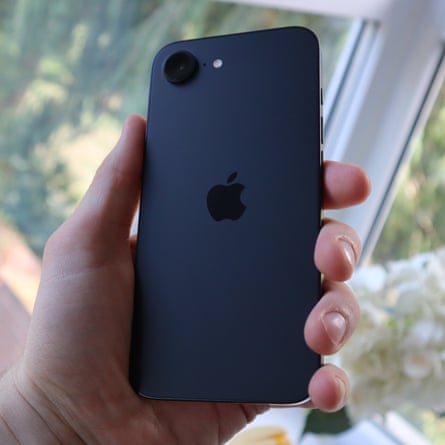
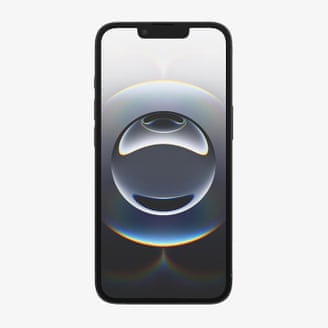
Designed as the spiritual successor to the iPhone SE, the iPhone 16e was something of a head-scratcher at launch. Despite its £599 price, there were a number of missing features, such as Apple’s MagSafe technology, and only a single camera on the back of the phone. Those issues were softened when Apple reduced the phone to £499 after the release of the iPhone 17e, but the price has since jumped back up as a result of the ongoing memory crisis. However, because the phone can be picked up for less when going down the refurbished route and I anticipate plenty of deals for the iPhone 16e during major sales events like Black Friday, I’ve decided to keep the iPhone 16e in this list.
Why we love it
It might sound a bit obvious, but the best thing about the iPhone 16e is the unfettered access to iOS and the entire Apple ecosystem for a reduced price. Apple News remains one of the better non-Kindle reading apps available, while Find My is helpful for tracking down your keys or anything else with an AirTag attached, as well as offering peace of mind on whether your iPhone-toting friends or family have made it home safely.
Apps are also better optimised for iPhones, with less variety between models to develop for. I struggled to get the Edits app to run smoothly on my Pixel 10 Pro, but had no such issues with the iPhone 16e and its super-efficient A18 chipset. It’s also a better long-term investment, since Apple has a good track record of supporting older phones. The recent iOS 27 update extends all the way back to 2019’s iPhone 11. More than 30% of the iPhone 16e’s overall composition is made from recycled materials, and while there is scope for home repair, Apple does provide (admittedly fairly costly) screen and battery repairs for handsets that are out of warranty.
It’s a shame that … the single 48MP sensor means you’re limited with the types of photos you can take. It can take solid shots with enough light, but the shutter speed is noticeably slower than pricier iPhones, and there’s no ultrawide capability.
Screen: 6.1in 60Hz OLED
Processor: Apple A18
Ram: 8GB
Geekbench 7 CPU results: 2,881 single-core, 7,618 multi-core
Storage: 128/256/512GB
Operating system: iOS
Security updates available until: 2032
Battery size: 4,005mAh (estimated)
Average battery life: up to two days (PCMark battery test unavailable on iPhone)
Camera: 48MP wide, 12MP selfie
Connectivity: Bluetooth 5.3, wifi 6
Dust and water resistance: IP68
Dimensions: 71.5 x 7.8 x 146.7mm (WDH)
Weight: 167g
Apple
iPhone 16e
from £599
What we love
Affordable iOS; great performance and battery life
What we don’t love
Only one camera and a slow 60Hz refresh rate
For more, read our guide to the best iPhones
after newsletter promotion
Best phone under £150:
TCL 60R 5G
TCL
60R 5G
£129.99
What we love
Covers the smartphone basics on a budget
What we don’t love
Limited software support hampers long-term use
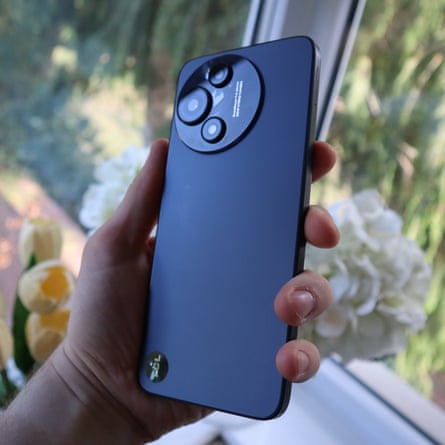
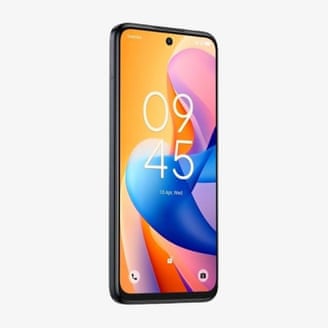
As much as I would recommend saving a bit more for the Samsung Galaxy A17 or the Pixel 9a, if you need a lower-budget phone, then the TCL 60R 5G is worth a look. At £99.99, the 60R 5G is very affordable, and you still get some impressive features for the price.
Why we love it
It’s fair to expect a compromise for a phone as cheap as this, but I was surprised by what TCL had managed to include, particularly the display. It’s a 6.7-inch IPS LCD panel (so you won’t be getting the deeper contrast in colours that OLED can provide), but it’s very bright and packs a decent 120Hz refresh rate – higher than the pricier iPhone 16e’s. Plus, with stereo speakers onboard, it works well for entertainment.
I was also impressed with the performance of the MediaTek Dimensity 6300 chipset. I did notice the occasional bit of lag when scrolling through certain websites too quickly, but I played a few rounds of Call of Duty: Mobile without issue (even if the graphics were downplayed to improve performance). There’s a sizeable 5,200mAh battery to get you through long days, and the ability to expand storage via a microSD card is always welcome.
TCL has a gold EcoVadis rating for a more responsible manufacturing process, and the company runs a repair service for faulty handsets.
It’s a shame that … the big compromise with the TCL 60R is that it includes just one major OS update that came out this year, and only two years of security updates (until 2027), so it won’t last as long as other phones here.
Screen: 6.7in IPS LCD 120Hz
Processor: MediaTek Dimensity 6300
Ram: 4GB
Geekbench 7 CPU results: 652 single-core, 1,828 multi-core
Storage: 128GB
Operating system: Android
Security updates available until: 2027
Battery size: 5,200mAh
PCMark tested battery life: 19hrs 17mins
Camera: 50MP wide, 8MP selfie
Connectivity: Bluetooth 5.4, wifi 5 dual-band
Dust and water resistance: IP54
Dimensions: 76.2 x 8.2 x 165.6mm (WDH)
Weight: 190g
TCL
60R 5G
£129.99
What we love
Covers the smartphone basics on a budget
What we don’t love
Limited software support hampers long-term use
The best of the rest
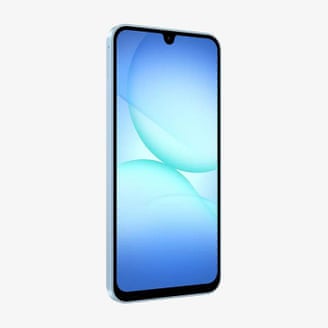
Samsung Galaxy A17
Samsung
Galaxy A17
from £155.39
What we love
Has longer support than most sub-£200 phones
What we don’t love
The camera is lacking compared with the Pixel 9A
Best for: a phone under £200
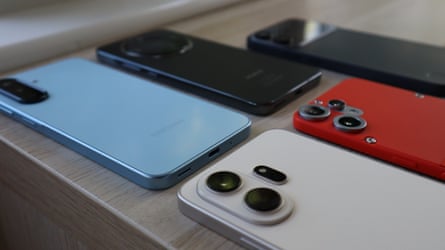
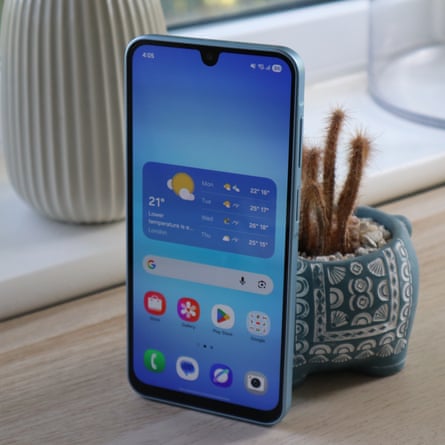
If the Galaxy A37 is out of your price range but you still want long-term software support, then it’s worth considering the Samsung Galaxy A17. Despite costing only £169.99, Samsung has committed to supporting the phone for six years from release (until 2031), so you’re getting far more bang for your buck than with any other budget smartphone below £200.
Samsung’s One UI software is better than ever, with a very sleek interface that’s fun to use. As a longtime tech reviewer, I’ve endured my fair share of bloatware-ridden Android phones, but this isn’t one of them. Unlike the A37, the A17 uses a slightly cheap-feeling plastic backing, but the Exynos 1330 chipset works well under everyday use.
It didn’t make the final cut because … the Galaxy A37 is a better buy overall, and doesn’t cost that much more. The Pixel 9a is only a bit pricier, too, and you’ll get far better camera performance.
Screen: 6.7in AMOLED 90Hz; processor: Samsung Exynos 1330 Ram: 4GB; Geekbench 7 CPU results: 619 single-core, 1,851 multi-core; storage: 128GB; operating system: Android ; Security updates available until: 2031; battery size: 5,000mAh; PCMark tested battery life: 17hrs 24mins; camera: 50MP wide, 5MP ultrawide, 2MP macro, 13MP selfie; connectivity: Bluetooth 5.3, wifi 5, dual-band dust and water resistance: IP54; dimensions: 77.9 x 7.5 x 164.4mm (WDH); weight: 192g
Samsung
Galaxy A17
from £155.39
What we love
Has longer support than most sub-£200 phones
What we don’t love
The camera is lacking compared with the Pixel 9A
Nothing Phone (4b)
Nothing
Phone (4b)
from £299
What we love
Budget phone with better looks than most flagships
What we don’t love
Samsung offers better long-term support for less
Best for: a well-designed phone on a budget
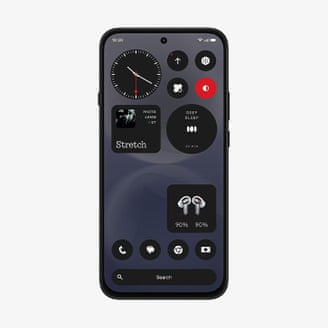
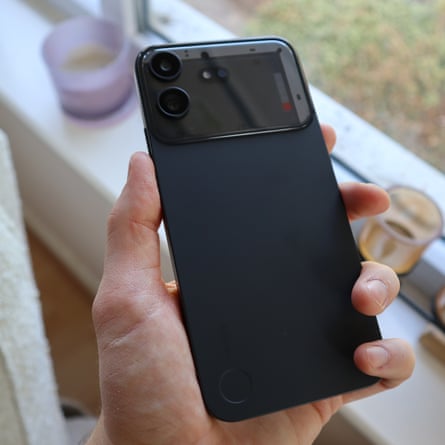
One of the unfortunate compromises at the budget end of the market is that design is often an afterthought. There are some fun colourways, sure, but very few options are what I would deem to be eye-catching. But the Nothing Phone (4b) is different. Regardless of the price tag, Nothing endows all of its phones with an engaging, space-age aesthetic – many big-brand options seem boring by comparison.
That philosophy also extends to the software, with Nothing OS featuring exclusive widgets that go beyond the standard Android fare. On the back you’ll find the Glyph Bar, a small strip of LED lights that can display all manner of information, including the impending arrival of your Uber driver and the countdown of a timer. Admittedly, it’s a bit scaled back compared with the Glyph lights on previous Nothing phones, but it still works rather well.
It didn’t make the final cut because … the (4b) pales in comparison to Samsung and Google phones for long-term support, getting just three years of OS updates (until 2029), although its lifespan is lengthened by six years of security patches (until 2032).
Screen: 6.77in AMOLED 120Hz; processor: Qualcomm Snapdragon 6 Gen 4; Ram: 8GB; Geekbench 7 CPU results: 956 single-core, 3,145 multi-core; storage: 128GB; operating system: Android; Security updates available until: 2032; battery size: 5,200mAh; PCMark tested battery life: 20hrs 8mins; camera: 50MP wide, 8MP ultrawide, 16MP selfie; connectivity: Bluetooth 6, wifi 6; dust and water resistance: IP64; dimensions: 78.2 x 8.6 x 164.4mm (WDH); weight: 210g
Nothing
Phone (4b)
from £299
What we love
Budget phone with better looks than most flagships
What we don’t love
Samsung offers better long-term support for less
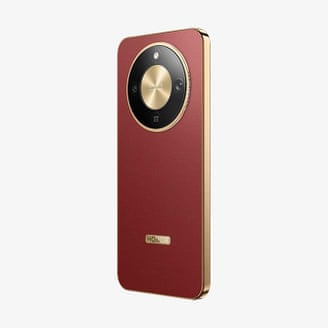
Honor Magic 8 Lite
Honor
Magic 8 Lite
from £329
What we love
Battery lasts for days; screen made for streaming
What we don’t love
OS is cumbersome; ultrawide camera is lacking
Best for: entertainment
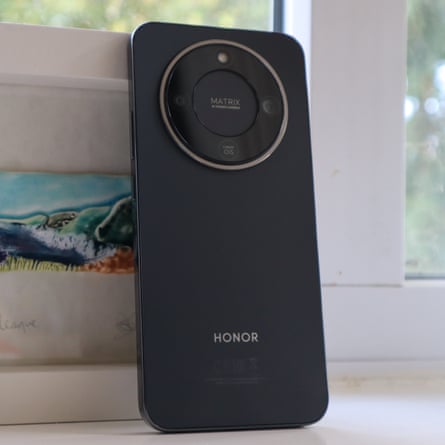
With so many of the brand’s phones occupying space at the budget end of the market, it can be tricky to know where the Honor Magic 8 Lite sits among them. If you want a long-lasting phone with a great screen for streaming, though, then this is the one to go for.
The 7,500mAh battery can stretch to multiple days of use, making it great for a long journey, and the display’s peak brightness of 6,000nits makes flagship phones look dim by comparison. The 6.79in panel provides plenty of space for wide-screen films to sprawl out. There is a fair amount of bloatware to deal with when you first boot up the phone, but it’s not a major issue.
It didn’t make the final cut because … Honor’s MagicOS overlay is a bit too cumbersome to use, especially when compared with the cleaner Android experience on the Motorola Edge 70 Fusion or the latest Pixel phones.
Screen: 6.79in 120Hz AMOLED; processor: Qualcomm Snapdragon 6 Gen 4; Ram: 8GB; Geekbench 7 CPU results: 958 single-core, 3,040 multi-core; storage: 512GB; operating system: Android; Security updates available until: 2031; battery size: 7,500mAh; PCMark tested battery life: 19hrs 56mins; camera: 108MP wide, 5MP ultrawide, 16MP selfie; connectivity: Bluetooth 5.2, wifi 6; dust and water resistance: IP68/IP69K; dimensions: 76.1 x 7.76 x 161.9mm (WDH); weight: 189g
Honor
Magic 8 Lite
from £329
What we love
Battery lasts for days; screen made for streaming
What we don’t love
OS is cumbersome; ultrawide camera is lacking
TCL Nxtpaper 70 Pro
TCL
Nxtpaper 70 Pro
from £289
What we love
The ideal budget phone to help curb doomscrolling
What we don’t love
Just two years of OS security patches and bug fixes
Best for: display
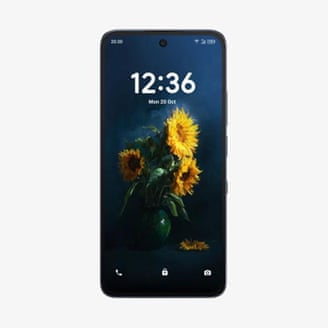
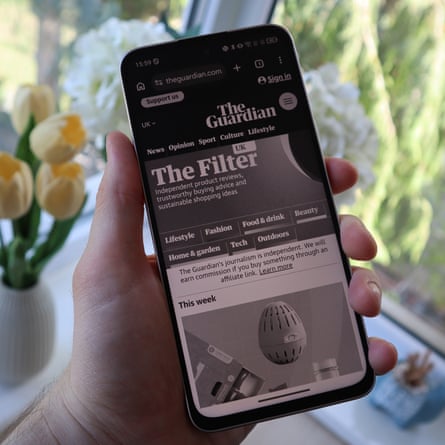
If you’re an avid reader of online articles and books, and don’t want to carry around a separate e-reader, then the TCL Nxtpaper 70 Pro is well worth a look. The phone features a matt display that minimises reflections, and a slider toggles a book-style Ink Paper mode for easy reading.
For those who prefer a dumb-phone approach, there’s also the Max Ink mode that limits distractions and puts an emphasis on using the Nxtpaper 70 Pro for reading. It’s reminiscent of Fairphone’s Moments toggle, and I wish more manufacturers offered it. Anything that diverts my attention away from social media and towards something more fulfilling gets a big thumbs up from me.
It didn’t make the final cut because … the screen doesn’t feel quite as sharp without the E-Ink-style modes activated, and there are only two years of OS security patches and vulnerability fixes (until 2028).
Display: 6.9in IPS LCD 120Hz; processor: MediaTek Dimensity 7300; Ram: 8GB; Geekbench 7 CPU results: 905 single-core, 3,280 multi-core; storage: 256GB/512GB; operating system: Android; Security updates available until: 2028 battery size: 5,200mAh; PCMark tested battery life: 19hrs 10mins; cameras: 50MP wide, 8MP ultrawide, 32MP selfie; connectivity: Bluetooth 5.4, 802.11ax wifi 6E; dust and water resistance: IP68; dimensions: 80.1 x 8 x 169.4mm (WDH); weight: 208g
TCL
Nxtpaper 70 Pro
from £289
What we love
The ideal budget phone to help curb doomscrolling
What we don’t love
Just two years of OS security patches and bug fixes
What you need to know
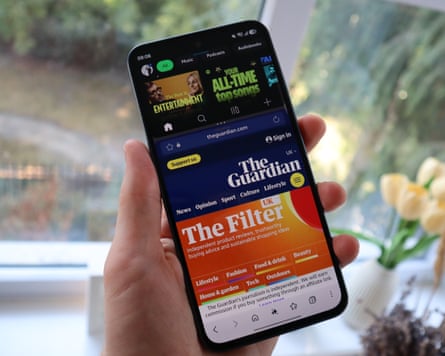
What to look for when choosing a budget phone
Forget about branding and all the marketing that goes with the latest phones, and instead consider the features that you prioritise from your current handset. After all, in order to hit a budget price for a phone, manufacturers are forced to compromise in one way or another.
A phone may have a great battery and a bright screen, but the chipset might be lacking. A phone that performs as well as a much pricier handset might lack another feature, such as fast charging. Decide ahead of time which features matter the most to you, so you won’t find yourself regretting your purchase.
It’s also worth considering how long the phone will be supported in terms of software and security updates. If you don’t want to fork out again in three or four years, then opt for a phone with longer support.
What to avoid when choosing a budget phone
As with any phone, don’t be swayed by the specs on paper: they don’t always translate to a better experience. For instance, the Honor Magic 8 Lite packs a 108MP main camera, but its photos aren’t as pleasing to the eye as those captured on the Pixel 9a: Google’s computational processing works its technical wizardry despite the phone’s 48MP sensor.
This guide is based on real-world use, so these recommendations will help you avoid these marketing pitfalls.
When you should replace your phone
To maximise the value of your phone (and cut down on waste), it’s worth holding on to your existing phone for as long as it’s officially supported with software and security updates. But if your phone is irreparably damaged or the battery has aged to the point that it can no longer be replaced or mitigated with a power bank, it might be time to upgrade.
How to buy a good refurbished phone
If you’re looking for a bargain on a phone, there’s never been a better time to choose refurbished. Reputable retailers such as Giffgaff, Back Market and the iOutlet sell professionally refurbished devices with clear gradings and warranties.
Keep an eye out for incentives, too. Giffgaff provides a 24-month warranty with phones bought in “like new” condition, while Vodafone’s Battery Refresh scheme lets you get a new battery for your phone, free of charge, for up to three years from the point of purchase, depending on your plan.
I would strongly advise against buying a refurbished phone through private or unverified sellers, however. Unverified sellers aren’t held to the same standards as those aforementioned retailers, so the quality of the phones they’re selling cannot be guaranteed.
For more, read Samuel Gibbs’s guide on how to find the best refurbished phone
For more:
How to make your smartphone last longer
The best Android phones: flagship smartphones compared and ranked
The best iPhones: which Apple smartphone is right for you
The best phone straps: our favourite stylish and practical picks
Thomas Deehan is a technology and entertainment journalist with almost a decade’s experience. He’s tested everything from smartwatches to video games, action cameras and more, but it’s smartphones that make up the bulk of his coverage. He very rarely leaves the house with fewer than two smartphones, and is constantly on the lookout for the perfect all-in-one handset
KioskNews shows a cleaned-up reading view extracted from the publisher’s page — the original always lives on their site, not ours.