Former Adidas boss in court after being told to part-demolish £1.3m country home '2 metres too big'

A former Adidas boss who bought a £1.3m dream home in the country only to be ordered to partly demolish it because it is two metres "too big" is suing the developer who sold him it for £900,000.
Former managing director of Adidas in Korea, Edward Nixon and wife Sally paid a total of £1.3 million for former farm outbuilding West Barn, in Holdenby Road, East Haddon, Northamptonshire, commissioning developer, Barry Howard, and his company to convert it into a sprawling rural home fit for the 21st century.
Mr Howard - head of Northampton-based house building and development company, Barry Howard Homes - sold the couple the £600,000 parcel of land where West Barn stands and had already built a “shell of a house” on the site.
He and the Nixons then struck a £700,000 deal for the developer to “finalise the construction of the house in accordance with drawings provided to the Nixons”.
The couple say they were told by Mr Howard during a video call in July 2020 that “the house is built and the planners are happy with it”.
But they were horrified when in June 2021 the local council imposed an enforcement notice, demanding that the Nixons either demolish their new home or carry out comprehensive alterations, telling them the 36m former barn was bigger than the approved plans and two metres too long.

The case has now spilled over into court, with the Nixons suing Mr Howard for £900,000 for "fraudulent misrepresentation" on the basis he must have known the house was bigger than it should have been when he filled in an enquiry form.
But the housebuilder is disputing the couple's claim, insisting he had no idea that the renovated barn’s dimensions had gone over the limit when he sold it.
Mr Nixon, 56, is an ex MD of Adidas and founder of Brand First Clearance Solutions, a company specialising in advising on clearing excess stock.
Barry Howard, 57, has enjoyed a long career as a successful developer and housebuilder in the Northampton area.

Daria Gleyze, the couple’s barrister, claimed at Central London County Court that Mr Howard made a series of misleading statements which induced his clients to go ahead with buying into the barn conversion project, including a video call in July 2020 in which he declared: “the house is built and the planners are happy with it”.
And in September 2020, when filling out the standard enquiries form questionnaire accompanying the sale contract, Mr Howard answered “no” to the question, “are you aware of any breach of planning law in relation to the construction, use or occupation of the property," the barrister said.
But in truth the finished house project exceeded its permitted length by two metres, she told Judge Nigel Gerald, with West Northamptonshire Council demanding drastic alterations due to “its sheer bulk and mass deviating from the character and form of the original approved building.”
The court heard that the house ultimately produced by Mr Howard’s company, Barry Howard Homes, exceeded its permitted length by around two metres and its “ridge height” by just under one metre.
The local authority decided that the changes had “detracted from the character and appearance” of the original barn, and in December 2020 the Nixons discovered the planning rules had been broken - three months after completing the barn’s purchase.
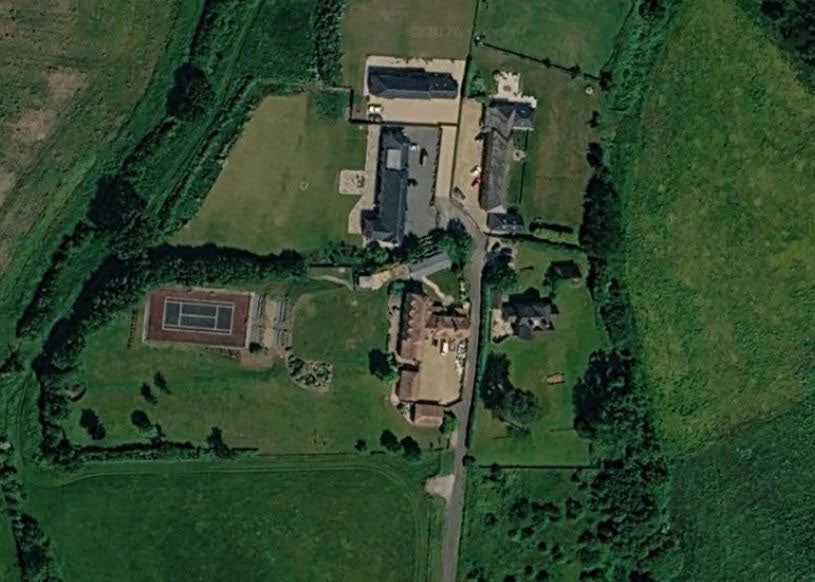
In June 2021, the local council imposed an enforcement notice demanding that the Nixons either demolish their new home or carry out comprehensive alterations.
The following year council officers finally approved “remedial works” which will result in a “significant decrease in size and a different layout of the house”, explained Ms Gleyze.
“Their new house will have to be much smaller,” she told Judge Gerald.
The Nixons’ legal team say the couple ended up buying the project on the strength of the “false representation” made in the enquiries form, and are now claiming £900,000 compensation from Mr Howard - partly to cover the costs of “making their house smaller”.
They are also suing for “fraudulent misrepresentation” on grounds that Mr Howard must have known the outsize building had breached planning rules when he filled in the enquiry form.
But developer Mr Howard is fighting the Nixons’ claim, insisting he had no idea that the renovated barn’s dimensions had gone over the limit when he signed it away to the couple.
Mr Howard, representing himself in court, insisted he “had no knowledge that this building was being built in breach”, also claiming that Mr Nixon had been fully aware of all the planning developments in relation to the barn, being “involved in every detail of the building’s design”.
But the couple’s barrister branded his defence “demonstrably untrue”, arguing: “It is inconceivable, and wholly fanciful to assert, that Mr Howard, who prides himself on being a professional builder with ample experience of building houses, would not have realised that he had deviated from the plans approved when he constructed the house, especially given the very significant discrepancies between the house as-built and as approved.
“It is clear that the claimants suffered loss as a result of these misrepresentations.
“They were forced to incur significant costs in attempting to remedy the breach of planning and they will end up with a property significantly smaller and less valuable than what they had purchased.
“A valuation dated 13 October 2025 estimated a difference of £350,000 between the value of the house as built and as it would be after remedial planning measures are implemented,“ added Ms Gleyze.
During a court hearing last week, the Nixons’ lawyers asked Judge Gerald to order “summary judgment” against Mr Howard on grounds that he has “no realistic prospect” of defeating the claim against him.
But after a brief hearing, the judge agreed to Mr Howard’s request to have the case adjourned in order for him to gather more evidence and instruct solicitors.
“It seems fair to give Mr Howard a relatively brief opportunity to find new solicitors and put in a witness statement,” he decided.
“The essence of his witness statement would be to explain why he didn’t know at the time that the representation which was made was wrong,” the judge added, although also noting evidence produced by the Nixons from the project architect “on one reading to the effect that prior to September 22 Mr Howard had been told that the planning regulations had been breached”.
The judge adjourned the case until late November to permit Mr Howard time to prepare his case.
KioskNews shows a cleaned-up reading view extracted from the publisher’s page — the original always lives on their site, not ours.