CNA Explains: What happens to carbon credits when the forests protecting them burn?
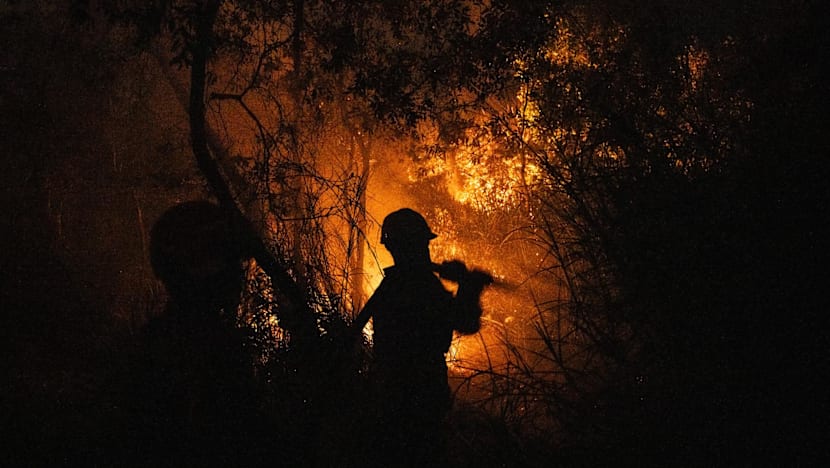
Wildfires in Indonesia are threatening forests linked to carbon credit projects. What does this mean for companies that have paid to offset their emissions, and are the safeguards enough?
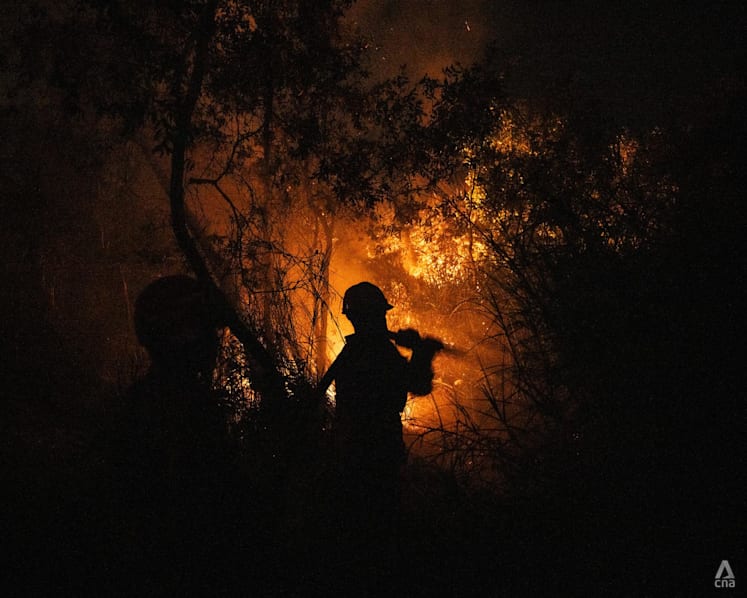
Firefighters spray water at a wildfire in Ogan Ilir, South Sumatra, Indonesia, Sep 11, 2026. (Photo: CNA/Wisnu Agung Prasetyo)
New: You can now listen to articles.

This audio is generated by an AI tool.

02 Nov 2026 06:18PM
Imagine paying to protect a forest thousands of kilometres away, only to see it go up in flames. Has the climate benefit you paid for gone up in smoke too?
Companies purchase carbon credits overseas, including from Indonesia, to offset emissions from their operations.
The market continues to attract interest, with 1,056 new buyers from the Asia-Pacific region entering the carbon credit market last year, according to carbon market database Allied Offsets.
But with Indonesia's wildfires reaching areas linked to carbon credit projects, questions are emerging over whether those credits remain valid, who bears the cost of the carbon released, and whether existing safeguards are sufficient.
Why and how do firms buy carbon credits?
Carbon credits allow companies to compensate for emissions generated by activities such as air travel, shipping and manufacturing, by paying for emissions reductions or removals elsewhere.
One carbon credit represents 1 tonne of greenhouse gas emissions reduced or removed from the atmosphere.
Forest conservation projects, for instance, can generate credits by preventing deforestation and the release of carbon stored in trees and soil. Other projects earn credits by removing carbon dioxide already in the atmosphere.
Before these credits can be sold, the emissions saved must be calculated and independently verified.
Unlike projects that reduce emissions by replacing fossil fuels with cleaner energy, forest projects face an additional risk: Carbon stored in trees and soil can later be released through fires or deforestation.
Do forest fires wipe out the credit?
When a protected forest burns, carbon stored in its vegetation and soil can be released back into the atmosphere, potentially undoing some of the emissions savings that the project was credited for delivering.
However, a fire does not automatically invalidate all the carbon credits previously issued by a project.
Experts must first determine the extent of the damage and how much carbon has actually been released.
While satellite images can identify fire hotspots and burnt areas, they may not capture the full extent of the damage, particularly in peatlands where fires can continue burning underground.
Mr Bjorn Fonden, Asia-Pacific director at the International Emissions Trading Association (IETA), said assessing a fire's impact requires looking beyond the visible damage to determine whether the project has delivered its intended climate benefits.
"When we look at the fires, the question we ask is not simply are the trees still standing, but if the project prevented emissions that otherwise would have happened," he said.
He added that independent verifiers must conduct scientific field measurements, including assessing how much underground peat and biomass has burnt.
These findings are then used to establish whether previously credited emissions savings have been reversed.
A project affected by fire may generate fewer new credits in subsequent years. If the fire releases carbon associated with credits already issued, the loss may also need to be compensated for.
How are carbon credit buyers protected?
One of the main safeguards used by carbon credit programmes is an arrangement known as a buffer pool.
Under this system, a portion of the credits generated by forest projects is withheld from sale and placed in a shared reserve.
These credits act as insurance against unforeseen events, including wildfires, floods and other disasters.
When a reversal occurs – meaning carbon previously prevented from being released from the atmosphere is released back into it – credits from the buffer pool can be cancelled to compensate for the verified loss.
This is designed to compensate for carbon losses and preserve the integrity of credits already issued, although it cannot undo the emissions released by a disaster.
“The buffer pool is there not just from one project, but from maybe hundreds of projects around the world,” said IETA’s Mr Fonden.
“So, in the case of a reversal in one specific project, that can be complemented by results from other projects that do not have fire or other reversal risks.”
However, the system’s effectiveness depends on whether sufficient credits have been set aside to cover losses.
Could disasters overwhelm the safeguards?
While buffer pools are designed to manage losses, concerns are growing over whether they can withstand increasingly frequent and severe wildfires.
Climate change is raising the risk of extreme fire conditions in many forested regions, potentially exposing multiple carbon credit projects to damage at the same time.
If several large forests burn within a relatively short period, the carbon released could exceed the credits available in reserve.
Scientists have questioned whether existing buffer pools adequately account for such risks, particularly as historical fire patterns may no longer reliably predict future conditions.
So, who decides how many credits must be set aside?
Mr Ben Rattenbury from carbon ratings firm Sylvera said carbon crediting standards typically require projects to contribute a percentage of their issued credits to buffer pools, depending on the project type and its risks.
“Let's say (it could be) 5 per cent, or for some project types it might be higher, of the credits from a specific project required to go into the buffer pool,” he said.
“In terms of who decides how adequate the volume of credits in the buffer pool is, this would be the responsibility of the crediting standards.”
Some non-governmental organisations and other market observers also scrutinise the arrangements, he added.
Some standards have updated their risk calculations to better account for extreme weather and other threats.
But the challenge remains: If fire risks increase faster than the reserves intended to cover them, the system could face a shortfall.
Can carbon credits help prevent fires?
Experts say revenue from selling carbon credits can also help prevent fires.
Funds generated by these projects can support forest patrols, firefighting teams and early-warning systems, allowing authorities and local communities to detect and respond to fires before they spread.
In peatland areas, the money can also be used to maintain water levels and prevent the soil from drying out.
This is particularly important because peatlands store substantial amounts of carbon accumulated over thousands of years. When drained or dried out, they become highly vulnerable to fires that can smoulder underground and release large quantities of greenhouse gases.
However, the effectiveness of these measures varies between projects, making it important for prospective buyers to assess the risks before investing.
“Before (embarking) on a project, you need to do due diligence, either via satellite images or historical and forward-looking data for places likely to have these wildfires happening, and perhaps avoid those places,” said Ms Zhang Yiwen, co-founder of carbon removal startup CarbonSynk.
She also highlighted the importance of working with local communities and farmers to address practices that contribute to fire risks, as such measures can help prevent human activities from undermining the long-term protection of forests.
Despite the fires in Indonesia, demand for the country’s carbon credits has remained relatively steady.
Ms Oi-Yee Choo, CEO of Singapore-based carbon exchange Climate Impact X, said trading activity involving Indonesian credits on the company's platform has remained relatively stable.
“So far, we haven’t seen any impact on trading. (The fires) haven’t particularly hurt the depth of the sales of the Indonesian credits on our platform and the demand hasn't significantly shifted away,” she told CNA.
Forest carbon credits can finance conservation efforts and help protect ecosystems that might otherwise face deforestation or degradation.
But their value ultimately depends on whether the emissions reductions they represent can be sustained over time.
For companies buying forest carbon credits, the question is no longer simply whether a project can protect a forest today, but whether the climate benefits they are paying for can withstand the fires of tomorrow.
Want an issue or topic explained? Email us at digitalnews [at] mediacorp.com.sg. Your question might become a story on our site.
KioskNews shows a cleaned-up reading view extracted from the publisher’s page — the original always lives on their site, not ours.