Solar-powered air-con, freeze-tech and ‘fan-jakketos’ among innovative cooling gadgets on the market
SINGAPORE – The search for innovative cooling solutions is hotting up, as countries grapple with rising temperatures caused by climate change and the ongoing El Nino weather phenomenon.
While people tend to turn to air-conditioners for reprieve, the UN had in a recent meeting in Singapore urged representatives from around 60 countries to look to alternative and greener cooling strategies instead.
This is because conventional air-conditioning is energy-guzzling and relies on refrigerants, some of which are powerful greenhouse gases.
In an interview with The Straits Times held on the sidelines of the meeting, the United Nations Environment Programme’s climate change division director Martin Krause said the scarcity of funding is the biggest challenge to scale up more innovative measures.
According to a 2024 report by UNEP and the International Finance Corporation, the market for cooling solutions in developing economies is expected to grow from around US$300 billion (S$383 billion) to at least US$600 billion, per year by 2050.
The Straits Times highlights some cooling gadgets already available on the market.
Ecoline Solar air-conditioner
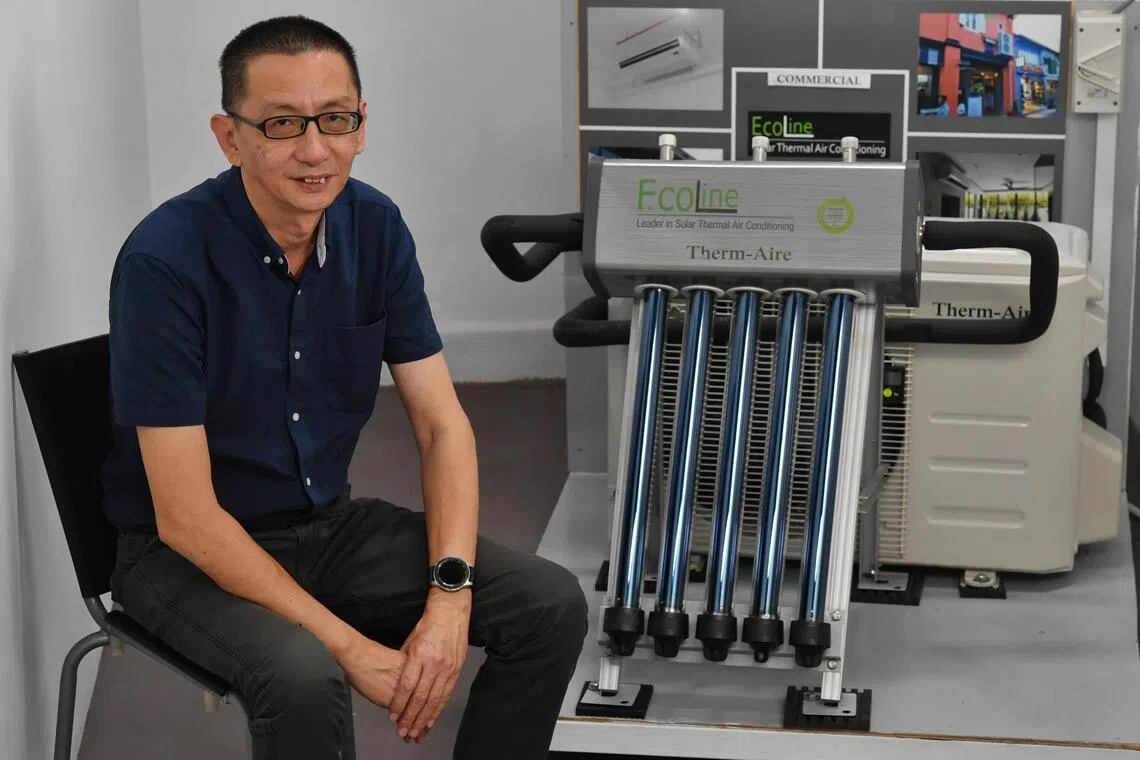
Mr Colin Chia, co-founder of Ecoline Solar, with the solar thermal air-conditioning system manufactured by his firm.
ST PHOTO: CHONG JUN LIANG
A made-in-Singapore air-conditioner that uses up to 55 per cent less energy than conventional ones.
Conventional air-conditioners warm the refrigerant – a fluid that absorbs indoor heat and releases it outside – by using electricity.
The Ecoline system captures solar heat and heat from the surrounding air to warm up the refrigerant partially, saving energy.
Air cooler
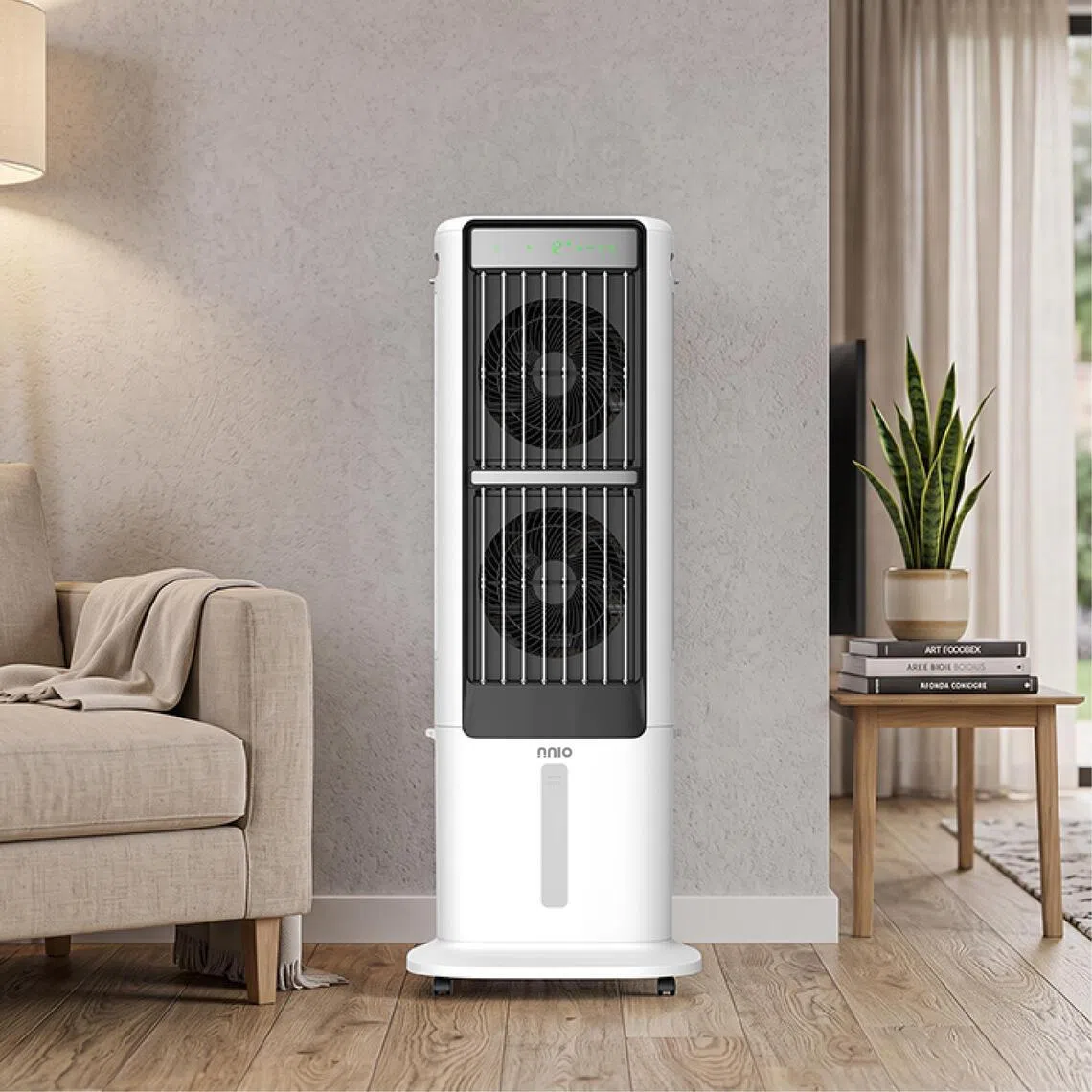
NNIO’s 2-in-1 DC Motor Fan and Air Cooler.
PHOTO: NNIO
A portable air cooler is suitable for homes or spaces that cannot be fitted with air-conditioners.
Surrounding warm air is drawn into the unit. The air passes through a water-soaked cooling pad and the cooler air is then blown out of the unit through a fan.
Air coolers serve as targeted cooling devices that make a specific person feel more comfortable, instead of cooling an entire room.
Freeze Tech cooling wear
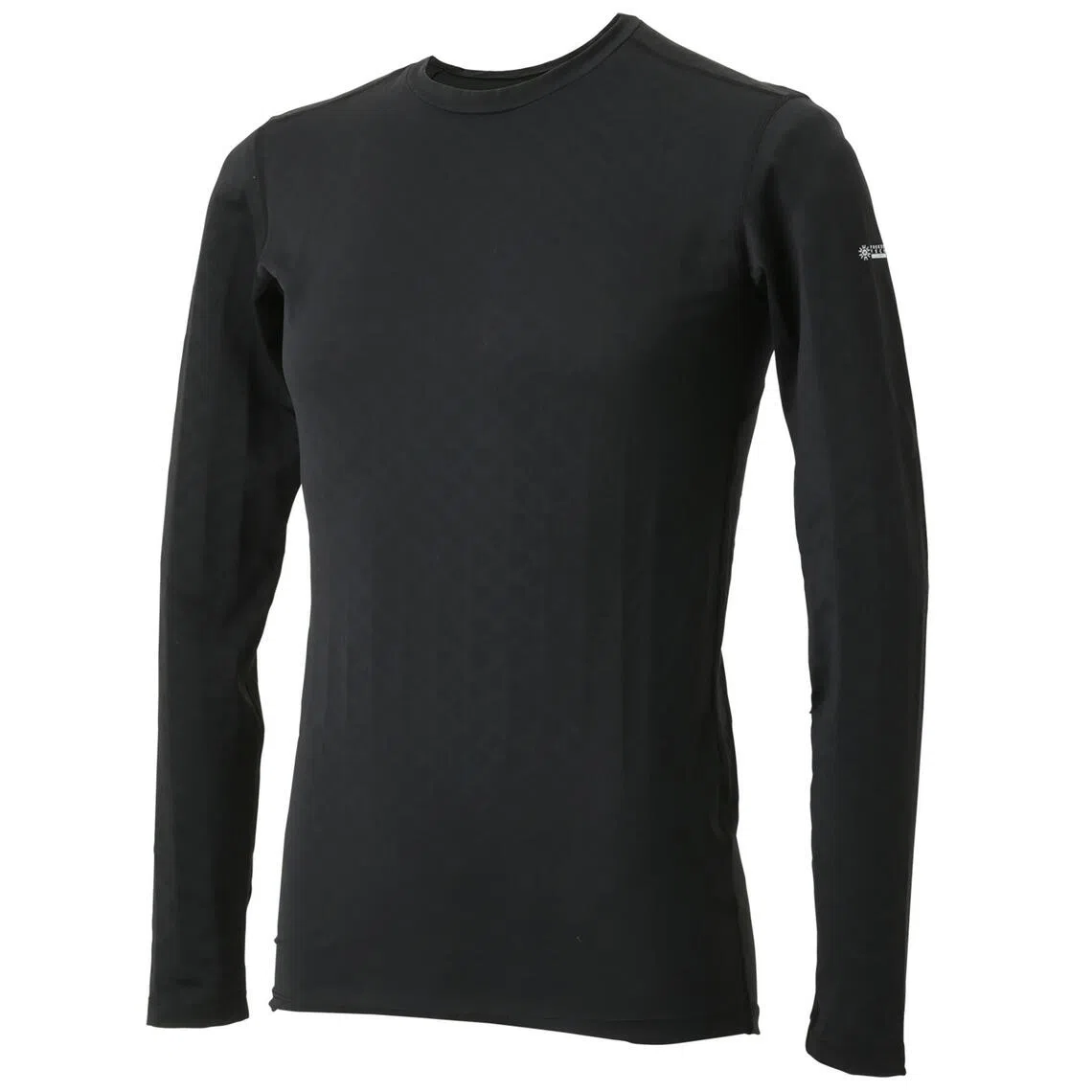
Freeze Tech’s cooling inner wear for workers who work outdoors.
PHOTO: FREEZE TECH
Freeze Tech is a Japanese cooling apparel brand that coats its fabric with a type of sugar alcohol. When activated by perspiration or moisture, it triggers a reaction that draws heat away from the body.
The fabric is said to be able to cool a person down by up to 9 deg C, and can last more than 50 wash cycles.
At least one construction company is trialling Freeze Tech’s inner wear with its workers who work outdoors in Singapore.
Clip-on fan
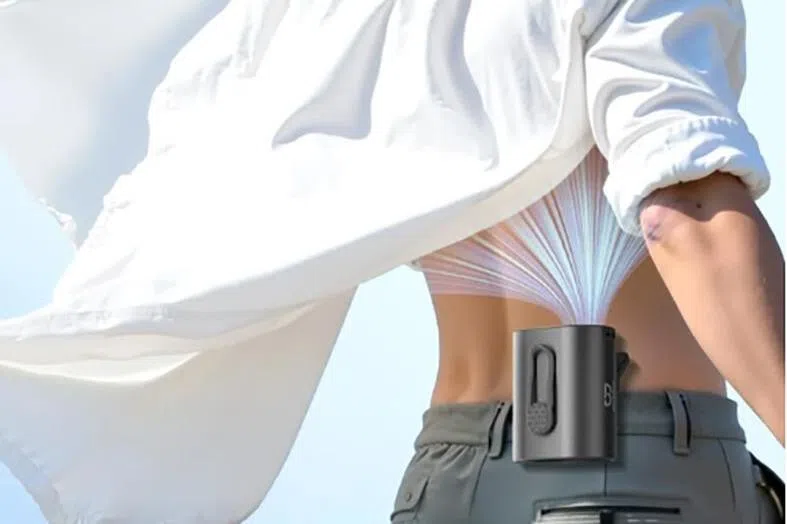
A waist clip-on fan.
PHOTO: SCREENGRAB FROM GOOJODOQ’S WEBSITE
These gadgets resemble portable chargers. They can be clipped onto the waistband, and they blow air to keep the torso cool and dry perspiration on the back.
Fan jacket
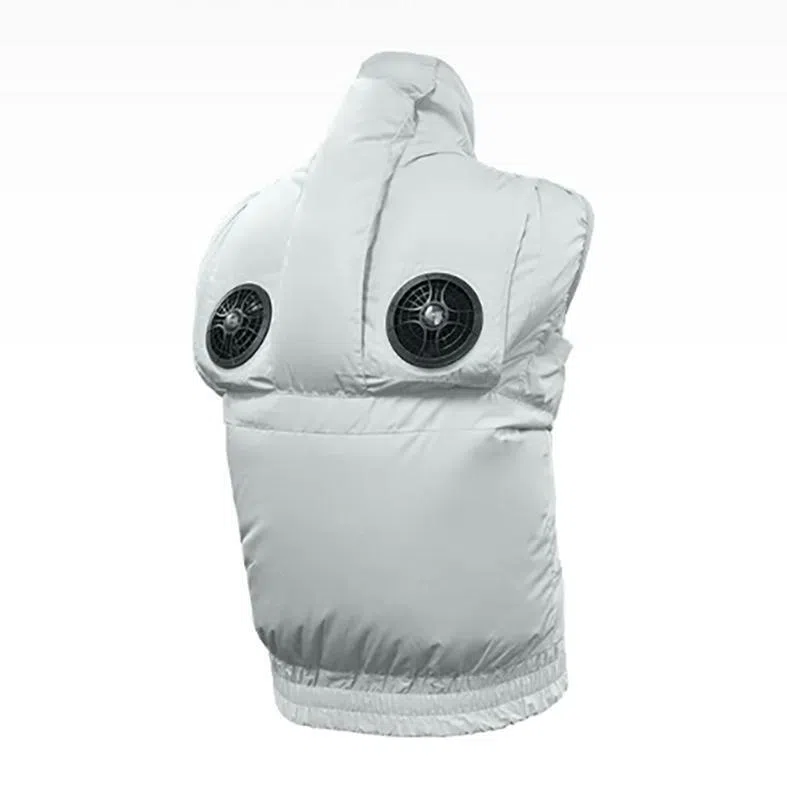
Work gear with fans embedded are a common sight in Japan.
PHOTO: SCREENGRAB FROM KUCHOFUKU’S WEBSITE
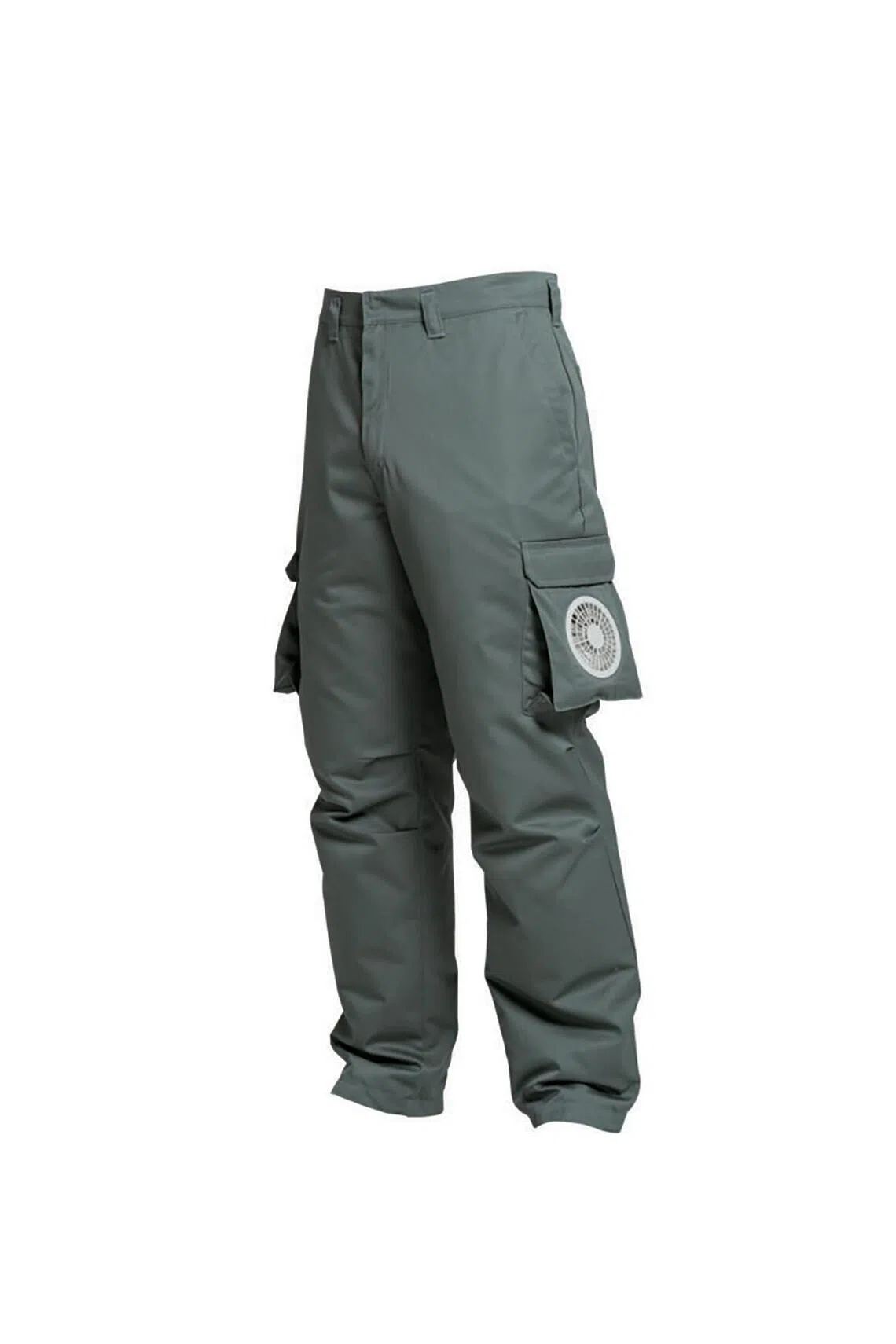
Worker trousers fitted with fans.
PHOTO: SCREENGRAB FROM KUCHOFUKU’S WEBSITE
Circular fans attached to work uniforms are a common sight in Japanese workers who work outdoors.
The fan-jakketo – as the device is called – was introduced in Japan in the early 2000s, keeping workers breezy during punishing heatwaves.
Neck fan

A visitor wearing a portable neck fan and carrying his dog at Singapore Botanic Gardens.
ST PHOTO: LIM YAOHUI
Resting around the neck, this horseshoe-shaped device draws in air and pushes it through vents towards your neck and face, creating a cooling breeze.
Cooling pillow
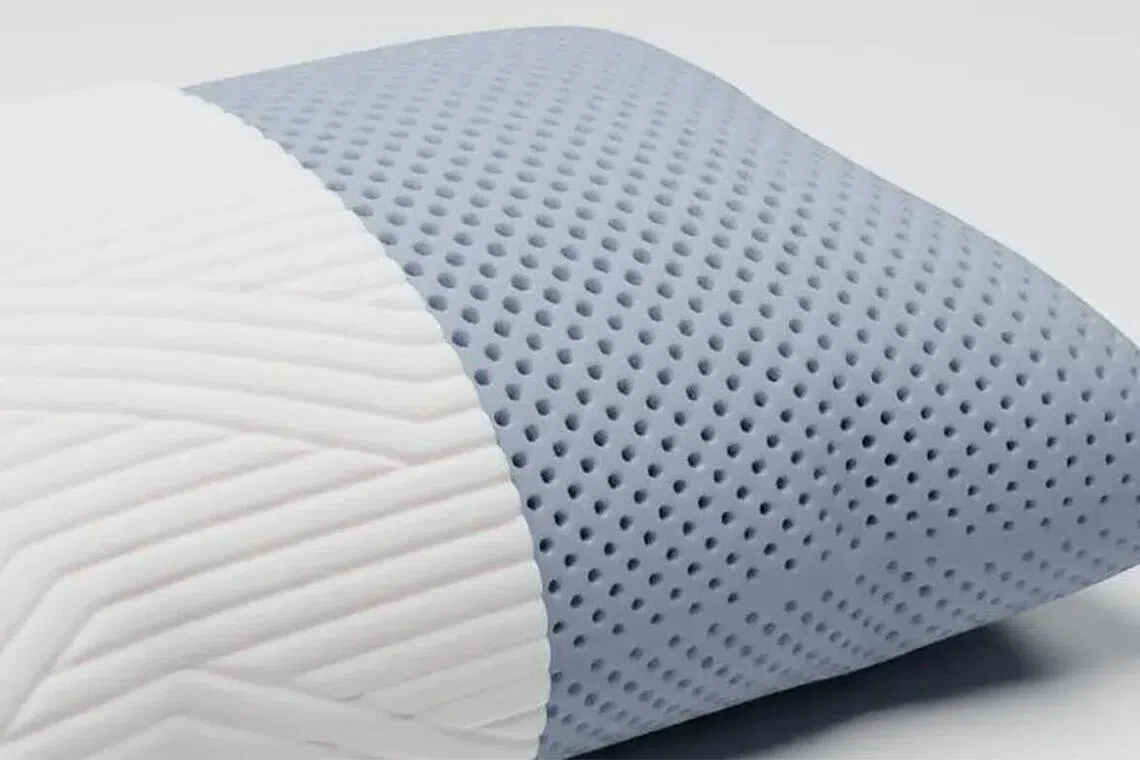
Origin Mattress’ Origin Superior Coolmax Latex Pillow.
PHOTO: ORIGIN MATTESS
As nights get warmer, bedding items may need to be enhanced to improve sleep quality.
A cooling pillow typically has a cooling gel to draw heat away from the user, and tiny air pockets to allow constant airflow.
Shabana Begum is a correspondent, with a focus on environment and science, at The Straits Times.
KioskNews shows a cleaned-up reading view extracted from the publisher’s page — the original always lives on their site, not ours.