[READOUT] The Philippines’ path to EVs runs through hybrids
Already have Rappler+?
to listen to groundbreaking journalism.
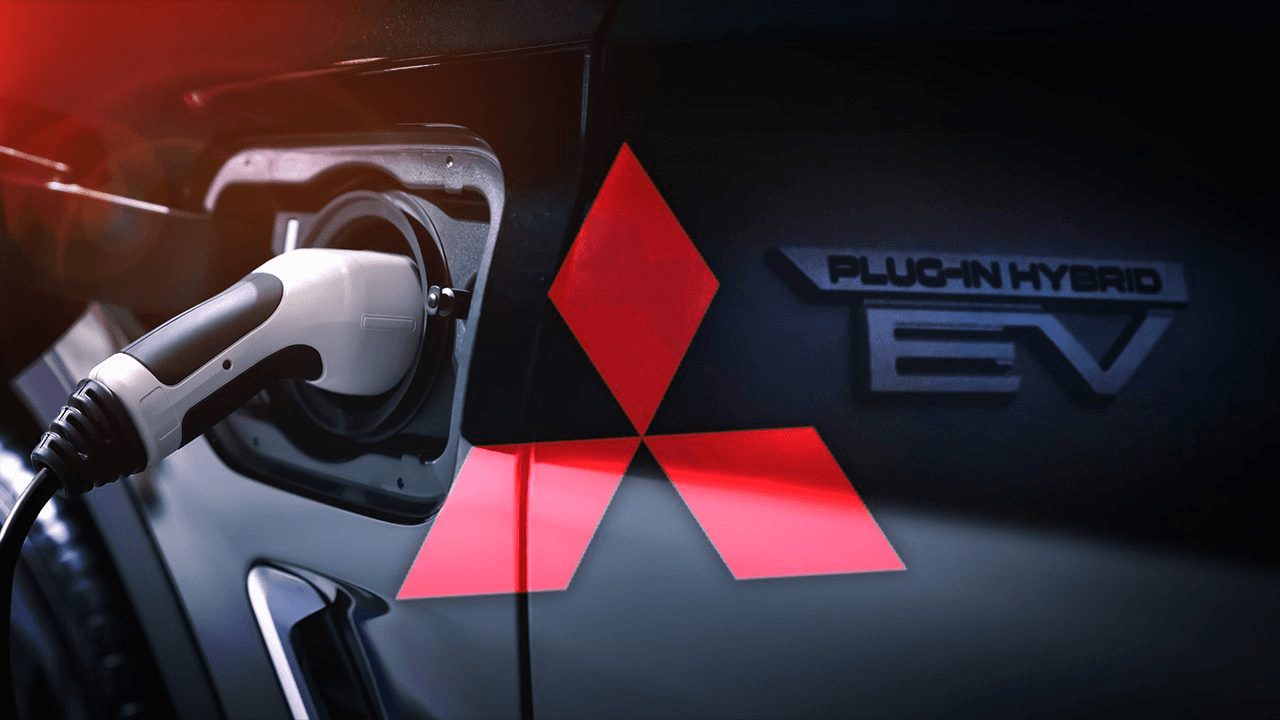
![[READOUT] The Philippines’ path to EVs runs through hybrids](https://www.rappler.com/tachyon/2026/08/Philippines-path-to-EVs-runs-through-hybrids.jpg)
Nico Villarete/Rappler
The market may still be a relatively small slice of the overall pie, but interest is clearly growing, with xEV sales surging 132.7% in H1 2026, even as conventional vehicle sales plummeted
AT A GLANCE
- Filipino consumers show a growing interest in electrified vehicles, with 34% preferring them for their next purchase, although this is still lower than other Southeast Asian countries.
- Sales of electrified vehicles in the Philippines increased significantly, reaching 58,905 units in 2025, despite an overall decline in vehicle sales, indicating a strong market momentum for hybrids and plug-in hybrids.
- Mitsubishi is investing in the Philippine market through government incentives aimed at boosting local production of electrified vehicles, while also addressing the challenges of cost competitiveness compared to regional peers.
This is AI-generated. Read the article for full context. Report any errors.
Filipino consumers may still be less ready than most of Southeast Asia (SEA) to go fully electric, but that doesn’t mean transition is stalled. Instead, the road to EVs looks like it will run through hybrids first – and government incentives have already nudged a major international manufacturer to make that move locally.
Deloitte’s 2026 Global Automotive Consumer Study found that only 34% of Filipinos prefer an electrified vehicle for their next purchase vs 62% for gasoline or diesel (ICE), broken down as follows:
- Hybrid electric vehicle (HEV): 20%
- Plug-in hybrid electric vehicle (PHEV): 11%
- Battery electric vehicle (BEV): 3%
That’s an improvement from their 2025 survey, when ICE preference stood at 68%. But the Philippines still remains the second-lowest of the six Southeast Asian markets surveyed.
For perspective, here’s the share of consumers in other Southeast Asian markets looking for an electrified vehicle next:
- Thailand leads at 58%
- Vietnam is still higher than us at 40%
- Malaysia is the only SEA country behind us at 31%
But let’s not understate how quickly an actual market is forming. Philippine sales of electrified vehicles (xEVs) — HEVs, PHEVs and BEVs combined — reached 58,905 units in 2025, equivalent to 12% of the 491,395-vehicle market and up 142.5% from 2024.
More encouragingly, even though vehicle sales dropped by 11.4% overall in H1 2026, momentum for electrified vehicles continued. xEV sales were up 132% from the same time last year, with 31,381 units sold so far in 2026, according to a joint report by CAMPI and TMA.
And for new entrants, take note: Filipino buyers are also unusually willing to switch brands. Deloitte found 68% intend to buy a different brand for their next vehicle, which gives newer players a real opening against more established names.
READ: A new Mitsubishi hybrid is coming. But don’t expect a pure EV anytime soon.
While EVs could be the long-term ambition, the more immediate bridge could be hybrids — and the big players know it.
Mitsubishi Motors Philippines chairman Noriaki Hirakata said the company has no plans to launch a pure BEV locally yet, pointing to the time it will take to build out charging infrastructure and the slower-than-expected global uptake of full EVs. Mitsubishi is instead leaning into HEVs and PHEVs.
Government incentives
That makes Mitsubishi’s early move on the government’s Electric Vehicle Incentive Strategy (EVIS) worth watching. Mitsubishi announced its intention to participate in April and has since tied a P7-billion investment to the program.
Here’s a quick view of what’s actually in EVIS:
- Up to P60 billion in total incentives, capped at P15 billion per enrolled model.
- Manufacturers may register up to two models.
- At least P5 billion in new capital investment is required.
- Locally manufactured EV models must be introduced within three years of registration.
Hirakata also gave a useful glimpse into why the incentives were needed. Toyota and Mitsubishi together produce slightly fewer than 100,000 vehicles a year in the Philippines, compared with more than 1.5 million annually in both Thailand and Indonesia. In a meeting with President Ferdinand Marcos Jr. and Finance Secretary Frederick Go, Mitsubishi executives showed the government the cost gap between producing here and in Indonesia, and argued that incentives were needed to narrow it.
In return, the government wanted more than basic assembly, so Mitsubishi committed to bring in newer production technology, assemble battery packs locally, and gradually increase local sourcing.
There is also a bigger reason Mitsubishi is willing to commit to the Philippines: the country is its largest market outside Japan and a key contributor to its global business. Hirakata has described the country as particularly important to Mitsubishi, giving the company more reason to invest for the long haul even while Philippine manufacturing remains less cost-competitive right now than its regional peers.
The hope is that Mitsubishi’s entry into EVIS will help bring the rest of the industry along. At this point, it’s all about execution. And manufacturers have reason to be cautious after their experience with past incentive programs like CARS and RACE:
- Payouts became a pain point. A P4.321-billion item intended for the two programs was vetoed from the 2026 budget.
- That left government looking for another way to settle obligations owed to manufacturers like Toyota and Mitsubishi.
- Some requirements may now spill into 2027, extending the timeline further than manufacturers would have liked.
We hope this readout helps inform your next strategy or boardroom decision. And as always, feel free to tell us what to tackle next, dear business leader. – Rappler.com
Readout is a new content series from data consultancy The Nerve, bringing you insights that bridge the gap between quick news headlines and dense technical reports. Readout tracks and explains business shifts in different Philippine industries. Crafted from on-the-ground reporting and data-driven analyses, Readout provides a clear read on where market and consumption are headed, what’s shaping demand across different sectors, who the key players are, and why it all matters.
KioskNews shows a cleaned-up reading view extracted from the publisher’s page — the original always lives on their site, not ours.