The 10 Best Psychological War Movies of All Time, Ranked

Jeremy has more than 2800 published articles on Collider to his name, and has been writing for the site since February 2022. He's an omnivore when it comes to his movie-watching diet, so will gladly watch and write about almost anything, from old Godzilla films to gangster flicks to samurai movies to classic musicals to the French New Wave to the MCU... well, maybe not the Disney+ shows.
His favorite directors include Martin Scorsese, Sergio Leone, Akira Kurosawa, Quentin Tarantino, Werner Herzog, John Woo, Bob Fosse, Fritz Lang, Guillermo del Toro, and Yoji Yamada. He's also very proud of the fact that he's seen every single Nicolas Cage movie released before 2022, even though doing so often felt like a tremendous waste of time. He's plagued by the question of whether or not The Room is genuinely terrible or some kind of accidental masterpiece, and has been for more than 12 years (and a similar number of viewings).
When he's not writing lists - and the occasional feature article - for Collider, he also likes to upload film reviews to his Letterboxd profile (username: Jeremy Urquhart) and Instagram account.
He has achieved his 2025 goal of reading all 13,467 novels written by Stephen King, and plans to spend the next year or two getting through the author's 82,756 short stories and 105,433 novellas.
There’s not really a need to define psychological thrillers or psychological horror movies if you're talking about them, because they're pretty well-established genres (or sub-genres). Applying “psychological” to other broad genres can be a little out-there, though, because you're not often going to find, say, war-related movies that get inside the heads of one or more characters getting labeled as psychological war movies.
That is what some war movies do, though, and so even if the term sounds a bit silly at first, what you get below is an attempt at highlighting the best psychological war movies of all time. They're uniquely challenging and oftentimes quite emotionally taxing, though there is a variety of other genres at play with this assortment of films, with some being satirical/darkly funny and others being intense enough that they sometimes feel like they're pretty close to full-blown horror territory.
10 'Catch-22' (1970)

Catch-22 qualifies as a psychological dramedy as well as a war movie because it’s about a soldier who wants to try to prove he’s insane, thereby getting him excused from further taking part in the war. It’s not as good as the classic novel it’s an adaptation of, but it still retains the source material’s premise and sense of satire, so that’s the main reason it’s worth including here.
Tonally, it’s also quite ambitious and odd, with the exploration of the madness of war here being taken a bit more literally than in most other war movies… even most other war comedies, like, if you want to compare it to M*A*S*H (either the movie or TV series). Stick to the book if you can, but if you really don’t have the time, you could do worse than this movie version of Catch-22.
9 'Johnny Got His Gun' (1971)
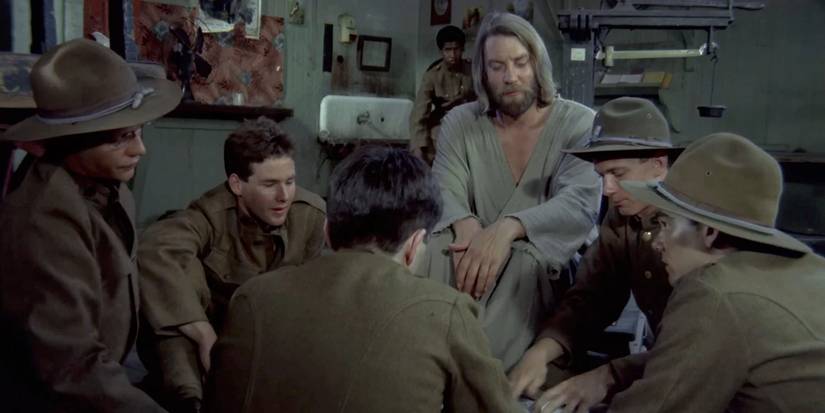
It’s hard to imagine a war movie getting in one character’s head to a greater extent than Johnny Got His Gun, mostly because the premise here ensures that there isn't really much to show outside what the main character is thinking/feeling. He’s been wounded in a way that has removed all of his senses, so he’s unable to communicate with or experience the outside world, and is barely even “alive” as a result.
Calling Johnny Got His Gun grim is an understatement, but it can certainly be admired for finding a new angle to explore as an anti-war film.
The film’s about him reliving memories and then experiencing things of a more surreal/dreamlike nature, all of it locked entirely in his own head. Calling Johnny Got His Gun grim is an understatement, but it can certainly be admired for finding a new angle to explore as an anti-war film, and really putting an emphasis on the “anti” part of that descriptor.
8 'Merry Christmas, Mr. Lawrence' (1983)

Merry Christmas, Mr. Lawrence takes place during World War II, for the most part, and all the prominent characters are involved in the military in one way or another. That being said, it’s very much a non-conventional war movie, owing to how there isn't really anything here that can be considered a combat sequence in the traditional sense, and it’s also a prisoner-of-war film where there isn't a focus on an escape, great or otherwise.
Instead, it’s focused on showcasing a clash of cultures, and exploring two sides – the Japanese forces running the camp and the British soldiers imprisoned there – with a good deal of nuance. The two central characters (played by a pair of musicians: David Bowie and Ryuichi Sakamoto) go through quite a lot internally, which is the main reason Merry Christmas, Mr. Lawrence feels a bit like a psychological drama first and a war movie second. Well, that and the way it doesn’t feature a lot by way of sequences you might expect to see in a more standard war film.
7 'Son of Saul' (2015)

It feels a little strange to call Son of Saul a psychological thriller of sorts, because thrillers are typically exciting and at least a little fun, and there’s very purposefully no fun or conventional thrills to be found in Son of Saul. It’d be weird if it did have those things, and can instead be singled out as a very dark kind of war/thriller movie that’s more about creating discomfort, anxiety, and dread throughout.
Also, Son of Saul is a tense watch, and if that’s something psychological drama/thriller films need to provoke, then there you go. The story here mostly concerns a man named Saul fighting to survive inside Auschwitz as a member of the Sonderkommando: someone forced to assist in disposing of the bodies of those already killed. It’s an incredibly grueling film, very much worth watching probably just the one time, mostly for the technical craft of it all and the way it succeeds in making you feel uncomfortably close to living through a truly hellish situation.
6 'Underground' (1995)

One more comedic war movie worth mentioning is Underground, which is both funnier and more harrowing than the previously mentioned Catch-22. Underground is also huge if you're looking at its ambition, because the narrative here spans decades, and there are different wars the main characters live through, as a result, with the film starting around World War II and concluding with the Yugoslav Wars.
While it’s very much about Yugoslav history, you don’t have to be particularly knowledgeable about the wars fought in/by Yugoslavia to appreciate what Underground is doing as an absurd comedy, downbeat drama, and unique war film, all at once. It’s hard to put into words just why the movie’s as good as it is, and it’s also difficult to express the emotions it’s likely to make one feel. The important thing is that it should be watched, and should also be at least a little more well-known overall.
5 'The Zone of Interest' (2023)

Jumping back to purely harrowing territory now, The Zone of Interest takes place during World War II, and it’s similarly confronting to Son of Saul, all the while standing out for taking the complete opposite approach stylistically and visually to that film. Son of Saul puts you right in the middle of Auschwitz, while The Zone of Interest deliberately places the camera – and thereby you – right outside Auschwitz.
The horrors are heard without being seen, and the focus is on Rudolf Höss and his family living disquietingly “normal” lives right outside a place where unspeakable violence is being perpetuated on a daily basis. You're put into a strange headspace, following the shocking ways some people deal with normalizing or ignoring such horrors, and the effect the film has as a psychological drama, as a result, is hard to deny.

Getting into people’s heads is what so many Stanley Kubrick movies proved pretty great at doing, with the director making psychological thriller/mystery movies (Eyes Wide Shut), psychological horror (The Shining), and psychological sci-fi/crime films (A Clockwork Orange). So, him directing films that could be given the “psychological war” label isn't too surprising, with Full Metal Jacket probably earning such a label to the greatest extent.
This feels especially so for the stretch of the film that deals with the psychological toll of boot camp, but then the second half, which is more of a traditional war movie, does also see people unraveling mentally/emotionally. Full Metal Jacket more than taps into that whole “madness of war” angle on more than one front, and it’s that quality which makes the film a difficult one to forget, once it’s been seen.
3 'Come and See' (1985)

Another somewhat easy and certainly essential pick, for present purposes, here’s Come and See, which is set during World War II and narratively concerns the experiences of a young boy who joins a group of resistance fighters. He’s already massively impacted by the war’s devastation before he becomes a soldier of sorts, and then once he is a soldier, things continually get worse for him and those around him.
Come and See has a well-deserved reputation for being one of the most challenging war films ever made, since it starts out feeling uncomfortable and uneasy, all before slowly getting more and more nightmarish as it goes along. It’s about the way war can drive one mad, and what it does psychologically to those who don’t happen to have their lives physically ended (at least not at first) by war.
2 'Apocalypse Now' (1979)
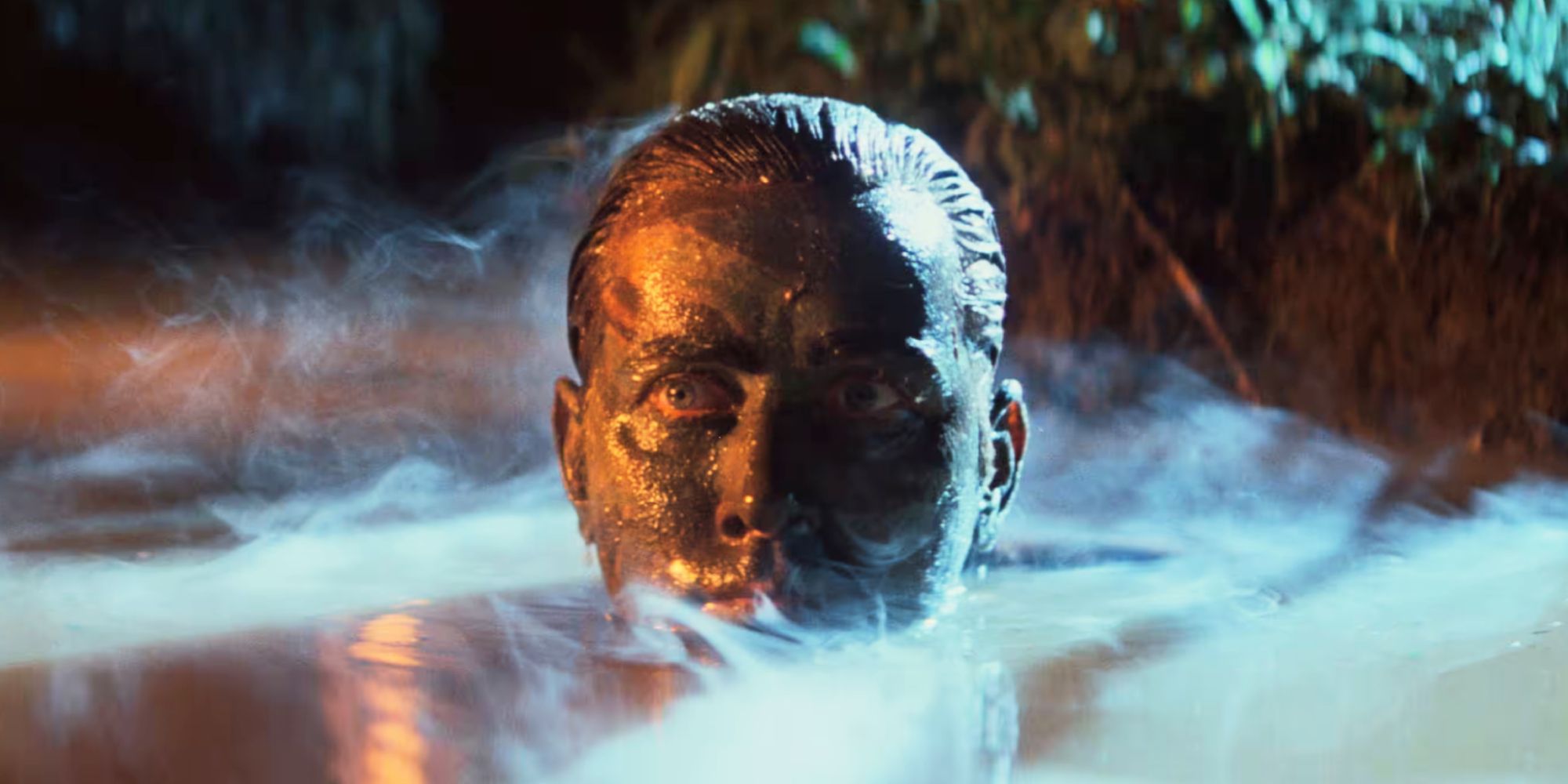
Apocalypse Now is right up there, as far as psychological war movies go, and if you're trying to find the psychological war movie that’s the most famous, it feels like a no-brainer sort of pick. It’s a confronting film, but an iconic one that’s well within the canon of “all-time great movies,” and part of the reason it’s there is because it pushes beyond the boundaries of what you'd expect to see in a war film.
It begins as a Vietnam War film, and the war’s technically still going at the end, but the story branches off from directly experiencing the war, and becomes something that feels more surreal and personal. Apocalypse Now goes to some odd and truly haunting places, and it well and truly succeeds at presenting – and making you feel – a warped psychological journey by the time it wraps up.
1 'The Human Condition' (1959–1961)

Released in three parts between 1959 and 1961, The Human Condition is being counted as one massive movie here, a little like how you can consider The Lord of the Rings one film released in three parts. In both cases, it was one massive production that led to three movies for release purposes, just because it’s already demanding to get people to sit through one three-hour movie, let alone “one” movie that goes for nine to 10 hours.
The Human Condition is indeed the length of three epic movies, because it is made up of three epic movies. The whole thing’s about a man named Kaji who’s a pacifist, but then he’s made to take part in World War II anyway in increasingly direct/demanding ways. It’s about his psychological unraveling and the struggles he has with holding onto his morals, especially when they clash with a desire to survive no matter what. It’s hard to think of another war movie that puts a single character through more of an internal battle, and for so long, so that’s why The Human Condition is going at #1 here.
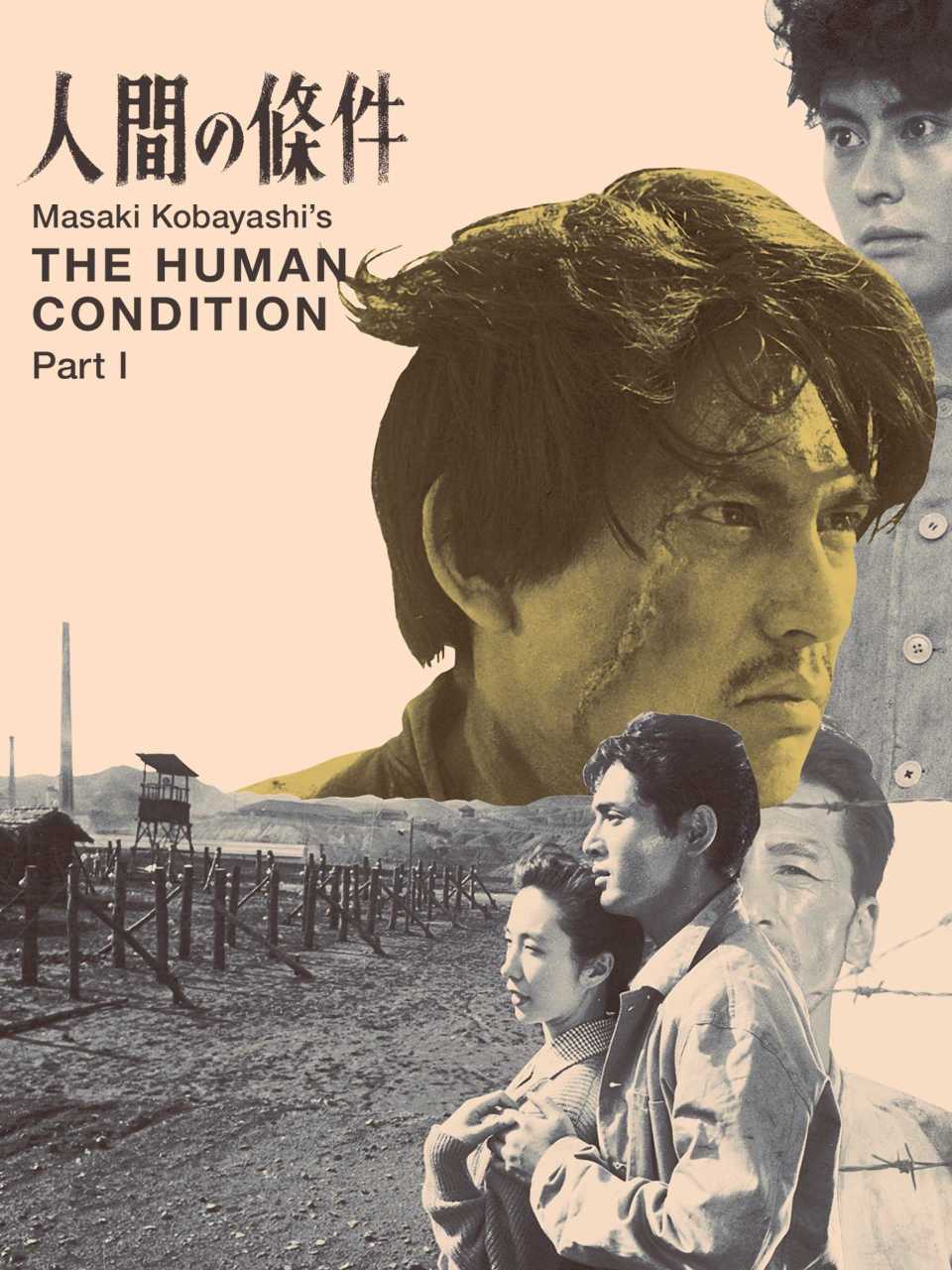
The Human Condition I: No Greater Love
- Release Date
- December 14, 1959
- Runtime
- 208 Minutes
- Director
- Masaki Kobayashi
- Writers
- Zenzô Matsuyama, Masaki Kobayashi, Jumpei Gomikawa
KioskNews shows a cleaned-up reading view extracted from the publisher’s page — the original always lives on their site, not ours.