Country diary: It’s been a strange year for seasons – now our fungi are in disarray | Michael White
As autumn intensifies, it is easy for surface-dwellers such as ourselves to forget that we have already seen the trees turn once this year – not from shortening days, but for want of water. Summer turned leaves and meadows brown, until heavy rain in September and a second “spring” painted green all signs of the drought here in Kent, and banished at a stroke our fleeting interest in it.
Subterranean organisms, though, and those that span both worlds, have far longer memories. The boundary oak between the lower paddocks will now for ever have a narrow growth-ring within its girth, and fungi, to the human eye at least, have been sent into utter disarray.
The field mushrooms were very much to script, fruiting as the drought lifted, in quantities not seen for a decade (possibly as a stress response). But they have been the exception.
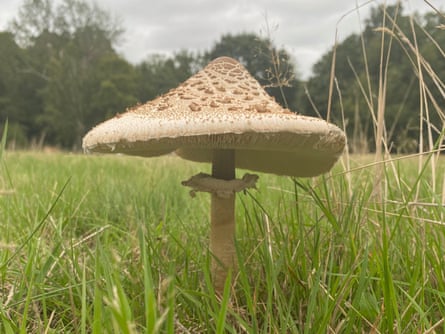
Ceps showed when expected in September, but have come again unseasonally in November, while winter chanterelles – usually a dependable find by mid-October – are in many places still absent. Parasols, a delectable edible (though be careful with identification), have also arrived late in huge abundance, while the small but powerful liberty caps have failed to materialise for the head-down wanderers of meadow and moor who seek them.
Even for the “mindceliated” – us folk immersed in all things fungal – the ways of the mushroom are largely mysterious, but research throws us a few juicy facts to wield. We know, for example, that mycorrhizal fungi – which live in symbiosis with trees – supply them with water when conditions are dry, and are paid in sugar for this service. This will therefore have been a profitable summer for ceps, and a double fruiting might not be unexpected.
Realistically, though, I doubt anyone can fully appreciate the conditions below ground, nor understand mycelium sufficiently to give a true explanation for this exceptional season.
To be humbled in this way is no bad thing. To be inspired to the point of obsession with trying to understand, while accepting that most will remain obscure, is the source of awe which holds me spellbound as I pick summer ceps in the winter’s first frost.
KioskNews shows a cleaned-up reading view extracted from the publisher’s page — the original always lives on their site, not ours.