D-Day veteran dies aged 100 just days before Remembrance Sunday
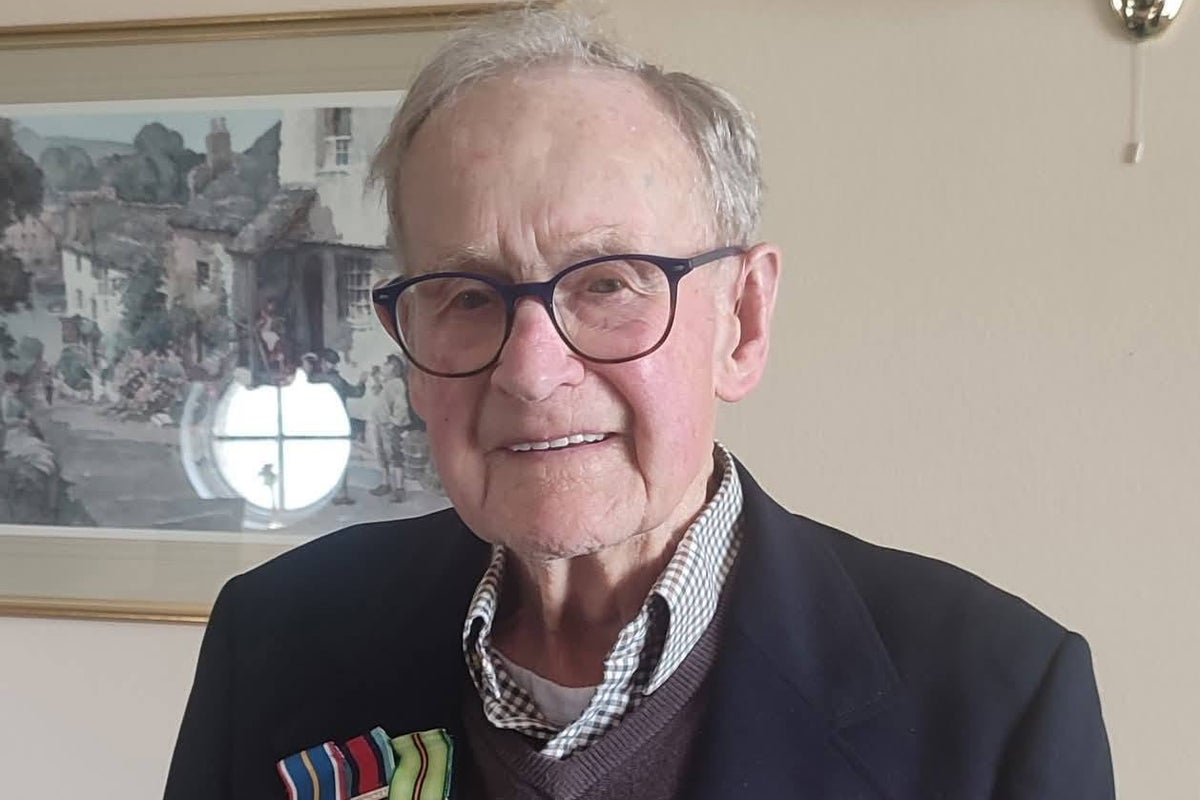
Charlie Horne, one of Scotland’s last surviving D-Day veterans, has died aged 100.
Aged just 18, Mr Horne served on a small wooden minesweeper which came under fire on June 6, 1944.
Mr Horne, who was from Prestonpans in East Lothian, said the scenes of devastation he saw as the Allied forces landed in France stayed with him for the rest of his life.
Mr Horne died on November 3 at Erskine Veterans Charity’s Edinburgh Home, where he had been living since the summer. His death came just a week before Remembrance Sunday.
Mr Horne, who returned home to marry his sweetheart Jenny after the war and continue life as a seafarer, recently reflected on his wartime experience ahead of Remembrance Sunday.
He said: “I will never forget what I saw. I don’t think you could live through something like that and ever really leave it behind, no matter how many years pass.
“I was only 18 and there were ships being blown apart, men in the water and shells coming towards us from the shore.”
He continued: “There were mines underneath us and you knew that one explosion in the wrong place could be the end of you and everyone around you.
“You were frightened, of course you were, but there wasn’t time to sit and think about it.
“We had a job to do, the men beside you were relying on you, and you were relying on them, so you carried on.”
Mr Young spoke of the importance of remembering those who never returned from the war.
He said: “I’ve had another 82 years. I came home, fell in love, got married, had children and watched my family grow – thousands of young men never had the opportunity to experience any of those things, and that is tragic.”
He continued: “I will never forget the men who didn’t come home.
“All I ask is that, when we are no longer here to tell you ourselves, you don’t forget them either.”

Born into a fishing family, Mr Horne was already an experienced seaman by the time he served on minesweeper MMS 291, part of the Royal Naval Patrol Service.
He kept a handwritten diary of his experience, describing bombs, shells and flares lighting up the sky.
German guns fired upon the minesweeping vessels as they sought to clear the sea for the approaching invasion force.
In his diary, Mr Horne recorded seeing “lots of wreckage” and dead servicemen in the water, while bullets fired from the shore landed within around 50 feet of his vessel.
His vessel destroyed a total of eight mines after leaving Plymouth, but the danger did not stop after D-Day.
His diary also recalls how another minesweeper, MM299, struck a mine and its explosion “blew her bows clean off”.
The young sailor eventually gave up trying to count the ships which had been lost, seeing the waters strewn with wreckage.
His service during the Normandy landings was later recognised with the Legion d’honneur, France’s highest order of merit.
He and Jenny, who died in 2009, went on to have three daughters.
Wing Commander Ian Cumming, chief executive of Erskine Veterans Charity, said: “We are deeply saddened by Charlie’s passing, and our thoughts are with his family, friends and everyone who knew and loved him.
“His passing is particularly poignant as we approach Remembrance.
“We are losing the last of a generation who experienced the Second World War firsthand, and with each passing, another irreplaceable connection to that period of our history is lost.
“It was a privilege to care for Charlie in the final months of his life.”
KioskNews shows a cleaned-up reading view extracted from the publisher’s page — the original always lives on their site, not ours.