Solar panel breakthrough could almost double the efficiency of today's panels
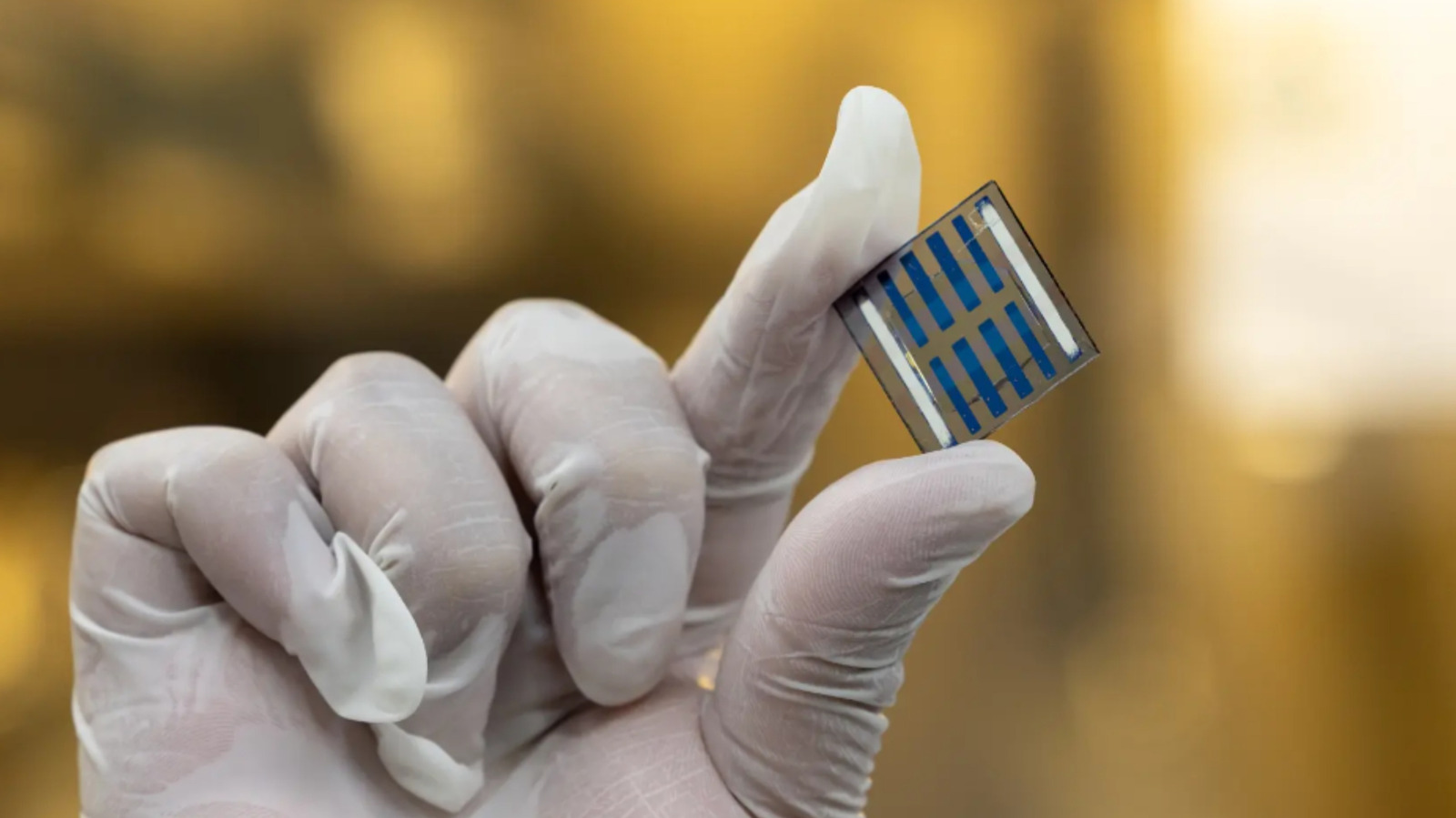
Here's hoping the new approach trickles down to consumer panels someday.
ICFO
Researchers at the Institut de Ciències Fotòniques (ICFO) have discovered a novel way to design solar panels that can dramatically increase their energy efficiency. Notably, while existing studies have focused on reducing how much solar energy is lost to heat, ICFO's research addresses another limiting factor: Boltzmann loss, or the energy lost to the light solar panels emit.
New research doesn't mean you'll be able to go out and buy a more capable solar panel tomorrow, of course, but considering the growing adoption of plug-in balcony solar panels in the US, improving the basics could go a long way. If it's possible to boost panel efficiency from the current theoretical limit of 33.16 percent (known as the Shockley-Queisser limit) to the roughly 43 percent the ICFO claims its new method would enable, we could see significant trickle-down benefits for consumer solar panels, which typically perform at 20 to 23 percent. This is far from the only recent breakthrough in solar panel tech in 2026, either: Chinese firm LONGi unveiled a solar cell with 35.5 percent efficiency in July and claimed the PV cell it uses is also theoretically capable of achieving 43 percent.
Capping light emission
At their simplest, solar panels contain semiconducting material — most commonly crystalline silicon — that releases electrons when exposed to sunlight, creating an electric current. Unfortunately, some of that solar energy turns into heat or is re-emitted as light. Scientists have explored several methods to reduce thermal energy loss, including changing a panel's semiconductor, but the light component of the equation has so far been trickier to address.
In a paper published in Energy & Environmental Science, the ICFO researchers attempted to solve the issue by addressing "the mismatch between the narrow sunlight absorption and the wider emission cones" of solar panels. They started with an organic solar cell rather than the silicon used in most panels. By replacing the cell's indium tin oxide front electrode with a thin silver one and converting the cell into an optical cavity, they created a cell that still let sunlight in, but emitted less light at wide angles. This improved the efficiency of their solar cell by around 0.85 percent, a modest gain in the grand scheme of things, but offers evidence that we could eventually push efficiency past the theoretical limit.
"If the emission cone can be narrowed to more closely match the absorption cone of incoming sunlight, which is exactly what our work demonstrates experimentally, solar cells will, in principle, be able to approach efficiencies close to 43 percent," Dr. Francisco Bernal Texca, the first author on the study, said in an IFCO press release. And in a plus for anyone interested in installing their own solar panels someday, the underlying principle should apply to all kinds of photovoltaic cells, not just the cutting-edge materials available in a lab setting.
KioskNews shows a cleaned-up reading view extracted from the publisher’s page — the original always lives on their site, not ours.