10 Thriller Films That Are Perfect From Start to Finish
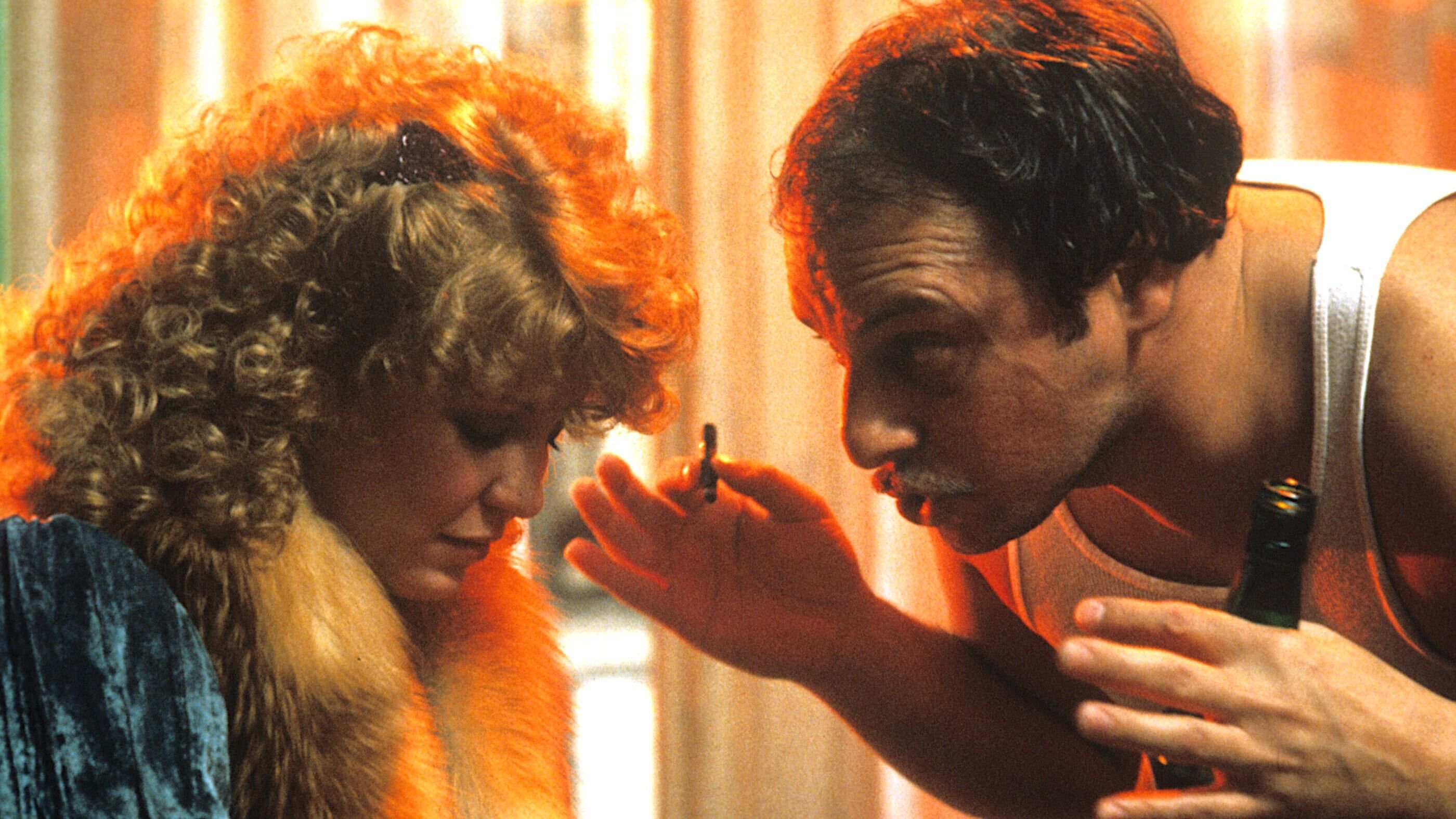

Thomas Butt is a senior writer. An avid film connoisseur, Thomas actively logs his film consumption on Letterboxd and vows to connect with many more cinephiles through the platform. He is immensely passionate about the work of Martin Scorsese, John Ford, and Albert Brooks. His work can be read on Collider and Taste of Cinema. He also writes for his own blog, The Empty Theater, on Substack. He is also a big fan of courtroom dramas and DVD commentary tracks. For Thomas, movie theaters are a second home. A native of Wakefield, MA, he is often found scrolling through the scheduled programming on Turner Classic Movies and making more room for his physical media collection. Thomas habitually increases his watchlist and jumps down a YouTube rabbit hole of archived interviews with directors and actors. He is inspired to write about film to uphold the medium's artistic value and to express his undying love for the art form. Thomas looks to cinema as an outlet to better understand the world, human emotions, and himself.
Sign in to your Collider account
What else do you want from a movie besides being emotionally captivated? Well, look no further than the thriller genre to satisfy that innate human desire. No matter the genre, everyone wants to feel moved in some way, and the thriller is the purest distillation of the big screen's power, practically as old as the medium itself. Filmmaking as a business and art form has drastically changed in the last 100 years, but the basic joys and pleasures have remained constant. The 10 movie thrillers ranked below are the epitome of filmmaking, made by ingenious visionaries with top-level performers and craftspeople. From the opening credits to the final shot, you'll be in the palms of these thrillers’ hands.
10 'Seven' (1995)
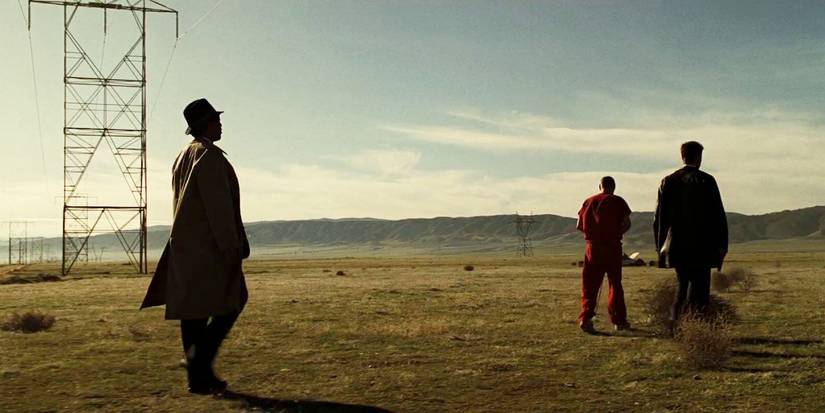
David Fincher's breakout film, and the film that announced him as one of the premier thriller directors of his generation, Seven grows on rewatch. The unforgettable climactic twist will always be devastating, but there is more operating under the hood of this terrifying serial killer thriller/police procedural starring Morgan Freeman and Brad Pitt as detectives solving the grisly murders based on the Seven Deadly Sins.
Matching the spirit of William Somersett's (Freeman) bedside device, Seven operates like a metronome. Fincher's sense of pacing is unparalleled, and it would come to define his career for the next 30 years. The film is unafraid to have quiet stretches of psychological meditations and subtle character growth moments, which makes its shocking moments of violence, horror, and sheer nihilism all the more powerful. Evil lurks in the rainy hellscape of Seven's unnamed metropolitan area. While the killer, John Doe (Kevin Spacey), doesn't appear until the third act, his reign of bloodshed consumes the screen at all times. Seven absolutely thrives as an old-fashioned crime thriller with countless vicious deaths and horrifying images, but it's also packed with reserved humor, non-showy characterization, and a meticulous portrait of obsession.
9 'Sorcerer' (1977)

What was once a box office bomb, clouded by the concurrent release of Star Wars in 1977, Sorcerer is every cinephile's favorite film to recommend to a casual audience member. This white-knuckle odyssey into the jungle, William Friedkin's follow-up to The Exorcist, brought the thriller to a whole new realm of visceral propulsion and daring creative heights.
Only someone at the top of the proverbial world could have conceived Sorcerer. For Friedkin, coming off The Exorcist and the Best Picture-winning The French Connection, his awe-inspiring control of the frame and onslaught of intensity peaked here, a movie with a notoriously disastrous production that tested the fortitude of its cast and crew. They embodied the experience of the film's main characters, four disparate criminals who converge to deliver volatile chemicals via truck over hazardous terrain in South America. Sorcerer begins slowly and meticulously, but Friedkin's precise tonal control and elaborate narrative construction keep you locked in. By the time the true action starts, you'll be sweating out each bump in the road and immovable obstacle that these desperate men face, who will do anything for some cash. Sorcerer, with its depiction of anguish and adrenaline, often feels too raw for the cinematic medium itself.
8 'Zodiac' (2007)
If one totemic serial killer thriller wasn't enough, David Fincher returned for more explorations of the dark side of humanity one decade later with Zodiac, the director's most ambitious, personal, and career-defining work to date. Released in the watershed year of 2007, the film, based on the string of murders in the San Francisco area allegedly perpetrated by the "Zodiac killer," is a profound text on obsession and the unsolvable nature of life.
Zodiac expands upon the formula cemented by Seven by framing this historical story not about the elusive killer who hasn't been officially identified, but instead, the pursuit of answers by three parties: a crime reporter, Paul Avery (Robert Downey Jr.), police inspectors David Toschi (Mark Ruffalo) and William Armstrong (Anthony Edwards), and an impressionable cartoonist, Robert Graysmith (Jake Gyllenhaal). Each person becomes consumed by the long-running investigation, and while they prosper in their respective careers, their personal lives and sense of self evaporate. In many ways, Zodiac surpasses its genre categorization and acts as a haunting saga about American futility and the intersection of law enforcement and the media. Still, pick any scene from the film (the basement scene, anyone?), and it will be just as thrilling or terrifying as any horror movie.
7 'M' (1931)
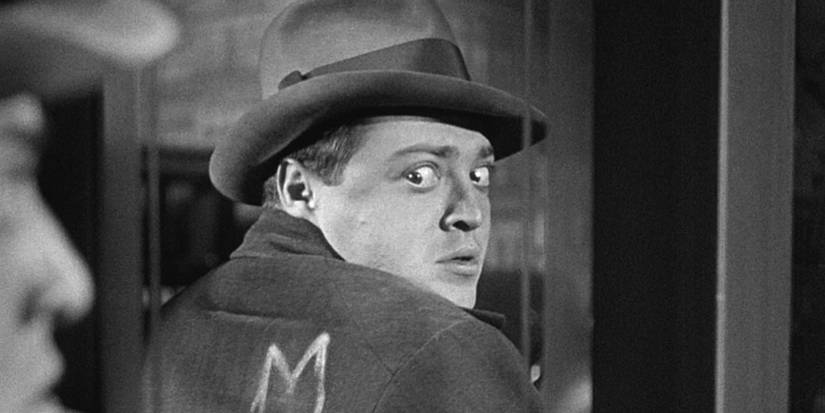
When it comes to the German Expressionism movement, Fritz Lang is perhaps most synonymous with the cinematic trend from the late '20s and early '30s. These films permanently changed the medium in the final days of the silent era, as they turned a static art form into a dynamic, maverick medium that could break all the rules. Without M, Lang's spellbinding film about a serial killer terrorizing a German neighborhood, there might not be a crime thriller genre as we know it today.
Civilians, law enforcement, and underground mobs band together to hunt down a child predator, Hans Beckert (Peter Lorre), in this gripping procedural thriller with a DNA that will be copied, implicitly or explicitly, forever, with its influence stretching into True Crime podcasts. M is a captivating mystery box that forces the viewer to think like one of the many real and mock detectives roaming the streets and meeting in dark taverns to catch this killer. Lang's German Expressionist roots are most thematically bold in scenes that depict supposed neighborhood nobility as a source of pent-up, hostile rage toward the world. M, often cited as a rebuke against the rise of Nazism in Germany, underlined the perverse community aspect of the criminal justice system, one that would define our bloodthirsty, True Crime-obsessed brains.
6 'The Conversation' (1974)

In between making The Godfather and The Godfather: Part II, Francis Ford Coppola quietly dropped a third masterpiece in a three-year span with The Conversation. A longtime passion project for Coppola, this essential paranoid '70s thriller was prescient in ways that are unsettling to consider. Brimming with the sweat-inducing angst and the deep cynicism of American institutions, The Conversation could've only come out of New Hollywood.
Starring Gene Hackman at his best, Coppola's conspiracy thriller about a surveillance expert who finds himself entangled in a sinister plot involving a married couple is both a jazzy character study and a scathing takedown of technological evolution and the expansion of corporate and government power in the '70s. Hackman's Harry Caul is a master in his field with the power to ostensibly watch the world through various cameras and hidden microphones, but he's no match for the unscrupulous client who hires him and forces him to submerge into an existential void, where the walls of his apartment are literally ripped apart from him. The Conversation operates at an unsettling rhythm, and its source of thrills stems from the sense that we are indeed powerless, and that the human mind is no match for what we've been given access to weaponize.
Collider Exclusive · Oscar Best Picture Quiz
Which Oscar Best Picture
Is Your Perfect Movie?
Parasite · Everything Everywhere · Oppenheimer · Birdman · No Country
Five Oscar Best Picture winners. Five completely different visions of what cinema can be — and what it can do to you. One of them is the film that was made for the way your mind works. Ten questions will figure out which one.
🪜Parasite
🌀Everything Everywhere
☢️Oppenheimer
🐦Birdman
🪙No Country for Old Men
01
What kind of film experience do you actually want? The best movies don't just entertain — they leave something behind.
02
Which idea grabs you most in a film? Great films are driven by a central obsession. What's yours?
03
How do you like your story told? Form is content. The way a story is shaped changes what it means.
04
What makes a truly great antagonist? The opposition defines the protagonist. What kind of opposition fascinates you?
05
What do you want from a film's ending? The final note is the one that lingers. What do you want it to sound like?
06
Which setting pulls you in most? Where a film takes place shapes everything — mood, stakes, what's even possible.
07
What cinematic craft impresses you most? Every great film has a signature — a technical or artistic element that makes it unmistakable.
08
What kind of main character do you root for? The protagonist is the lens. Who you choose to follow says something about you.
09
How do you feel about a film that takes its time? Pace is a choice. Some films sprint; others let tension accumulate slowly, deliberately.
10
What do you want to feel walking out of the cinema? The best films leave a mark. What kind of mark do you want?
The Academy Has Decided Your Perfect Film Is…
Your answers have pointed to one Oscar Best Picture winner above all others. This is the film that was made for the way your mind works.
Parasite
You are drawn to films that operate on multiple levels simultaneously — that begin in one genre and quietly, brilliantly migrate into another. Bong Joon-ho's Parasite is a film about class, desire, and the architecture of inequality that manages to be darkly funny, deeply suspenseful, and genuinely shocking across a single extraordinary running time. Your instinct is for cinema that hides its true intentions until the moment it's ready to reveal them. Parasite is exactly that — a film that rewards close attention and punishes assumptions, right up to its devastating final image.
Everything Everywhere All at Once
You want it all — and this film gives you all of it. The Daniels' Everything Everywhere All at Once is one of the most maximalist films ever made: action comedy, multiverse sci-fi, family drama, existential crisis, and a genuinely earned emotional core that sneaks up on you amid the chaos. You are someone who responds to ambition, who doesn't want cinema to choose between being entertaining and being meaningful. This film refuses that choice entirely. It is overwhelming by design, and its overwhelming nature is precisely the point — because the feeling of being crushed by infinite possibility is exactly what it's about.
Oppenheimer
You are drawn to cinema on a grand scale — films that understand history not as a backdrop but as a force, and that place their characters inside that force and watch what happens. Christopher Nolan's Oppenheimer is a film about the terrifying gap between what we can do and what we should do, told with the full weight of one of the most consequential moments in human history behind it. You want your films to feel important without feeling self-important — to earn their ambition through sheer craft and the gravity of their subject. Oppenheimer does exactly that. It is enormous, complicated, and refuses easy comfort.
Birdman
You are drawn to films that foreground their own construction — that make the how of the filmmaking part of the what it's about. Alejandro González Iñárritu's Birdman, shot to appear as a single continuous take, is cinema examining itself through the cracked mirror of a fading actor's ego. You respond to formal daring, to the feeling that a film is doing something that probably shouldn't be possible. Michael Keaton's performance and Emmanuel Lubezki's restless camera create something genuinely unlike anything else — a film that is simultaneously about creativity, relevance, self-destruction, and the impossibility of ever truly knowing if your work means anything at all.
No Country for Old Men
You are drawn to cinema that trusts silence, that refuses to explain itself, and that treats dread as a form of meaning. The Coen Brothers' No Country for Old Men is a film about the arrival of a new kind of evil — implacable, arbitrary, and utterly indifferent to the moral frameworks we use to make sense of the world. It is one of the most formally controlled films ever made, and its controlled restraint is what makes it so terrifying. You want your films to haunt you, not comfort you. You are not interested in resolution if resolution would be dishonest. No Country for Old Men is honest in a way that most cinema never dares to be.
5 'Rear Window' (1954)
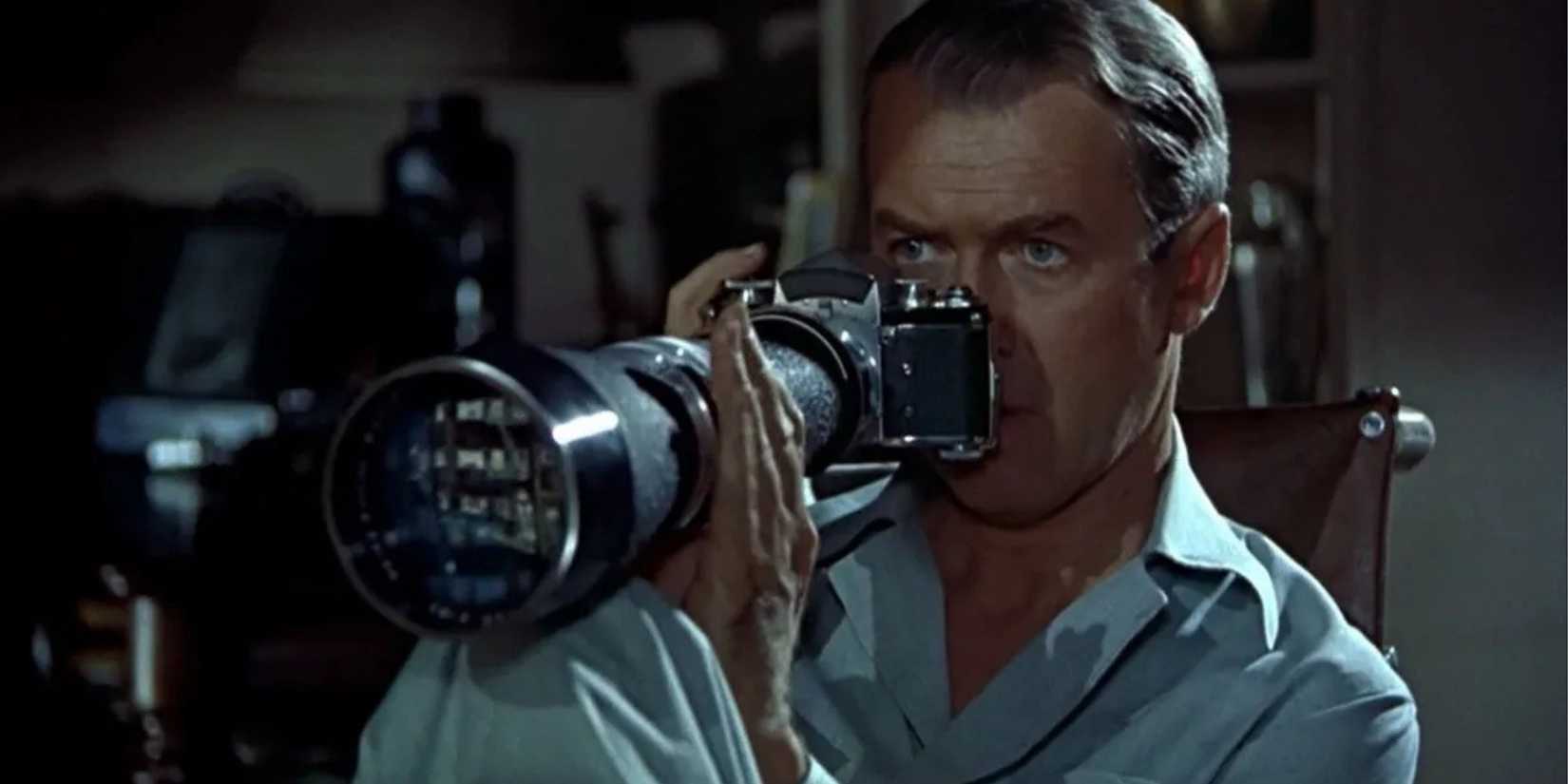
He's not referred to as the Master of Suspense for nothing. Rear Window is arguably the perfect gateway movie for viewers being introduced to Alfred Hitchcock. The obsession. The subverted movie star persona. The striking blonde leading lady. The lurid fascination with crime and violence. Everything you need to know about Hitchcock is distilled in his totemic psychological thriller from 1954.
Only Hitchcock could make people-watching as exciting and suspenseful as a bank heist.
Suffering from a nasty case of boredom and cabin fever, a temporarily impaired photographer, L.B. "Jeff" Jefferies (Jimmy Stewart), spends his days observing his neighbors through his apartment window, where he suspects that one of them has committed a murder. Only Hitchcock could make people-watching as exciting and suspenseful as a bank heist, and Jeff's voyeuristic urges in Rear Window speak to the director's belief that, deep down, all humans are ravenous for shocking thrills and will do anything to get their rocks off, even if it means ignoring the affection of the gorgeous Lisa (Grace Kelly). Darkly funny, methodically paced, and endlessly engaging as a character study and exercise in suspense, Rear Window is irresistible, just like spying on your neighbors when stuck in a wheelchair.
4 'Blow Out' (1981)

Calling Brian De Palma the heir to Alfred Hitchcock is frankly an unjust label for him, as few directors have as idiosyncratic, vibrant, and potent cinematic languages as this modern master of lurid thrillers and psycho-sexual nightmares. Often disregarded as an auteur of trashy pulp, De Palma deserves respect as an ingenious visionary who grapples with poignant character studies and groundbreaking visual flourishes. Look no further than his undisputed masterpiece, Blow Out.
For a while, Blow Out was the kind of movie that needed to be recommended by a highbrow film buff, but today, the 1981 conspiracy thriller about a sound artist, Jack Terry (John Travolta), who inadvertently records evidence of a political assassination, is now cited as a modern classic. De Palma fires on all cylinders in this Hitchcockian riff on obsession, voyeurism, and man's weaponization of an unsuspecting woman. No film demands a surround system quite like Blow Out, which plays as both an homage to sound designers and mixers and a cautionary tale about the grave danger of technology. Travolta's career-best performance is a tragic arc of ambition and nobility, as this Foley artist for low-rate slasher movies is the ideal protagonist for this investigative thriller about the most seedy pockets of the American government.
3 'High and Low' (1963)

Many of the modern cinematic conventions audiences take for granted would be nowhere without the legendary Japanese auteur Akira Kurosawa. From action epics to character dramas, Kurosawa's influence is unparalleled. Of his rich and renowned filmography, High and Low, a stunningly gripping and profound crime thriller from 1963, might be his most imaginative and breathtaking, and it is certain to leave you in awe.
High and Low is a thrilling yet heart-wrenching film that forces the viewer to consider what exactly they would do if they were in wealthy business magnate Kingo Gondo's (Toshirō Mifune) position, who faces the ultimate dilemma of having to pay a ransom or else unknown criminals will murder his chauffeur’s son, who was mistakenly kidnapped rather than Gondo's own child. Once the premise sets into gear, Kurosawa never lets go, and the film becomes a two-plus-hour psychological thrill ride that serves as a morality fable and gritty crime saga. The director's narrative construction and thematic language, marked by the contrast in styles in the two halves, are superb. You can enjoy High and Low as a no-frills, invigorating thriller or as a cerebral study of Japan's class divide and consumerist culture. Never had Kurosawa made writing and directing a masterpiece look so easy.
2 'Jaws' (1975)
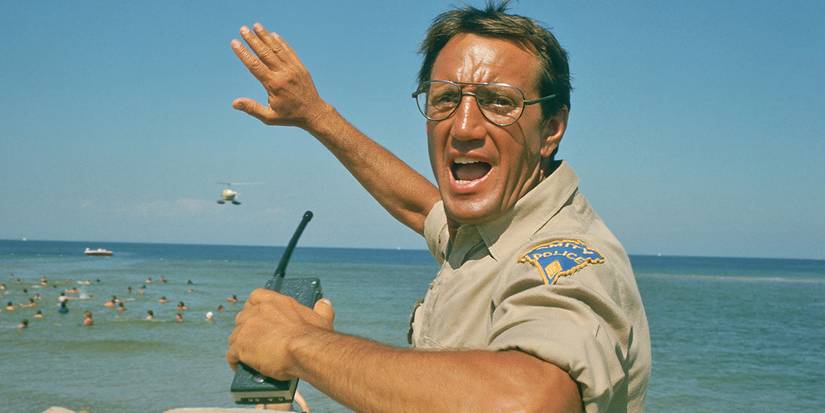
If the shark on the set of Jaws had worked, legend says that we'd never know the Steven Spielberg we know today, nor would we be blessed with the American cultural landmark that is this 1975 adventure thriller that made everyone terrified of the ocean. A miraculous construction of character, suspense, and horror, Jaws never loses its magic, even on the umpteenth rewatch.
At this point, who needs to have the brilliance and legacy of Jaws explained to them? Still, even with its massive cultural standing and omnipresence, discussing the perfection of Spielberg's direction, performances by Roy Scheider, Richard Dreyfuss, and Robert Shaw, the indelible John Williams score, and the impeccable narrative momentum is endlessly enriching. Although Spielberg became synonymous with wholesome, sentimental filmmaking that defined a generation, Jaws sees the director at his most visious, displayed in both the carnage of the rabid shark in the water and the greedy politics that exposed this vacation resort to a killer beast. Despite its troubled production, Jaws is such a diamond-cut masterwork that it makes other thrillers look foolish, as Spielberg’s control of the camera is pure wizardry. This groundbreaking film proved that blockbuster filmmaking that appealed to all audiences could be artistically special.
1 'Vertigo' (1958)

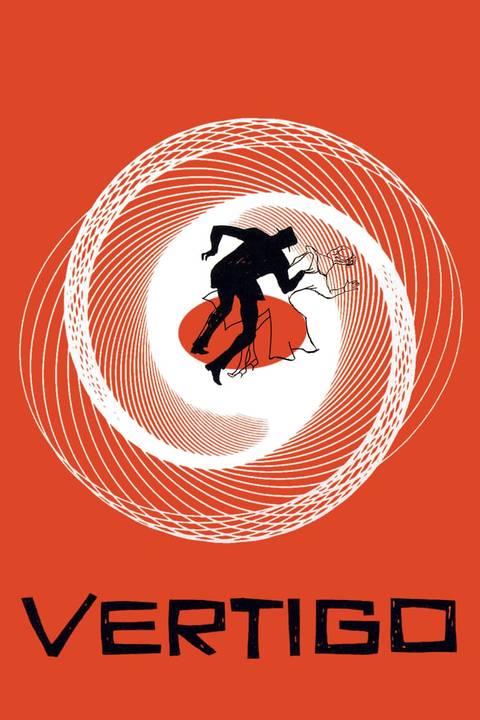
It's safe to argue that movies as an art form don't get much better than this. Alfred Hitchcock's crown jewel and perhaps the absolute high-water mark for cinema, Vertigo can't even be classified as just a straightforward psychological mystery-thriller. While it riffed on the Master of Suspense's previous work and fascination with psychology and obsession, the 1958 film starring Jimmy Stewart and Kim Novak is a one-of-one that can only be appreciated by watching it.
On paper, Vertigo is a rudimentary story of a private investigator, Scottie Ferguson (Stewart), following the movements of an aloof woman, Madeline (Novak), for a wealthy client. Just a few minutes into Hitchcock's masterpiece, you realize that this is no detective saga, as it quickly devolves into an intoxicating look into the male gaze and the masculine proclivities for control, fighting against sexual repression and trauma. Vertigo has a brain of its own that no other movie has been able to match, despite all its imitators. One minute a lurid thriller, then another minute an experimental psychedelic fever trip; the film is hypnotic. Beautifully photographed and thunderously acted, Hitchcock crafts the film as if it's the sun, and the viewer is staring right into it, feeling both euphoric and mystified in one fell swoop.
- Release Date
- May 28, 1958
- Runtime
- 128 minutes
- Director
- Alfred Hitchcock
- Writers
- Alec Coppel, Samuel A. Taylor
-

James Stewart
Det. John 'Scottie' Ferguson
-

Kim Novak
Madeleine Elster / Judy Barton
KioskNews shows a cleaned-up reading view extracted from the publisher’s page — the original always lives on their site, not ours.