6 Most Perfect Psychological Thrillers Released Since 2010, Ranked

Luc Haasbroek is a writer and videographer from Durban, South Africa. He has been writing professionally about pop culture for eight years. Luc's areas of interest are broad: he's just as passionate about psychology and history as he is about movies and TV. He's especially drawn to the places where these topics overlap.
Luc is also an avid producer of video essays and looks forward to expanding his writing career. When not writing, he can be found hiking, playing Dungeons & Dragons, hanging out with his cats, and doing deep dives on whatever topic happens to have captured his interest that week.
Sign in to your Collider account
Psychological thrillers are tricky to pull off but incredibly satisfying when done right. Fortunately, the last 16 or so years have been a solid era for the subgenre, producing more than a few modern classics, from the narrative tricksiness of The Handmaiden to the creepy, streetlight nihilism of Nightcrawler.
The movies below span a variety of vibes and styles, and some even verge into other genre territory. Together, they make for a great snapshot of the state of 21st-century thriller filmmaking.
6 'Burning' (2018)

"I burn greenhouses." This one is an excellent slow-burn, delivering one of the most incendiary finales of the 2010s. For most of its 2 and a half-hour runtime, it really feels like more of a layered, character-driven drama than anything else. Burning follows aspiring writer Lee Jong-su (Yoo Ah-in), who reconnects with childhood acquaintance Shin Hae-mi (Jeon Jong-seo) and agrees to look after her cat while she travels to Africa. When Hae-mi returns, she brings along the rich, confident Ben (Steven Yeun).
When Hae-mi disappears, Jong-su becomes increasingly convinced that Ben has done something terrible. There are suspicious details everywhere, but the movie deliberately keeps us guessing. Ben's behavior might be sinister, or Jong-su's jealousy and class resentment might be encouraging him to interpret ambiguous evidence in the worst possible way. That uncertainty makes the movie hypnotic, adding to the thermonuclear impact of the closing scene.
5 'Obsession' (2025)

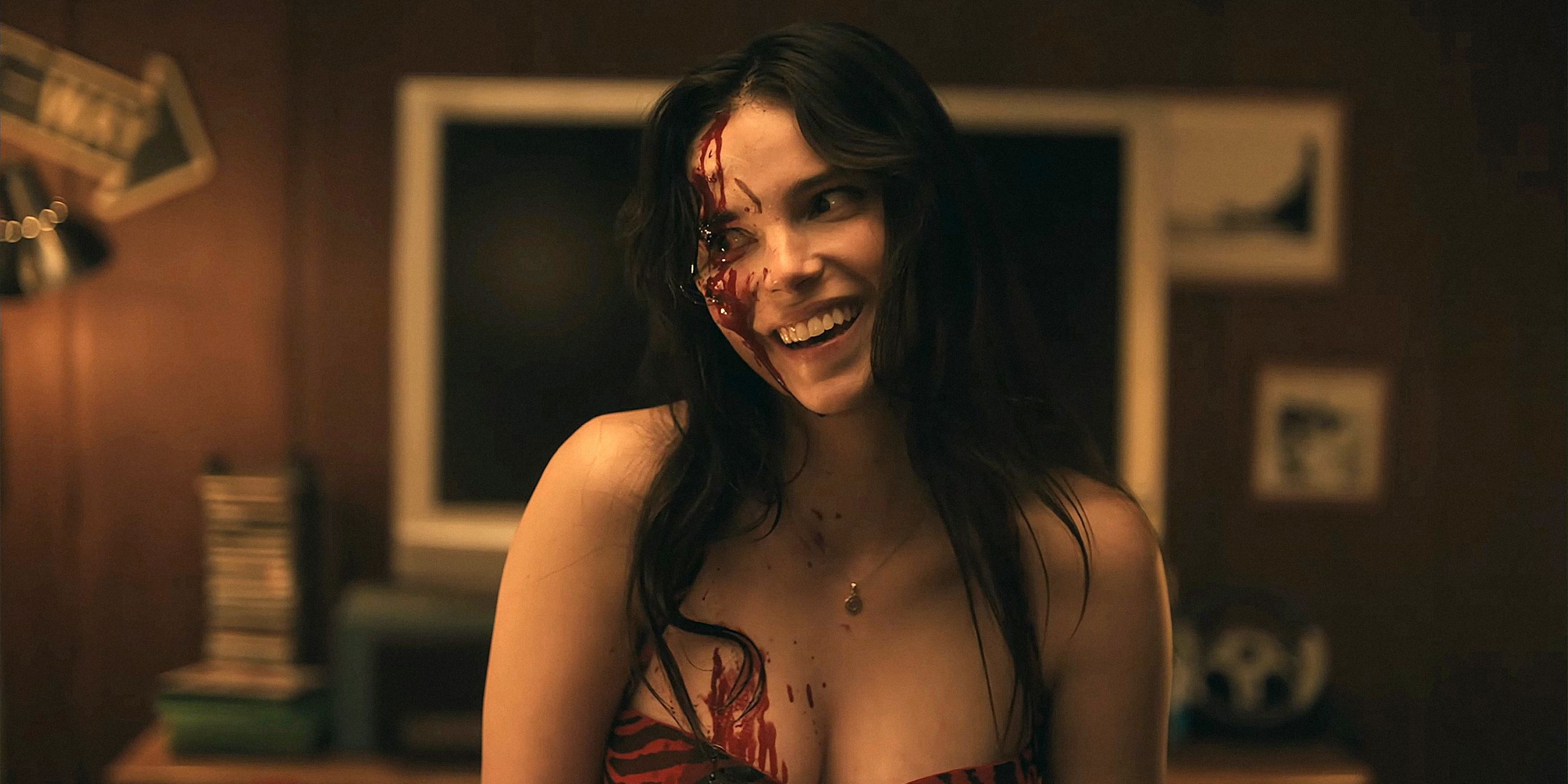
"I wish Nikki loved me more than anyone in the world." Although it's a supernatural horror, Obsession also works as a great psychological thriller. After all, most of its scariness comes from the dark emotions and unsaid words that can accompany infatuation and loneliness. The premise became instantly iconic: Bear (Michael Johnston) is hopelessly in love with Nikki (Inde Navarette) and uses a wish to make her love him "more than anyone", only for it to go very, very wrong.
In a way, Obsession feels like a fusion of Ruby Sparks and the "Bobby" segment of the 1977 anthology movie Dead of Night (where a grieving mother uses magic to resurrect her drowned son, only for him to return with a demon possessing his body). Yet director Curry Barker and his talented stars elevate this way beyond mere pulp, hitting us with sharp themes around dishonesty and the perils of not saying how you feel.
Collider Exclusive · 8 Questions · 2 Minutes What Is Your Biggest Horror Nightmare? Elm Street · Chucky · Scream · The Conjuring
Four horror franchises. Four completely different ways of scaring you. One waits until you fall asleep. One makes sure nobody believes you. One is already in your group of friends. And one is in the house with your family. Answer eight quick questions about how you actually watch horror, and find out which nightmare was built for you.
😴Elm Street(Freddy Krueger)
🧸Chucky(Child's Play)
📞Scream(Ghostface)
🕯️The Conjuring(The Warren Files)
01
Which horror scene makes you cover your eyes? Four classic images. One of them is worse than the others for you.
02
You are home alone and you hear a noise. First thought? Everybody has one. It arrives before you have decided anything.
03
Which horror movie rule would you break first? Everybody thinks they would survive. Almost nobody actually does.
04
Something genuinely frightening happens. What do you do? Not in a film. In your actual living room, tonight.
05
How do you actually watch a horror film? Be honest about this one. Nobody is checking.
06
Somebody offers you serious money. Which do you still refuse? The amount does not matter. There is one on this list you are not doing.
07
Which feeling stays with you a week after the film? Good horror does not stop when the credits do.
08
Something wakes you at 3am. What is the worst possibility? Eight questions in, this is the one that decides your nightmare.
The Lights Just Went Out Your Nightmare Is…
Four franchises, four completely different ways of getting underneath your skin. This is the one built out of your particular fear, why it works so well on you, and what it would leave behind.
Elm Street
Your nightmare does not wait outside the door. It waits for you to close your eyes, which you are going to have to do eventually, because nobody has ever won that particular argument.
- Freddy is horror's cruellest idea: a threat that lives in the one place you cannot guard, cannot lock, and cannot avoid forever.
- You are the one who is fine during the film and wide awake at two in the morning. Your own head is where this does its damage.
- These films understood exhaustion as a horror engine. The kids on Elm Street do not lose because they are weak. They lose because they are tired.
- You can lock every door in the house. You still have to sleep.
Chucky
Your nightmare is not really the doll. It is the face of the person you tell, and the way they decide, very kindly, that you have imagined all of it.
- Chucky works precisely because he is absurd. That is the trap: the more accurately you describe him, the less anybody is going to believe you.
- You are the one shouting at the screen because the characters are not listening. You know that feeling from real life too.
- The franchise is at its best when the adults in the room are the real obstacle, and you have met those adults.
- By the time somebody finally believes you, you will have handled most of it on your own.
Scream
Your nightmare has your number, knows your name, and has almost certainly been inside your house before. The worst part is that you already know them.
- Scream is the only one of these where the killer takes the mask off and turns out to be somebody who was at the party.
- You are the person who calls the twist out loud before it lands. You watch people the same way you watch films.
- The franchise made the rules of horror part of the plot, which means the survivors are the ones paying attention. You would be paying attention.
- Everybody is a suspect, including the person who just offered to walk you home.
The Conjuring
Your nightmare is not really about you. It is about the people asleep down the hall, and the feeling that whatever is here is not interested in leaving.
- The Conjuring films are domestic horror. The house, the family, the perfectly ordinary room that quietly stops feeling ordinary.
- Your instinct is to get everybody into one room. Your fear is protective rather than personal, which is rarer than it sounds.
- This is the one franchise where belief is the weapon. The people who come through it are the ones who are not alone and refuse to be.
- Whatever is here did not come for you. It came for the household, and you are the one standing in the hallway.
4 'The Handmaiden' (2016)

"My savior who came to ruin my life." Directed by the master Park Chan-wook, The Handmaiden is a Rashomon-esque marvel of layered stories and narrative misdirection. This exquisitely constructed psychological thriller begins in Japanese-occupied Korea, where pickpocket Sook-hee (Kim Tae-ri) is recruited by a con man calling himself Count Fujiwara (Ha Jung-woo). His plan is elaborate: Sook-hee will become the maid of wealthy Japanese heiress Lady Hideko (Kim Min-hee), encourage Hideko to marry him, and help him steal her fortune before he has his new wife committed to an asylum.
That's already pretty complicated, but it's only the beginning. Sook-hee and Hideko's developing relationship throws another enormous complication into the scheme, particularly as the boundary between manipulation and genuine affection begins collapsing. Park repeatedly revisits events from different perspectives, revealing hidden motives, forcing us to repeatedly reconsider scenes we thought we understood.
3 'The Lighthouse' (2019)

"Why'd ya spill yer beans?" Lock two men inside an isolated lighthouse, bombard them with terrible weather, alcohol, resentment, and possible supernatural forces, and eventually something is going to break. Here, those men are veteran lighthouse keeper Thomas Wake (Willem Dafoe embodying the essence of the salt sea dog) and his younger assistant, Ephraim Winslow (Robert Pattinson), who arrive on a remote island for a four-week assignment. The mood is grim and tense from the beginning.
Then a storm prevents them from leaving, and the island becomes a full-on pressure cooker. The characters' relationship swings between hostility, companionship, drunken affection, and outright violence. Their bodies deteriorate due to too little food and too much alcohol, and they begin to hallucinate in frightening, thalassic ways. The film's aesthetics ram this home. Boxy black-and-white cinematography traps the men inside the frame, while foghorns, crashing waves, machinery, and howling wind create an incessantly hostile soundscape.
2 'Nightcrawler' (2014)

"What if my problem wasn't that I don't understand people but that I don't like them?" This one succeeds as both an entertaining thriller, as well as a darkly incisive commentary on media sensationalism and the pursuit of attention at all costs. Here, Jake Gyllenhaal delivers one of his finest performances as Lou Bloom, an aimless man who discovers the world of freelance crime journalism, where camera operators race to accidents and murders and fires before selling their footage to local TV stations.
More importantly, Lou realizes that the more horrifying the footage becomes, the more valuable it is. Soon, he's blurring the line between observer and participant, pursuing views and money with a kind of moral emptiness that recalls Patrick Bateman. Crucially, Lou doesn't undergo a conventional descent into madness; instead, he becomes increasingly successful because his worst qualities happen to be commercially useful.
1 'Gone Girl' (2014)

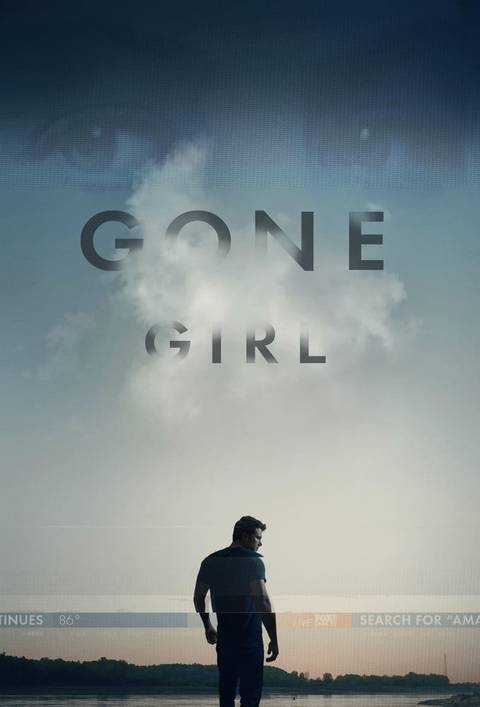
"What are you thinking? How are you feeling? What have we done to each other?" The high point for 2010s thriller filmmaking. This modern classic begins when Amy Dunne (Rosamund Pike) disappears on the morning of her fifth wedding anniversary. Her husband Nick (Ben Affleck) quickly finds himself at the center of the investigation, and he doesn't exactly make a convincing grieving spouse. Then, like The Handmaiden, Gone Girl reveals how little the audience actually understands.
The famous midpoint revelation could easily have been the culmination of a lesser thriller. Instead, it's practically the beginning of a new one. From there, Gone Girl becomes a vicious examination of marriage as performance: the identities people construct to attract one another, the resentment that develops when maintaining those identities becomes exhausting, and the horrifying possibilities that emerge when two intelligent people know exactly where their partner is weakest.
Gone Girl
- Release Date
- October 3, 2014
- Runtime
- 149 minutes
- Director
- David Fincher
- Writers
- Gillian Flynn
KioskNews shows a cleaned-up reading view extracted from the publisher’s page — the original always lives on their site, not ours.