How does cloud seeding work? What it could do for haze at Sepang this weekend
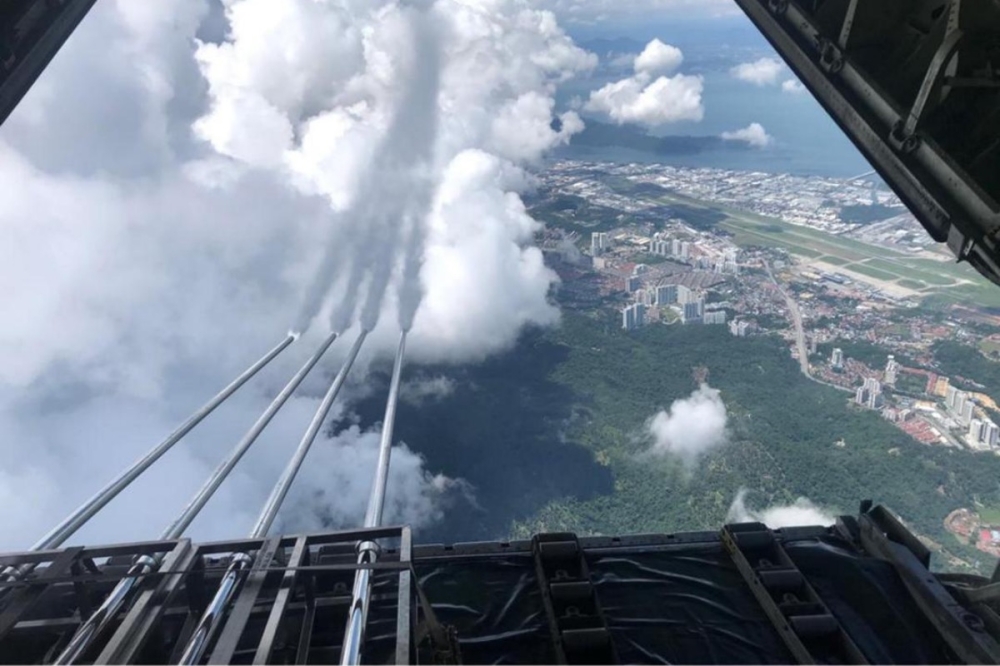

File picture of cloud seeding operations that were held over Penang island in May 2024. — Picture courtesy of PBAPP
By R. Loheswar
First Published: Saturday, 03 Oct 2026 7:00 AM MYT
KUALA LUMPUR, Oct 3 — For more than a month, haze has blanketed parts of Malaysia as transboundary smoke from massive forest and peatland fires in neighbouring Indonesia drifts across the region.
Many of the fires burn deep into carbon-rich peatlands, which are notoriously difficult to extinguish and can produce thick, acrid smoke for prolonged periods.
With the Sepang International Circuit (SIC) set to host the Bahrain F1 Grand Prix this weekend, SIC chief executive officer Azhan Shafriman Hanif has said cloud seeding operations could be carried out around the circuit to induce rainfall ahead of the event.
The hope is that the additional rainfall could help improve air quality and visibility, creating better conditions for the race and spectators.
The proposal comes as Malaysia has stepped up cloud seeding operations in response to the haze and hot, dry weather.
Fourteen cloud seeding operations involving more than 50 flights have been carried out nationwide as of September 30, 2026, with operations also extended to Sabah and Sarawak.
National Disaster Management Agency (Nadma) operations implementation section director Datuk Mazli Mazlan said the operations were aimed at increasing rainfall, particularly to ensure dam water levels remained sufficient.
So, how exactly does cloud seeding work, what can it achieve, and why is it being considered as one measure to deal with the current conditions?
What is cloud seeding?
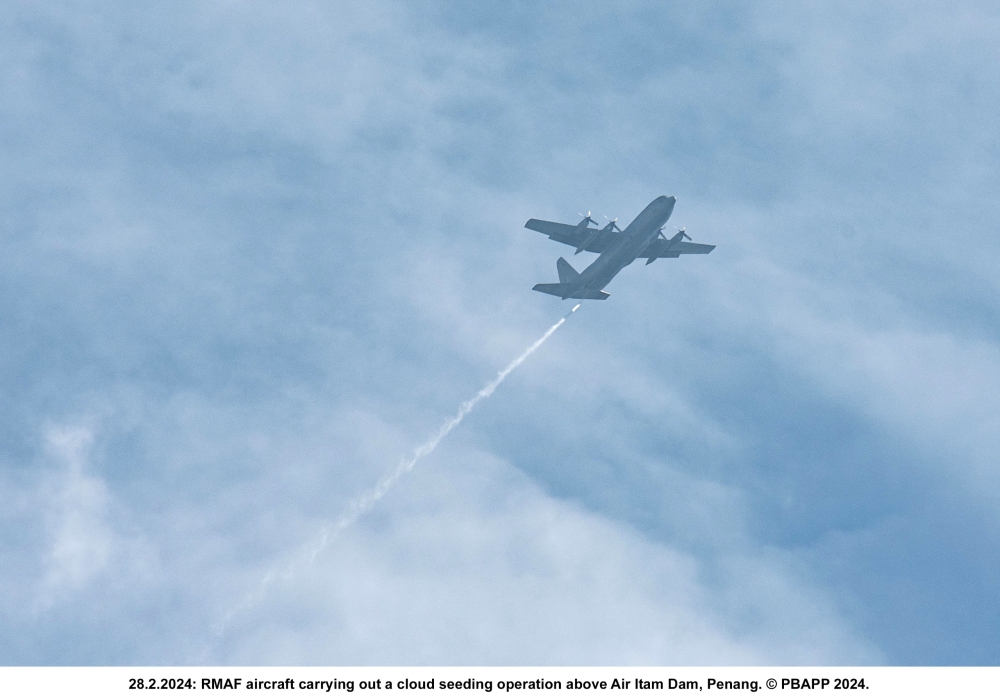
Cloud seeding operations are seen over the Air Itam Dam water catchment area in this February 28, 2024 image. — Picture courtesy of PBAPP
Clouds are made up of tiny water droplets or ice crystals that form when water vapour in the atmosphere cools and condenses around microscopic particles such as dust or salt.
These particles, known as condensation nuclei or ice nuclei, provide a surface for water to collect and eventually form larger droplets or ice crystals that can fall as precipitation.
Cloud seeding is a form of weather modification that attempts to enhance this natural process by introducing additional particles into suitable clouds.
It does not create clouds or rain from a clear sky.
Instead, the technique relies on existing clouds that contain sufficient moisture and suitable atmospheric conditions.
How does cloud seeding work?
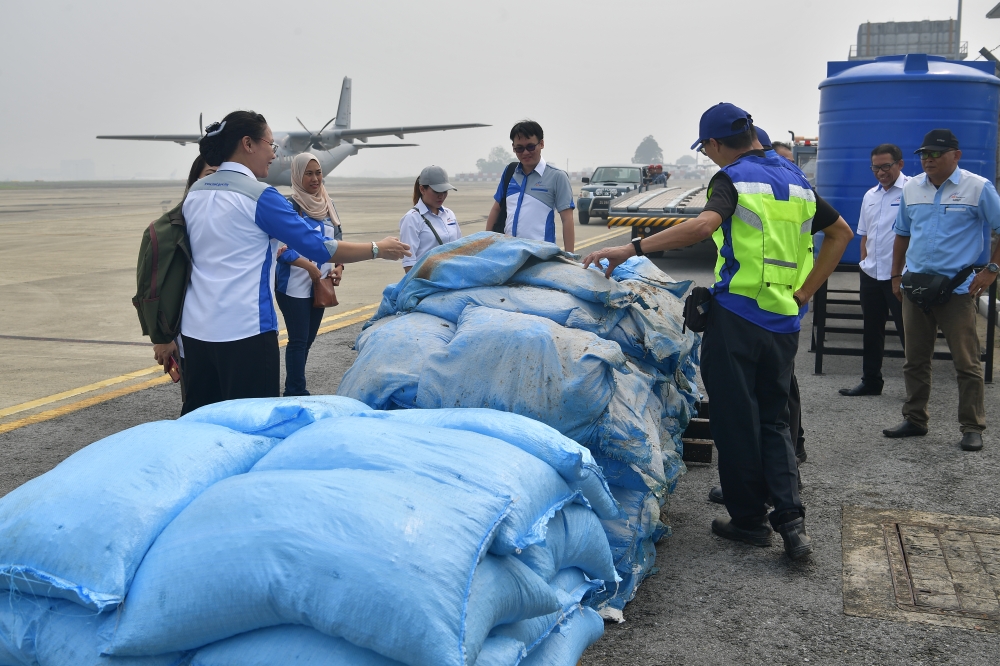
Preparation of solutions for cloud seeding operations at the Royal Malaysian Air Force (RMAF) Kuching Air Base in this file picture dated September 20, 2019. — Bernama pic
The process begins with meteorologists identifying suitable clouds — generally those that contain enough moisture but have not yet produced significant rainfall.
Seeding agents are then released into or around the cloud using aircraft, ground-based generators or other methods, depending on the technique being used.
Common seeding materials include silver iodide, which can encourage ice crystal formation in cold clouds, and hygroscopic materials such as salt, which are used in warmer clouds.
Dry ice, or frozen carbon dioxide, can also be used in some cloud seeding operations to cool clouds and encourage ice formation.
Once introduced, the particles provide additional nuclei around which water vapour can condense.
The droplets or ice crystals can then grow as they collect more moisture.
When they become sufficiently large and heavy, they fall from the cloud as precipitation — rain in warm conditions, or snow or hail where temperatures permit.
Cloud seeding therefore works by enhancing precipitation from clouds that are already capable of producing rain, rather than producing rainfall from clear skies.
Three main types of cloud seeding
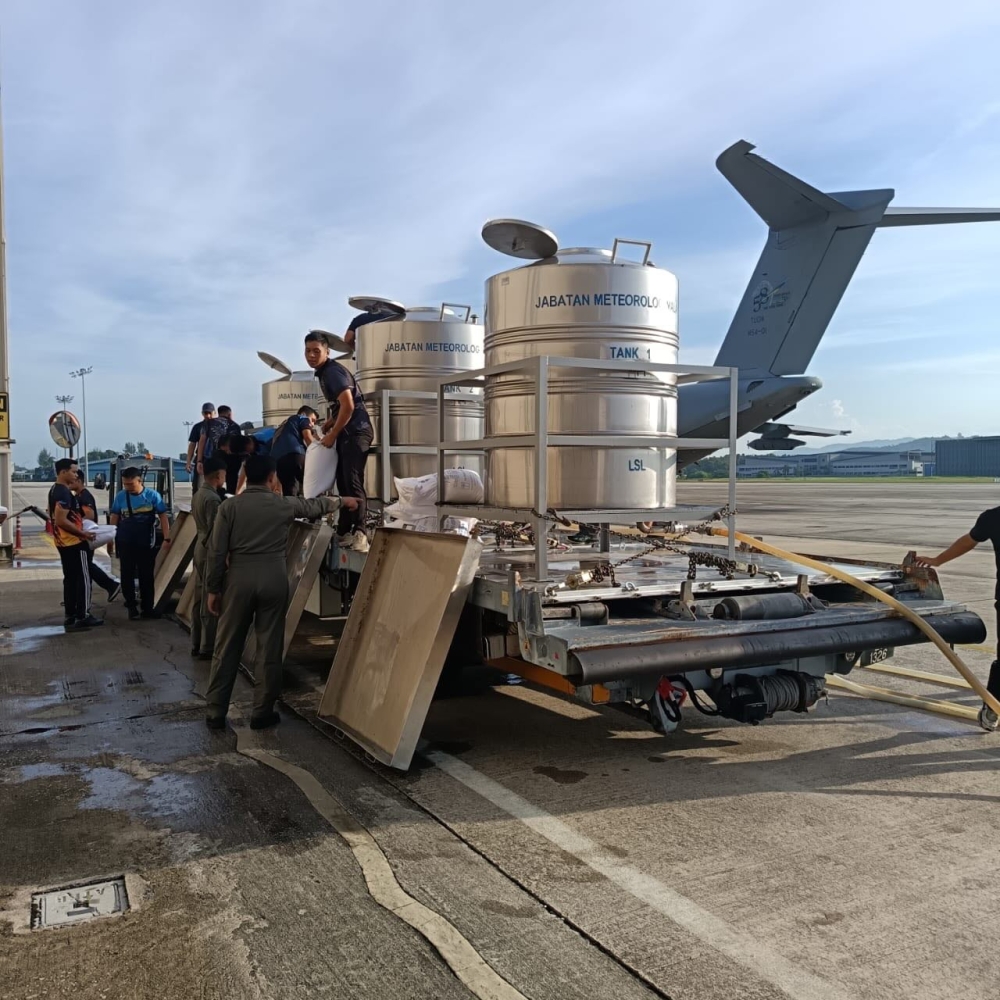
MetMalaysia personnel prepare a saltwater mixture for cloud seeding before loading the barrels onto an RMAF aircraft at the Subang airbase for operations in Perlis and Kedah on May 11, 2026. — Picture from Facebook/National Disaster Management Agency, Prime Minister’s Department
There are three broad types of cloud seeding, each designed for different cloud and weather conditions:
1. Static seeding
This is one of the most widely used methods. It involves introducing substances such as silver iodide into cold clouds to encourage the formation of ice crystals, which can grow and eventually fall as precipitation.
2. Dynamic seeding
This technique aims to increase the size and vertical development of clouds by altering air movement within them. It requires more material and careful planning, but has the potential to enhance rainfall from suitable clouds.
3. Hygroscopic seeding
Used mainly in warm-cloud environments, this method disperses particles such as salt into clouds. The particles act as nuclei around which water droplets can form and grow, eventually becoming large enough to fall as rain.
What does Malaysia use?
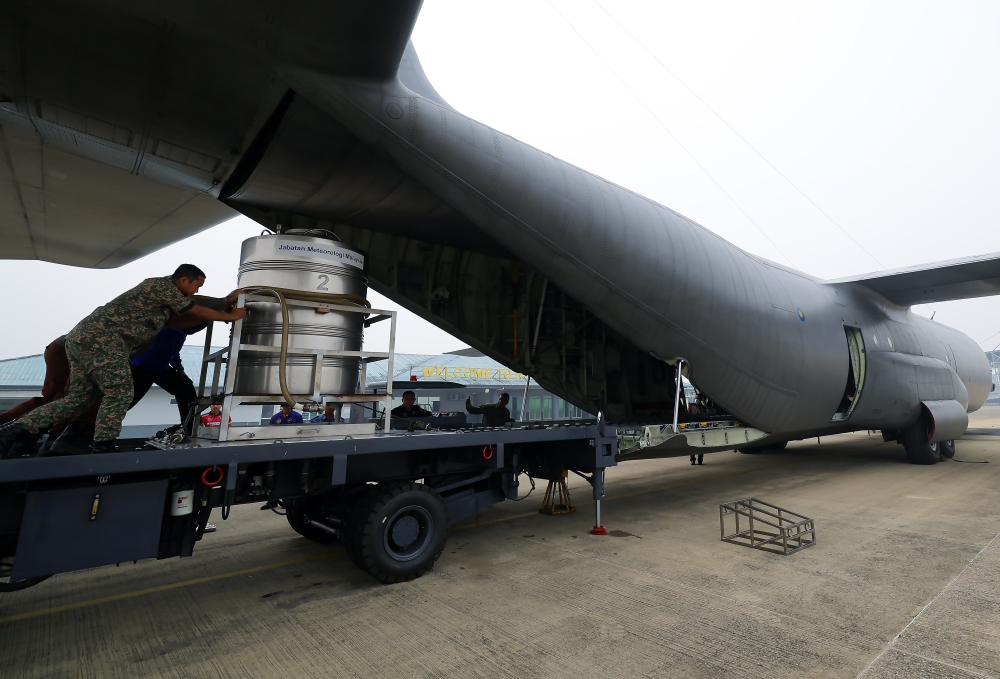
KUCHING, Sept 3 — Malaysian Army (TDM) personnel push tanks containing salt solution into a Royal Malaysian Air Force (RMAF) C-130 aircraft to carry out a cloud seeding operation at the RMAF Kuching Base today.
According to the Malaysian Meteorological Department (MetMalaysia), cloud seeding operations in Malaysia use two approaches known as wet seeding and dry seeding.
Both methods rely on hygroscopic materials, such as salt, to encourage the formation and growth of water droplets in suitable clouds.
For wet seeding, a salt solution weighing about 200kg is carried in four tanks aboard a Royal Malaysian Air Force (RMAF) C-130 Hercules aircraft.
The solution is sprayed into suitable clouds at an altitude of between 5,000 and 8,000 feet.
For dry seeding, hygroscopic flares mounted on a Cessna 340A aircraft are ignited at the base of suitable clouds at an altitude of between 3,000 and 5,000 feet.
The dispersed salt particles act as Cloud Condensation Nuclei (CCN), providing surfaces around which water vapour can condense and encouraging water droplets to grow until they become sufficiently large and heavy to fall as rain.
Rainfall is typically expected within 30 to 60 minutes after a cloud seeding operation, although the timing depends on prevailing atmospheric conditions and whether the targeted clouds are suitable for seeding.
KioskNews shows a cleaned-up reading view extracted from the publisher’s page — the original always lives on their site, not ours.