Google pledges US$160 million for water infrastructure amid Malaysia’s data centre boom
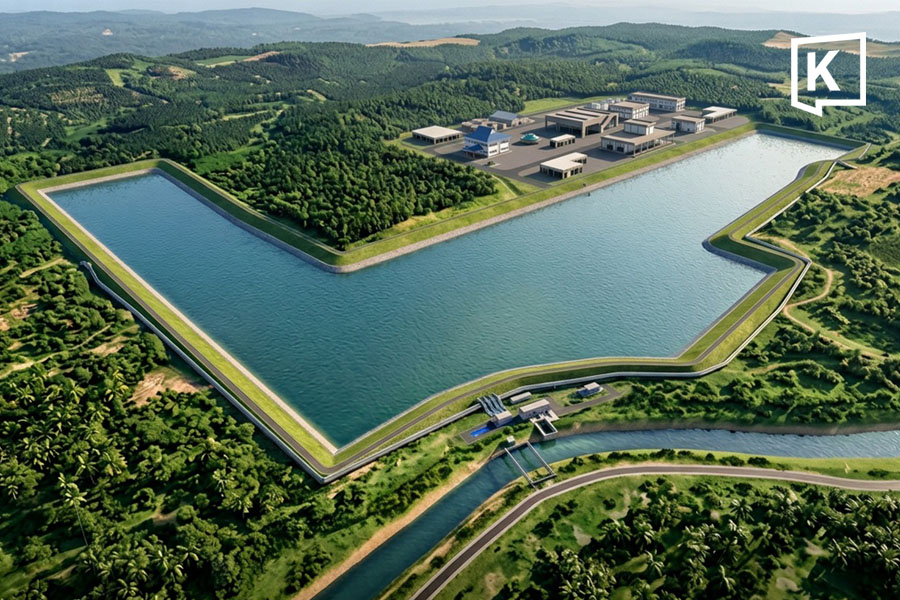
As the digital revolution accelerates across Southeast Asia, data centres have become some of the world’s most discussed topics. To address growing environmental and resource concerns head-on, tech giant Google has announced a landmark $160 million (about RM651 million) investment in water infrastructure in Negeri Sembilan, Malaysia.
The funding will finance a brand-new off-river storage reservoir and water treatment plant designed to support both Google’s planned data centre campus at the Springhill Industrial Park in Port Dickson and the surrounding local communities.
The move marks a significant shift in how big tech companies approach resource management in fast-developing digital hubs, attempting to balance high-tech growth with local ecological needs.
Taming the Thirst: The Data Centre Dilemma
Malaysia has rapidly emerged as a premier regional hub for cloud computing and artificial intelligence, drawing multi-billion-ringgit investments into states like Johor, Selangor, and Negeri Sembilan. However, this tech boom has triggered intense public debate regarding resource security.
Modern data centres run thousands of servers that generate immense heat, requiring millions of litres of water daily for cooling systems to maintain optimal operating temperatures. Projections indicate that data centres across Selangor, Johor, and Negeri Sembilan alone could demand up to 445.04 million litres of water per day.
Civil society groups, environmental watchdogs, and local residents have frequently raised alarms over potential water deficits, climate change pressures, and the strain that commercial cooling demands could place on municipal supplies. In response, regulatory bodies like the National Water Services Commission (SPAN) have tightened oversight, evaluating resource applications carefully to prevent local shortages.
A Shared Resource Model
Google’s newly announced project seeks to directly counter the narrative that tech hubs deplete local resources at the expense of ordinary citizens. Rather than building a private, closed-loop system, the tech giant is funding public-benefit infrastructure.
Key elements of the US$160 million project include:
-
Massive Daily Output: The upcoming water treatment plant and off-river storage reservoir will supply 65 million litres of drinking water a day, shared between public municipal use and Google’s data centre campus.
-
State Ownership: Upon completion, the physical facilities will be entirely owned by Menteri Besar Negeri Sembilan (Incorporated), ensuring long-term state control over the vital asset.
-
Flood Mitigation and Drought Resilience: The off-river storage design will capture excess river water and heavy rainfall during peak flow periods, actively helping to lower local flood risks. Conversely, during drier spells, the stored reserves will supplement regional water security.
Drew Byrnes, Google’s Director and Head of Global Infrastructure and Energy for Asia Pacific, noted that the project aligns with the company’s broader sustainability goals.
“Google’s decision to fund shared water infrastructure in Negeri Sembilan reflects our global ambition to replenish 120% of the freshwater volume we consume, even as our water risk assessment showed that local water sources were not at high risk of scarcity or depletion,”
Power and People
Aside from the massive water project, Google’s development in Negeri Sembilan—which will power essential digital services like Google Search, Maps, and Chrome—incorporates strict local commitments. The corporation has confirmed it will independently cover all electricity expenses for its campus and pay directly for grid-connection infrastructure, shielding local taxpayers from energy grid upgrades.
Furthermore, the project rolls out clean energy training and workforce development programmes aimed at equipping local Malaysian youth with technical skills suited for long-term careers in the digital infrastructure sector.
Promise versus Proof
Google’s $160 million commitment offers a welcome blueprint for how tech giants can proactively fund the resources they rely on. However, key operational details remain unconfirmed. Most notably, authorities have yet to disclose the exact division of that 65 million litres of daily water between local households and server cooling.
If managed with transparent public quotas, this shared model could set a impressive new benchmark for eco-friendly digital growth across Southeast Asia; without them, communities in Port Dickson will understandably watch to ensure their taps are never secondary to server demands.
KioskNews shows a cleaned-up reading view extracted from the publisher’s page — the original always lives on their site, not ours.