Commentary: Election win by Brazil's Lula limits Trump’s Latin American ambition

Brazil’s election outcome tests whether a renewed Monroe Doctrine can survive Brazilian President Luiz Inacio Lula da Silva's active non-alignment, says an academic.
29 Oct 2026 05:58AM
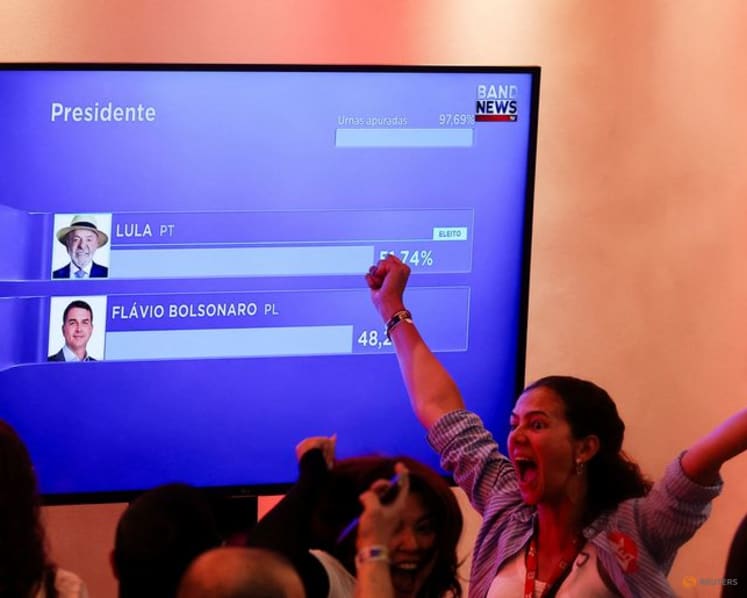
SYDNEY: The weekend win by Luiz Inacio Lula da Silva is more than just a milestone for Brazil in rewarding an ideology of investing in social programmes, South-South cooperation and defending democracy with a fourth term in power. Lula’s win is a turning point in United States President Donald Trump’s pursuit of a renewed Monroe Doctrine to define US influence in Latin America.
Lula’s leadership will position Brazil as a major counterweight to US ambition in the region through principles of active non-alignment, sovereignty and social protection.
For the Brazilian people, Lula is a symbol of working-class ideals and the collective good. A former metalworker and union speaker, he rose through the ranks by mobilising workers during Figueiredo’s dictatorship, where he was also arrested under the National Security Law.
“MOST POPULAR POLITICIAN ON EARTH”
During his first two terms as president, Brazil experienced an increase in employment, minimum wage, education levels and was subsequently removed from the United Nations hunger map by 2014. But the “most popular politician on Earth” became embroiled in controversy when his party was accused of buying votes in Congress for legislative support.
Lula spent 580 days in prison for Operation Car Wash, a bribery scheme involving the state oil company, Petrobras. Lula maintained his innocence and all convictions were annulled in 2021.
Lula’s opponent in the latest election was Flavio Bolsonaro, an ultraconservative who led a 2026 campaign inherited from his father’s presidency. He aligned with evangelical voting blocs, proposed lowering the age of criminal responsibility to 16, rejected climate change and supported tax cuts. Trump has maintained close ties with Flavio Bolsonaro and his father, Jair Bolsonaro, Brazil’s president from 2019 to 2023 who is currently serving a 27-year sentence for leading a failed coup.
A Bolsonaro win would have been lauded by Trump, following a wave of conservative governments in Latin American countries including Argentina, El Salvador and Colombia.
Since the Trump-endorsed Argentinean candidate Javier Milei took office in 2023, Argentina has largely aligned with US defence, economic and foreign policy. This includes purchasing US-backed fighter jets, providing direct line for the US treasury to intervene in the Argentinean peso, supporting US strikes in Iran and withdrawing from the World Health Organization following Trump’s lead. Argentina is positioned to be Washington’s “partner of choice” in the region.
MORE RESISTANCE TO US
But Brazil is the most powerful country in Latin America. A socially left middle-power will become a counterweight to the region’s right-wing governments.
Andre Pagliarini, assistant professor at Louisiana State University, predicts that under Lula, there will be more resistance to Trump’s pursuit of regional influence and US hostility towards China. The extent to which Lula will be able to counteract Trump’s politics will depend on his ability to work with a far-right majority in Congress while managing Brazil’s excessive public debt and insecurity.
Lula was one of the first leaders to publicly oppose the US operation that captured Venezuelan President Nicolas Maduro in January. Lula advocated for a national Venezuelan election and will likely continue his strong support for Venezuelan sovereignty and the reduction of US influence in his upcoming term.
Brazil’s critical minerals were also at the top of Trump’s agenda. Brazil holds the world’s second-largest rare-earth reserves, but Lula declined Washington’s minerals alliance, opting to keep mineral processing and manufacturing local.
Brazil will not accept being “anyone’s backyard”, Lula proclaimed in his victory speech on Sunday (Oct 25) night.
The loss of US foothold in Brazil is further reinforced by Lula’s intention to deepen geopolitical ties with BRICS, specifically China. Lula’s historic “active nonalignment” reveals that Brazil will continue to build ties with China in mutually beneficial sectors such as trade, investment and diplomacy.
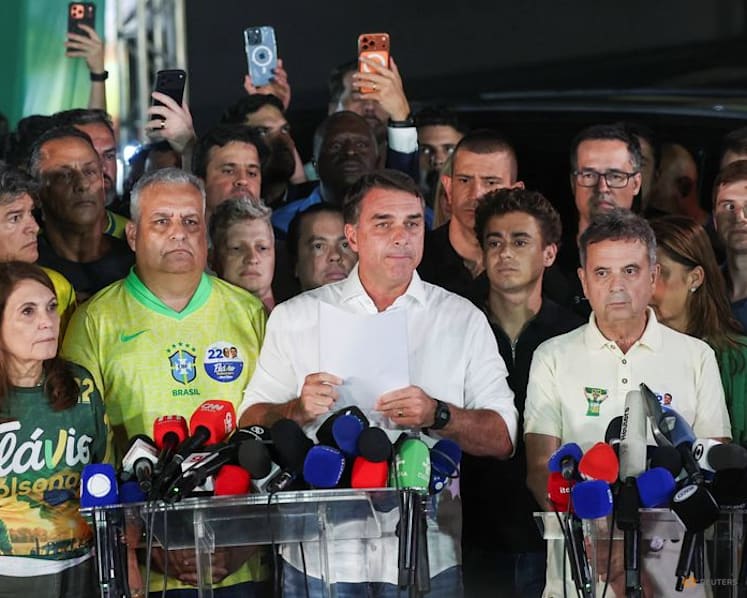
As the streets of Brazil rejoice for their new President, Flavio Bolsonaro has rejected the result and is seeking an annulment of the vote after polling stations were kept open for two additional hours following requests from both parties. The president of the Electoral Court has stated that the extended voting hours did not impact the results, and it seems unlikely that a legal argument will be successful.
Bolsonaro swiftly left Brazil for the United States, where US officials have planned to offer Bolsonaro and his family visas. Bolsonaro’s departure comes amid investigations into his links with money laundering and corruption schemes.
Ultimately, Lula’s win is not only a win for the Brazilian people, it shows that US dominance in Latin America is not inevitable. Trump will continue to assert US influence in the region, but the result proves socially progressive left-wing candidates can prevail.
But Lula’s ability to translate this victory into a wider geopolitical shift will depend on whether he can tackle Brazil’s domestic issues while maintaining active non-alignment and a sovereign approach.
Isha Desai is a writer, researcher and analyst based in Sydney. She works in social impact policy at Penguin Random House ANZ and represented Australia at the G20 Youth Summit in Washington DC in 2026. This commentary first appeared on Lowy Institute’s blog, The Interpreter.
KioskNews shows a cleaned-up reading view extracted from the publisher’s page — the original always lives on their site, not ours.