Janine van Wyk: ‘Our rooms were empty … no mattresses, no lightbulbs and not a drop of water’
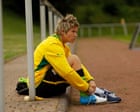
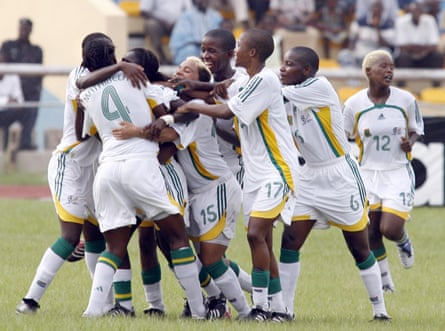
I was just a year into my international career when we qualified for my first Wafcon, which was then called the African Women’s Championship (AWC) and was held in Nigeria in 2006. I was extremely excited but very nervous to participate in this tournament, more so when it was announced that we would be in the same group as the hosts, and would play them last in the group.
As it turned out, it would be the game that decided who finished top of the group. By then we had beaten Algeria 4-0 and Equatorial Guinea 2-0 and had to travel to Delta State to take on the hosts. I’d heard that Nigeria was the toughest country to travel to and I was about to realise why. It’s become common knowledge that South Africans and Nigerians are massive rivals on the football field but also don’t really get on off it.
We felt unwelcome from the moment we arrived and we were not the only team to experience this. Nigeria exploited all avenues to play mind games with their opposition and to make them lose focus on the matches.
We arrived early in the morning at the Murtala Muhammed international airport in Lagos and faced our first test: how to retrieve our luggage. Only one carousel was working, which meant we had to wait a long time for our bags to arrive. We had a training session planned for later in the day and were all eager to get to the hotel, settle in and prepare for our first practice.
As we stepped out the airport doors, we looked for the bus that was to take us there, but we didn’t see one anywhere. As players, we were irritable and impatient, and starting to show it. Some of us were slumped on our bags, others had taken up residence on the pavement, and we were all cranky, especially as it took over an hour before a bus arrived.
Like in Mozambique a few years before, the bus was too small. Another 21-seater and we were 27 – 20 players and seven support staff, as well as all our luggage. Luckily, most of us had experience of how to squeeze in and so we knew the drill. We also had the advantage of our bags travelling in a smaller vehicle behind the bus, so the only challenge was fitting all the bodies in.
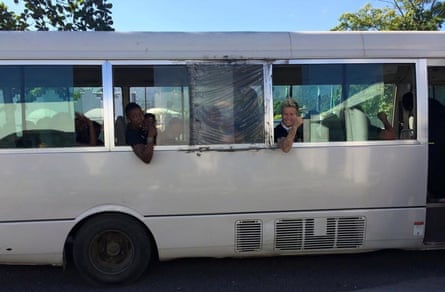
Generally, we saw the lighter side of these things and laughed as some of us got comfortable on the floor and others had to make do with a teammate’s lap. But we lost our sense of humour when we realised we had no air-conditioning and the drive was going to last at least another hour. Some grumbling ensued, but we knew better than to complain at such an early stage, and it seemed that things would get better soon.
When we got to the hotel, the building that greeted us looked fairly new from the outside, with freshly painted walls and a manicured garden at the entrance. But when we walked through the doors, it looked as though the hotel was in the process of being renovated, and the outside was clearly the bit that had been made up first. It still looked like a decent place, so we weren’t too worried, and the smell of new paint and the sight of workers installing lights made us feel special as the first group of people staying in this hotel.
All of us were looking forward to being in our rooms and the chance to shower and relax before training. It was only when I saw maintenance workers carrying still-sealed mattresses to the rooms that it occurred to me that we were being put up in a hotel that was not fully ready for guests. I was only half-right. Actually, it was not ready at all.
When we got to our rooms, they were empty: no mattresses on the beds, no lightbulbs in the lamps and, worst of all, not a drop of water in the taps. This made us all a little worried, but we were told it would be sorted out as soon as we had finished our training. We did have lunch at the hotel, although by now I was suspicious of things and particularly of the spread of fish and chicken, and then left for training. At least that went smoothly, and we expected to get back to suitable accommodation. No such luck.
We returned to beds being made but still had no lights or running water. After a training session in extremely warm conditions, we were all dripping with sweat from head to toe and we had to make another plan. A few of our players spotted a river just outside the hotel and said they were going to go there to rinse themselves off. I thought they were joking.
after newsletter promotion
When I looked again, the players had stripped down to their tights and sports bras, wrapped themselves in their pristine white hotel towels with their toiletries in hand and were heading out the door. If I wanted to be clean, I realised, I had to join them. My hesitation was twofold: I had never washed in a river before and wasn’t sure whether it was hygienic, but I was also still quite young and didn’t want to expose my body in public. I had to get over my qualms quite quickly. Fortunately, we didn’t have to wash in the river again. No one knows how, but when we opened the taps the following day, the water gushed out.
With that kind of preparation, and Nigeria being as strong a team as they were, it was hardly a surprise that we lost 2-0. We experienced Nigeria’s off the field tactics first-hand. I did have one happy memory from the match, though. The Nigerian centre-back, Onome Ebi, who would go on to become the first African to play in six World Cups between 2003 and 2023, gave me her jersey. We both wore No 5 and she was the first international to give me her shirt. Given how much my Banyana Banyana jersey meant to me, I understood how special and symbolic this moment was, and I have stored it in my memory to this day.
This is an edited extract from 185: The Janine van Wyk Story is published by Karavan Press and available on Amazon in the United Kingdom.
Get in touch
If you have any questions or comments about any of our newsletters please email moving.goalposts@theguardian.com.
-
This is an extract from our free email about women’s football, Moving the Goalposts. To get the full edition, visit this page and follow the instructions. Moving the Goalposts is delivered to your inboxes every Tuesday and Thursday.
KioskNews shows a cleaned-up reading view extracted from the publisher’s page — the original always lives on their site, not ours.