Taking the Chipko legacy forward: How mature trees are getting a second life
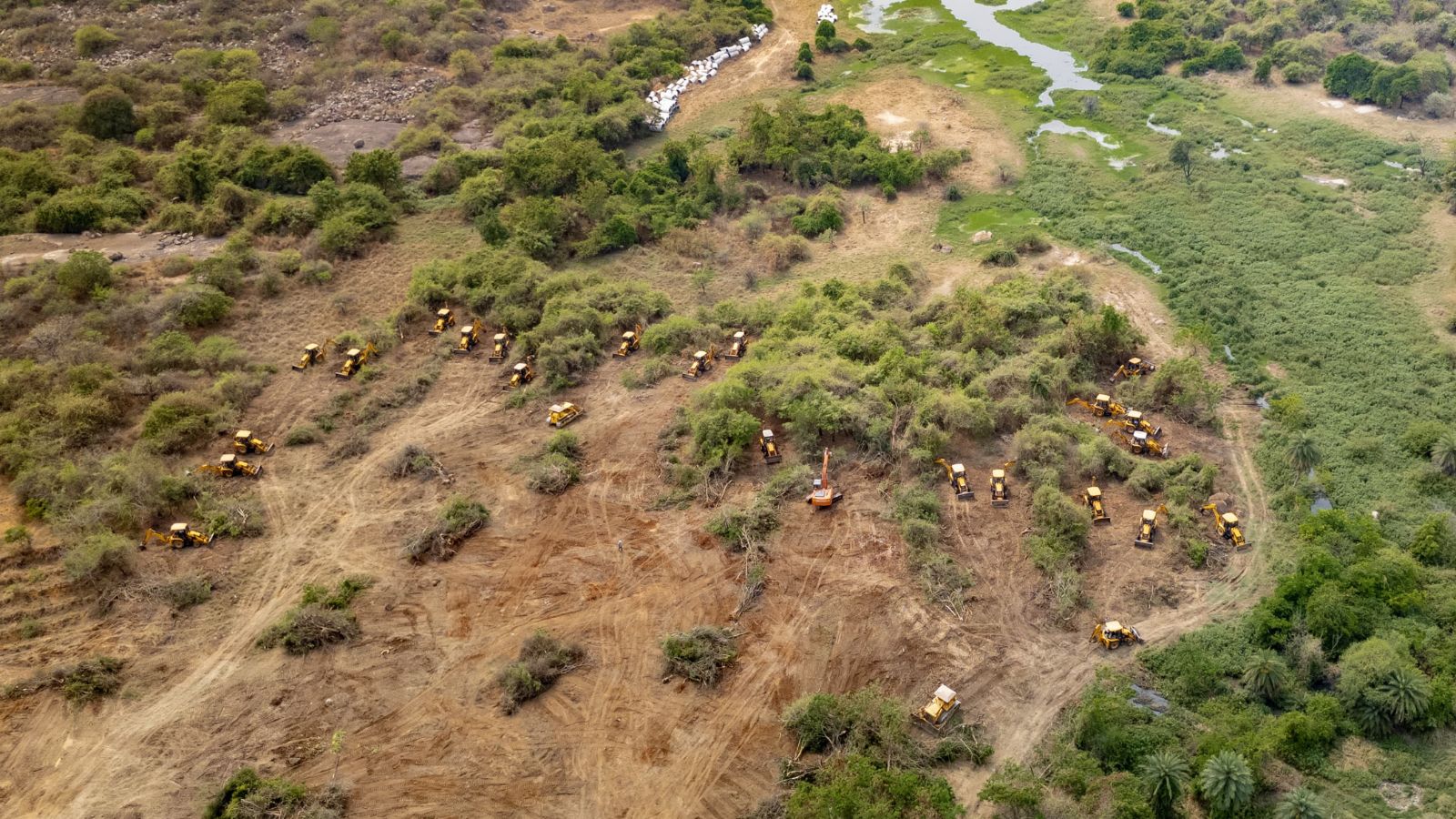
In April 1973, Chandi Prasad Bhatt helped launch the Chipko Movement in Gopeshwar, now in Uttarakhand. Decades later, mature trees, which villagers once protected from the axe with their bodies, are still not adequately valued.
Across the country, when mature trees are cut in the name of development, the question is: “How many saplings are to be planted as compensation?” But a sapling is not a mature tree, and it takes years for a sapling to accumulate as much carbon as a mature tree holds. This is changing how conservationists think of saving trees, which now starts with the question whether a mature tree can be moved and given another home.
For Hyderabad-based developer Ashwin Rao, the question arose when a nearly 100-year-old banyan tree in Zaheerabad faced the axe. In 2015, the environmental non-profit, Vata Foundation, helped him move it to vacant land he owned. This was done during the monsoon, when, Ashwin says, the “chances of survival of translocated trees are the highest”.
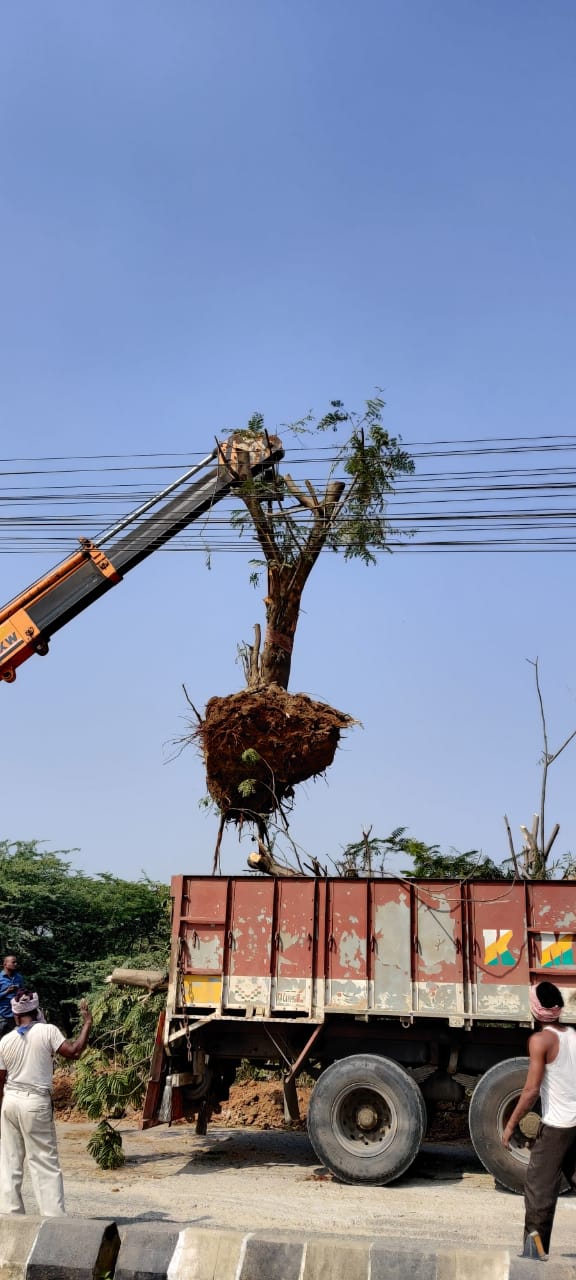 Vata foundation translocated copperpod trees in Tellapur, Hyderabad in 2018
(Credits: Uday Krishna)
The banyan had grown in a particular environment and orientation to the sun for almost a century, and the best bet was to preserve some of these conditions. “When you move a tree that has grown in one orientation for years, you have to put it back in the same orientation,” says Ashwin.
He used these lessons later while developing a 150-acre residential project, for which some 800 mango trees had to be removed to make way for a link road. Ashwin ensured that all of the trees were translocated. “It took us some six to eight months. I bought empty land and moved the trees there,” he says.
Vata Foundation, which helped Ashwin with the banyan, has been identifying trees marked for felling, finding potential adoptees for the trees, and then overseeing their move, “free of cost”, since it was founded in 2015. Its adoption model was forged through its founder’s experiences as a contractor.
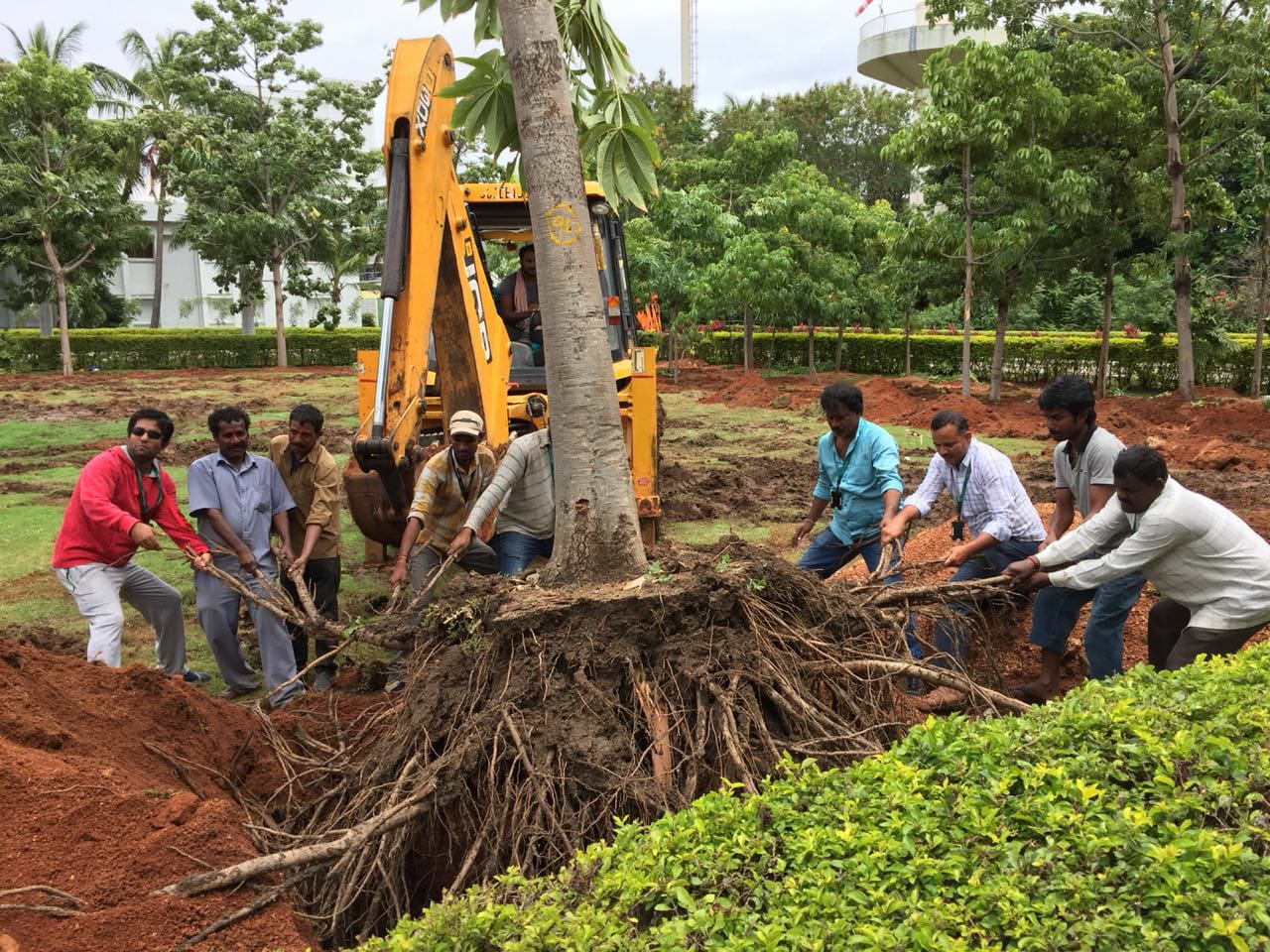 Translocation in process (Credits: Uday Krishna)
In 2010, Uday Krishna secured a contract to build a foot overbridge in Hyderabad on a ‘Build, Operate and Transfer (BOT)’ basis, but felling 45 trees for the project rankled. His bond with nature went back to childhood, when his grandfather, an Ayurvedic doctor, would send him out to collect herbs and plants. When he later took on the construction of a second foot overbridge, Uday found an alternative: he translocated 16 trees that had to be removed, 13 of which survived.
Story continues below this ad
Back then, Uday recalls, once the tree protection committees had approved the removal of trees for development projects, there was virtually no follow-up on the compensatory plantations or the survival of the saplings. Noticing this gap, he started Vata in 2015, but soon realised that he would need more land for tree translocation. Then, a school came forward to adopt some of the trees, and Uday got his idea for Vata’s adoption model.
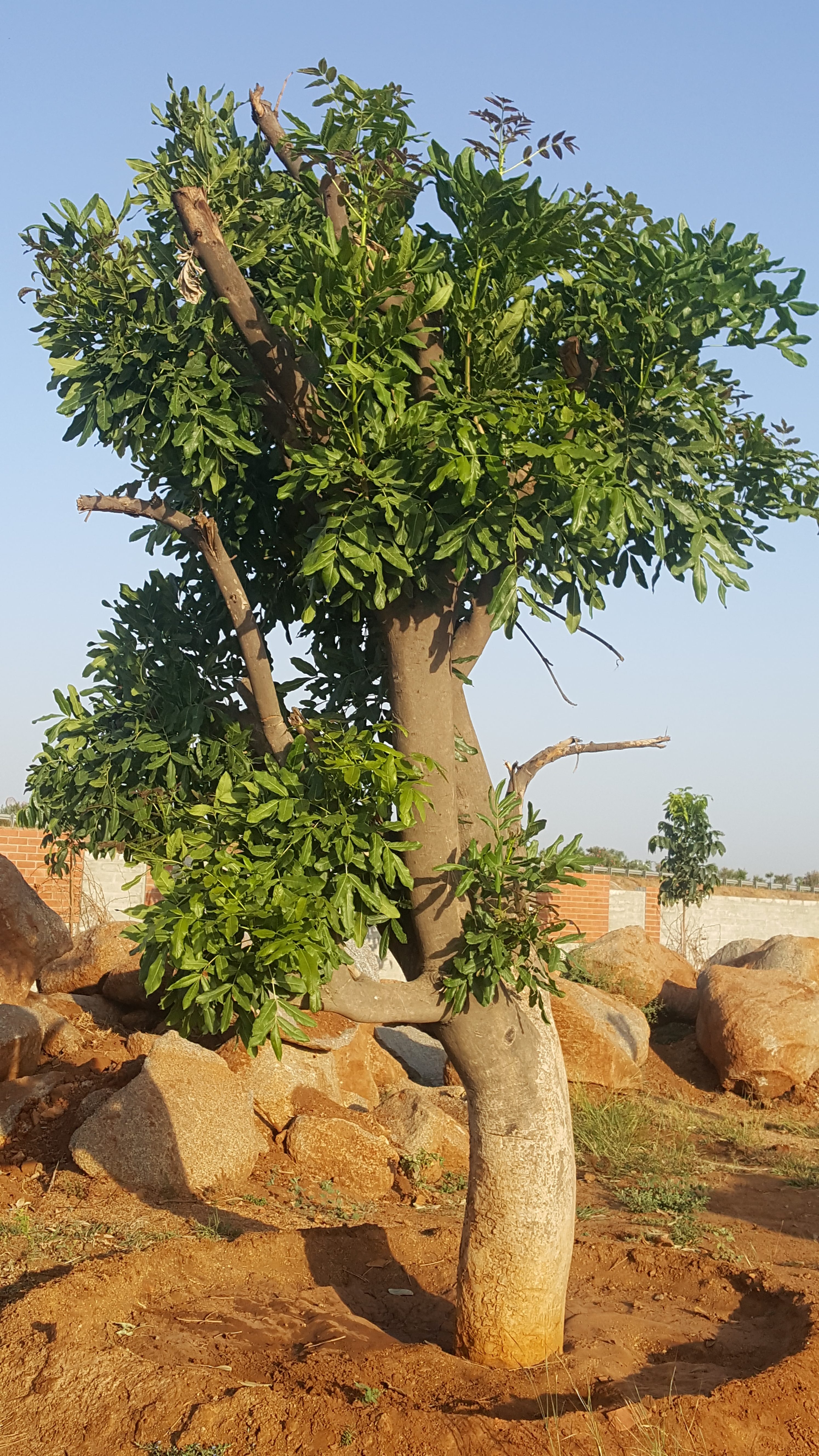 In 2015, the court permitted Vata Foundation to translocate 45 trees, including this African sausage tree. (Credits: Uday Krishna)
The foundation sometimes ropes in people or institutions that have both land and funds as adoptees for the trees, and at other times, matches those willing to adopt trees with those who have land to offer. Uday says that since 2015, Vata, with its network of around 8,000 people across the country, has helped more than 17,500 trees find new homes.
But a larger question remains. “We are destroying, and then we are planting. Does it make sense?” Uday asks.
That larger question came into focus in April 2025, when Vata Foundation and other parties challenged the Telangana government’s plan to auction 400 acres in Kancha Gachibowli, near the University of Hyderabad, for development. Hearing their public interest litigation, the Telangana High Court directed a halt to further tree felling.
Story continues below this ad
The Supreme Court took suo motu cognisance of the matter on April 3. A subsequent site inspection found that nearly 100 acres had already been cleared of trees, and the top court has since sought the state’s response.
For Uday, the issue goes beyond the trees and is about the larger ecological landscape. “How do you bring in animals? How do you bring in water bodies? How do you bring in rock formations?” he asks.
Tree adoption
In 2018, two banyan trees more than 100 years old were uprooted and left to die on the side of a road. Uday’s volunteers found them a week later. A fourth-grade girl in the US raised around Rs 95,000 to help move them, while Uday found a school in Hyderabad willing to take them.
The rescue itself was not simple. The equipment was inadequate, the truck carrying the trees broke down, and the trees were moved around 10 days after they had been uprooted.
One survived. The other did not.
Story continues below this ad
In 2017, Yashodha, a former principal of Government Girls High School in Nagarkurnool, contacted Uday about a Jungle Jalebi tree on campus that had fallen during a storm. The principal noticed that it was still bearing fruit and did not approve its removal for almost two-and-a-half months. When Uday heard, he offered help.
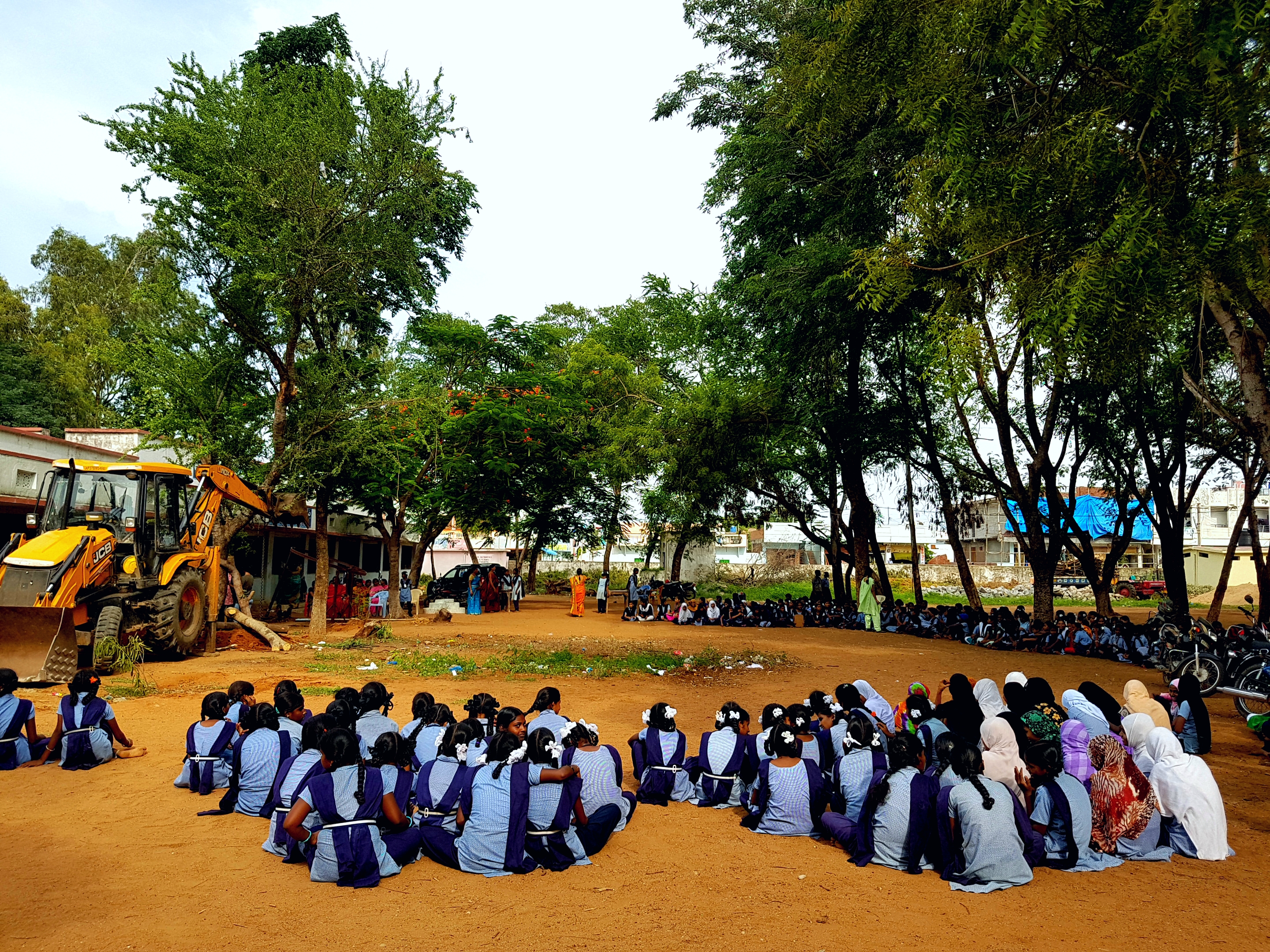 The junglee jelebi tree which was translocated to Government Girls High School in Nagarkurnool in 2017
(Credits: Uday Krishna)
On July 28, 2017, his team set the tree upright again with the help of a single JCB. Since then, the schoolgirls have been holding a festival for the tree every year on July 28.
In Vikarabad district near Hyderabad, the Vata Foundation has partnered with the Indian Navy on a project to translocate thousands of mature trees in the Damagundam Reserve Forest that will be removed for the Navy’s upcoming Very Low Frequency (VLF) radar communication station.
Former principal chief conservator of forests Mohan Chandra Pargaien says the option of translocating the trees was adopted to reduce the ecological impact of the Navy project, which involves both diversion of forest land and tree felling. However, he believes “translocation should be the last resort” and should be “adopted only where it is ecologically feasible and technically sound, with high chances of survival”.
Story continues below this ad
While environmental regulations and project-specific orders require compensatory planting, planting saplings does not guarantee their survival. The number of saplings can be recorded, but their survival requires continued monitoring, water, labour and resources.
This is where SankalpTaru, a foundation started by Apurva Bhandari in 2012, comes in. It uses geo-tagging to record the locations of the saplings it plants in collaboration with companies and government institutions and, instead of merely recording a plantation count, ensures that individual trees are monitored.
But tracking a tree also does not ensure its survival. “It’s the farmers that we partner with that grow and nourish these trees,” Bhandari says. Pointing to water scarcity across different states, Bhandari emphasises that the government should extend irrigation schemes to farmers and local volunteers.
The question of survival, Bhandari notes, is a question of governance: whether the people expected to care for the trees have the resources and institutional support to do so.
Story continues below this ad
Like Chandi Prasad Bhatt, Bhandari is from Gopeshwar, Uttarakhand. He says tree conservation has always been part of the fabric of his community, whose members have traditionally lived close to nature. And he, in his small way, is trying to take that legacy forward.
KioskNews shows a cleaned-up reading view extracted from the publisher’s page — the original always lives on their site, not ours.