The kids are alright: F1’s next-generation rises to the challenge
SINGAPORE – Call it coincidence or fate, but this weekend as 20-year-old Mercedes speedster Kimi Antonelli closes in on the drivers’ title to become the youngest world champion in Formula 1, the chase could be sound tracked by The Killers.
When You Were Young, the hit single by the American rock band – who perform at the Padang on Oct 10 – was released in September 2006, a month after Antonelli was born.
While the song is a bittersweet anthem about youth, for Antonelli this moment could not be any sweeter.
The Italian ace currently holds an 84-point lead at the top of the standings, and in a sport where split-second decisions, high-speed risks and immense pressure demand maturity, Antonelli’s rise to the peak is proof that age is no barrier to excelling at the highest level.
F1’s grid is also getting younger, and its rising stars are ready to challenge the established order earlier than ever.
Antonelli is one of seven drivers aged 24 or younger on the 22-man roster, alongside Racing Bulls rookie Arvid Lindblad, 19; Haas’ Oliver Bearman and Audi’s Gabriel Bortoleto, both 21; Red Bull’s Isack Hadjar, 22; Alpine’s Franco Colapinto, 23; and Racing Bulls’ Liam Lawson, 24.
In an article titled, “Why F1 drivers are getting younger”, Calvin Molyneaux, a principal account support manager at recruitment specialist VHR which provides solutions for F1 and motorsport industries, attributed the rise in youth talents to three main factors.
These are: the several years of karting experience amassed by drivers from as early as six or seven, prevalence of team-backed junior academies that provide elite coaching, simulator training and physical conditioning, and advances in fitness and technology that have further accelerated drivers’ development.
Bearman, who joined the Ferrari Driver Academy in 2022, is one of the young drivers making a name for himself since he took a F1 seat in 2024.
Then only 18, he made a last-minute substitute appearance for Ferrari in place of Carlos Sainz.
His impressive displays on the track earned him a full-time opportunity with Haas for 2025, and he is currently 13th in the drivers’ standings this season.
Bearman said on Oct 8 in an interview with The Straits Times: “It was everything that I ever dreamt of. To be honest, it was incredible, and to get that chance at such a young age, it was nerve-racking and daunting, but I was happy that I made the most of the opportunity.”
Like many of his peers, Bearman said the time spent in Formula Two made the step-up easier. He added: “I think young drivers are very well-prepared nowadays with Formula Two, and you know how intensive the programme is, the young drivers are more prepared than ever, and I think that’s why you see the young drivers performing so well when we enter in Formula One, and that makes us prove our worth.”
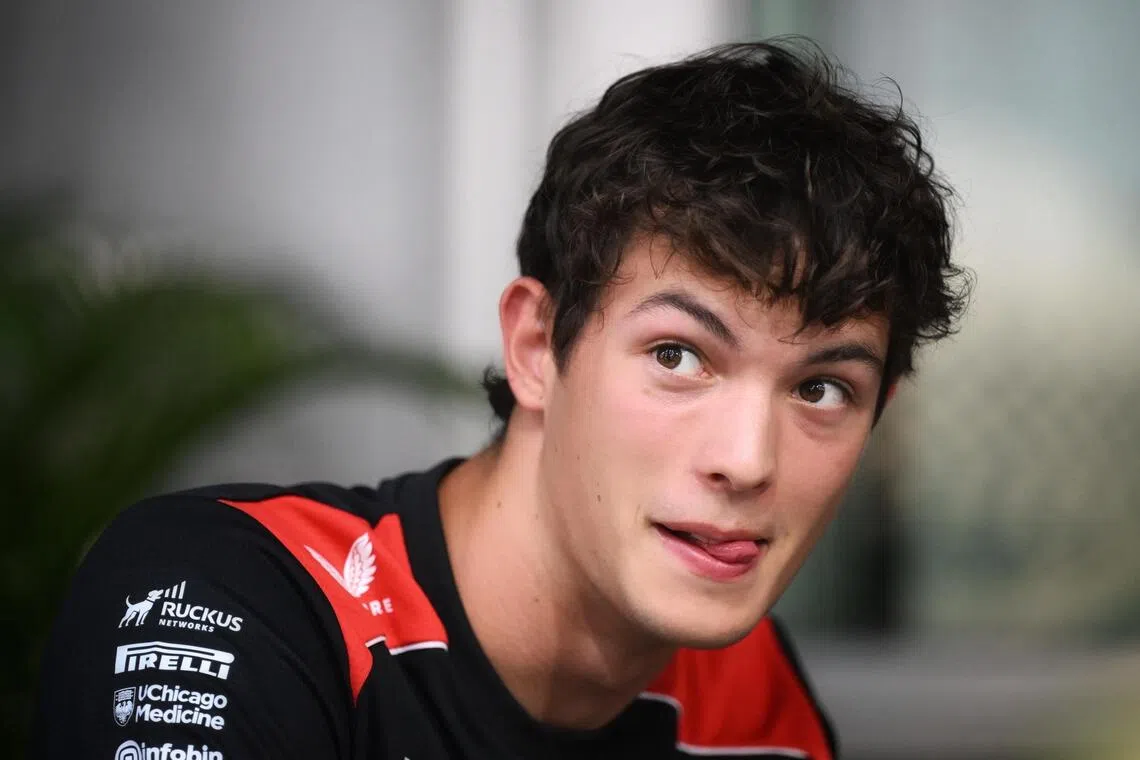
British driver Oliver Bearman, TGR Haas F1 Team, during an interview with ST at the paddock on Oct 8.
ST PHOTO: CHONG JUN LIANG
“It’s impossible to prepare fully for F1, but I think we must say that we’re very well-prepared compared to how it was 10 years ago, maybe.”
The statistics support Bearman’s points.
The first world champion, Italian icon Giuseppe Farina, won in 1950 aged 43, Argentina’s Juan Manuel Fangio secured his final title in 1957 at 46, and Australian driver Jack Brabham bagged the world title with his eponymous team in 1966 aged 40.
In recent times, Sebastian Vettel’s first victory was in the 2010 season when he was 23, the same age as Lewis Hamilton when he first won in 2008, while Fernando Alonso was 24 in 2005 and Max Verstappen was 24 in 2021 when they first stood at the top of the podium.
In just his second season, Antonelli looks set to ascend the throne. The Italian was a 12-year-old go-karter when he joined the Mercedes junior programme in 2019, before rising through the ranks to earn his place in the F1 team six years later.
Four-time world champion Verstappen still holds the record for being the youngest driver ever to start an F1 race, making his debut at 17 years, five months and 13 days old at the 2015 Australian Grand Prix.
Verstappen noted that advances in racing technology and sport science have helped.
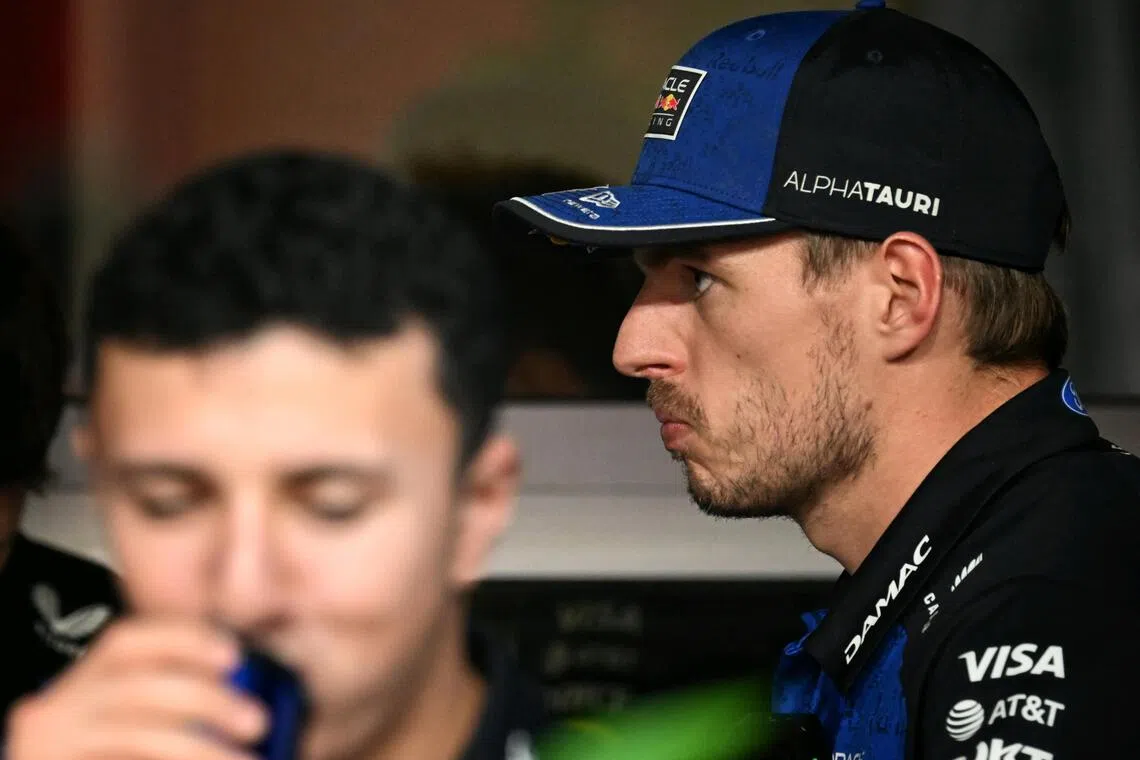
Oracle Red Bull Racing, Dutch driver, Max Verstappen, at the team motorhome, on Oct 8.
ST PHOTO: ARIFFIN JAMAR
The 29-year-old Dutchman told ST: “It’s also a bit of a natural process, right? That every five, six years, seven years, new drivers arrive because the old drivers become too old and they stop... But we do have a lot of talented young drivers at the moment in Formula One, and it’s just nice to see that immediately they jump in and they’re doing a great job.
“In general, the simulation over the years has been improving a lot. So from a younger age you can be more prepared because there’s just more information available, and you see that not only Formula One but a lot of sports. There’s a lot more science behind it, a lot more know-how of how to operate, how to get the best out of yourself.”
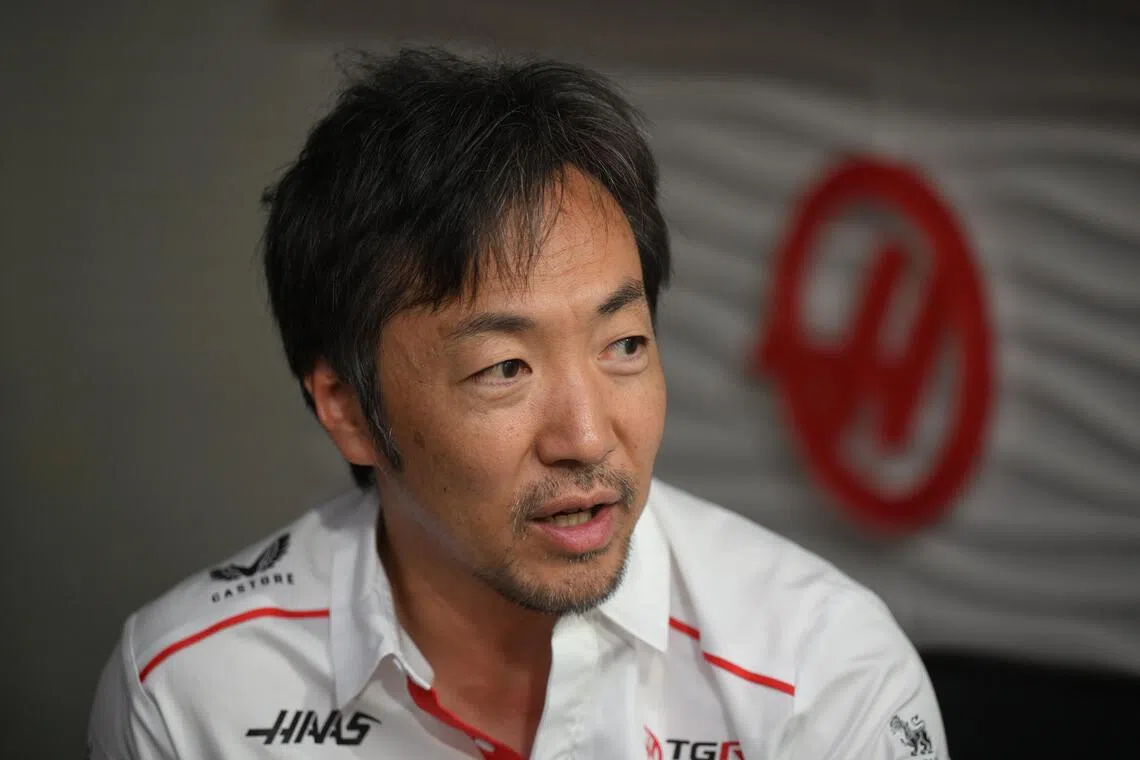
Ayao Komatsu, team principal of TGR Haas F1 Team at a ST interview at the paddock on Oct 8.
ST PHOTO: CHONG JUN LIANG
Ayao Komatsu, the Japanese team principal of Haas who previously served as chief race engineer of Lotus, added: “In terms of age, in terms of preparation, in terms of how early manufacturers and F1 teams pick up young drivers, the age is getting earlier.
“Whether it’s an easier environment to get into, overall they have better preparation, so they are more equipped to take on the challenge earlier in life than 10 or 20 years ago.”
The trend of young drivers making their marks early has also inspired a legion of up-and-coming hopefuls. One of them is 16-year-old Kareen Kaur, who is Singapore’s first female F4 driver.
Kareen said: “It’s truly inspiring to see young drivers like Isaac, Arvid and Kimi make their mark in Formula 1. As a young driver myself, it reminds me that age doesn’t have to define how far you can go. Seeing them compete at the highest level motivates me to keep learning, working hard and believing in my own journey. They show that with talent, determination and the right opportunities, young drivers can achieve great things.”
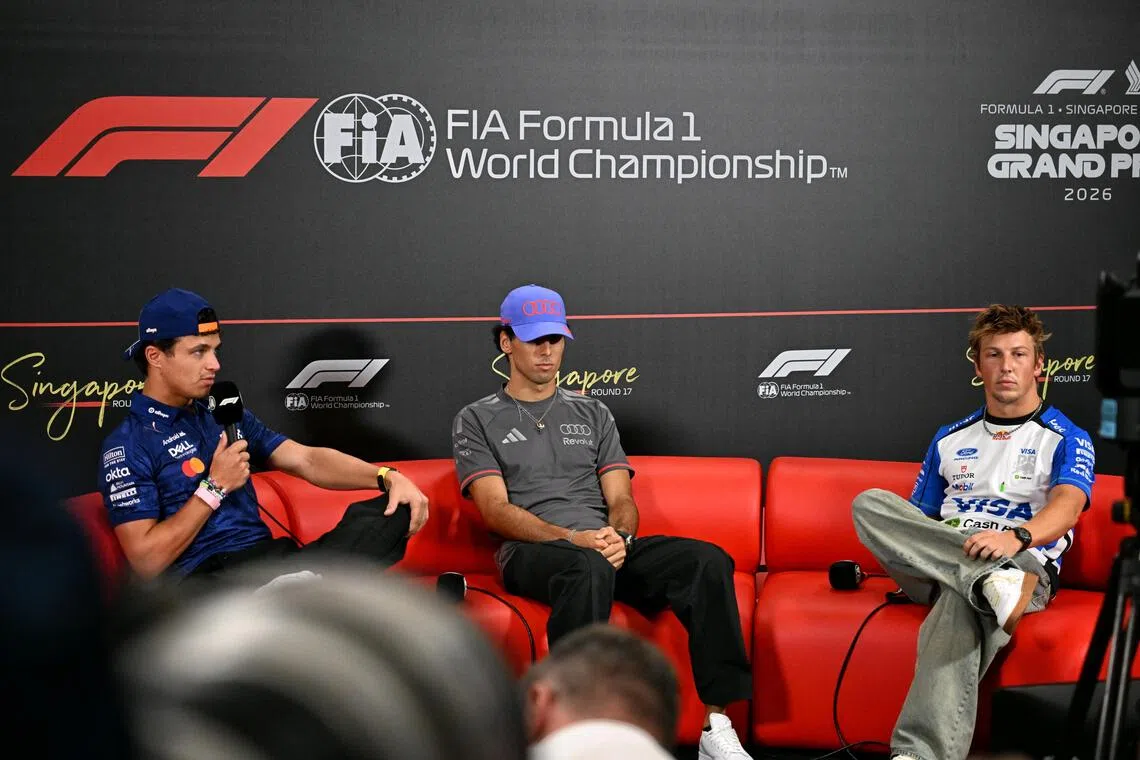
(From left) No. 1 McLaren Mastercard F1 Team, British driver, Lando Norris, No. 5 Audi Revolut F1 Team, Brazilian driver, Gabriel Bortoleto and No. 30 Visa Cash App Racing Bulls F1 Team, New Zealander driver, Liam Lawson, during the press conference, on Oct 8.
ST PHOTO: ARIFFIN JAMAR
But even as young drivers rise to the fore, they also have to grapple with social media scrutiny as the sport becomes more popular among younger people. They also face a significantly heavier media, marketing, and promotional workload than previous generations, largely due to Liberty Media’s digital-first strategy and the massive success of Netflix’s Drive to Survive.
Bearman said that the attention was instantly noticeable when he made the step-up to F1, as he recalled that at his first race in Jeddah, “seeing how many people were there with the camera taking pictures of me” made him realise how big of a moment it was.
On how he tackles social media, Bearman said it is important not to get disheartened by comments, adding that “I don’t take any notice of it (negative comments) because I know that it's someone who’s really sad who is writing those types of things, so that that keeps me happy with myself”.
KioskNews shows a cleaned-up reading view extracted from the publisher’s page — the original always lives on their site, not ours.